


 by Tom Gurney
Tom Gurney BSc (Hons) is an art history expert with over 20 years experience
Email: tomgurney1@gmail.com / Phone: +44 7429 011000
Introduction
Picasso's political art cannot be reduced to a single dove or to Guernica. He made the anti-Franco print sequence The Dream and Lie of Franco in 1937, returned to wartime death in The Charnel House, placed unarmed families opposite armed figures in Massacre in Korea, and imagined opposed worlds in the Vallauris murals War and Peace. He also made images for organised peace campaigns, including the later World Without Weapons design. Those works differ in scale, medium, audience and political setting. Looking at them together shows how Picasso moved between satire, painting, public murals and reproducible signs rather than applying one visual formula to every conflict.
His commitment was public, but it was not politically simple. Picasso supported the Spanish Republic, remained in France during the Second World War, and joined the French Communist Party in 1944. After the war he became a prominent figure in the international Peace Movement. The Museu Picasso Barcelona's exhibition research[1] and the Musée national Picasso-Paris's account of the war years[2] trace this involvement. Their evidence does not make every painting a party commission, nor does it turn complex pictures into illustrations of a slogan. The art asks how violence is shown, while its public uses ask who chose to show it, where, and for what purpose. [1] [2]
At a Glance
- Key works: Guernica, The Charnel House, Massacre in Korea and War and Peace
- Other forms: Anti-Franco prints and peace-campaign imagery
- Approach: Read each image in its own political and material setting
Contents
- Spain, Franco and the first political prints
- During the Second World War
- Party membership and peace campaigning
- From Massacre in Korea to War and Peace
- How the dove became a public peace image
- World Without Weapons and the 1962 sun-and-dove design
- What connects these works?
Spain, Franco and the first political prints
Picasso was living in Paris when the military rebellion against Spain's elected Republic began in 1936. The conflict reached him both as a Spanish citizen and as an artist with friends and political ties on the Republican side. In January 1937 he began The Dream and Lie of Franco, a sequence of small etched scenes that ridiculed the rebel general through grotesque figures and abrupt changes of action. The Barcelona museum's research on Civil War cartoons[8] dates the start to 8 January 1937 and places the sheets within a wider culture of satire and Republican graphic propaganda. They are not a preliminary painting of Guernica. Their compact printed panels could circulate in ways a monumental canvas could not. [8]
The satire's form matters. Franco appears not as a heroic leader but as a distorted character who changes costume and situation. Later panels turn towards suffering and devastation. That shift should not be simplified into a claim that every vignette was drawn in response to the same news report. The sequence developed across the months in which the war intensified. A print could mock political power and then confront the consequences of that power, while retaining the stop-start rhythm of a series rather than the single continuous scene of a mural.
The print sequence also makes a useful starting point because it prevents a history of Picasso's politics from beginning only with his party membership seven years later. His support for the Republic was expressed before the postwar peace campaigns and before his Communist Party affiliation. It was not identical to those later commitments. In the 1930s, an artist working outside Spain could contribute an image to a political struggle at home; in the late 1940s and 1950s, the same artist could become a visible participant in international organisations. The change in role affected how his work was requested, distributed and argued over.
The Spanish Republic had separately commissioned a large work from Picasso for its pavilion at the 1937 Paris International Exposition. The German and Italian aerial attack on Gernika on 26 April gave the commission its subject. In the Reina Sofía's research chronology[3], the commission comes first and the bombing later. This distinction is essential: the Republic wanted Picasso's work in the Pavilion before the attack, but the event transformed what he made for it. Guernica neither pictures the aircraft nor supplies a street-by-street report. It presents terrified bodies, animals, competing lights and disrupted space. Its title insists on the historical place; its visual language carries grief beyond a single documented scene. [3]
At the Pavilion, Guernica formed part of the Republic's appeal to an international audience, alongside other politically committed art and photography. The Reina Sofía's account of the Pavilion[9] identifies the architects Luis Lacasa and Josep Lluís Sert and the political programme shaped by Josep Renau. The work's first setting was therefore not politically neutral. Later viewers have encountered the same canvas in a museum, often separated from the other materials that explained the Republic's cause. Both contexts matter: one for why it was made, the other for how its anti-war reputation grew. [9]
During the Second World War
Picasso remained in France through the Occupation. The Paris Picasso museum's biography[2] describes his support for exiled Spaniards and for friends affected by war. Staying and making art in occupied France did not mean he lived the same experience as people who were deported, imprisoned or murdered. It also does not prove that every work from those years concealed a coded political message. Portraits, still lifes, sculpture and writing continued alongside work that directly bears on violence. [2]
The Charnel House, made in Paris in 1944–45, is one of those works. In the Museum of Modern Art's object record[4], a group of human bodies lies beneath an ordinary table, in oil and charcoal on a large canvas. Domestic objects above the bodies make the scene more disturbing, not less. The painting was developed in stages, and curators have offered different accounts of its sources, including wartime reports and images. It should not be presented as a photographically precise record of one camp or one murdered family. The work's exposed drawing and partly painted surface make its form as unsettling as its subject. [4]
The differences between The Charnel House and Guernica are instructive. Both can be connected to mass violence and both use severely restricted colour, but one was made for a public Republican Pavilion in 1937 and the other took shape near the end of a different war. Treating one as a sequel with an identical political message erases those circumstances. Each must be read through its own evidence, even as Picasso's repeated attention to civilian vulnerability becomes clear.
Watch: Pablo Picasso
Explore Picasso through five videos from museums, broadcasters and art educators.
Picasso’s Guernica: Great Art Explained
Explore the composition and historical setting of Picasso’s best-known response to war.
Watch on YouTubeParty membership and peace campaigning
After the liberation of Paris, Picasso joined the French Communist Party in 1944. That was a public affiliation, not simply a label attached to him by later critics. The Paris museum's historical account[2] and the Barcelona museum's Picasso–Paul Éluard project[10] place his decision among friendships, wartime loss and political networks. Tate's Picasso: Peace and Freedom research overview[11] notes that he remained a party member until his death in 1973. Membership is a fact; it is not a substitute for examining how any particular artwork was made or used. [2] [10] [11]
Picasso and the poet Paul Éluard collaborated and appeared in peace initiatives. Barcelona's museum account[10] records their attendance at the 1948 Congress of Intellectuals for Peace in Wrocław and their visit to Auschwitz during that journey. Barcelona also traces a peace congress in Paris in 1949. A later congress was planned for Sheffield in 1950 but moved to Warsaw after British authorities denied visas to delegates, according to the Picasso Administration's history of the peace work[12]. These events placed Picasso among writers, artists and campaigners working across borders after the devastation of the Second World War. They also operated in the political atmosphere of the emerging Cold War. A call for peace in that period was a public position taken within contested organisations and alliances, not an ahistorical sentiment floating above them. [10] [12]
There were tensions inside Picasso's own political camp. The Paris museum's anniversary research[13] records a sharp controversy after his portrait of Stalin appeared in Les Lettres françaises in 1953; relations with the party subsequently loosened. An account that treats Picasso as a completely obedient party illustrator misses this friction. An account that ignores his continuing membership misses his deliberate public alignment. His art and activism met, but they were not always accepted on the same terms by political allies. [13]
From Massacre in Korea to War and Peace
The Korean War became the setting for one of Picasso's clearest painted confrontations between armed power and unarmed people. Massacre in Korea, dated 18 January 1951, places women and children opposite a group of weapon-bearing men. The Musée national Picasso-Paris[5] relates its arrangement to Goya's Third of May 1808 and Manet's Execution of Emperor Maximilian. Picasso uses the structure of an execution scene, but the painted figures do not wear unambiguous national uniforms. The title names Korea; the work is not a documentary picture of a verified single killing site. Later claims that it depicts one particular massacre need evidence separate from its title and composition. [5]
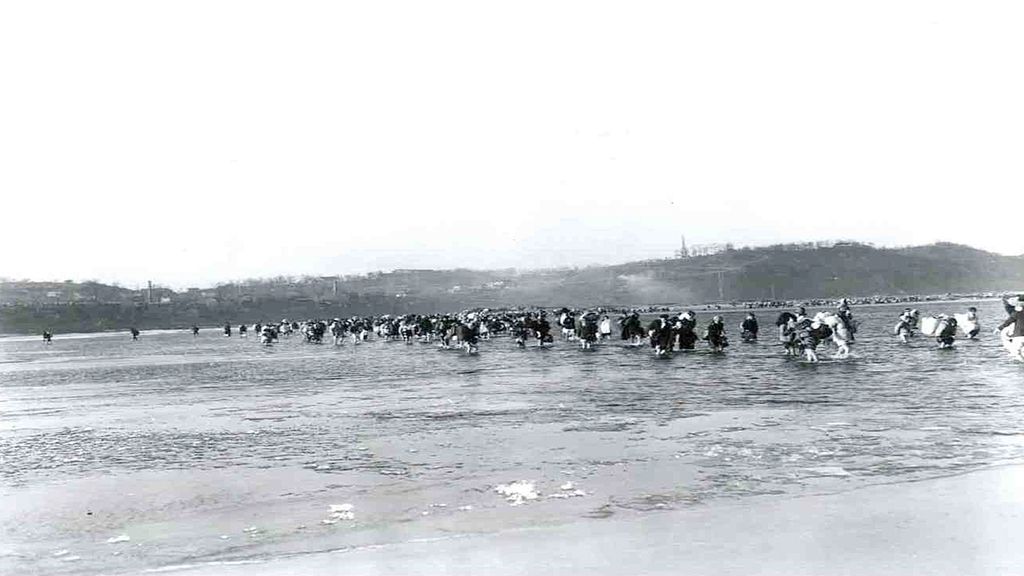
The civilians are not passive background. Their bodies are joined tightly, and children cling to adults. The armed group looks mechanical and partly anachronistic, with weapons that do not all belong to one time. This is why the picture can carry a criticism of modern organised violence without providing a forensic identification of soldiers. It was made amid Cold War argument, and its meanings were themselves debated. A contextual hub can name that political circumstance while leaving the exact work's subject and reception to its dedicated page.
In 1952 Picasso painted two enormous panels, War and Peace, for a former chapel in Vallauris. The holding museum's account[6] describes the work as two opposed scenes that visitors encounter in a shared space. War stages threatening movement and weapons; Peace shows people, animals and activities of ordinary life. The panels are not illustrations of Tolstoy's novel despite the familiar English title. They ask what a world shaped by destruction would look like beside one in which other relationships can flourish. [6]
The chapel format makes an important difference from Massacre in Korea. A spectator walks between the paired works and feels their opposition physically. The painting was not simply meant to be read as a slogan on a flat page. Its large hardboard surfaces were installed in 1954, while the institution was formally inaugurated later, in 1959. The separate dates and the later third panel belong to the mural's history. Calling the project a single 1952 canvas or an immediately opened museum would obscure both the artwork and the site.
How the dove became a public peace image
The dove is often called Picasso's invention as a peace symbol. Its actual history is more specific and more interesting. Picasso made images of pigeons and doves in different contexts. The Musée national Picasso-Paris catalogues La Colombe[7] as a naturalistic bird dated 9 January 1949, worked as a wash on zinc and printed by Mourlot. Its museum educational research[14] says the bird was not originally drawn for the peace congress. Louis Aragon selected it for the April 1949 Paris poster. The dedicated dove page follows that image's history; the political emblem arose from a choice and circulation, not from a sudden commission in which Picasso invented the whole motif on a restaurant napkin. [7] [14]
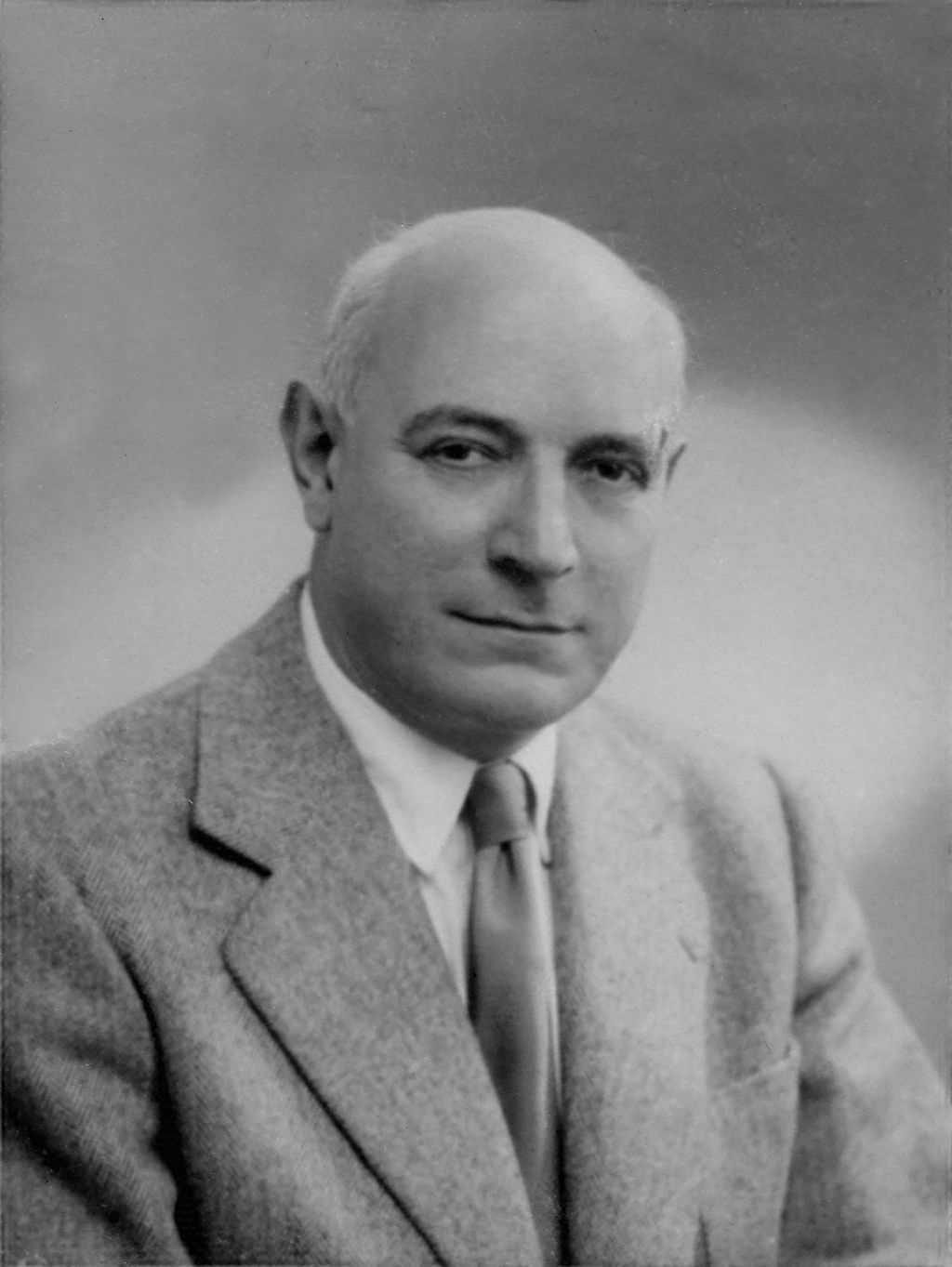
That image was followed by other birds, drawings, prints and designed objects. Some show a dove in flight; others add flowers or place the bird among people. These are not interchangeable reproductions of the 1949 print. Their differences show how a sign can be adapted for changing events and audiences. Barcelona's Picasso, War and Peace research[1] connects the doves with postwar congresses, while the Paris museum documents later uses of the imagery. The prints' reproducibility was central to the public life of the symbol: a mural can move between museums only with difficulty, but a poster can appear wherever an organisation can distribute it. [1]
The widespread peace reading does not make every dove politically identical. A living bird in a domestic picture, the naturalistic 1949 poster image, a floral design and a later disarmament poster can share a motif while serving different purposes. Their medium, dates and commissioning histories should stay separate. Likewise, a dove image made publicly available in a museum catalogue is not automatically free for another website to reproduce.
World Without Weapons and the 1962 sun-and-dove design
An image circulated as World Without Weapons, Le Monde sans armes or Colombe au soleil shows a pale, spreading-winged dove with a small sprig above a dark tangle of discarded weapons. A bright yellow sun interrupts the otherwise spare palette. The composition differs plainly from the 1949 La Colombe: the earlier print presents a naturalistic bird against darkness, while this design makes the contrast between an ascending dove and the instruments of violence the whole subject. Calling the 1962 arrangement a simple reproduction of the 1949 poster hides that change.
The design is associated in print catalogues with the 1962 World Congress for General Disarmament and Peace in Moscow. A Christie's catalogue entry[15] describes a colour lithograph published for the congress, but its sale-room notice corrects the attribution of that impression to “After Picasso.” Other impressions have been catalogued differently. This matters for a reader encountering small reproductions online: the presence of Picasso's name in a design, or a date printed from a plate, is not proof that a particular sheet is an original, hand-signed lifetime print. The precise origin, medium, edition and rights of an individual impression require its own catalogue and physical evidence. [15]
The motif itself is clear enough to discuss without making that unsupported leap. Weapons lie in a compressed, dark mass below a bird moving into open space and sunlight. It presents disarmament as an imagined change in the relationship between people and weapons, not as a report that such a world had been achieved. Its very clarity made it suitable for reproduction and political campaigning. The old English title is useful for that visual argument, but it should not be treated as proof that Picasso personally wrote every caption under which the image later appeared.
The design belongs at the end of this history rather than at its beginning. It uses the dove's already established peace associations and gives them an explicit antagonist: weapons pictured as a heap below. That opposition is simpler than the social world of the Vallauris Peace panel, where food, animals and human activity fill the space. It is also different from the 1951 Korean painting, where the people threatened by weapons occupy the foreground. The 1962 graphic addresses a campaign audience through immediate contrast. Seeing those choices side by side shows how a political theme could be compressed for a poster without making the larger paintings redundant.
What connects these works?
The political works are connected less by one icon than by recurring questions. Who is placed in danger? Who holds the weapons? How can a viewer recognise an attack that the artist did not witness? What happens when a picture made for a particular campaign travels into a museum or onto a poster? Guernica names a town and uses a vast, unstable scene. Massacre in Korea opposes two groups with almost theatrical clarity. War and Peace sets two environments against one another, while the dove posters strip the appeal down to a rapidly recognised sign. Their differences are part of Picasso's political imagination.
The distinctions also keep Picasso from becoming an uncomplicated emblem himself. He committed to causes and organisations, argued through images, and sometimes met criticism from people who shared his stated politics. His pictures could be used by campaigns without being reducible to their instructions. Understanding that tension is more useful than a list of “anti-war masterpieces.” It leaves the specific historical victims and conflicts in view while asking what an artist's work can, and cannot, do in public life.
Discussion
Use the evidence and your own close looking to explain your view. These are editorial prompts, not reader comments.
Reader Insights
How does Guernica’s public purpose differ from that of a peace dove?
Which work makes conflict visible through a specific historical scene?
What would be lost by treating every political image as one universal symbol?
Join the Conversation
Which reading best fits the evidence?
References
- Museu Picasso Barcelona, Picasso, War and Peace — museum overview of the political trajectory.
- Musée national Picasso-Paris, Spanish war and Occupation — biographical and party context.
- Museo Reina Sofía, Rethinking Guernica — 1937 commission, bombing and painting archive.
- Museum of Modern Art, The Charnel House — holding-museum account.
- Musée national Picasso-Paris, Massacre in Korea — 1951 painting and history-painting comparisons.
- Musée national Pablo Picasso, Vallauris, War and Peace — the two chapel panels.
- Musée national Picasso-Paris, La Colombe — the distinct 1949 image.
- Barcelona museum's research on Civil War cartoons. View source
- Reina Sofía's account of the Pavilion. View source
- Barcelona museum's Picasso–Paul Éluard project. View source
- Picasso: Peace and Freedom research overview. View source
- Picasso Administration's history of the peace work. View source
- anniversary research. View source
- educational research. View source
- Christie's catalogue entry. View source
Image Credits
- Papamanila. CC BY-SA 3.0. Source: Wikimedia Commons. Resized to 1024px; no crop. Source record. Licence.
- US Army. Public domain. Source: Wikimedia Commons (File:Refugees crossing Taedong river 1950-12-03.jpg). 1024px proportional sRGB JPG derivative; no crop. Source record. Licence.
- Mourlot family archive; scan and rights-holder release credited to Eric Mourlot on Wikimedia Commons. Record date: 16 July 1953, despite the filename’s ‘1950’. Worldwide public-domain dedication, with fallback permission for any purpose. Proportional resize only. Source record. Licence.



