


 by Tom Gurney
Tom Gurney BSc (Hons) is an art history expert with over 20 years experience
Email: tomgurney1@gmail.com / Phone: +44 7429 011000
Introduction
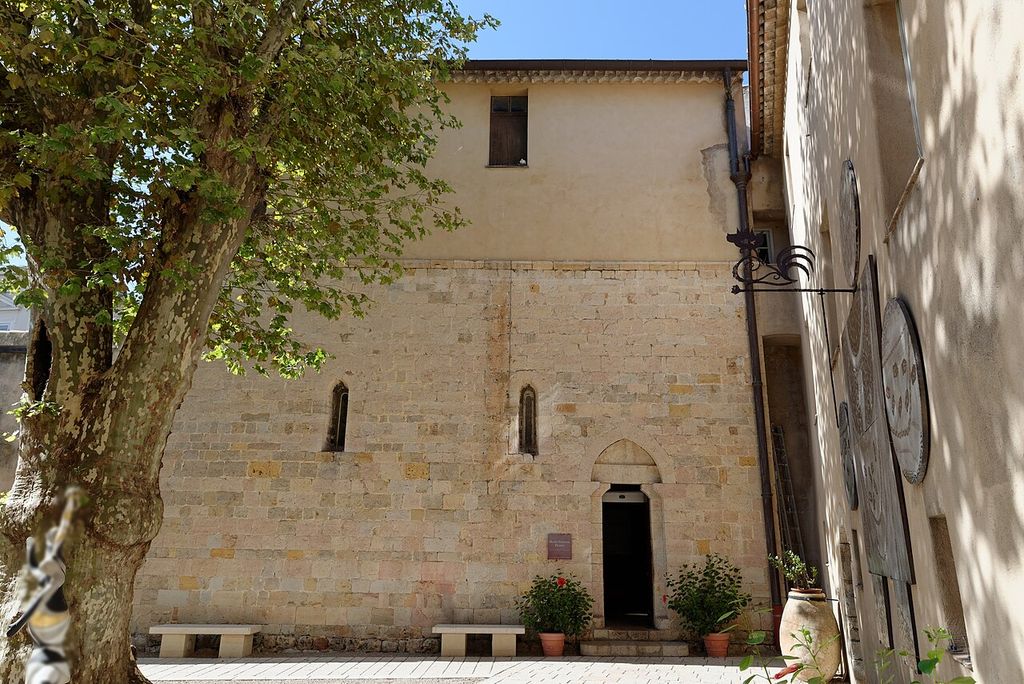
Picasso's War and Peace is a pair of immense painted panels in a former chapel at Vallauris, in southern France. He made La Guerre and La Paix in 1952 on Isorel hardboard, each approximately 4.70 metres high and 10.20 metres long. They face one another, so that a visitor moves physically between a vision of destruction and an image of shared life. A later third panel changed the way the space is entered. The work is an allegory shaped by Picasso's postwar commitment to peace, not a set of illustrations for Tolstoy's novel of the same English title.[1][2][3]
Its location is essential. Unlike a canvas that can be rehung beside unrelated paintings, these panels were built for a curved architectural space and remain at the Musée national Pablo Picasso, La Guerre et la Paix. Picasso painted the components in his Vallauris studio before their installation in the chapel's low entrance space. The museum counts about 300 preparatory drawings. The result is both painting and an experience of walking, turning and comparing: the panel of war confronts the panel of peace across the visitor's own path.[1][3][4]
At a Glance
- Made: 1952 at Vallauris, southern France
- Form: Two large painted panels on opposing chapel walls
- Experience: A visitor moves between scenes of destruction and shared life
War and Peace in Picasso's career
First Communion
1896Three Musicians
1921Guernica
1937War and Peace
1952Las Meninas series
1957The highlighted work is dated with the qualifications explained in the sources on this page. The other works are selective points of comparison, not the start or end of a style.
Contents
- Why Picasso made a work for Vallauris
- The War panel
- The Peace panel
- Two paintings made for one passage
- Installation, gift and later third panel
- Conservation and what survives at Vallauris
Why Picasso made a work for Vallauris
Picasso had lived and worked in Vallauris since 1948, making ceramics at Madoura and taking part in the town's artistic life. The art historian Anne Dopffer traces the project for the chapel, with some caution, to an invitation discussed around a potters' banquet for his seventieth birthday in autumn 1951. The account does not amount to a signed commission at that dinner. It does explain why the work belongs to this particular town: the site and Picasso's local relationships were part of the opportunity to make a public, large-scale statement.[4]
The building was a former priory chapel, no longer used for worship. Dopffer explains that Picasso first considered the larger main chapel but chose its smaller, vaulted entrance area—the narthex. That choice created a difficult practical problem. The paintings would have to bend with the walls and ceiling of a compact space, while preserving the force of large figures and long moving groups. It also gave Picasso a way to make the threshold into the work itself. A visitor would not simply stand at a distance before an antiwar picture; the two alternatives would take over the walls at either side.[4]
Picasso's politics formed another part of the setting. His work on Guernica in 1937 had responded to the Spanish Civil War; Massacre in Korea followed in 1951. The Museu Picasso Barcelona describes his participation in the international peace congresses of 1948, 1949 and 1950 and his use of dove images in that movement. The Vallauris panels continue this public concern, yet they do not name a battlefield or show soldiers of a particular nation. The holding museum calls them allegorical: images of conditions, choices and consequences rather than a report on one event.[1][4][8]
The War panel
La Guerre presents violence as an advance. The holding museum describes a hearse-like cart pulled by three harnessed horses and driven by a horned figure with a bloodied blade. Skulls are piled on the driver's back. Behind, dark figures seem to follow; below, the horses trample an open book already caught by flames. The cart's movement carries death and the destruction of learning in the same direction. Picasso did not need to paint a named dictator or country to give the image a political charge.[2]
Opposing the cart is a naked figure of peace. He carries a lance from which a balance hangs and shelters behind a pale shield marked with a dove. The contrast is not simply one of weak innocence against strong machinery. The defender's upright body, stillness and clear blue field check the rushing team and its jagged driver. The balance introduces justice into the scene; the book under the horses introduces what war threatens beyond individual lives. These details offer a way to read the picture's ethical argument while leaving the exact identity of its monstrous attacker open.[2]
The museum identifies a faint portrait of Françoise Gilot within the shield. That reading gives a personal dimension to the sign of protection, but the shield's dove remains publicly legible whether or not a viewer recognises her features. A separate cluster of dark, spiky forms is described by the museum as possibly evoking bacteriological weapons research. “Possibly” matters here. The shapes can carry the threat of modern violence without proving that Picasso illustrated a specific weapons programme. The panel's wider subject is a destructive force met by a human refusal.[2]
Its burning book has particular force when read from across the room. In La Paix, a woman reads while nursing a child. Knowledge is not merely named as a virtue; it is placed in human hands and given time and shelter. The contrast does not make either individual a portrait of a documented sitter. It gives culture two fates: crushed under a moving cart or shared in a scene of care. Because the panels face each other, this connection cannot be understood as fully in a small, isolated reproduction of one wall.[2][3]
Watch: Pablo Picasso
Explore Picasso through five videos from museums, broadcasters and art educators.
Picasso’s Guernica: Great Art Explained
Explore the composition and historical setting of Picasso’s best-known response to war.
Watch on YouTubeThe Peace panel
La Paix answers the cart with several kinds of activity rather than a single heroic figure. The holding museum describes a garden with people resting, a mother reading as she feeds her child, fruit, children, dancers and a musician. In a broad blue zone a winged white horse pulls a harrow guided by a child. The image joins cultivation to play: labour does not vanish in peace, but it is guided by a child rather than driven by a figure of death.[3]
The reader and child are among the work's most direct images of continuation. Reading requires a future in which someone can use what has been learned; nursing requires a life that will grow. Their placement near a tree and fruit gives the group an ordinary material abundance. Picasso did not, however, offer a realistic model village or a claim that peace means life without effort. The winged horse and exuberant bodies turn the scene toward myth and festive possibility. It is a proposal for what might be protected and made, not a photograph of a society that already exists.[3]
Elsewhere the imagery becomes playful and strange. Birds appear in a vessel where fish might be expected, while fish occupy a birdcage. The museum calls attention to this reversal, as well as to an owl, grapes and a small hourglass. The exchange of air and water creatures unsettles normal rules without making the scene threatening. War's distortions destroy; peace's inversions can become games. That difference is one reason the two murals cannot be reduced to a simple dark-versus-light colour scheme. They present two ways a world might depart from ordinary life, and only one leaves room for wonder.[3]
The hourglass is a reminder that the festive scene is not outside time. The museum reads it against the spiral shell near the musician: one sign measures a finite human interval, while the other suggests a more expansive cycle. That interpretation is not the only way to understand the objects, but it draws attention to a tension the scene can otherwise conceal. Children grow, fruit ripens, music lasts only while someone plays. Picasso's peace is not a frozen paradise in which nothing changes. Its pleasures are activities that require duration and people willing to sustain them; this makes the loss threatened on the opposite wall more specific.[3]
The faun-like musician at one end and the dancers at the centre connect this work to Picasso's wider Mediterranean vocabulary. It would be easy to call the whole panel merely pastoral. Yet the opposing wall prevents such a detached reading. The fruits, music and children are set opposite the hearse, blade and burning book. Their placement makes peace a positive set of human practices and pleasures—culture, feeding, work, dance—rather than only the absence of armies.[3][4]
Two paintings made for one passage
Picasso's preparatory work was substantial. The Vallauris museum estimates roughly 300 drawings in the months before the 1952 panels, while Dopffer's curatorial essay, drawing on Claude Roy's testimony, describes Picasso building the composition around the movement of the funeral cart. Such evidence complicates the attractive image of a monumental work created in one inspired gesture. Many decisions about separate figures preceded the painting, even if the overall arrangement evolved as he worked.[1][4]
Preparation did not cease to be useful after the panels were painted. Dopffer notes that in 1953 Picasso returned to war-and-peace figures in new drawings, sometimes bringing the opposing forces onto a single sheet. Those later works should not be counted as sketches necessarily made before every part of the mural was settled. They show that the contrast remained a working problem for the artist. On the chapel walls, the two alternatives have the physical space between them; on paper, they could be made to collide directly. The distinction helps explain why “about 300 preparatory drawings” is an approximate account of a working process, not a complete inventory of every Picasso drawing on the theme.[1][4]
The pair was painted on panels of Isorel, a type of hardboard, at the Le Fournas workshop. The holding museum catalogues each as oil on wood/Isorel. Flexible enough to be mounted along the chapel's curved surfaces, these components were fixed to a designed wooden structure. The conservation account later counted forty-six hardboard sections. That construction is not an incidental support hidden behind an autonomous picture. It made the long friezes and the painted vault possible. The viewer encounters a continuous surface, but the conservation history reveals a complex assembly of individual pieces.[1][2][3][5]
Dopffer describes a route through the original installation: the visitor first met the war panel, moved toward the Romanesque chapel and turned back to encounter peace. Painting and architecture together shaped the argument. The passage recalled an ancient frieze, but the low vault also made the work feel enveloping rather than merely panoramic. The sense of scale is different from reading the same motifs as small photographs. A painting more than ten metres long cannot be taken in all at once at the distance a chapel vestibule permits.[4]
The setting has sometimes been called a “Temple for Peace.” Dopffer notes that Françoise Gilot remembered Picasso using the work's title, War and Peace, rather than that phrase himself, although it became common in commentary. The distinction is useful. This was a deconsecrated historic chapel, and its architecture lends gravity to the painting, but the work's figures and political appeal were not presented as a revived religious service. “Temple” describes one strand of its reception; it is not a reason to erase the place's history or to give the artwork an invented sacred title.[4]
Installation, gift and later third panel
The museum's detailed chronology separates several dates that are often collapsed. Picasso painted the initial two panels in 1952 and they were installed in 1954. He donated the work to the French State in a letter dated 26 September 1956, while the paintings remained in Vallauris. The town transferred its lease of the chapel to the State in November 1957. The museum was formally inaugurated on 19 September 1959. Before that ceremony the chapel had only partial public access, especially for safety reasons. An account that says the murals were first made or installed in 1959, or that a 1958 opening was quickly shut down for politics, misses these distinct events.[1][6]
The visitor's route changed before that inauguration. A third painted panel, Les Quatre parties du monde—The Four Parts of the World—closed off an entrance from the town square. Its four simplified figures hold a large round form against blue. The museum's object entry labels this panel 1957, while its historical account and Dopffer's essay say Picasso made or agreed to it in 1958; the latter sources place its permanent installation shortly before the 1959 opening. The year attached to the third panel is therefore not as settled across official pages as the 1952 dates of War and Peace. What is clear is its later role in a changed three-part installation, not an original third 1952 mural.[4][6][7]
Sealing the square-side entrance meant visitors approached through the priory courtyard and main chapel before descending into the painted space. Dopffer compares the darker, enclosed setting to a cave, an association she grounds in contemporary comments about ancient wall painting. The comparison should remain a comparison: Picasso did not turn Isorel panels into prehistoric frescoes. The real change was architectural. A work devised for walls gained a new approach and a new end surface, so its sequence became part of its later history.[4]
Conservation and what survives at Vallauris
The panels have remained in their site, but that has not meant leaving them untouched. The museum reports a major conservation campaign in the first quarter of 1998. Water had run over parts of the unvarnished painted surface; colour was dirty, paint was lifting and whitening, and moisture had swollen and damaged hardboard at the base. Dust and rubble behind the work had also pressed on the curved assembly. Conservators removed the panels using specially shaped supports, cleaned and secured them, treated the building's moisture problems and put the paintings back on the original wooden structure.[5]
During the dismantling, a charcoal figure was found on the plaster wall behind the paintings. The conservators fixed and photographed it before covering it again when the panels were reinstalled. It is an evocative discovery, but the museum's report does not turn that figure into a lost third mural or identify it as a final design for the ensemble. Its value is as evidence of another mark at the site, preserved and documented without displacing the work viewers came to see.[5]
The holding museum's object entries call the painted panels oil on Isorel, while its brief restoration text calls the unvarnished material water-based. The public records do not explain the discrepancy. The secure physical facts are the hardboard sections, wooden support and documented effects of moisture; a precise account of binders would require the underlying laboratory report. For a visitor, the consequence of that material history is clear enough: the mural's survival depends on caring for the building and the panels together.[2][3][5]
War and Peace belongs beside Picasso's other images of conflict, but it is distinctive in giving viewers two opposing walls and a path between them. Guernica and Massacre in Korea have their own historical contexts and object histories; the Vallauris work asks how a painted public space might make the choice between destruction and shared life unavoidable. Its horses, book, mother, children, musician and defender do not resolve war by themselves. They give the argument human form in a place where a viewer must turn from one possibility toward the other.[2][3][4][8]
Discussion
Use the evidence and your own close looking to explain your view. These are editorial prompts, not reader comments.
Reader Insights
What changes when you imagine walking between the two opposing panels?
How do Vallauris and the chapel shape the work’s public meaning?
Which figure or object complicates a simple opposition between war and peace?
Join the Conversation
Which reading best fits the evidence?
References
- Musée national Pablo Picasso, Vallauris, La Guerre et la Paix collection overview.
- Musée national Pablo Picasso, Vallauris, La Guerre object record.
- Musée national Pablo Picasso, Vallauris, La Paix object record.
- Anne Dopffer, “La Guerre et la Paix, temple classique et caverne moderne,” Musée national Pablo Picasso, 2018, French with English and Italian translations.
- Musée national Pablo Picasso, Vallauris, 1998 restoration account.
- Musée national Pablo Picasso, Vallauris, institutional chronology and donation dates.
- Musée national Pablo Picasso, Vallauris, Les Quatre parties du monde object entry.
- Museu Picasso Barcelona, Picasso, guerra i pau, Catalan exhibition research.
Image Credits
- François de Dijon. CC BY-SA 4.0. Source: Wikimedia Commons. Resized proportionally to 1024px wide; no crop. Source record. Licence.
