


 by Tom Gurney
Tom Gurney BSc (Hons) is an art history expert with over 20 years experience
Email: tomgurney1@gmail.com / Phone: +44 7429 011000
Introduction
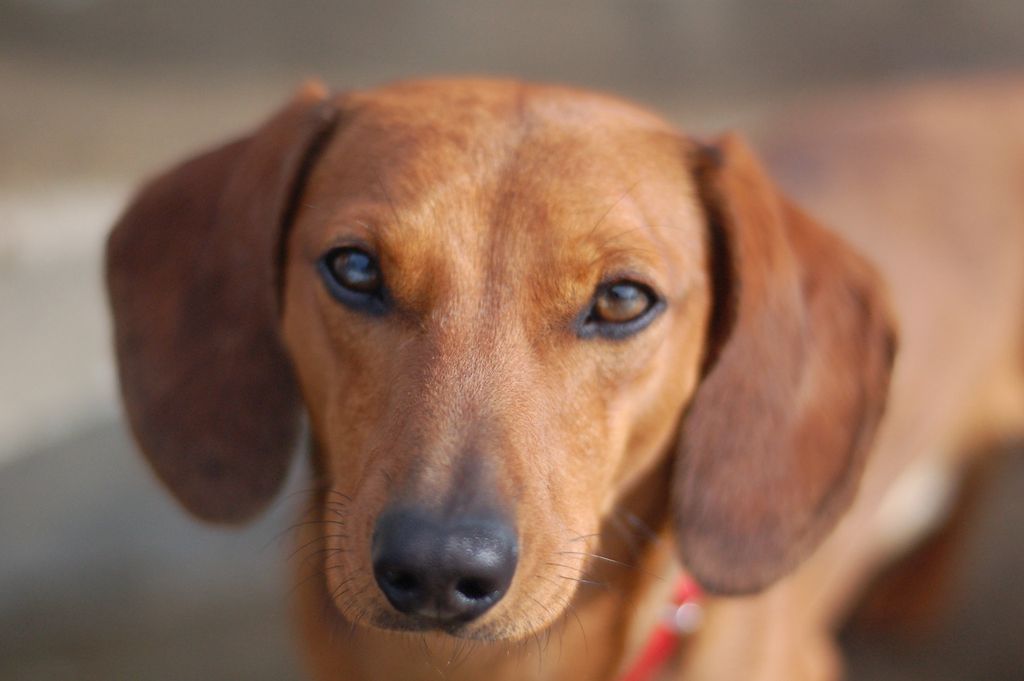
Lump was a dachshund brought to Picasso's home by the photographer David Douglas Duncan in April 1957. He became part of life at Villa La Californie near Cannes and appears in photographs and in Picasso's reworking of Velázquez's Las Meninas. One work made expressly for him survives in a public collection: Picasso painted and dedicated a dinner plate to the dog on the day of Duncan's visit. The legacy pablopicasso.net Dog page identified a separate black-outline reproduction as Lump. Its original sheet, date and medium have not been established by the collection records used here.[1][2][3]
The distinction is not pedantic. A person looking for “Picasso dog” may mean the thin line drawing, the painted plate, a small figure in Las Meninas, or a photograph of Picasso holding Lump. They are not versions of a single work. The plate belongs to the Harry Ransom Center in Texas; paintings in the Las Meninas group belong to the Museu Picasso in Barcelona; many photographs are works by Duncan and other photographers. Each has its own maker, date, material and rights. Understanding Lump means following those separate traces without turning every dachshund-shaped image into one securely catalogued Picasso drawing.[1][2][3][4]
At a Glance
- Subject: Lump, the dachshund brought by David Douglas Duncan
- At Picasso’s home: From April 1957 at Villa La Californie
- Documented image: A dinner plate Picasso painted and dedicated to the dog
Contents
- How Lump came to La Californie
- The plate made for Lump on 19 April 1957
- Lump in Picasso's Las Meninas
- A dog among other animals and other dogs
- What can be said about the famous Dog outline?
How Lump came to La Californie
Duncan was an American photojournalist whose friendship with Picasso began before Lump arrived. According to the Harry Ransom Center, Robert Capa encouraged an introduction, and Duncan first visited Picasso on 8 February 1956. He returned to the Cannes villa in April 1957 with his dachshund. Duncan later recalled that after exploring the house, Lump stayed. That is a participant's account, supported in its broad outline by the photographs of the dog at La Californie and elsewhere in Picasso's circle. It does not make Duncan's dog an object Picasso had owned from puppyhood, nor does it prove every colourful detail attached to the visit in later retellings.[1][5]
The house mattered to the story. La Californie was both a residence and a place of work; a visiting photographer could observe Picasso among household members, animals, art materials and finished paintings. Duncan's images are valuable precisely because they record such settings. The Musée national Picasso-Paris catalogues his photograph of Jacqueline Roque with Lump at La Californie in 1957 and another of Picasso with Lump in the courtyard of the Madoura pottery workshop at Vallauris. These are not studio portraits of the dog alone. They show how a small animal moved between domestic and artistic spaces and how people around Picasso interacted with him.[5]
The photographs also give Duncan an active role in the story. He was not merely the man who delivered a dog to a famous painter. He chose the scenes, made the negatives and later selected images for books about Picasso. His archive includes prints and negatives held in Austin; the Paris museum holds separate photographs and later prints. A photograph of Picasso and Lump is therefore both evidence about their relationship and a work with its own author. Even when it shows a Picasso artwork, the photograph does not become free to reproduce with that artwork.[1][2][5]
This distinction helps explain why a photograph can be strong evidence for one claim and weak evidence for another. Duncan's documented plate sequence establishes that Lump was present as Picasso worked on a particular object. A photograph of Lump beside Jacqueline establishes another encounter in the same household. Neither, without a matching catalogue or original sheet, dates an unrelated line drawing that later circulated as Dog. Photographic testimony also has a point of view: the camera shows what Duncan selected, not every hour the dog spent at La Californie. The archive is unusually rich, but it should enlarge the account rather than turn a few charming frames into an unbroken diary.[1][2][5]
The plate made for Lump on 19 April 1957
The most securely documented Picasso image of Lump is a small plate. The Harry Ransom Center says Picasso painted it at lunch on 19 April 1957, using an ordinary commercial dinner plate rather than one of his purpose-made Madoura ceramics. The diameter is 24 centimetres; black glaze forms the dog's image; a dedication, signature and date were added. Duncan kept it and donated it to the Ransom Center in 2011. In the collection's later German exhibition credit, it is named Pour Lump—“For Lump”—with object number 2011.17.1. The title and inscription make the intended subject unusually clear.[1][6]
The circumstances invite a tempting anecdote about effortless genius: a dog appears, Picasso reaches for a plate and a portrait is instantly complete. The Ransom Center reports Duncan's account of the lunch, and photographs document the episode, but the work deserves more than an origin story. An elongated body, short legs and conspicuous ears were enough to make this specific dachshund legible within a domestic object. The plate could be shown to the animal and passed to the photographer; it belonged to a social exchange, not a gallery commission. Its shape and use matter as much as its apparent spontaneity. Picasso was making an image for the dog in a material already associated with feeding him.[1][2]
The Musée national Picasso-Paris catalogues one of Duncan's photographs as Picasso drawing Lump on a plate at La Californie on 19 April 1957. The museum lists the photograph as a digital inkjet print made in 2013 from the original negative. Those two dates do different jobs: 1957 is the event depicted; 2013 is the date of the particular print catalogued. The Ransom Center's plate is a third object, made in 1957. Keeping the plate, negative and later print distinct avoids a common mistake in describing photographic evidence of an artwork.[1][2]
The plate also complicates the label “Picasso ceramic.” He worked intensively with ceramics at Vallauris, and Lump is photographed at the Madoura workshop. But this particular object was, according to its holder, a piece of commercial tableware painted at home. Calling it a fired Picasso studio ceramic would imply a production history the record does not give. Nor should the dedication be recast as a “reward” to Duncan for giving Picasso the dog. Picasso handed the object to the photographer, yet its inscription names Lump; the motive beyond the event is not known with that precision.[1][5]
Watch: Pablo Picasso
Explore Picasso through five videos from museums, broadcasters and art educators.
Picasso’s Guernica: Great Art Explained
Explore the composition and historical setting of Picasso’s best-known response to war.
Watch on YouTubeLump in Picasso's Las Meninas
In the months after Lump arrived, Picasso undertook a long series of paintings after Diego Velázquez's Las Meninas. Velázquez's large dog rests in the foreground of the seventeenth-century painting. Picasso could have omitted it or retained a large mastiff. Instead, in his 1957 variations, a small dachshund takes its place. The Museu Picasso Barcelona explicitly identifies this dog as Lump. The substitution draws the artist's present household into an older court image: the animal is recognisably a dog, but changes its scale, body and relation to the figures around it.[3][4]
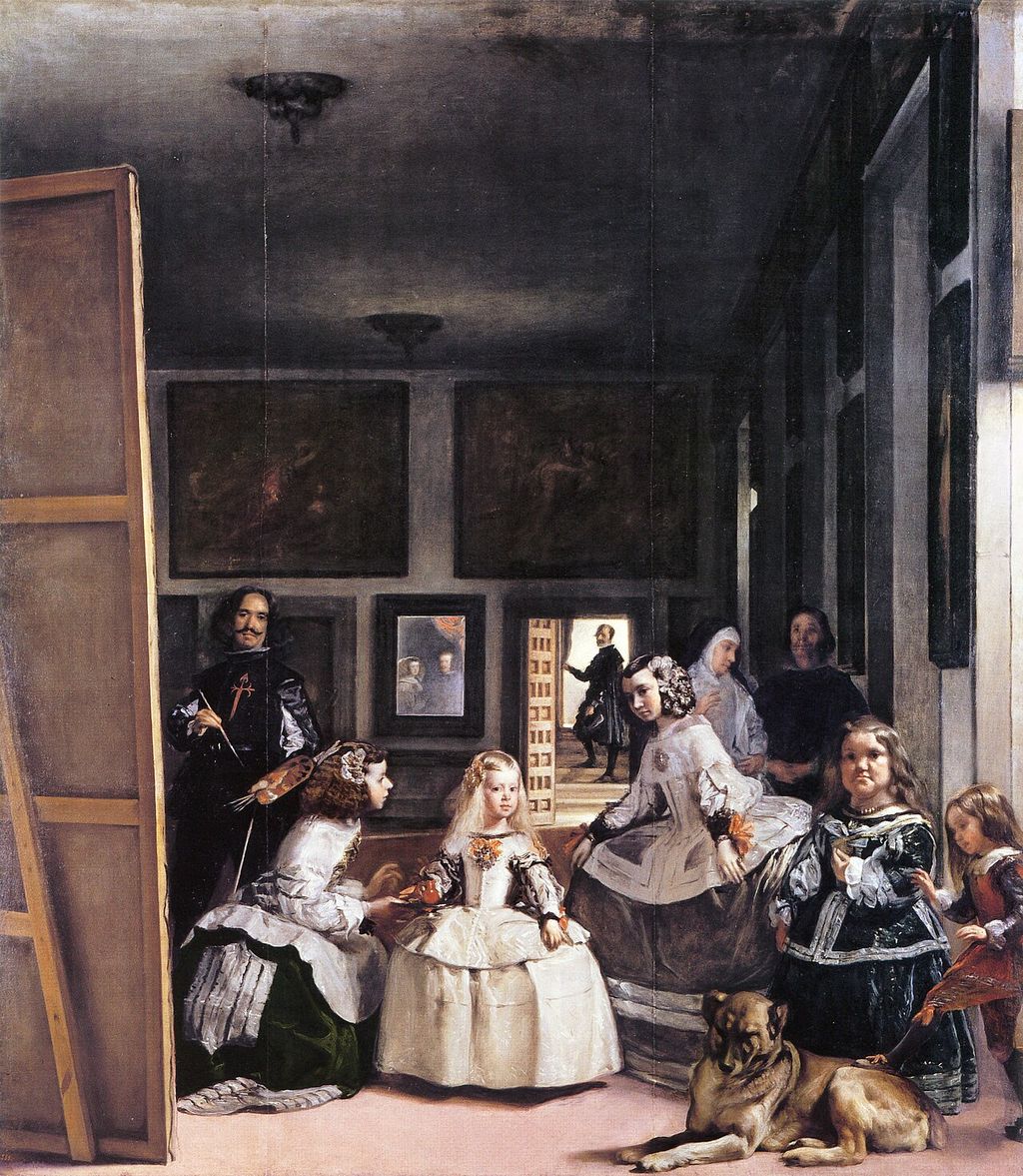
One Barcelona object makes the comparison exact. Las Meninas (Isabel de Velasco, María Bárbola y Nicolasito Pertusato), painted in Cannes on 24 October 1957, is an oil on canvas measuring 130 by 96 centimetres, catalogue number MPB 70.476. The museum says the dog in this picture underwent the greatest transformation: Velázquez's mastiff became the small Lump familiar at La Californie. This is not simply “a Picasso painting with a dog.” It is a pointed change to a specific element in a predecessor's composition. Its date also places the image about six months after Duncan's April visit, not on the day of the dedicated plate.[3]
Barcelona's account of the larger Las Meninas group dates Picasso's work from August through December 1957 and records his 1968 gift of the series to the museum. A different Barcelona essay identifies Lump in the opening ensemble painting, MPB 70.433, and places a Duncan photograph of Picasso and Lump beside the comparison. These records support the dog identification in specific works. They do not license the claim that Lump appears in every canvas of the group. A painting devoted to one attendant, a variation on the whole room and a portrait of the dog on a plate answer different visual questions, even though the same animal links them.[3][4]
The change from mastiff to dachshund is also more than a joke about size. Velázquez's dog helps establish the inhabited space at the viewer's feet; Picasso's smaller, livelier form alters the scale and energy of that foreground. It lets an everyday inhabitant of La Californie enter a Spanish painting Picasso had studied for decades. The museum's identification gives the biographical basis for that reading. Claims that Lump “symbolises” a particular emotion or political idea would need further evidence; the visible transformation and the documented household connection already make the detail significant.[3][4]
A dog among other animals and other dogs
Lump was not Picasso's only canine companion. A Paris museum photograph catalogues Jan the boxer, Lump the dachshund and Perro the Dalmatian together at La Californie, approximately between 1957 and 1961. André Gomès photographed Lump lying before a canvas at the Château de Vauvenargues, although the Paris record does not provide a precise date for the negative. Such records make it possible to trace the dog beyond one lunch and one villa without guessing the span of his residence from a single caption.[7][8]
Other dogs entered Picasso's work in ways different from Lump. Auction research identifies Perro as the Dalmatian pictured in a group of works at Vauvenargues in 1959, while a 1962 Femme au chien depicts Jacqueline with the Afghan hound Kaboul. The precise object records matter because a dog beside Jacqueline in a later painting is not automatically Lump. Body shape, date, person and location all help make the distinction. The Museo Picasso Málaga describes dogs among a much broader bestiary of birds, cats, bulls, horses and goats in Picasso's art, but that theme does not turn every animal into a pet portrait.[9][10][11]
Picasso's animal subjects could be domestic observations, components of a larger human scene, ceramic shapes or substitutions in an art-historical dialogue. Lump crossed several of those categories. The plate treats him as a named recipient; the photographs show him as a participant in the household; Las Meninas makes him a conspicuous alteration to Velázquez's composition. These roles are related but cannot be collapsed into a single image or a single story of affection. They show how a familiar body could take different visual tasks as Picasso moved among media and subjects.[1][3][5]
What can be said about the famous Dog outline?
The reproduction on the legacy pablopicasso.net Dog page shows a long, low dog with pendant ears and a raised tail, accompanied by a Picasso-style signature. That page calls the subject Lump. The image's economy is easy to see: the narrow body is carried by an almost horizontal stroke, while a few turns establish the head, legs and tail. As a visual image, it demonstrates how a dog can be recognised from contour and proportion without shaded fur or a detailed setting.
The question of which original object that image reproduces is harder. The old page supplies no dated sheet, medium, measurements, present holder or catalogue number for the outline. The 1957 plate is certainly dedicated to Lump, and Barcelona identifies him in Las Meninas; neither source identifies that separate outline as the original for its reproduction. A dachshund form and a signature visible in a small digital image are not enough to establish the underlying object's provenance. It would be misleading to give the outline the plate's date or call it a pencil drawing just because that label is familiar online.[1][3]
This uncertainty does not make the outline irrelevant. It is what many readers have in mind when they ask about Picasso's dog, and its reductive contour offers a useful contrast with the decorated plate and the painted Las Meninas dogs. But close visual description is not authentication. Until a catalogue or holding collection identifies the original, the responsible account is two-part: the image circulates under those names, while the securely documented works and photographs establish Lump's place in Picasso's life and art. Anyone considering a print or supposed original should ask for the underlying object record, not rely on a sales caption or the popularity of the reproduction.[1][3]
Lump's history is unusually vivid because a photographer was there, kept the dedicated object and left a substantial archive. The evidence permits a clear sequence: Duncan brought the dachshund to La Californie in April 1957; Picasso painted a plate for him on the nineteenth; photographers recorded the dog with Picasso and Jacqueline; and Barcelona's Las Meninas variations brought a dachshund identified as Lump into an older masterpiece later that year. The famous outline may belong in that wider story, but its exact original remains to be verified. The distinction lets a reader enjoy the image without confusing its circulation with the documented plate, paintings and photographic record.[1][2][3][5]
Discussion
Use the evidence and your own close looking to explain your view. These are editorial prompts, not reader comments.
Reader Insights
What does the dedicated dinner plate show that the familiar dog outline cannot?
Which detail in Duncan’s account can be checked against an object record?
How should a dachshund photograph be labelled so it is not mistaken for Lump?
Join the Conversation
Which reading best fits the evidence?
References
- Harry Ransom Center, Plate Painted by Pablo Picasso Donated to Ransom Center by Photojournalist Duncan; University of Texas account and object description.
- Musée national Picasso-Paris, David Douglas Duncan photograph of Picasso making Lump's plate, DunDav053.
- Museu Picasso Barcelona, Las Meninas (Isabel de Velasco, María Bárbola y Nicolasito Pertusato), MPB 70.476.
- Museu Picasso Barcelona, The Inhabitants of the Museum: Las Meninas and Catalan original.
- Musée national Picasso-Paris, Duncan's Jacqueline Roque and Lump photograph, APPH699; Picasso and Lump at Madoura, APPH701.
- Kunsthalle Bremen, 2026 press materials and HRC object credit for Pour Lump.
- Musée national Picasso-Paris, Jan, Lump and Perro at La Californie, APPH7440.
- Musée national Picasso-Paris, André Gomès photograph of Lump at Vauvenargues, APPH919.
- Christie's, Le chien dalmate and the Perro series.
- Christie's, Femme au chien and Kaboul.
- Museo Picasso Málaga, Spanish catalogue entry for Tres palomas and Picasso's animal subjects.
Image Credits
- kmoney56, 4 February 2007. CC BY-SA 2.0. Source: Wikimedia Commons / Flickr. Proportionally resized to 1024px; no crop. Derivative under CC BY-SA 2.0. Source record. Licence.
- Diego Velázquez. Public domain. Source: Wikimedia Commons. Resized to 1024px; no crop. Source record. Licence.

