 by Tom Gurney
Tom Gurney BSc (Hons) is an art history expert with over 20 years experience
Published on August 14, 2026 / Updated on August 14, 2026
Email: tomgurney1@gmail.com / Phone: +44 7429 011000
Paul Gauguin Paintings: Introduction
Paul Gauguin's paintings do not form a simple march from subdued Impressionism to brilliant Pacific colour. He changed supports, returned to old figures, borrowed and displaced other artworks, and rebuilt places in memory. A canvas made in France might reorganise Tahitian motifs; one painted at Hiva Oa could contain a portrait remembered from Brittany. Geography matters, but it never explains the pictures by itself.
At a Glance
- ArtistPaul Gauguin
- GuidePaul Gauguin Paintings
- FocusPaintings
- Key topicsBefore the red fields: surface and constructed place; Brittany and Arles: paintings made from belief and memory; First Tahiti: visible people, imported sources and invented settings; Return, repetition and the second Tahiti period
- OverviewPaul Gauguin's paintings do not form a simple march from subdued Impressionism to brilliant Pacific colour.
Contents
- Paul Gauguin Paintings: Introduction
- Before the red fields: surface and constructed place
- Brittany and Arles: paintings made from belief and memory
- First Tahiti: visible people, imported sources and invented settings
- Return, repetition and the second Tahiti period
- Hiva Oa: late painting without a decline story
- Supports and recurring figures
- Choosing a way through the paintings
Browse Paul Gauguin Paintings
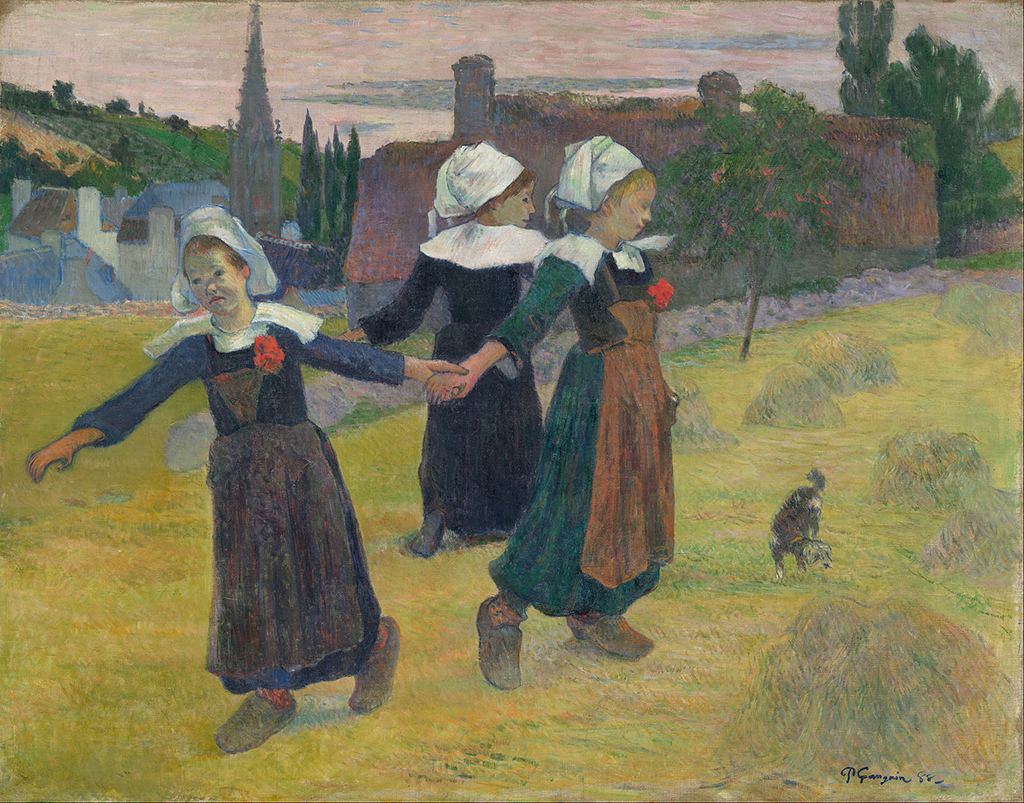
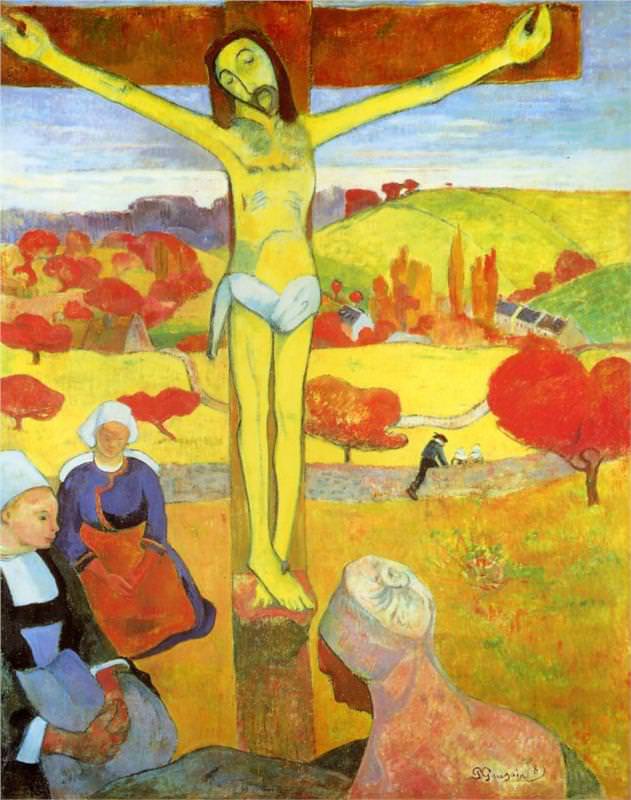
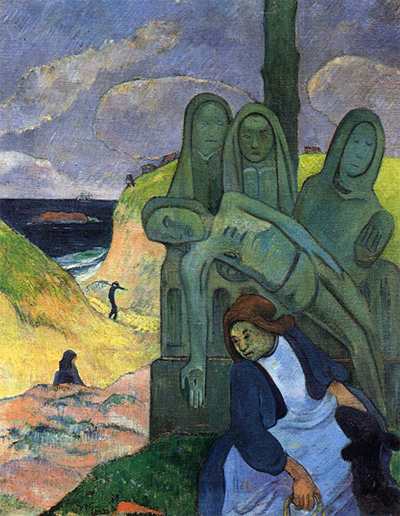
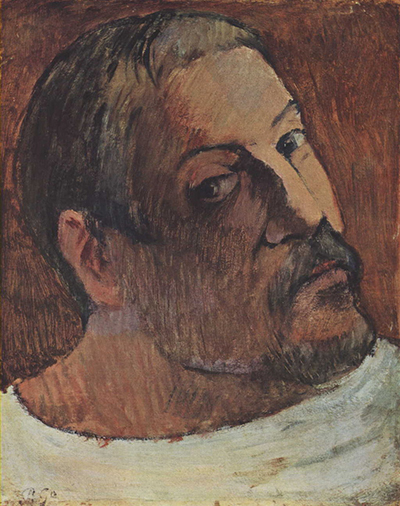
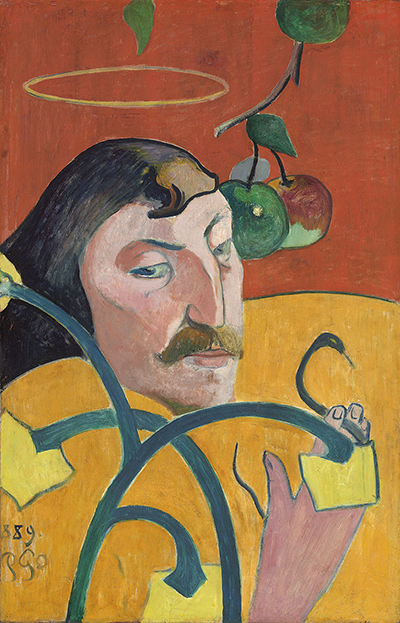
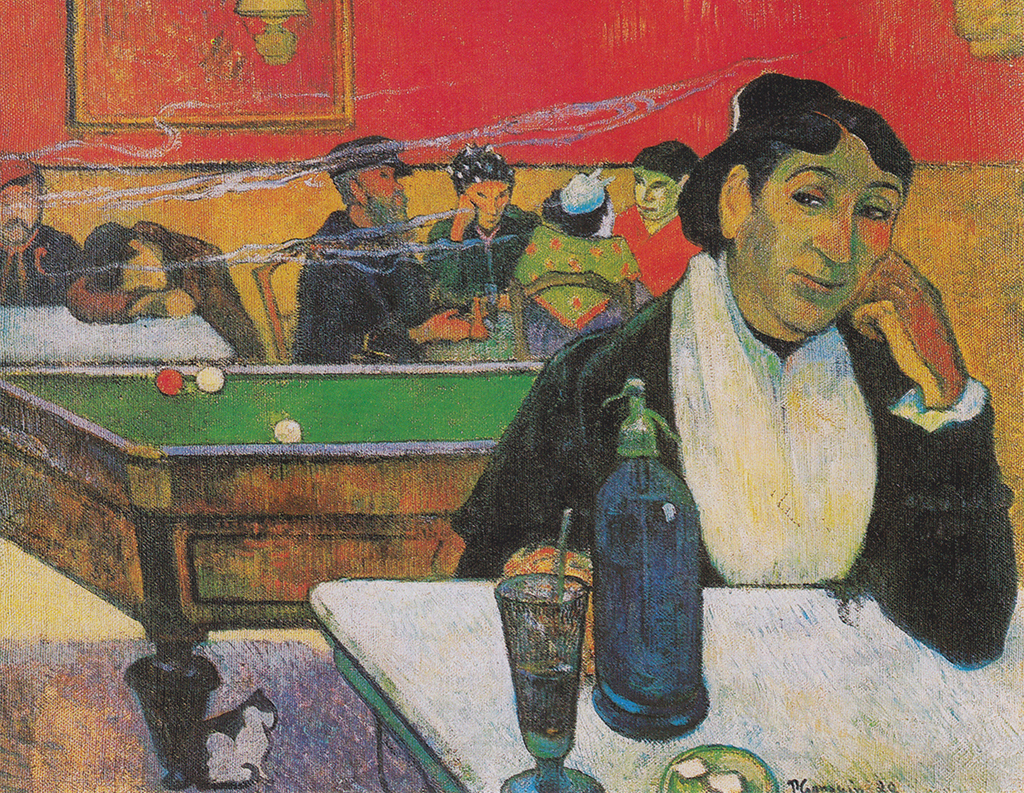
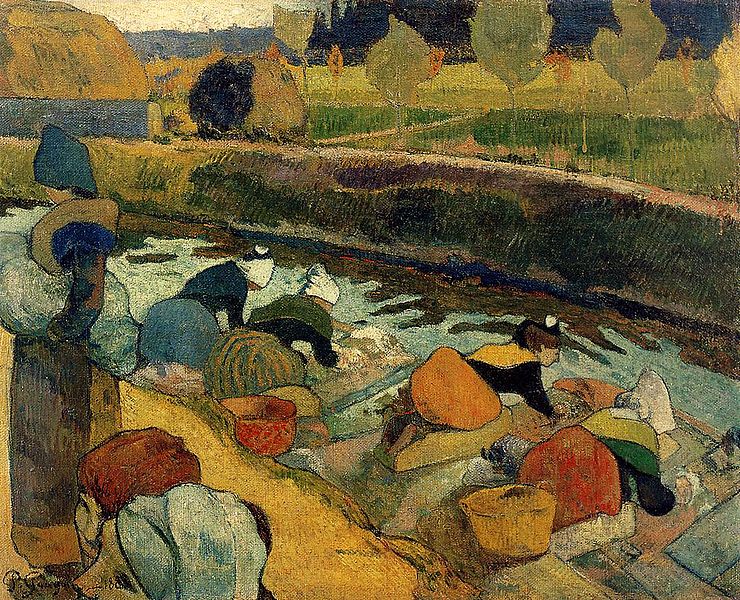
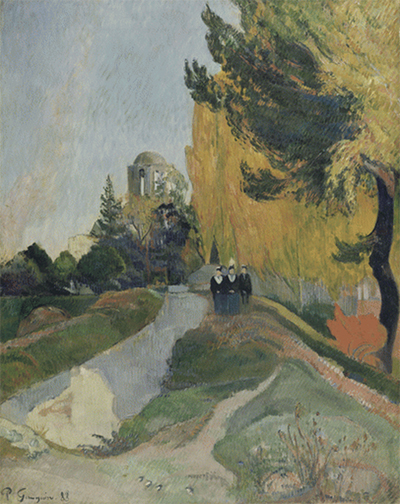
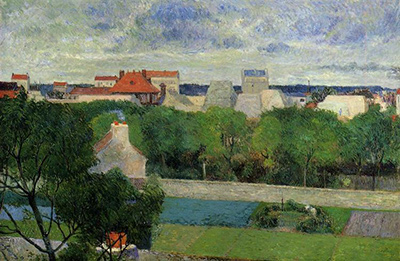
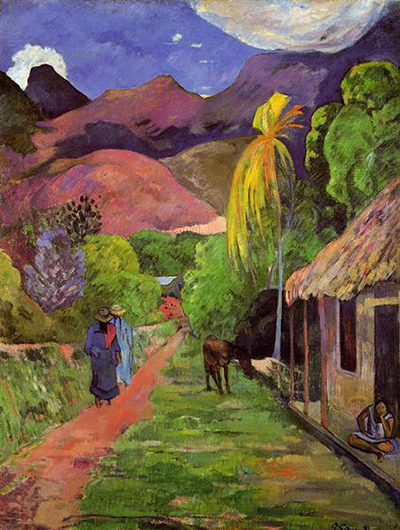
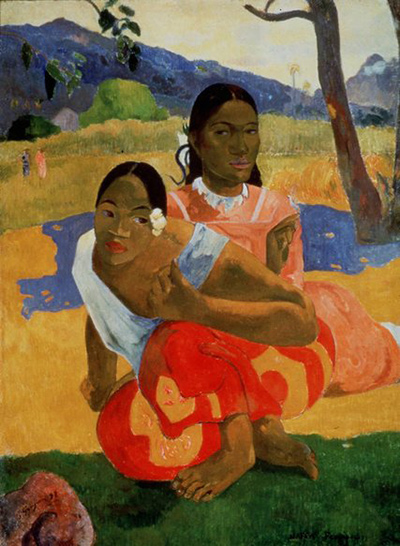
 in Detail Paul Gauguin.jpg)
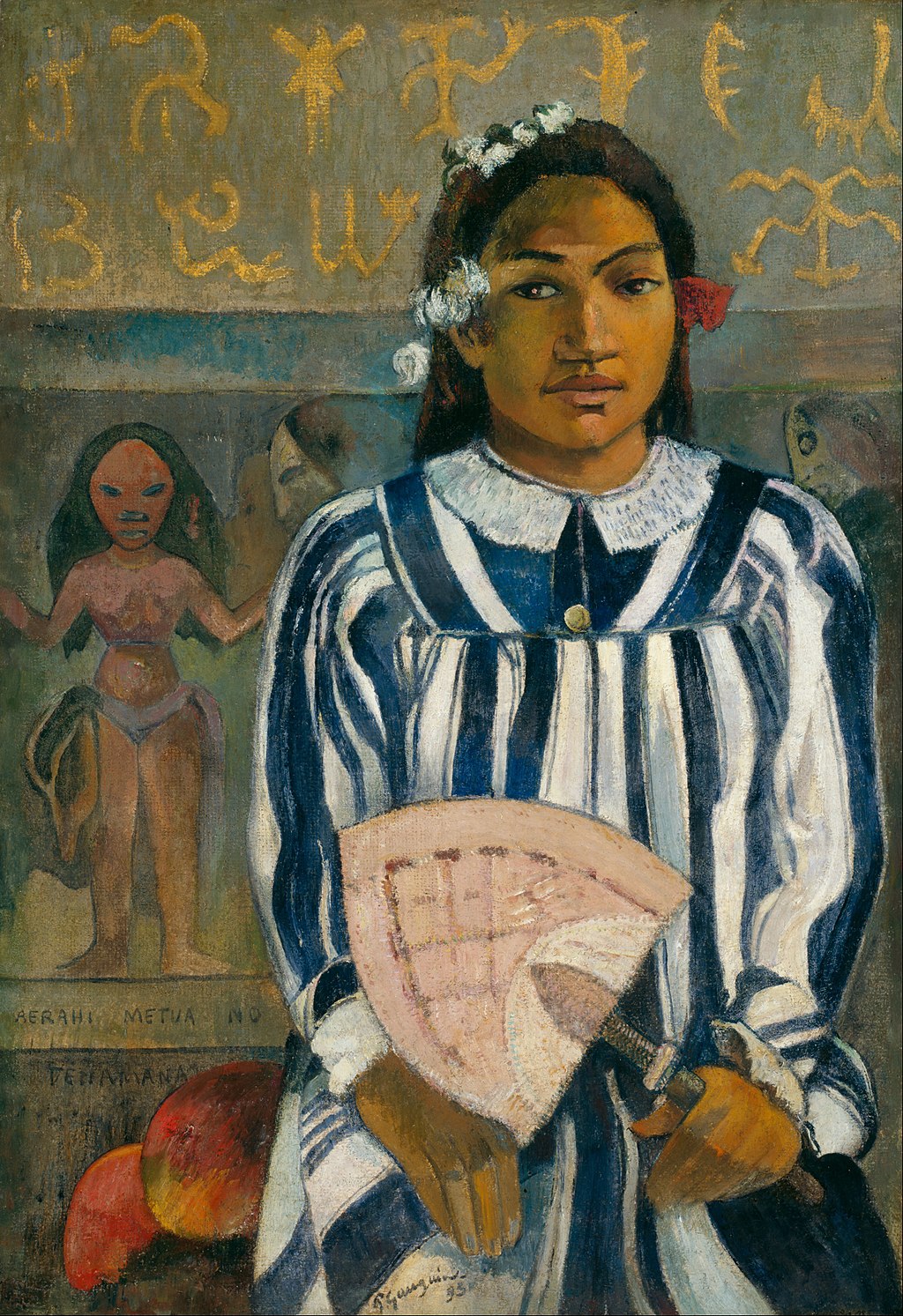
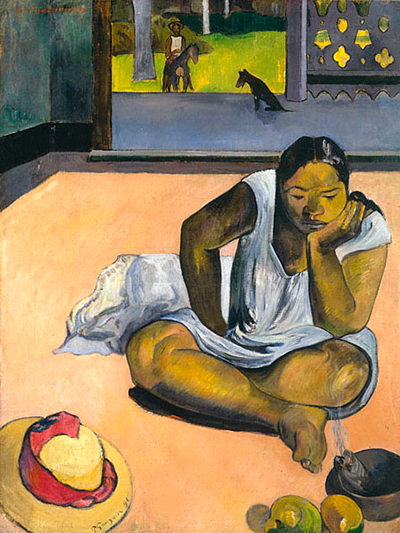
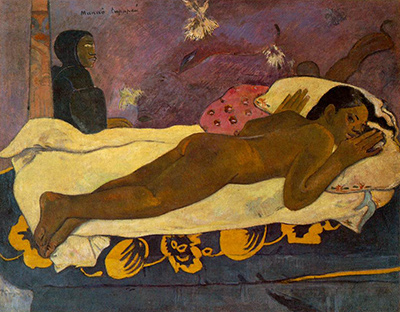
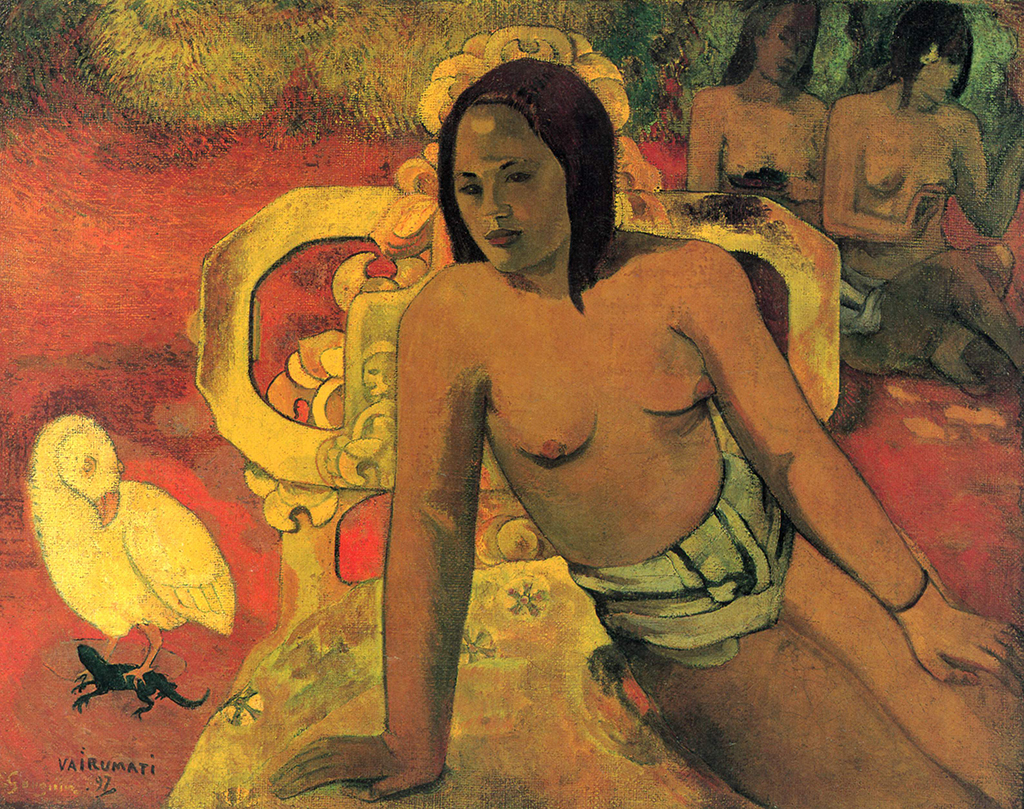
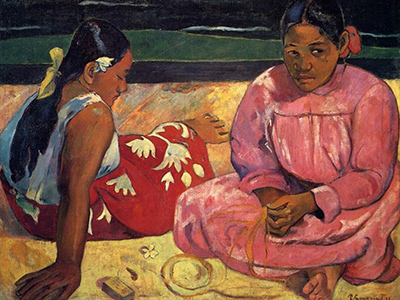
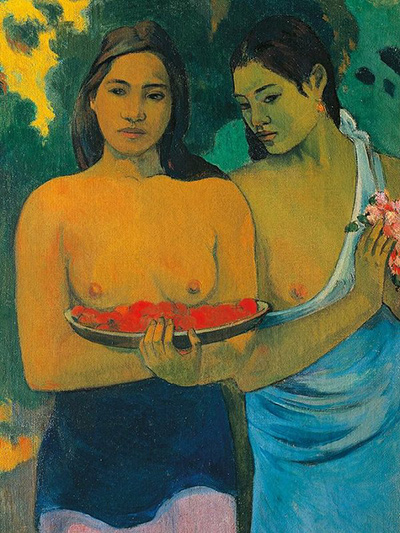
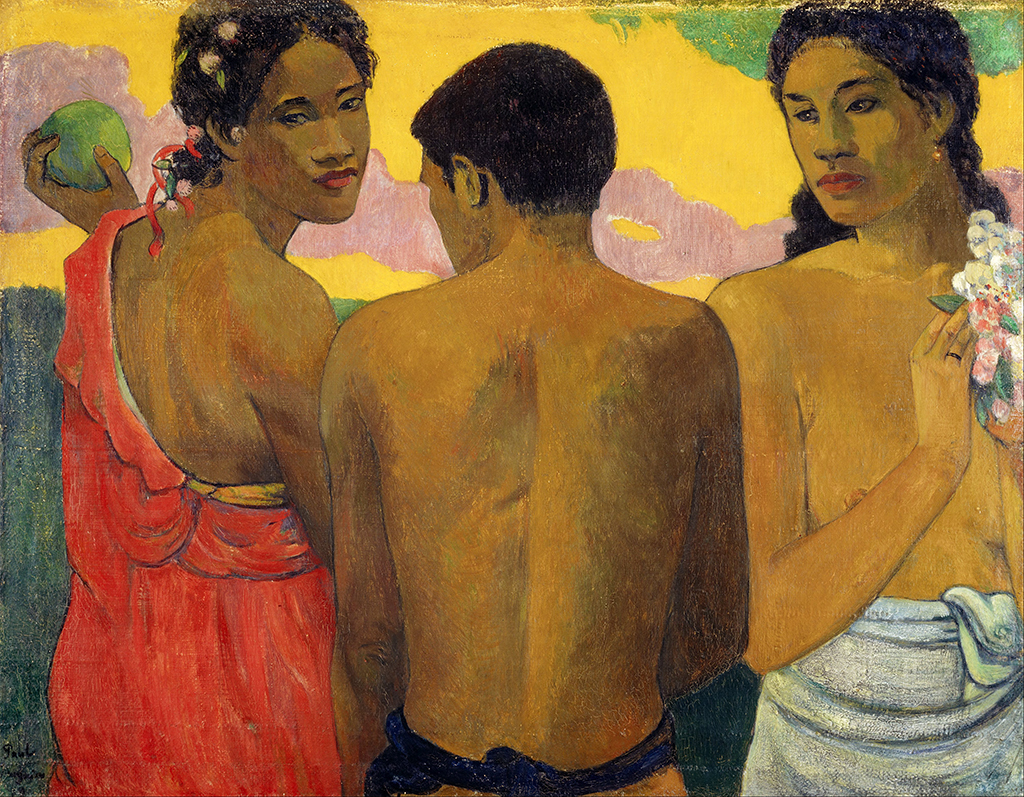
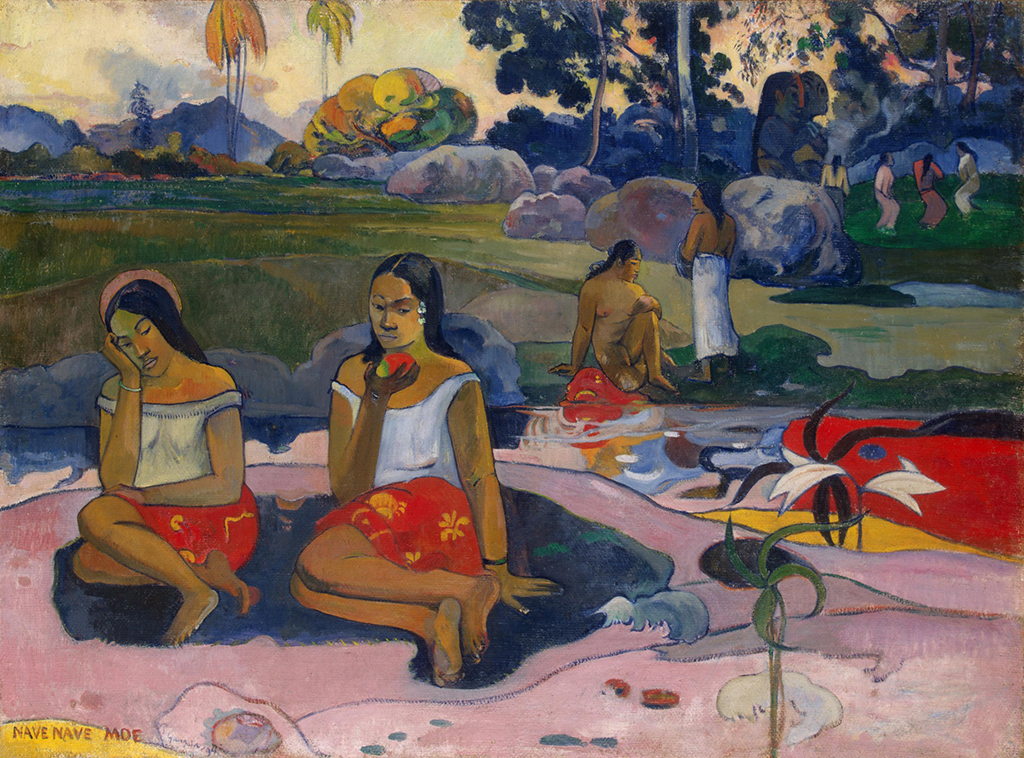
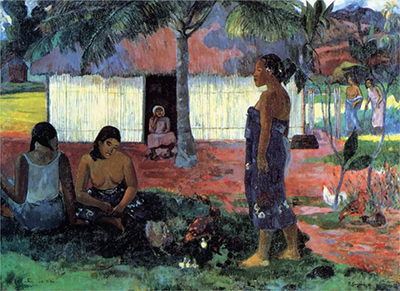
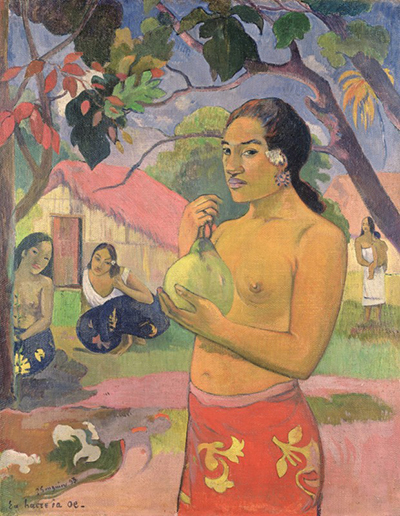
 Paul Gauguin.jpg)
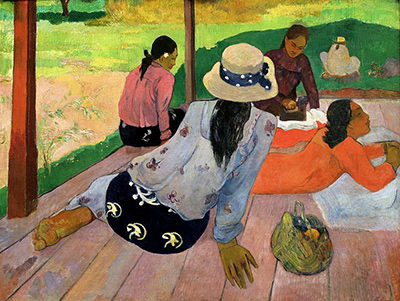
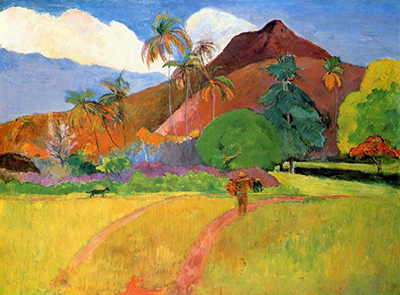
 Paul Gauguin.jpg)
 in Detail Paul Gauguin.jpg)
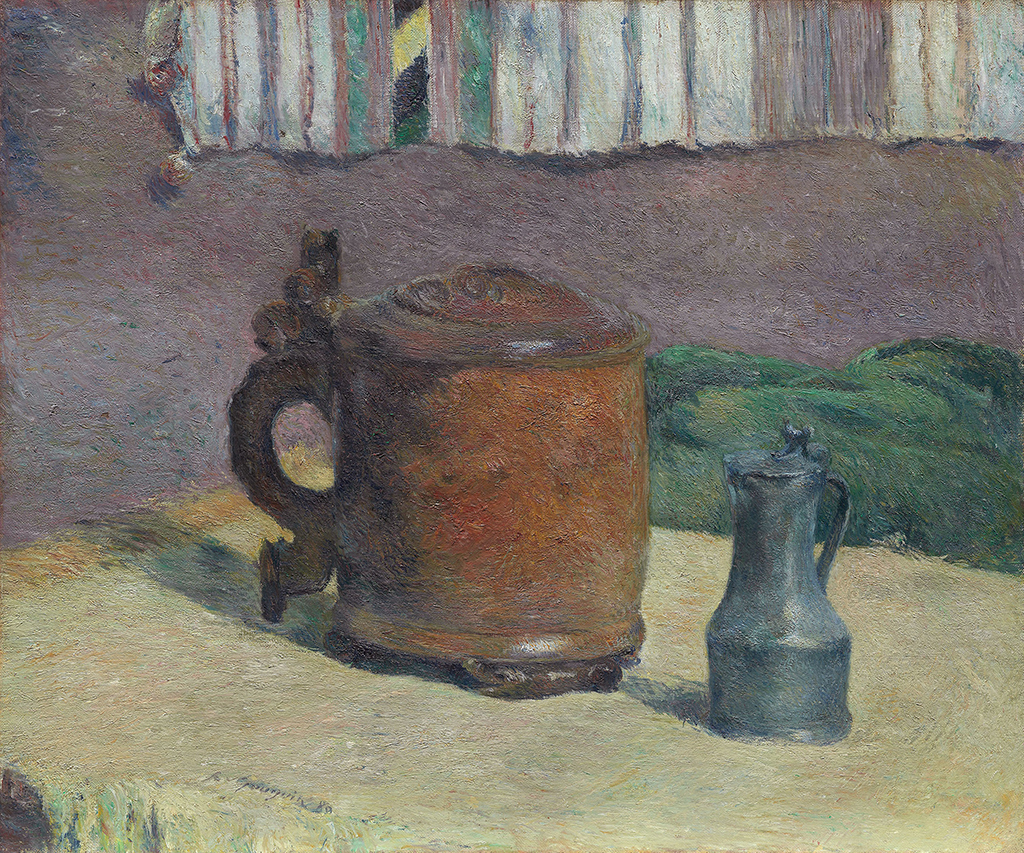
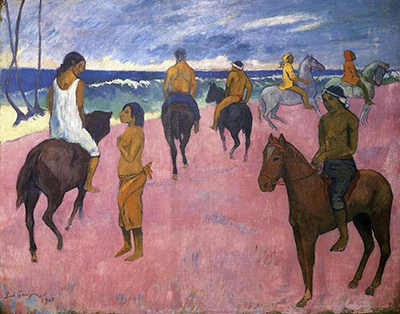
This is therefore a selective map, not a catalogue or ranking. The National Gallery of Art's major 1988 retrospective reproduced more than 200 works, but that total crossed painting, sculpture, print and drawing. [1] The current Wildenstein Plattner Institute catalogue is an essential guide to paintings dated 1889–1903, not a count for Gauguin's whole career. [2] The works below earn their place because each opens a distinct problem and a useful route into deeper evidence.
Before the red fields: surface and constructed place
The Art Institute of Chicago's Still Life: Wood Tankard and Metal Pitcher of 1880 is a productive place to begin. Its wooden vessel, small metal pitcher and worn tabletop are deliberately ordinary. Gauguin worked on linen canvas, adjusted the objects as he painted and left a surface built from active strokes rather than seamless finish. [3] [4] The picture makes early facture and revision visible before either Brittany or Tahiti can dominate the story.
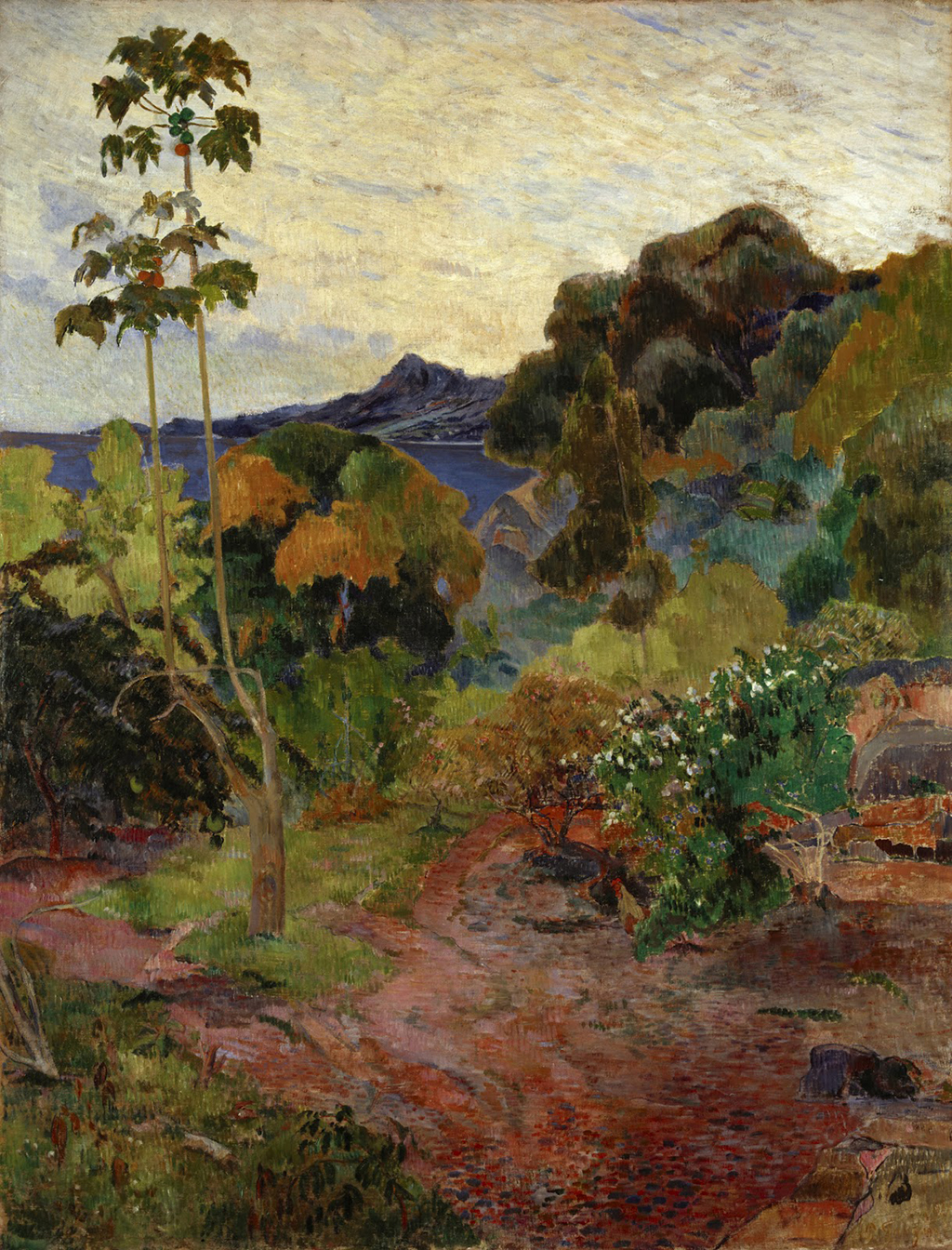
Seven years later, the upright Martinique Landscape now in Edinburgh shows a more forceful control of place. A path, tall papaya and enlarged mountain organise the vertical canvas, while short hatched strokes gather into larger colour zones. Institutional research locates the viewpoint above colonial Saint-Pierre, a busy city Gauguin removed from the scene. [5] The apparent remoteness is consequently a pictorial decision, not evidence that Martinique stood outside modern history.
These two paintings resist the myth of instant transformation. Gauguin's early practice developed through material choices, collection knowledge, travel and recomposition. A humble still life and an altered Caribbean prospect ask different questions, yet both show observation being reorganised on the canvas.
Brittany and Arles: paintings made from belief and memory
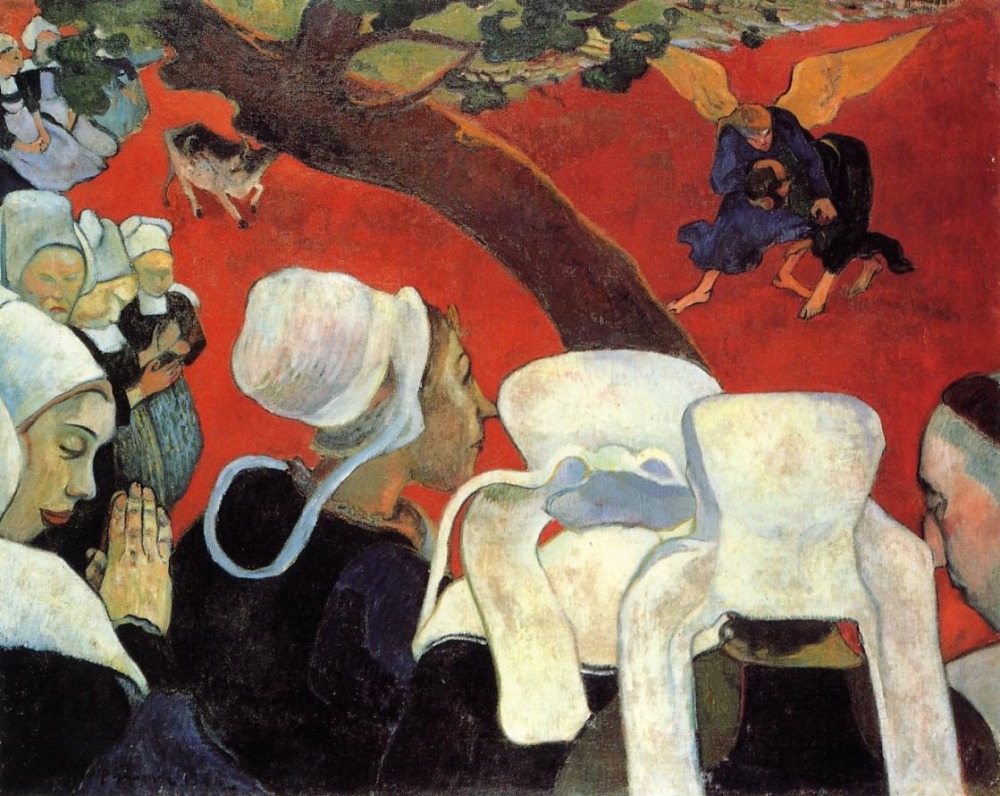
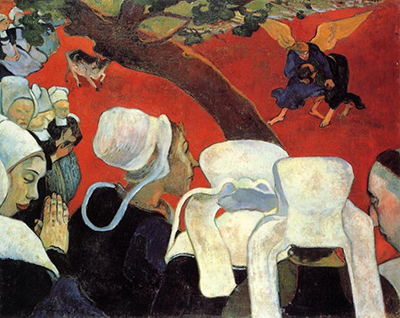
In Vision of the Sermon of 1888, Breton worshippers occupy the foreground while Jacob and the angel wrestle beyond a diagonal tree on a flat red field. The National Galleries of Scotland describes Gauguin's attempt to combine the observed and imagined; his contemporary letter called it a religious picture. [6] The route into the painting is spatial: how can one surface hold people in church and the vision produced by what they have heard?
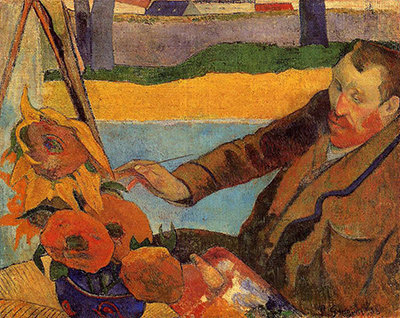
At Arles later that year, memory became a different tool. Vincent van Gogh Painting Sunflowers presents Van Gogh at his easel with five flowers, yet sunflowers were not blooming in December. Current Van Gogh Museum scholarship relates them to the still lifes Van Gogh had made in August and to the two artists' argument over working from observation or imagination. [7] The portrait is neither a neutral studio record nor a simple tribute. It stages one painter through another painter's remembered motif.
The Yellow Christ of 1889 gives unnatural colour a local, material anchor. Its crucified figure derives from the polychrome wood crucifix at the Trémalo chapel near Pont-Aven, while yellow connects body, harvested fields and surrounding Breton landscape. [8] Rather than using “Symbolism” as a complete explanation, the dedicated route asks how source object, worship, season and painted colour interact.
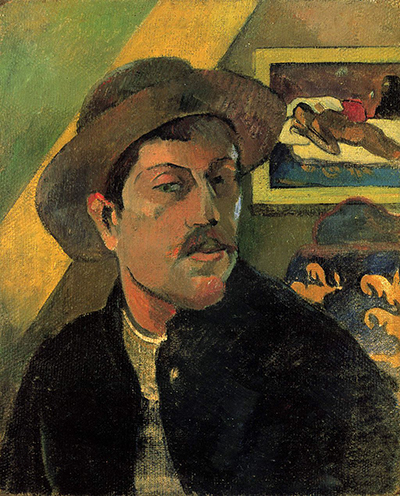
Gauguin then placed that canvas inside Self-Portrait with the Yellow Christ, dated 1890–91 by the Musée d'Orsay. His own head stands between a reversed fragment of the painted Christ and an anthropomorphic ceramic pot. [9] Three artworks occupy one small picture. Self-portraiture becomes curation: Gauguin uses what he has already made to construct the artist he wants viewers to encounter.
First Tahiti: visible people, imported sources and invented settings
Gauguin travelled to Tahiti in 1891 under French colonial rule. The resulting paintings cannot be treated as transparent records of an untouched culture. They combine visible dress and landscape with imported reproductions, European genres, Asian objects, repeated figures and the artist's own stories. Object-specific evidence is the best defence against turning that mixture into one exotic formula.
In Tahitian Women on the Beach, dated November–December 1891 by the Musée d'Orsay, two seated figures are pressed forward by narrow bands of shore and water. One wears a floral wrap; the other a long-sleeved mission dress. [10] Clothing places the scene inside a changed colonial present, while lowered gazes and adjacent bodies withhold the sitters' identities and relationship. The painting offers posture, fabric and pictorial distance—not access to two inner lives.
Ia Orana Maria (Hail Mary), also of 1891, converts a Christian revelation into a Polynesian setting. The Met identifies the oil painting and its title, while current catalogue research follows Gauguin's description of an angel revealing Mary and the Christ child to two women. [11] The figures and gestures also lead beyond Tahiti to sources including a photograph of a Borobudur relief. The useful question is not which culture “owns” the finished scene, but how its religious authority is assembled from unequal and widely separated materials.
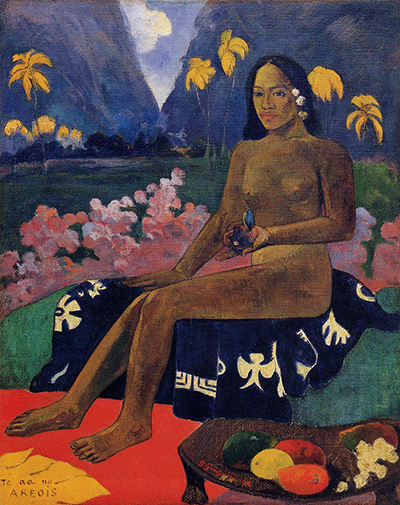
MoMA's The Seed of the Areoi of 1892 makes such combination especially visible. It is painted on burlap, and the seated figure's pose has been connected by the museum to Egyptian, Japanese, Javanese and French models. [12] Listing those sources is only the start. Their coexistence shows that a picture presented to European viewers as Polynesian was being built through a transregional image archive controlled by Gauguin.
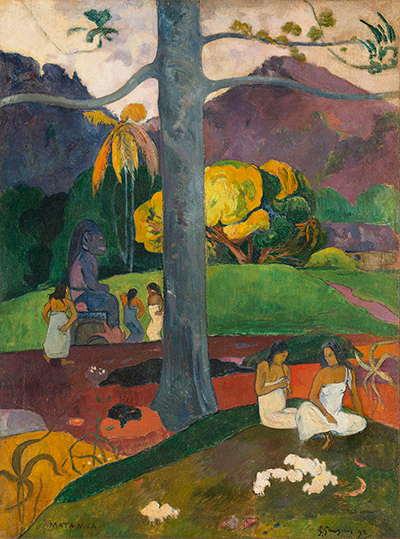
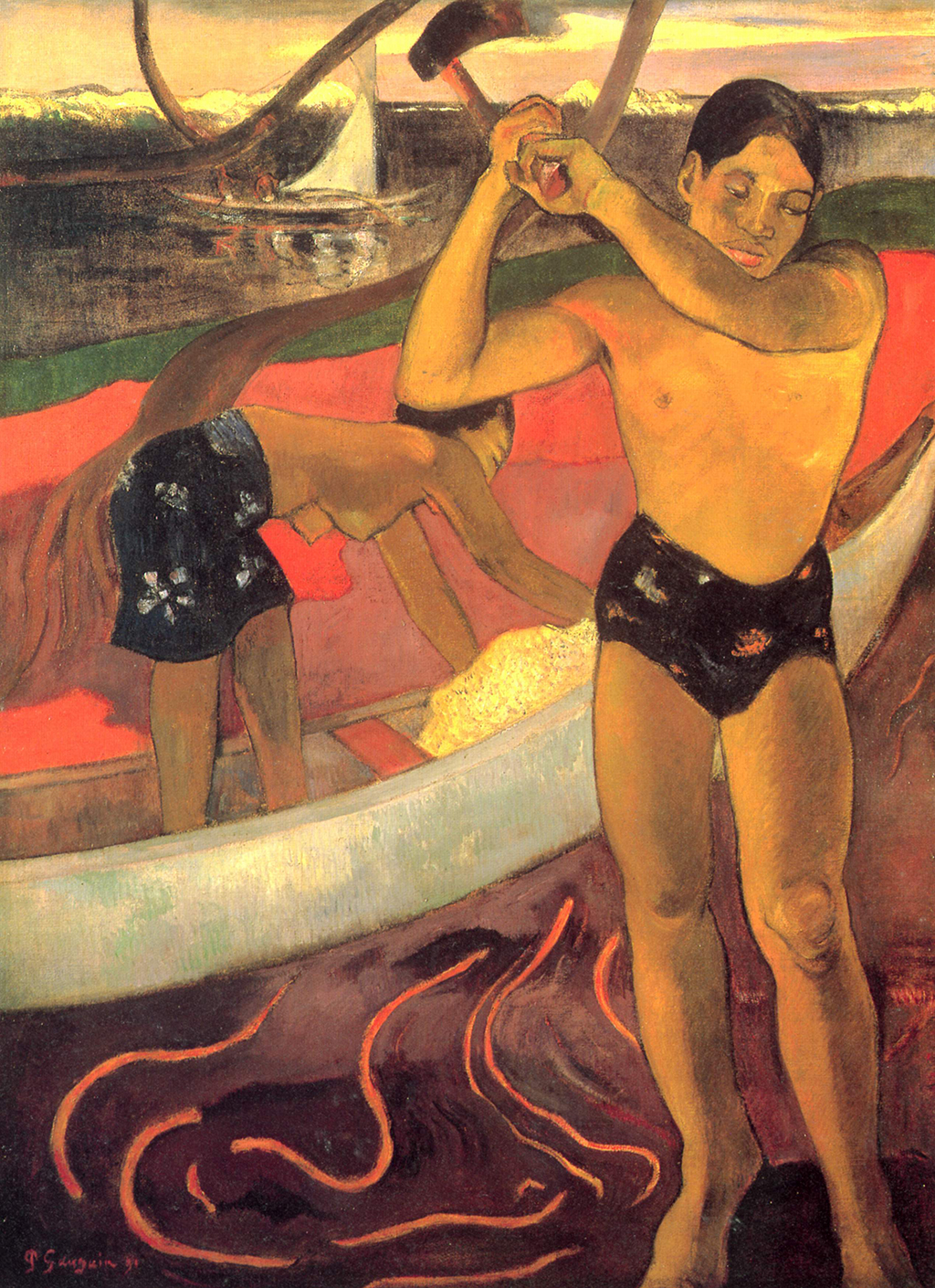
Landscape could be equally unstable. In the Pushkin painting Matamoe, an axe-bearing worker occupies the middle distance while peacocks cross the foreground. The canvas was exhibited as Matamoe (Mort) and also circulated under titles centred on the woodcutter, birds or landscape. [13] [14] Those labels redistribute attention rather than solve the scene. The strongest route follows the repeated worker motif and keeps title history separate from an unsupported claim that one word decodes every painted element.
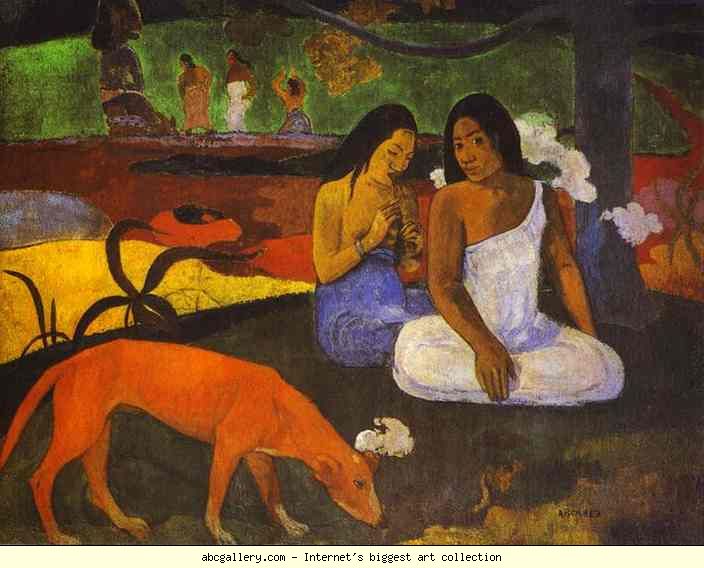
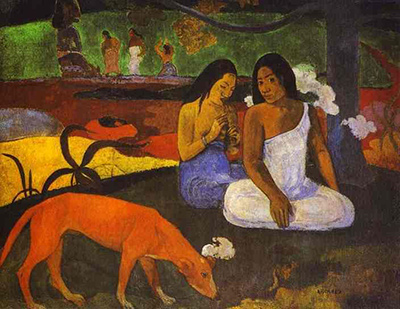
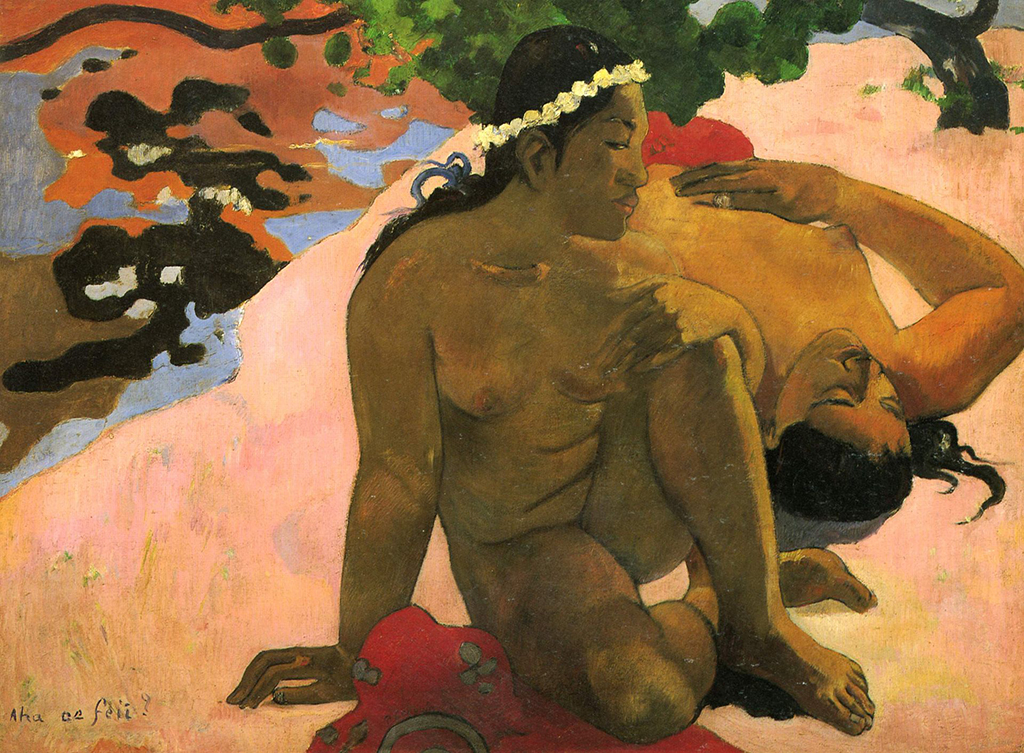
In Arearea, two foreground figures, a red dog and broad green, yellow and red planes lead to a small ritual group farther back. The Musée d'Orsay explicitly describes the sacred episode as invented and records the work's 1892 date. [15] Gauguin reused recognisable figures and surroundings, then made their combination strange. The painting is most revealing when observation, repetition and fabricated ceremony remain distinguishable.
Return, repetition and the second Tahiti period
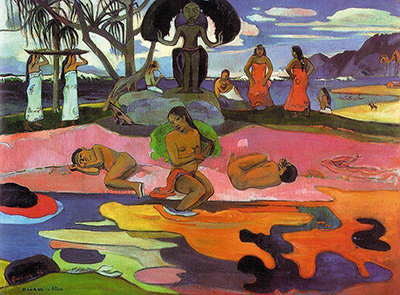
Gauguin did not leave Tahitian imagery behind when he returned to France in 1893. He reorganised it. The Art Institute's Mahana no atua (Day of the God), painted in 1894, stacks a central divine figure, bathers and bands of intense colour into a ritual scene. [16] Technical study shows a worked, revised construction, while its setting and iconography refuse identification as one documented ceremony. The painting demonstrates that “Tahiti” in Gauguin's art could be produced in a French studio from accumulated motifs and claims.
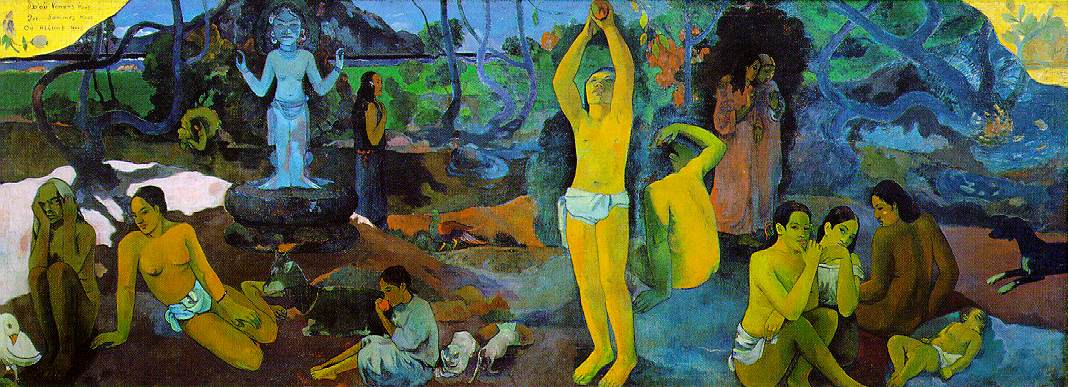
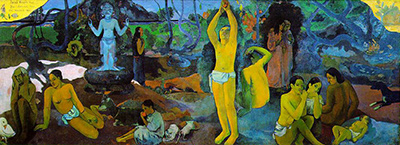
After returning to Tahiti in 1895, he made the unusually large Where Do We Come From? in 1897–98. Its full three-question title is painted into the upper corner, and figures from different sources and earlier compositions are distributed across the burlap support. [17] [18] Gauguin's letters encourage a sweeping autobiographical reading, but the object also rewards slower routes through scale, sequence, surface and repeated bodies. It is a synthesis, not a master key that makes all earlier paintings preparatory steps.
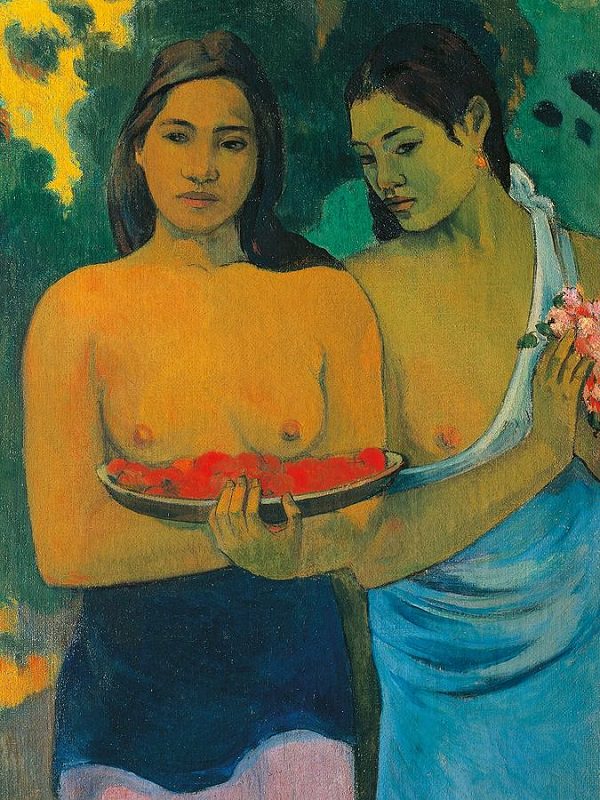
Two Tahitian Women of 1899 brings recurrence into a more concentrated form. The two figures also appear in larger compositions, and the Met's current commentary confronts Gauguin's construction of an idealised “Tahitian Eve” through a European male gaze. [19] Reuse is both a working method and a question of power: the painted women become available for rearrangement even though the record does not recover their own voices.
Hiva Oa: late painting without a decline story
Gauguin moved to Hiva Oa in the Marquesas in 1901. Calling every subsequent work Tahitian erases that geography; treating the move as isolation overlooks the dealers and audiences to whom he still sent art.
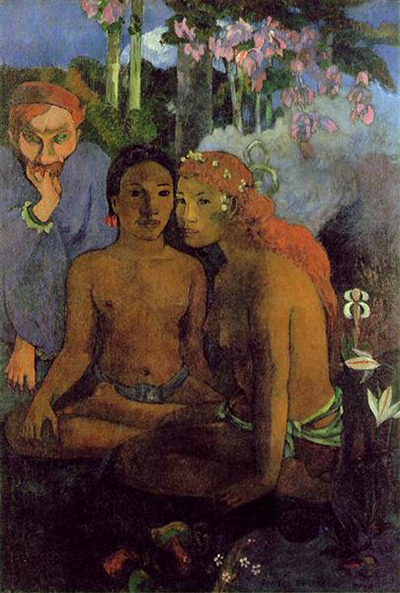
The 1902 Contes barbares brings these tensions into its very title. Museum Folkwang preserves Gauguin's French inscription but regards his wording as racist. A remembered likeness of the Dutch artist Meijer de Haan appears behind two seated figures, joining a Breton portrait history to an invented Marquesan gathering. [20] [21] Memory, borrowed pose and colonial classification operate together; none converts the scene into reliable ethnography.
Riders on the Beach I, also from 1902, presents five mounted figures crossing a broad pink shore. Museum Folkwang's W619 canvas must be distinguished from the larger private work often numbered II. [22] [23] Version control changes how the painting can be read: the count, directions, colour field and provenance belong to one specific object. Its shallow, changing procession provides a late example of Gauguin organising movement through colour without supporting a sentimental last-journey narrative.
Supports and recurring figures
Period labels can hide material differences. The 1880 still life is painted on linen canvas, whereas The Seed of the Areoi uses burlap. Gauguin selected another coarse support for Where Do We Come From?. [3] [12] [17] These facts do not generate meaning automatically, but they change the surface available to the brush. A close material route asks how weave, absorbency, preparation and later conservation affect what now appears as matte colour, broken stroke or exposed ground.
Recurrence provides a second route across chronology. The woodcutter associated with Matamoe exists in related paintings and works on paper; figures in Arearea belong to a larger store of poses; the women in the Met's 1899 canvas return in other large compositions. [13] [15] [19] Repetition should not be mistaken for documentary confirmation. A pose appearing twice does not supply a sitter's name or prove that both settings record the same event.
Instead, recurrence makes revision observable. A figure can change scale, direction, clothing, companions and setting while remaining recognisable as pictorial material. That practice connects painting to drawing, printmaking and ceramics, where transfer may also reverse or simplify a motif. [24] Readers interested in “influence” may find this internal circulation more concrete than a list of later artists: it shows Gauguin testing what an image could do when its context or material changed.
Choosing a way through the paintings
Chronology is only one route. For colour, support, facture and revision, begin with style and technique, then compare the early still life with Vision of the Sermon, The Seed of the Areoi and Day of the God. For constructed identity, move from the self-portraits to paintings of represented women and ask who controls title, pose and circulation. For religion, compare Breton Christian imagery with Ia Orana Maria and Gauguin's invented Pacific rites without forcing them into one theology.
Place-based routes should keep Martinique, Brittany, Arles, Tahiti and the Marquesas distinct while asking how each was altered in paint. The colonial-context study is essential alongside the Pacific works, particularly where Gauguin's writings or later myths claim cultural knowledge that the objects do not prove. Prints, drawings and ceramics then show motifs changing support, scale and direction rather than simply serving the paintings. [1] [24]
The point of a paintings guide is not to shrink a varied practice into a sequence of famous images. It is to make the differences usable: early surface versus later flatness, observation versus memory, Christian source versus invented rite, named self versus unnamed sitter, one version versus another. Those choices lead to stronger questions—and to the individual paintings where the evidence can be followed in full.
Related Pages
Frequently Asked Questions
Paul Gauguin's paintings do not form a simple march from subdued Impressionism to brilliant Pacific colour.
Landscape could be equally unstable.
The point of a paintings guide is not to shrink a varied practice into a sequence of famous images.
Discussion
Paul Gauguin's paintings do not form a simple march from subdued Impressionism to brilliant Pacific colour.
Reader Insights
Paul Gauguin's paintings do not form a simple march from subdued Impressionism to brilliant Pacific colour.
Landscape could be equally unstable.
Those choices lead to stronger questions—and to the individual paintings where the evidence can be followed in full.
Join the Conversation
Share the visible detail or source that most changed your reading.
References
- National Gallery of Art, The Art of Paul Gauguin, 1988, online scholarly catalogue: View source
- Wildenstein Plattner Institute, Paul Gauguin Catalogue Raisonné: Paintings 1889–1903, guide and methodology: View source
- Art Institute of Chicago, Still Life: Wood Tankard and Metal Pitcher, 1880, 1999.362, current object record: View source
- Richard R. Brettell, Genevieve Westerby and Kristin Hoermann Lister, Still Life: Wood Tankard and Metal Pitcher, 1880, Cat. 1, Art Institute of Chicago current scholarly catalogue: View source
- National Galleries of Scotland, Martinique Landscape, 1887, NG 2220, current object record: View source
- National Galleries of Scotland, Vision of the Sermon (Jacob Wrestling with the Angel), 1888, NG 1643, current object record: View source
- Joost van der Hoeven, Vincent van Gogh Painting Sunflowers, 1888, Contemporaries of Van Gogh 1, Van Gogh Museum current scholarly catalogue: View source
- Buffalo AKG Art Museum, Le Christ jaune (The Yellow Christ), 1889, 1946:4, current object record: View source
- Musée d'Orsay, Portrait de l'artiste au Christ jaune, 1890–91, RF 1994 2, current object record: View source
- Musée d'Orsay, Femmes de Tahiti, November–December 1891, RF 2765, current object record: View source
- Metropolitan Museum of Art, Ia Orana Maria (Hail Mary), 1891, 51.112.2, current object record: View source
- Museum of Modern Art, The Seed of the Areoi, 1892, SPC14.1990, current object record: View source
- Wildenstein Plattner Institute, Matamoe, 1892, PGZADF/W484, current catalogue record: View source
- Pushkin State Museum of Fine Arts, “Death”. Landscape with Peacocks, Ж-3369, current object record: View source
- Musée d'Orsay, Arearea, 1892, RF 1961 6, current object record: View source
- Art Institute of Chicago, Mahana no atua (Day of the God), 1894, 1926.198, current object record and scholarly catalogue: and View source
- Museum of Fine Arts, Boston, Where Do We Come From? What Are We? Where Are We Going?, 1897–98, 36.270, current object record: View source
- Wildenstein Plattner Institute, D'où venons-nous ? Que sommes-nous ? Où allons-nous ?, W561, current catalogue record: View source
- Metropolitan Museum of Art, Two Tahitian Women, 1899, 49.58.1, current object record: View source
- Museum Folkwang, Contes barbares, 1902, G 54, current object record and commentary: View source
- Wildenstein Plattner Institute, Contes barbares, 1902, PGSGN3/W625, current catalogue record: View source
- Museum Folkwang, Cavaliers sur la plage (I) / Riders on the Beach (I), 1902, G 52, current object record: View source
- Wildenstein Plattner Institute, Cavaliers sur la plage, 1902, PGIEA5/W619, current catalogue record: View source
- Art Institute of Chicago, Gauguin Paintings, Sculpture, and Graphic Works, current digital collection catalogue: View source