by Tom Gurney
Tom Gurney BSc (Hons) is an art history expert with over 20 years experience
Page created on September 3, 2026 / Page updated on September 13, 2026
Email: tomgurney1@gmail.com / Phone: +44 7429 011000
From First Look to a Defensible Critical Judgement
Art criticism is the practice of making a reasoned, evidence-led argument about an artwork. It is not simply finding faults, declaring whether you like something or covering a description with technical terms. A strong criticism connects what can be seen to an interpretation, tests that interpretation against relevant context, and explains the criteria behind any judgement.
The method is flexible. You can begin with patient looking, move through description and analysis, investigate context, form a claim, then return to the work and revise it. Description, analysis, interpretation and evaluation are useful headings, but they are not sealed boxes or the only possible sequence. Looking often changes what you need to research; research may send you back to look again.
At a Glance
- ObserveRecord exact features and relationships another viewer can check before assigning meaning.
- InferExplain a possible effect or meaning and signal when more than one interpretation remains plausible.
- ResearchAdd context only when it changes, qualifies or sharpens the argument raised by looking.
- EvaluateState the criterion behind a judgement instead of treating taste or convention as a universal scorecard.
- ReviseReturn to the object, test a counter-reading and separate evidence from assumption at every stage.
Contents
- The central rule: separate evidence from claim
- Books for Looking, Interpretation and Art Criticism
- A practical method for criticising art
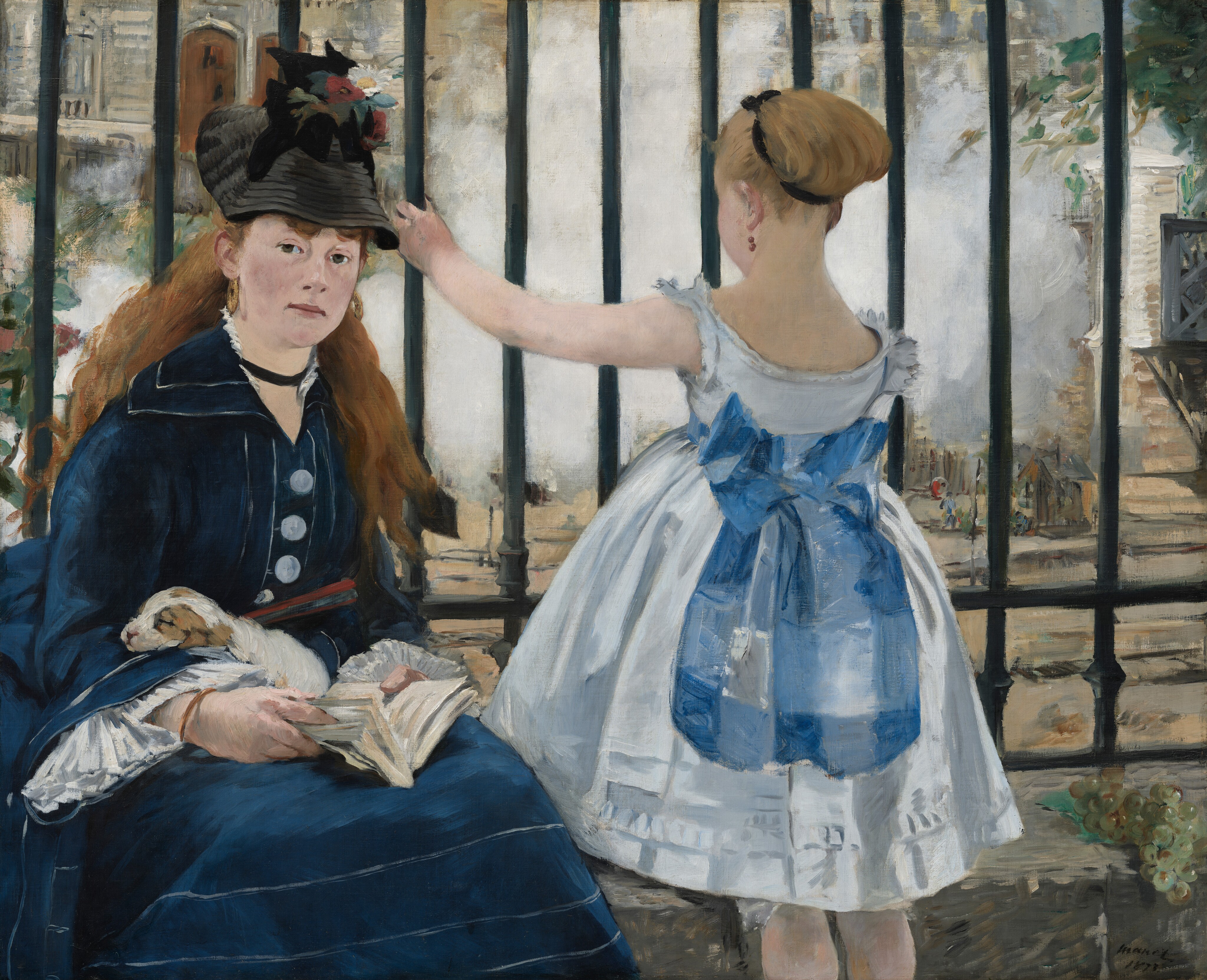
- Worked example: Manet's The Railway
- Annotated Close Reading: Six Claims to Test in The Railway
- Two short tests for interpretive claims
- Art criticism checklist
- Watch Looking Become Critical Argument
The central rule: separate evidence from claim
- ObservationA feature another viewer can check.
- InferenceAn effect or meaning proposed from that feature.
- ContextA relevant fact verified by a source.
- JudgementAn assessment with a stated criterion.
Critical writing becomes clearer when it distinguishes four kinds of statement.
- Observation records a checkable feature: “black vertical railings cross most of the background.”
- Inference proposes an effect or possible meaning: “the railings may make the figures appear separated from the railway beyond.”
- Context adds a sourced fact: “Manet exhibited the painting at the Salon of 1874.” [5]
- Judgement assesses the work through a stated criterion: “the painting is effective at sustaining ambiguity because its contrasts supply evidence for several relationships without resolving them.”
An inference is not a mistake. It is the point where criticism begins to make meaning. The problem comes when inference is disguised as observation, or when context is treated as a code that produces one compulsory interpretation. The aim is to make every step visible enough that another reader can agree, disagree or offer better evidence.
A practical method for criticising art
1. Encounter the whole work
Before naming symbols or researching the artist, notice the first structure of the encounter. What takes attention first? Where does the eye move next? How large is the work in relation to a body? Does its material surface absorb, scatter or reflect light? A digital image can support close looking, but it may hide scale, texture, edges and installation.
Write a short inventory without explaining it. Getty's curriculum defines description as an inventory of what can be seen, distinct from conclusions about feeling, process or meaning. [3] Include the medium if known, the dominant shapes or masses, the distribution of light and dark, important colours, the direction of lines, the handling of space, repeated forms and the relationship between figures and setting. Getty calls the elements the components of a work and the principles the ways artists organise them. [1][2] The vocabulary is useful only when it identifies a relationship that matters.
2. Move from description to analysis
Description says what is present. Analysis asks what those features do together. A dark vertical may divide a field; repeated curves may accelerate the eye; a low viewpoint may enlarge a figure; an interval of empty space may isolate two forms. Smarthistory describes formal analysis as both the description of visual features and the analysis of their effects. [4]
Choose the two or three strongest relationships rather than listing every element of art. Useful questions include:
- Where are the greatest contrasts of scale, value, colour or texture?
- What repeats, and what interrupts the repetition?
- How does the composition direct attention?
- Which part appears stable, precarious, enclosed or open, and why?
- How does the medium make this effect possible?
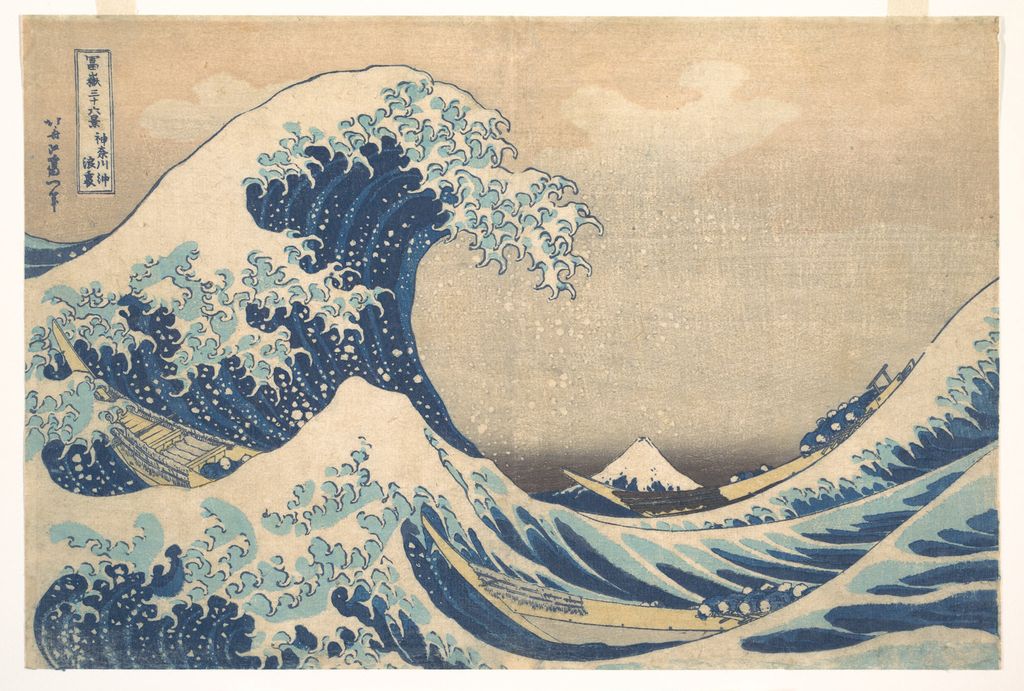
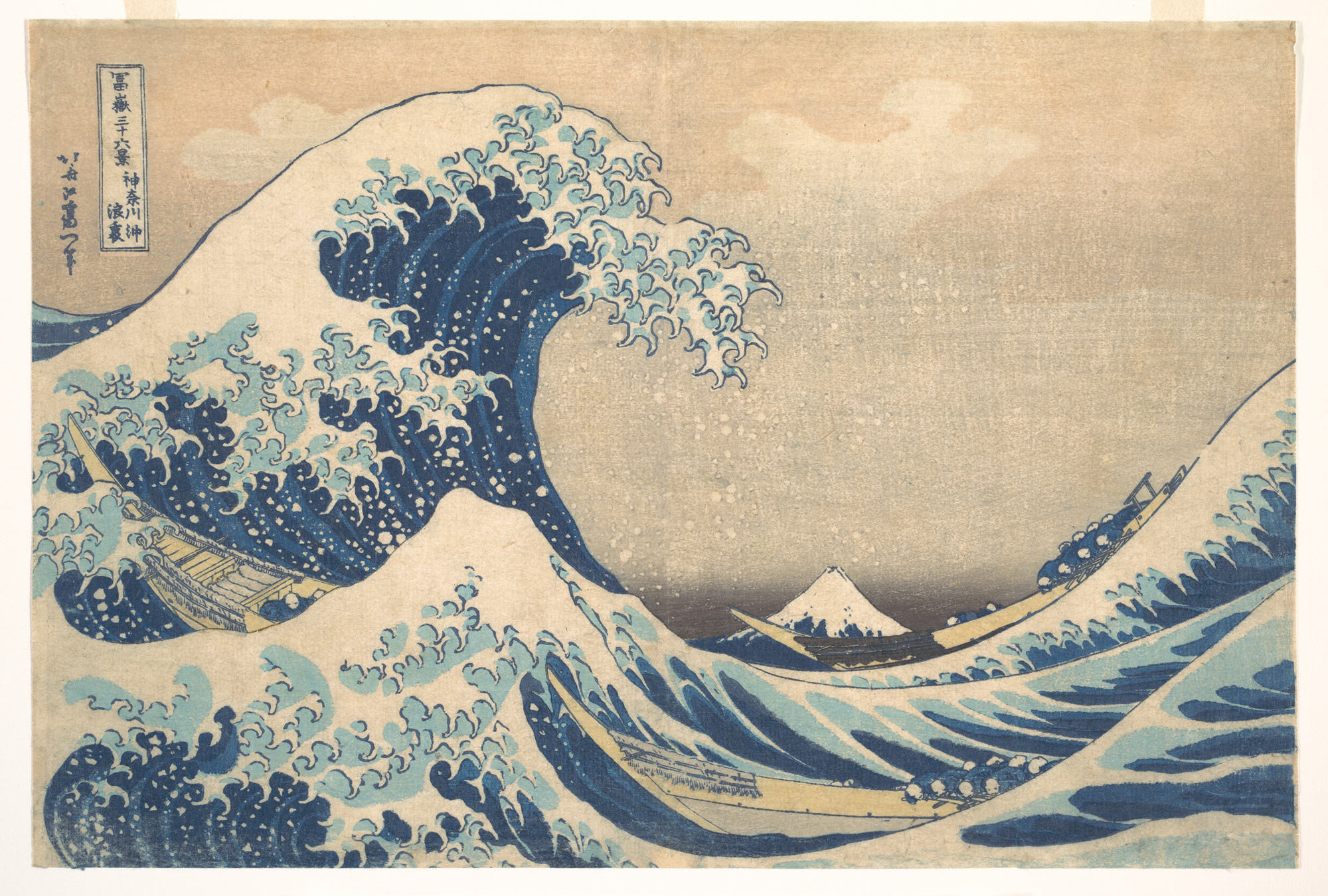
The answer should name evidence. “The composition is dynamic” is only a label. “Three diagonal boats drive into the curve of the wave while the small mountain holds the distant horizon” gives the reader something to test.
3. Develop an interpretation
Interpretation asks what the observed relationships might mean. Begin with a modest claim and trace it back to features in the work. Use language such as “suggests”, “supports” or “can be read as” when the evidence allows more than one conclusion.
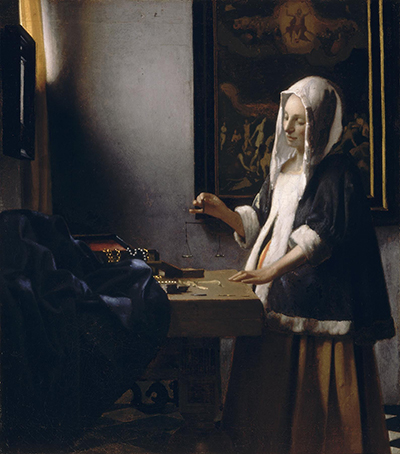
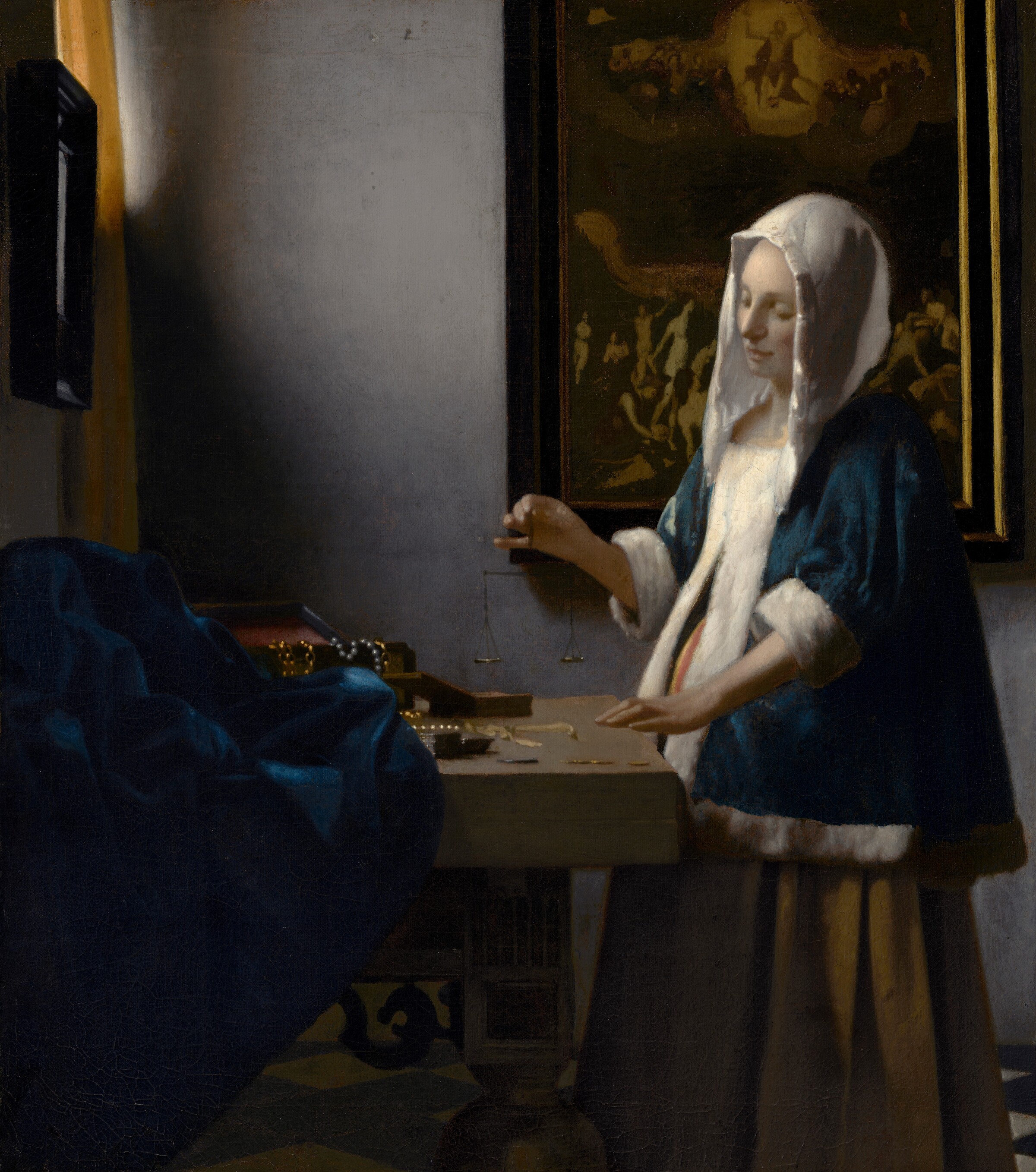
Subject matter and iconography can expand the reading. In Vermeer's Woman Holding a Balance, the woman's hand, the small balance, the objects on the table and the painting of the Last Judgement behind her form a suggestive group. The National Gallery of Art dates the picture to about 1664 and identifies it as Woman Holding a Balance. [7] It is reasonable to ask whether physical and moral judgement are being brought together. It is less careful to announce the woman's thoughts as a visible fact.
4. Add context that changes the argument
Research is most useful when it answers a question raised by looking. Context may include the work's original function, place, audience, patronage, technique, exhibition history, political setting, later reception or movement between collections. It should alter, qualify or sharpen the claim rather than sit in a detached biography paragraph.
Hokusai's Under the Wave off Kanagawa offers a good test. Visually, the huge curling wave, three narrow boats and small distant Mount Fuji create extreme shifts of scale. According to the Met, it is an ink-and-colour woodblock print from about 1830–32 and belongs to the series Thirty-six Views of Mount Fuji. [8] Those facts matter: the image was designed as a reproducible print within a series, not as a unique, isolated picture. A reading about danger or human vulnerability remains possible, but the series subject and print medium complicate any universal slogan imposed on it.
Context is not always evidence about the artist's intention. It can establish what viewers could have known, how an object circulated, or why a visual choice carried particular force. Artworks also acquire new settings and audiences. A criticism can address those later histories as long as it says which moment it is discussing.
5. Evaluate with stated criteria
Evaluation asks how well the work does something that matters. The criterion must be named. You might assess how effectively a memorial directs collective attention, how inventively a print uses its medium, how coherently a painting sustains an ambiguity, or how a museum display frames an object. Different criteria can lead to different defensible judgements.
Avoid turning convention into a universal scorecard. Symmetry is not automatically better than imbalance, naturalism is not the measure of every culture, and technical difficulty does not guarantee significance. A judgement earns weight through the fit between criterion, evidence and context.
A compact pattern is:
Claim: The work succeeds, fails or remains productively unresolved in a specific respect. Evidence: Identify the visual, material or contextual details that matter. Reasoning: Explain how those details meet or challenge the criterion. Qualification: Name an ambiguity or plausible counter-reading.
6. Revise after testing the claim
Return to the artwork and try to disprove your first interpretation. Does an overlooked detail resist it? Are you treating a museum title as the artist's own wording? Is a contextual fact later than the work? Would the claim survive if the artist's biography were removed? Revision is not a final cosmetic step; it is where criticism becomes more precise.
Worked example: Manet's The Railway
Édouard Manet's The Railway is an oil painting of 1873, now in the National Gallery of Art in Washington (accession 1956.10.1). [5] It shows a seated woman facing the viewer and a standing child turned away. A dark iron fence spans the background. Beyond it, pale steam conceals much of the railway space.
Description
The two figures occupy the foreground but face in opposite directions. The woman wears dark blue and looks outward while holding an open book, a folded red fan and a small dog. The child's pale dress is tied with a strong blue bow. Her hands meet the railings as she looks toward the steam. Dark vertical bars repeat across the width of the painting, interrupted by heads, shoulders and bright vapour. A bunch of grapes rests on the parapet at the right.
This inventory avoids deciding whether the figures are mother and daughter, whether the woman is bored, or what the child can see. The NGA itself phrases their relationship as a question, not a settled identity. [5]
Analysis
Manet builds the picture from oppositions: dark clothing and pale dress, adult stillness and a child's forward attention, direct gaze and turned head, legible foreground objects and obscured background machinery. The railings are both a repeated visual rhythm and a physical barrier. Their upright bars hold the surface together while the steam makes the space beyond difficult to read.
The railway is therefore present without a visible locomotive. Modern transport enters the painting through infrastructure, vapour and the child's attention. The contrast between the woman's direct look and the child's inaccessible view divides the spectator's own attention: we can look at the woman, but we cannot share what the child sees.
Context and interpretation
The painting appeared at the Salon of 1874. [5] The National Gallery's study places its site in the newly developed Europe district around Gare Saint-Lazare, the neighbourhood in which Manet lived and worked during the 1870s. [6] This context supports a reading of modern Paris, but it does not turn every rail into a simple emblem of progress.
A stronger interpretation is that The Railway makes modernity difficult to possess as a single view. The station announces itself through steam and barriers; the figures share a setting without sharing an orientation; the woman returns our gaze while the child sees the spectacle denied to us. The painting offers proximity and obstruction at once. That reading is supported by the composition, but it remains open to alternatives about class, gender, spectatorship and the changing city.
Evaluation
If the criterion is whether the painting creates a coherent image of modern urban uncertainty, it is highly effective. Its oppositions are not decorative additions: they organise the whole encounter. The railings bind the field and block it; the steam indicates activity and withholds its source; the two gazes make spectators aware of their own limited position. The work's achievement lies less in explaining the railway than in making access to it partial.
This judgement does not require every ambiguity to be solved. Indeed, resolution would weaken the quality being assessed. A reader could challenge the criterion and argue that social specificity matters more than uncertainty. That would begin another criticism, provided it addressed the same visible and historical evidence.
Annotated Close Reading: Six Claims to Test in The Railway
The markers identify evidence used in the worked criticism. Each label remains a proposition to test against the full painting, not a compulsory meaning.
123456- Outward gazeThe seated woman meets the viewer rather than the railway.
- Turned childHer inaccessible view divides attention and knowledge.
- Iron railingsRepeated bars organise the field while physically obstructing it.
- Book and fanForeground objects establish interruption rather than a posed still life.
- SteamModern transport is present while its locomotive remains withheld.
- Edge detailsGrapes and cropped space resist a single clean focal hierarchy.
Two short tests for interpretive claims
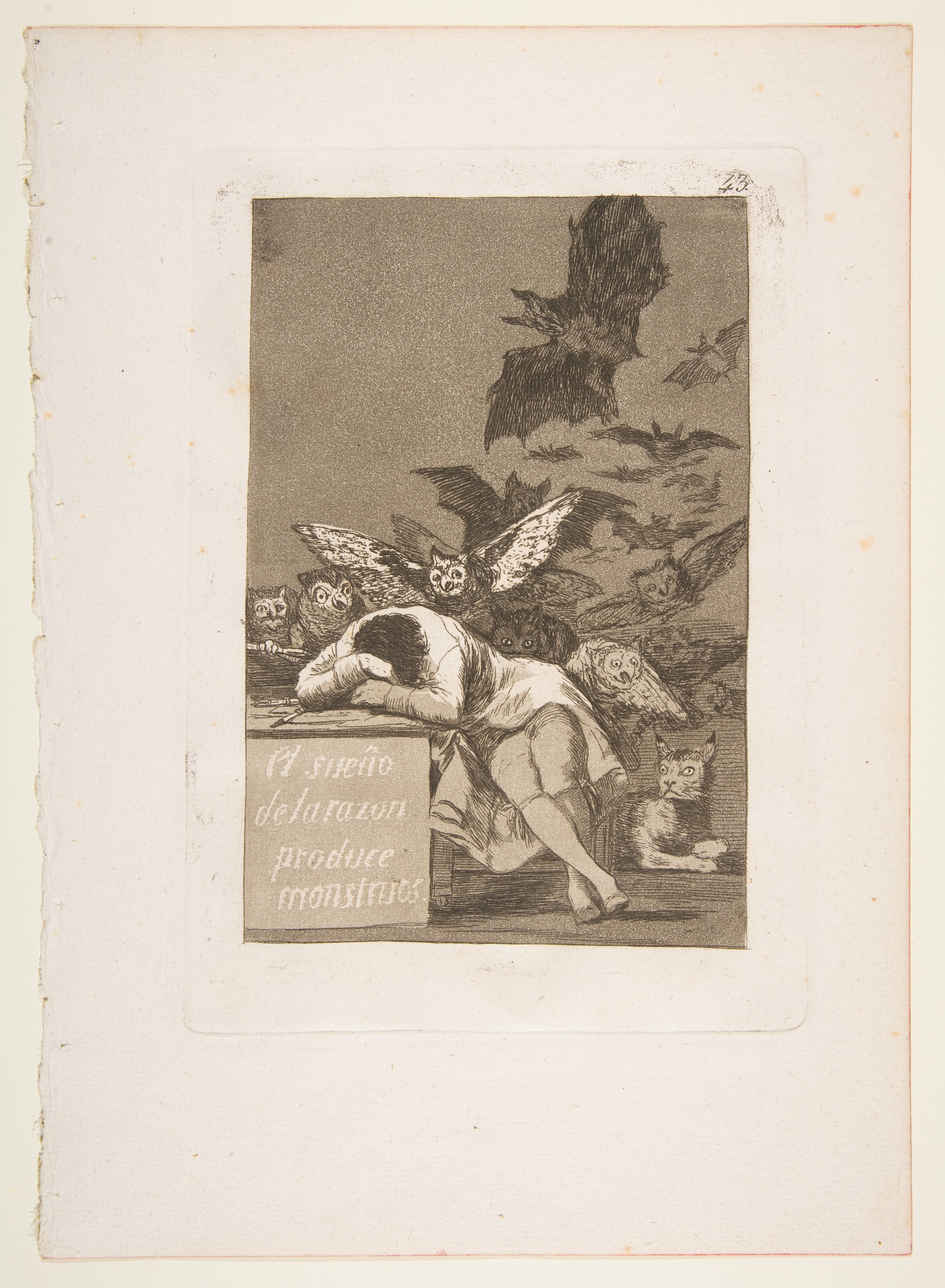
Goya's The Sleep of Reason Produces Monsters is plate 43 of the Los Caprichos series, published in 1799 and made with etching and aquatint. [9] A figure sleeps at a desk while owls, bats and other creatures gather behind. The title and series context support a reading about reason's absence, but the clustered animals do not reduce to a single fixed code. Ask which details support a claim, which come from the title, and which remain conjecture.
In Vermeer's Woman Holding a Balance, a criticism might connect the suspended balance with the background judgement scene and the painting's extraordinary stillness. It should also admit that visual balance is not identical to moral balance. The first is a relationship among forms; the second is an interpretation that needs iconographic and contextual support.
Art criticism checklist
Before finishing, ask:
- Have I identified the exact work, date, medium and owning collection?
- Can a reader distinguish my observations from my inferences?
- Does every formal term point to a specific feature and effect?
- Have I used context to change the argument rather than pad it?
- Are uncertain meanings expressed as possibilities rather than facts?
- Is my evaluative criterion explicit and appropriate to this work?
- Have I considered another reading or resistant detail?
- Do my image, caption, title and source all refer to the same object?
Good criticism makes its reasoning inspectable. It looks closely, researches selectively, argues clearly and stays willing to change. The result is neither a neutral inventory nor an unsupported verdict, but a claim another viewer can test against the work.
Watch Looking Become Critical Argument
Choose an open encounter, a formal-analysis demonstration or an object-specific interpretation.
How to Enjoy Art
Consider how physical encounter and individual response can begin a criticism without requiring a pre-written decoding key.
Watch on YouTubeFrequently Asked Questions
Art criticism is a reasoned argument about an artwork that connects observable and contextual evidence to interpretation and, where appropriate, a judgement made through stated criteria.
No. Criticism can explain achievement, limitation, ambiguity, historical force or changing reception. Its defining feature is inspectable reasoning, not a negative verdict.
Observation records a feature another viewer can locate. Interpretation proposes what that feature or relationship may mean. Good criticism signals the move between them and permits alternatives.
Include context that changes or tests the argument: function, audience, technique, patronage, exhibition history, politics or reception. Detached biography does not strengthen a reading by itself.
Yes, when both fit the evidence, state their assumptions and answer resistant details. A stronger criticism normally explains more of the object with fewer unsupported leaps.
Discussion
Which claim about a familiar artwork changes most when you separate observation, inference, context and judgement?
Reader Insights
Mark what is observed, inferred, sourced or judged before revising the argument.
A judgement gains force when readers can see what standard it applies and why.
An awkward detail or counter-reading can sharpen a criticism instead of defeating it.
Join the Conversation
Share one precise observation or a useful museum example below.
References
- Getty — Understanding Formal Analysis: Elements of Art
- Getty — Understanding Formal Analysis: Principles of Design
- Getty Publications — Discipline-Based Art Education: A Curriculum Sampler
- Smarthistory — Understanding art, an introduction
- National Gallery of Art — Édouard Manet, The Railway
- National Gallery of Art — Manet, Monet, and the Gare Saint-Lazare
- National Gallery of Art — Johannes Vermeer, Woman Holding a Balance
- The Metropolitan Museum of Art — Katsushika Hokusai, Under the Wave off Kanagawa
- The Metropolitan Museum of Art — Francisco de Goya, The Sleep of Reason Produces Monsters