by Tom Gurney
Tom Gurney BSc (Hons) is an art history expert with over 20 years experience
Page created on September 3, 2026 / Page updated on September 13, 2026
Email: tomgurney1@gmail.com / Phone: +44 7429 011000
What the Frame Includes—and What It Makes Us Imagine Beyond
An open composition makes important forms or directions seem to continue beyond the visible boundary. A closed composition keeps its main group and movement comparatively contained within the frame. The difference is not whether an artwork is complete: it is how the image treats its edges and the world imagined around them.[1][2][3]
Open and closed are useful tendencies, not airtight boxes. A painting can contain a calm central group while cropping scenery at the sides, or hold every figure inside the frame while sending their glances outward.
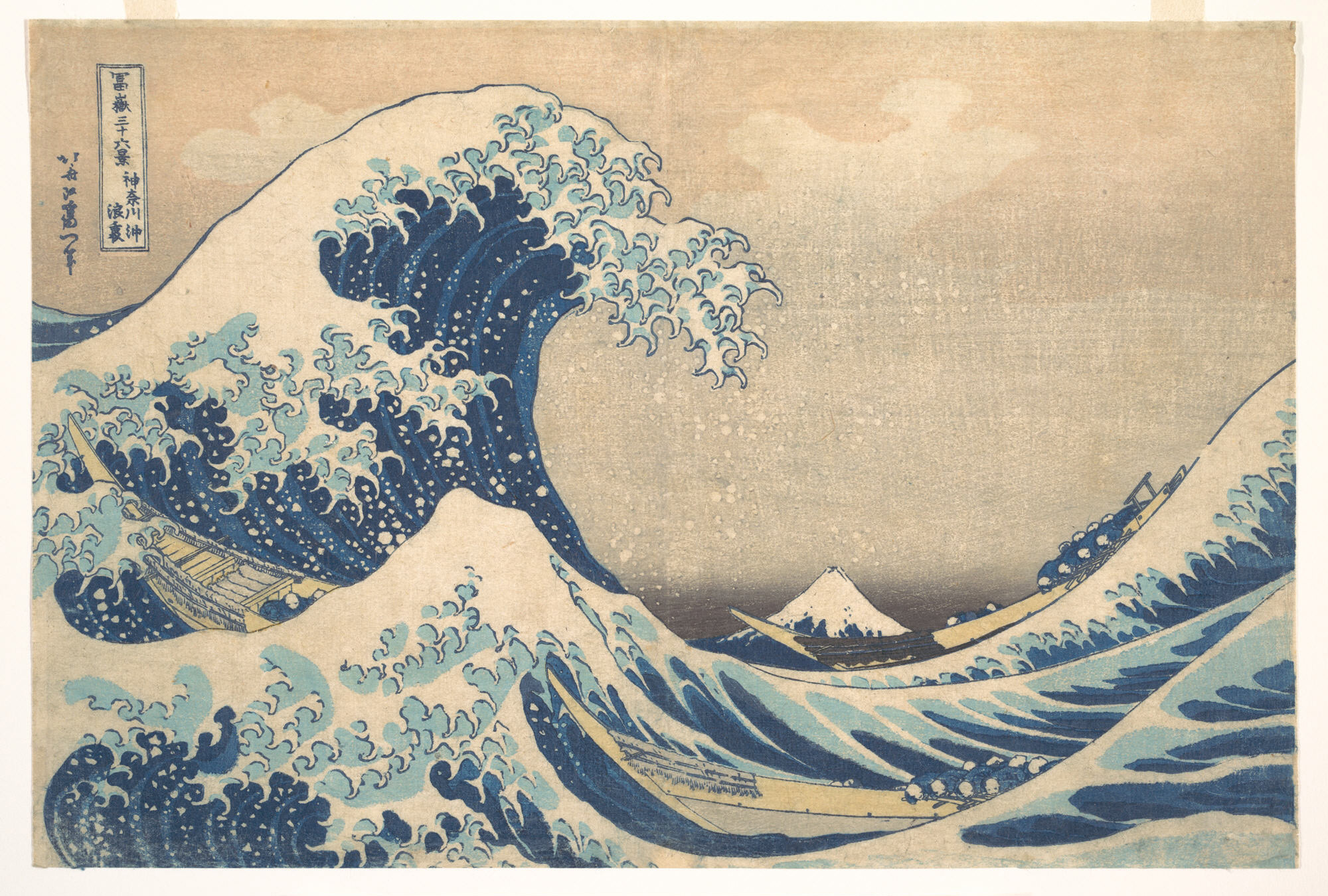
Katsushika Hokusai, Under the Wave off Kanagawa, c. 1830–32. The boats and water continue through the sheet’s edges, making the foreground world feel larger than the visible field, while the small Mount Fuji remains fully contained in the distance. Image: The Metropolitan Museum of Art, public domain.
At a Glance
- Open tendencyforms, directions or spaces appear to continue beyond the visible boundary.
- Closed tendencythe main group and its directional energy remain comparatively contained within the frame.
- Read all four edgescropping, pressure, entry and exit matter more than the number of objects.
- Expect mixturesa contained group may sit inside an open landscape, or a cropped form may act as a stable border.
- Not a quality scorechoose the description that explains the work rather than treating either tendency as better.
Contents
Start with the boundary
Look along all four edges before naming the composition. Are bodies, branches, boats or architectural forms cut? Do strong diagonals arrive from outside or depart through a corner? Does empty space separate the main group from the boundary, or do forms press against it?
The Metropolitan Museum's teaching guide explains that cropping can make the represented world appear to extend beyond a painting's physical edge. It also notes that borders can direct the eye and carry meaning.[2] This makes the frame an active part of the arrangement rather than a neutral container.
Read the boundary guide
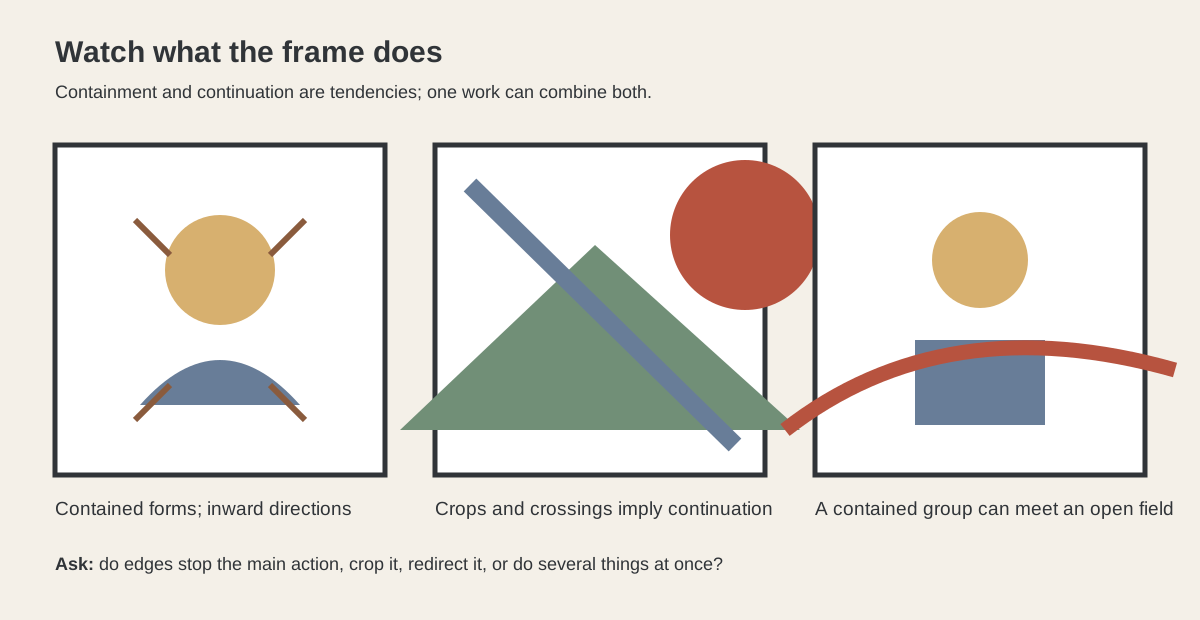
The first panel keeps forms inside and turns its arrows inward. The second lets shapes cross and be cut. The last combines a contained group with a curve that continues beyond both sides. Most artworks reward this mixed, degree-based reading.
Closed composition: containment without isolation
A relatively closed arrangement often leaves breathing space around its primary forms, returns gestures toward the group and uses horizontal or vertical accents to steady the field. The National Gallery associates closure at the edges with one kind of static, orderly composition, while stressing that colour, tone and direction contribute as well.[1]
Closed does not mean lifeless. Figures can exchange glances intensely, colour can pulse, and depth can open behind them. Closure simply means that the dominant compositional energy is gathered rather than strongly dependent on unseen continuation.
Raphael: a group held by a circle
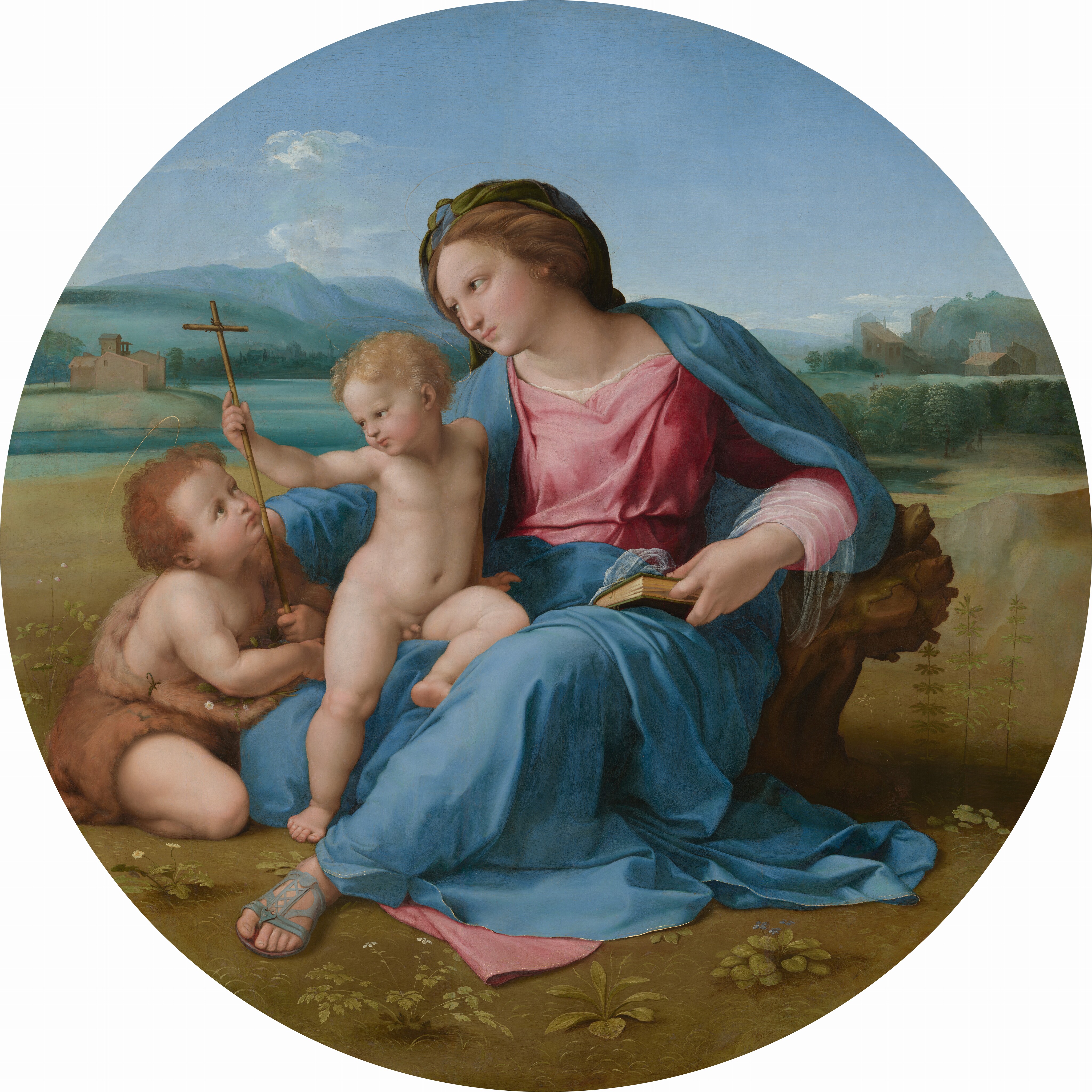
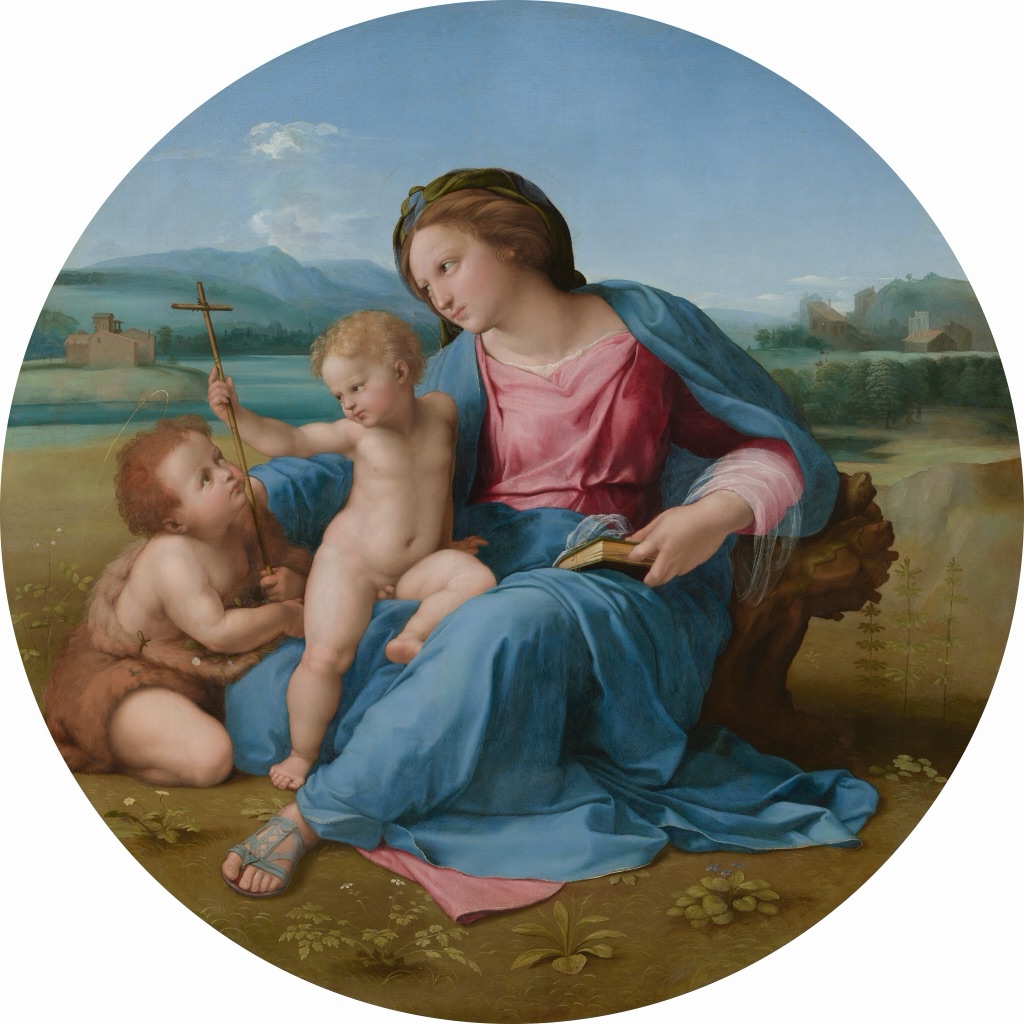
Raphael's The Alba Madonna, about 1510, places Mary, Christ and young John within a round panel now at the National Gallery of Art.[4] Their bodies overlap, their attention gathers around the cross, and the circular support curves around the landscape.
No large body is abruptly cut, and the exchanges return toward the group. Yet the distant landscape remains expansive. The work is relatively closed in its figural organisation without pretending that nothing exists beyond the tondo.
Vermeer: action contained in a room
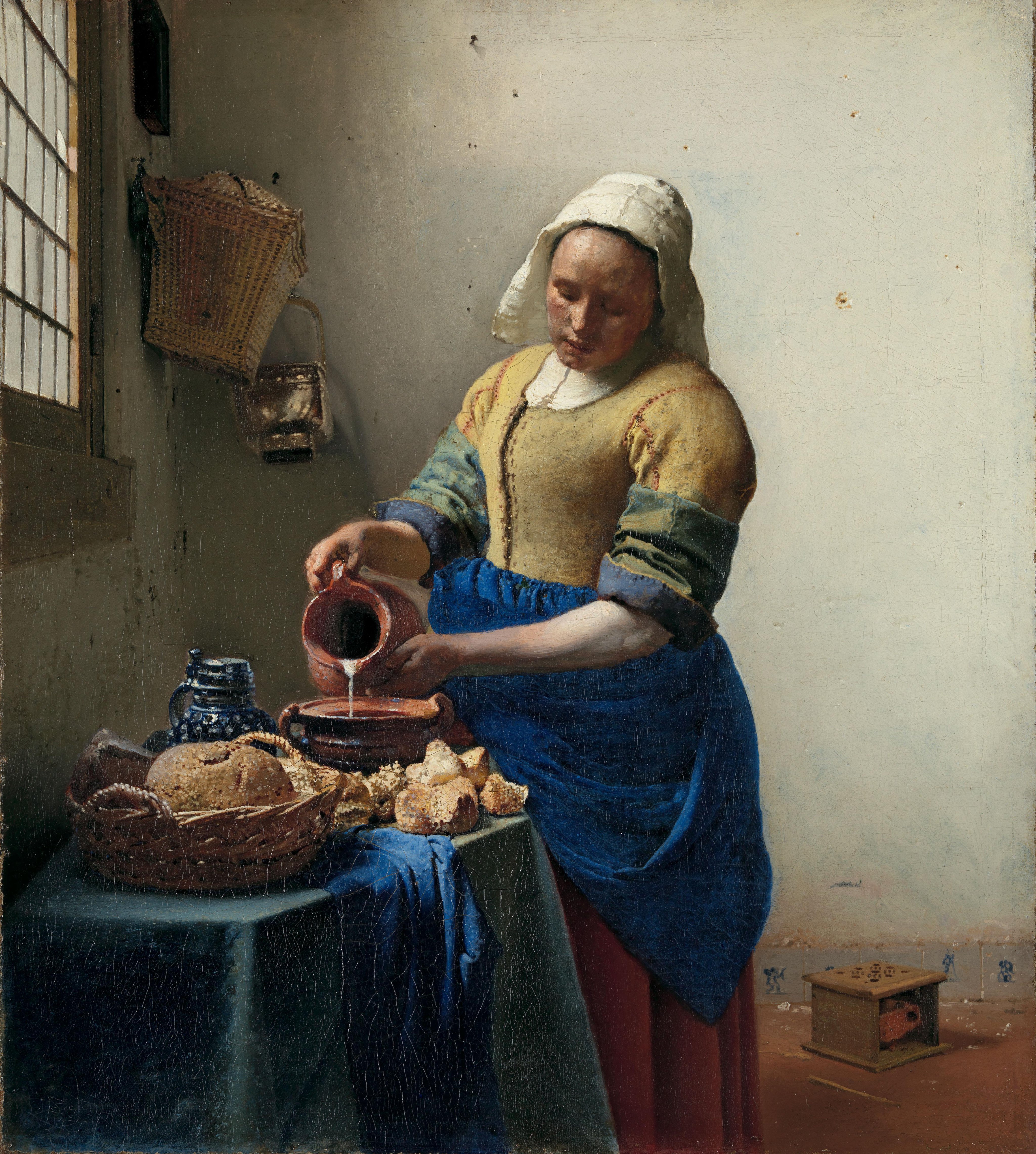
Johannes Vermeer's The Milkmaid, around 1660, belongs to the Rijksmuseum.[5] The woman, table and vessels occupy a compact area inside a room defined by wall, floor and window. Her lowered gaze and bent arms contain attention around the act of pouring.
The broad wall is quiet but not empty. Light crosses it from the window and gives the figure space. Closure here depends on enclosure, gesture and pause rather than perfect symmetry or central placement.
Open composition: the edge as an event
An open arrangement often crops large forms, continues lines beyond the field or places a subject so near an edge that the viewer imagines additional space. It can feel immediate because the frame intersects an ongoing world. Openness may support activity, but it can also produce stillness, ambiguity or vast scale.
Manet: a boat continues past us
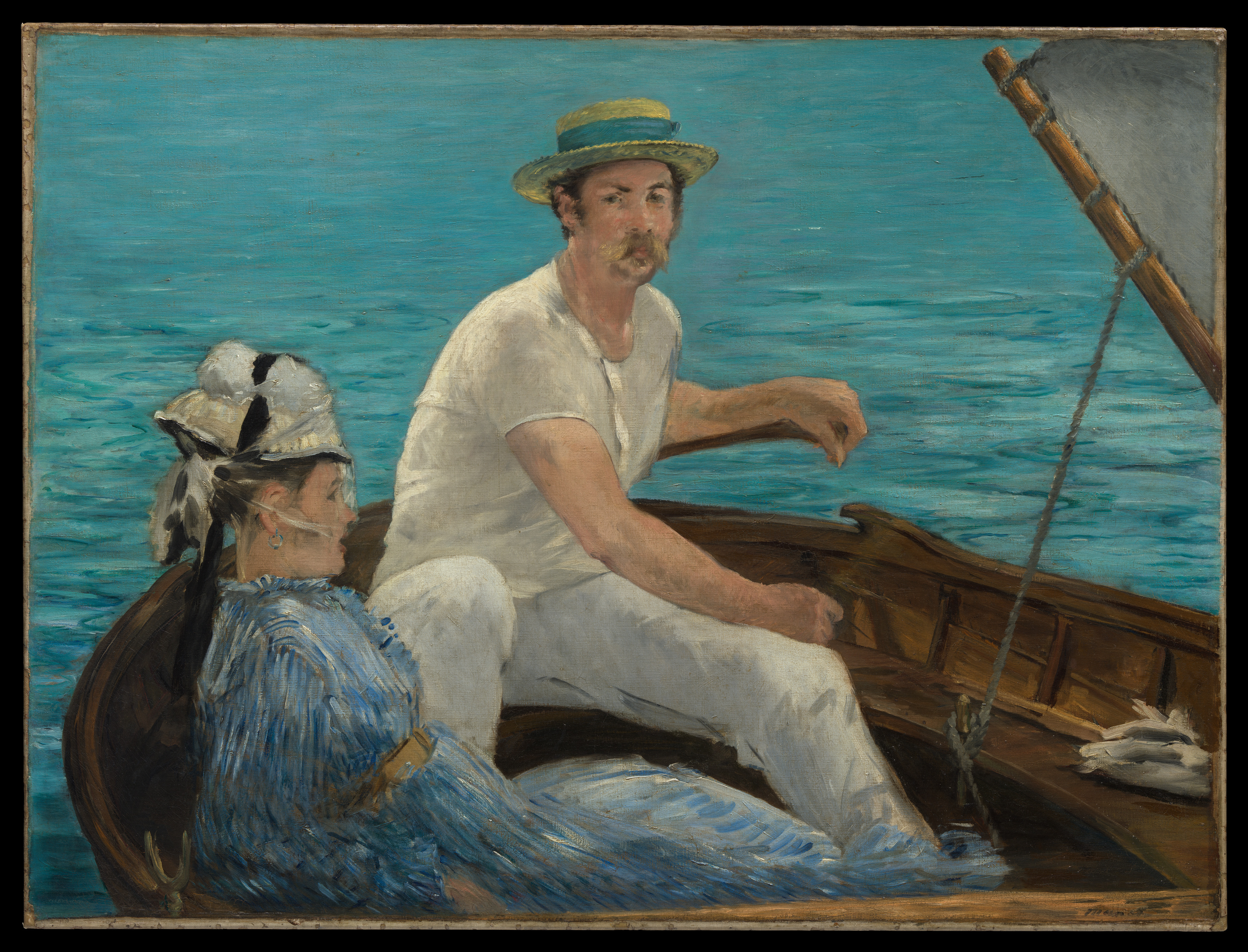
In Édouard Manet's Boating, 1874, the boat crosses the lower field and the man is cut by the right boundary.[6] A mast rises sharply while the pale sail occupies much of the upper image. The Metropolitan Museum holds the painting.
The crop makes the viewer unusually close to the passengers. Boat and body seem to continue outside the canvas, while uninterrupted water removes a distant containing shore. The frame does not merely surround the event; it participates in its pressure.
Hiroshige: a branch enters from elsewhere
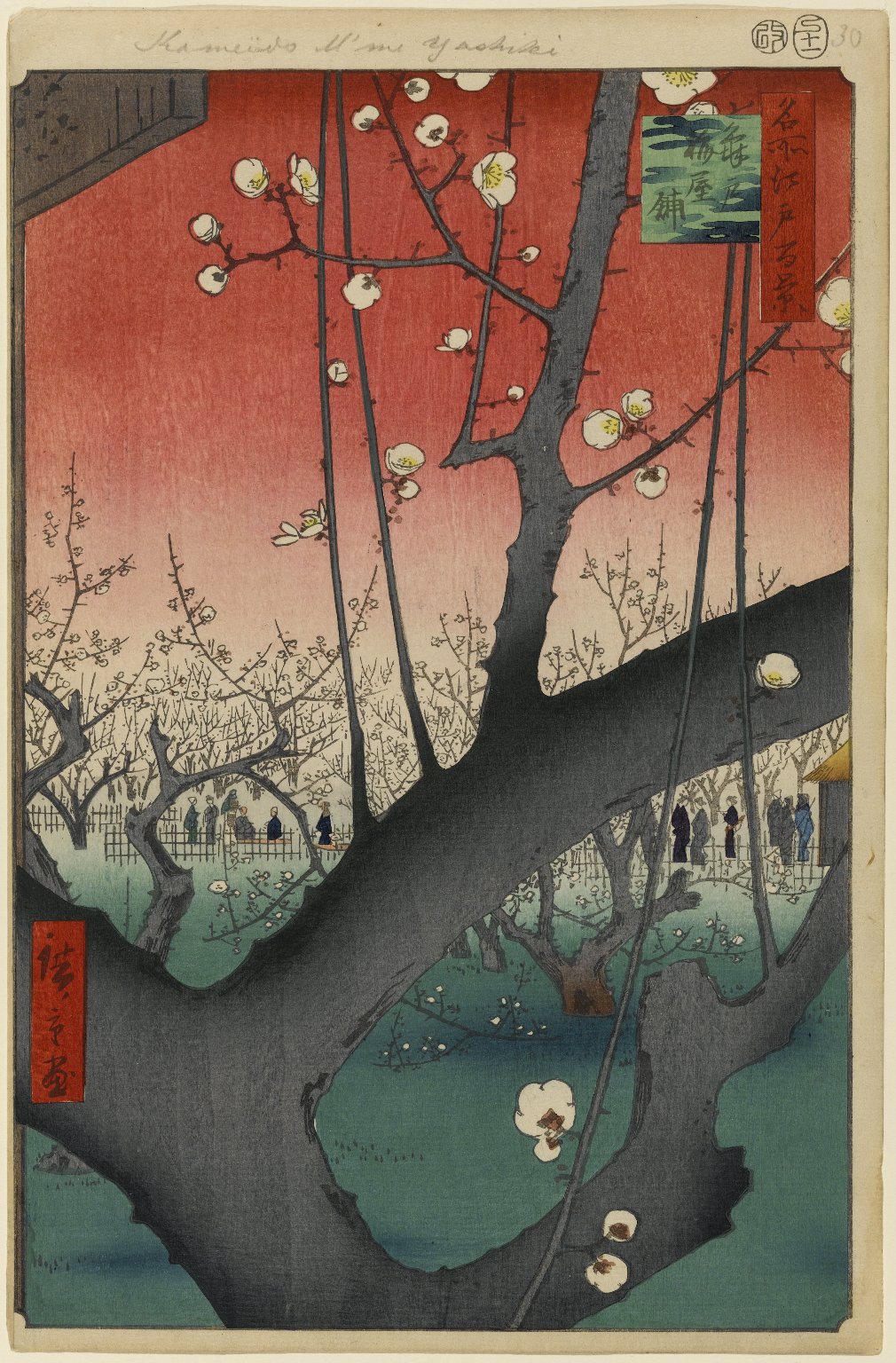
Utagawa Hiroshige's Plum Estate, Kameido, 1857, is in the Brooklyn Museum.[7] An enormous plum trunk enters from several edges and crosses the foreground. Tiny visitors and blossoming trees appear far beyond it.
Because the branch is too large to fit, the sheet becomes a selected view within a larger world. Cropping establishes nearness, while scale opens a jump to the garden. The result is open through both boundary and depth.
Movement, cropping and internal borders
Not every cropped object creates strong outward motion. A vertical form cut at top and bottom may act like a stable internal border. Conversely, a fully visible pointing arm can send attention beyond the picture. Examine the direction of forms as well as their completeness.
Internal boundaries matter too: a doorway, riverbank, shadow or change of colour can divide the field into zones. These divisions may contain one group while allowing another path to continue. The Movement in Art and Shape in Art guides provide vocabulary for those relations.
Try the same subject both ways
Arrange three objects with clear space around them and turn their main directions inward. Draw or photograph that closed version. Then move closer, crop at least one large form and let a diagonal cross an edge. Keep the objects themselves unchanged.
Compare what the boundary now implies. Does the second version feel larger than the frame, or merely cramped? Does the first feel resolved, or too detached? Adjust the amount of space and the angle of movement until each arrangement has a distinct purpose.
For an existing artwork, avoid treating the labels as scores. Describe which forms are contained, which are cut, where directions lead and how the Composition in Art works as a whole. Open and closed composition become valuable when they focus attention on the edge—not when they replace looking with a binary verdict.
Watch: Open and Closed Composition through Formal Analysis
Choose a museum-led whole-work analysis, a close reading, or a foundations overview for considering open and closed composition.
Introducing Formal Analysis: Landscape
Follow how recurring shapes, colours and intervals contribute to a larger visual organisation.
Watch on YouTubeFrequently Asked Questions
An open composition makes important forms, directions or spaces appear to continue beyond the visible boundary.
A closed composition keeps its main group and dominant directional energy comparatively contained within the frame.
No. The direction, scale and role of the cropped form matter; a cut vertical may function as a stable internal border.
Yes. A contained central group can occupy an expansive or cropped setting, so degree and level of analysis should be stated.
Use the same subject twice: first leave breathing space and turn directions inward, then crop a major form and carry a direction through an edge.
Discussion
Which example on this page changes most when you read the frame as an active event rather than a neutral border?
Reader Insights
Note what is cut, contained, entering or leaving.
A fully visible gesture can lead outward while a cropped form can still contain.
Separate the treatment of the main group, setting and depth.
Join the Conversation
Share one precise observation or a useful museum example below.
References
- National Gallery, “Composition”
- The Metropolitan Museum of Art, Looking to Connect with European Paintings: Visual Approaches for Teaching in the Galleries
- University of Wisconsin–Madison Division of Extension, “Composition”
- National Gallery of Art, Raphael, The Alba Madonna, c. 1510
- Rijksmuseum, Johannes Vermeer, The Milkmaid, c. 1660
- The Metropolitan Museum of Art, Édouard Manet, Boating, 1874
- Brooklyn Museum, Utagawa Hiroshige, Plum Estate, Kameido, 1857