by Tom Gurney
Tom Gurney BSc (Hons) is an art history expert with over 20 years experience
Page created on September 3, 2026 / Page updated on September 13, 2026
Email: tomgurney1@gmail.com / Phone: +44 7429 011000
How a Broad Base and Rising Group Create Stability
Pyramid composition gathers the main forms into a broad base that narrows toward a higher point. In a figure painting the arrangement may appear three-dimensional: bodies overlap and recede, so “pyramid” can describe the group more accurately than a flat triangular outline. The structure often gives several figures a shared stability without making them identical.[1]
The pyramid is a way of organising relationships, not a stencil. Its sides may be irregular, its summit off-centre and its base interrupted. What matters is whether mass, gesture, gaze and overlap make the parts feel like one rising group.
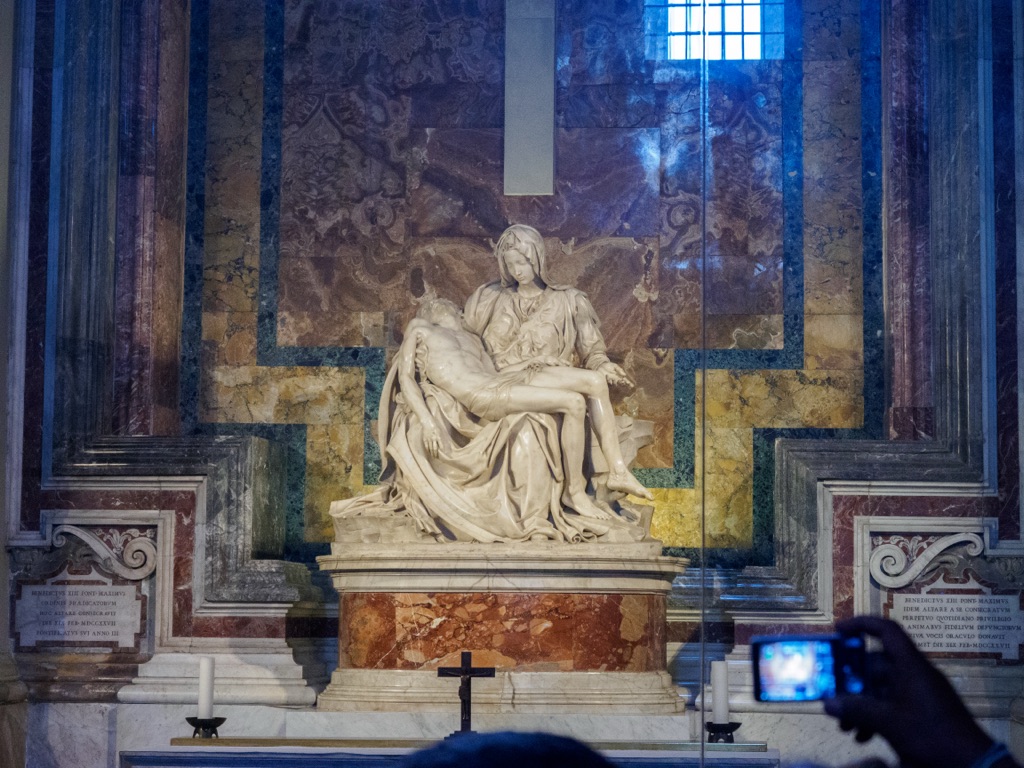
Michelangelo, Pietà, c. 1498–99. The seated Virgin and the diagonal body of Christ form a broad, low base that narrows towards Mary’s head, while folds and curves keep the grouping from becoming a rigid triangle. This is a visual analysis, not evidence that Michelangelo used the modern label “pyramid composition”. Photograph by Uday Watwe, via Wikimedia Commons, CC BY 2.0; resized and compressed.
At a Glance
- Core structurea broad base rises towards a narrower apex, often through grouped figures or objects.
- Read the insidegestures, overlaps, contours and sight lines matter as much as the outer silhouette.
- Not every trianglea triangular object or isolated diagonal does not automatically organise the whole as a pyramid.
- Test the framecropping, depth and the support shape can strengthen or complicate the group.
- Use as a tooltreat the pyramid as a making and looking test, not a universal formula.
Contents
How to recognise the structure
Begin with the largest masses. Does a seated or kneeling group spread across the lower field? Does one head, object or light accent rise above it? Can the eye move from the wider lower forms toward that upper concentration without ignoring major parts of the scene?
Then look inside the silhouette. A pyramid becomes persuasive when elbows, hands, drapery, exchanged looks and overlaps connect the people or objects. A triangle drawn around three remote points may fit geometrically while saying little about how the composition works.
Read the structure guide
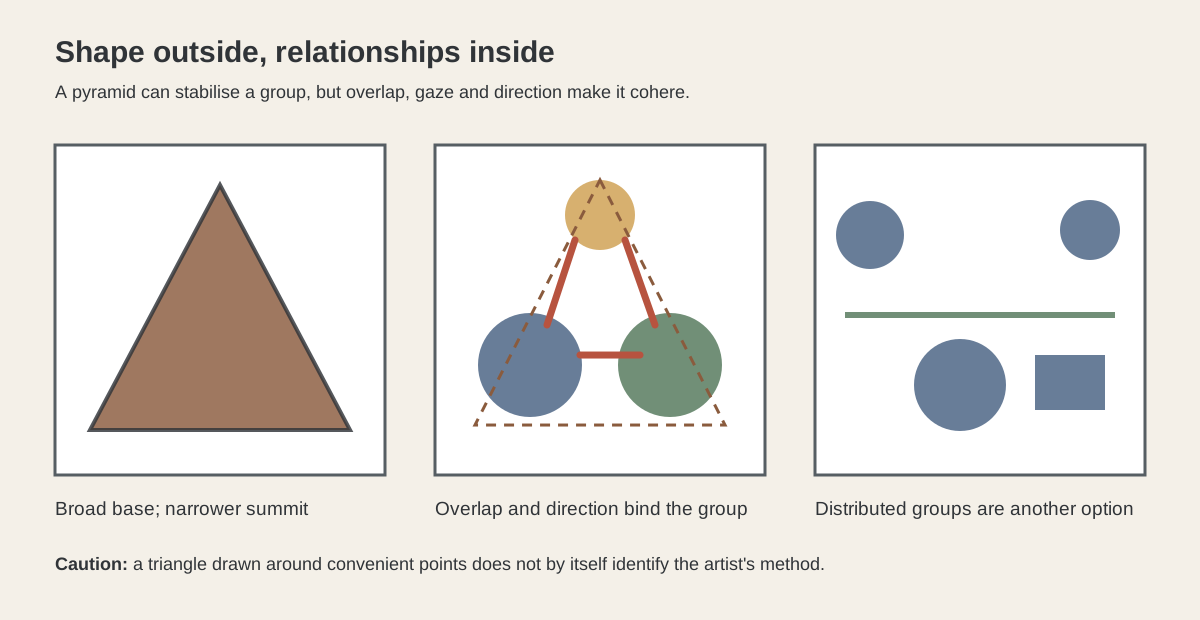
The first panel isolates a broad base and summit. The second places three forms within a dotted boundary but adds the inner directions that make them a group. The last distributes forms across the field without one enclosing pyramid. It is a valid alternative, not a failed version of the first two.
Why artists use a pyramid
A broad base can make a complicated group feel grounded. Narrowing toward a summit establishes hierarchy, while sloping sides return outward forms toward the centre. In religious painting, a higher head may become the focal point; in still life, stacked vessels and fruit can rise above a table while remaining visually supported.
Stability does not require stillness. A hand can cross the central axis, a face can turn outward, and a diagonal can disturb one side. Those variations keep the arrangement from becoming a rigid emblem. The Balance in Art guide is useful here because equal geometry and experienced visual weight are not the same thing.
Preparatory drawings can reveal this process more clearly than finished contours alone. The Metropolitan Museum explains that Renaissance artists used summary studies to pull figure arrangements, setting and light into an overall design, and identifies one Raphael sheet as a rough study of a pyramidal Madonna grouping.[2]
Leonardo: a group with spatial depth
Leonardo da Vinci's The Virgin of the Rocks, about 1483–86, groups the Virgin, Christ Child, infant John the Baptist and an angel within a grotto. Smarthistory describes the figures as held within a geometric pyramid and stresses that the spatial term matters: Leonardo is creating an illusion of depth, not merely arranging a flat triangle.[1]
Gesture and gaze complete the shape
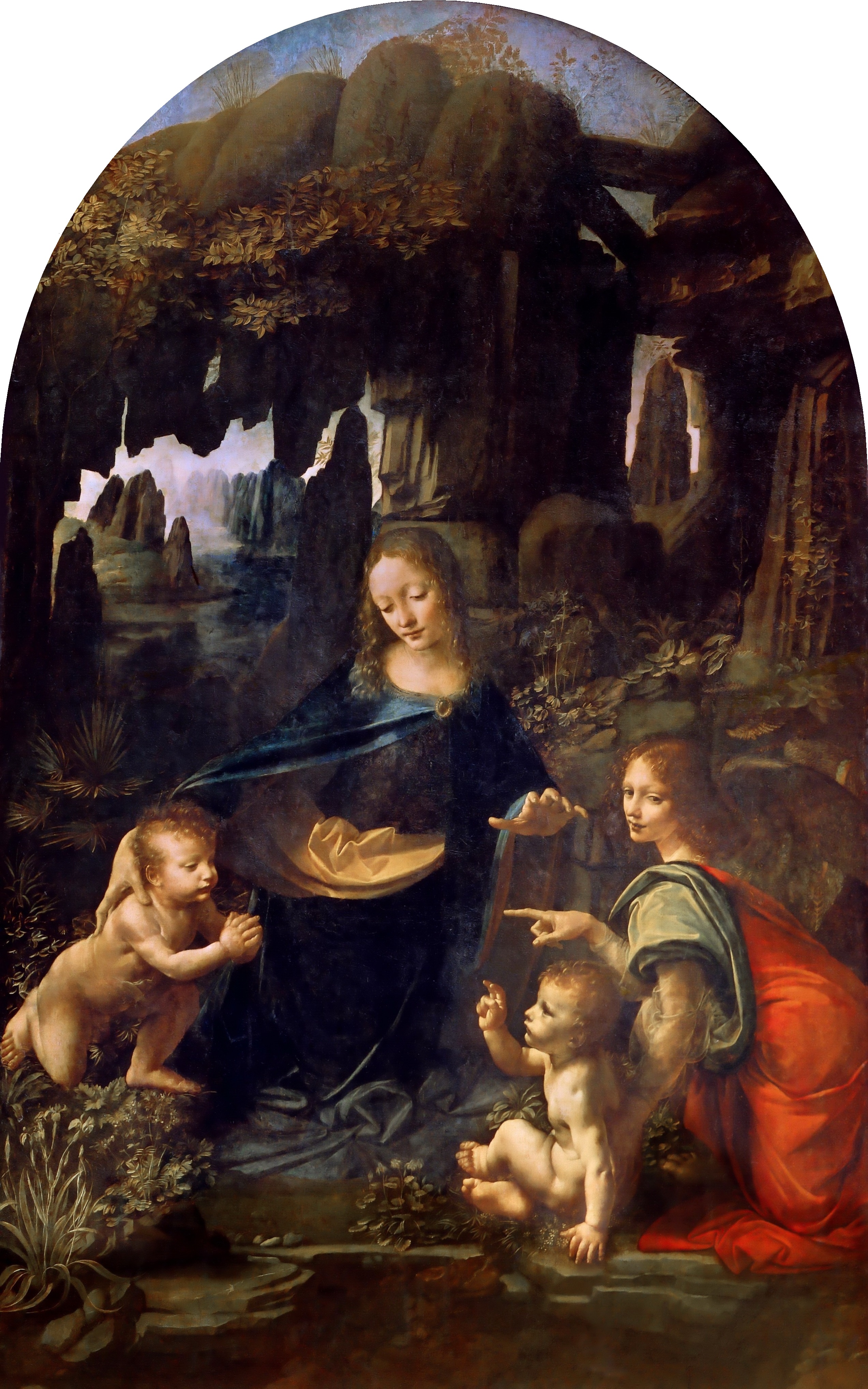
The Virgin's head provides a high point, but the painting does not depend on that point alone. Her arms extend toward the children; the angel supports Christ and looks outward; John's prayer and Christ's blessing cross the lower part of the group. Overlap makes the bodies inhabit shared space, while the dark grotto and openings to distant landscape surround rather than separate them.
The example establishes a useful test. Remove the imagined boundary and the figures still cohere through action. That is stronger evidence of composition than a diagram that happens to touch three heads.
Raphael: a triangle adapted to a circle
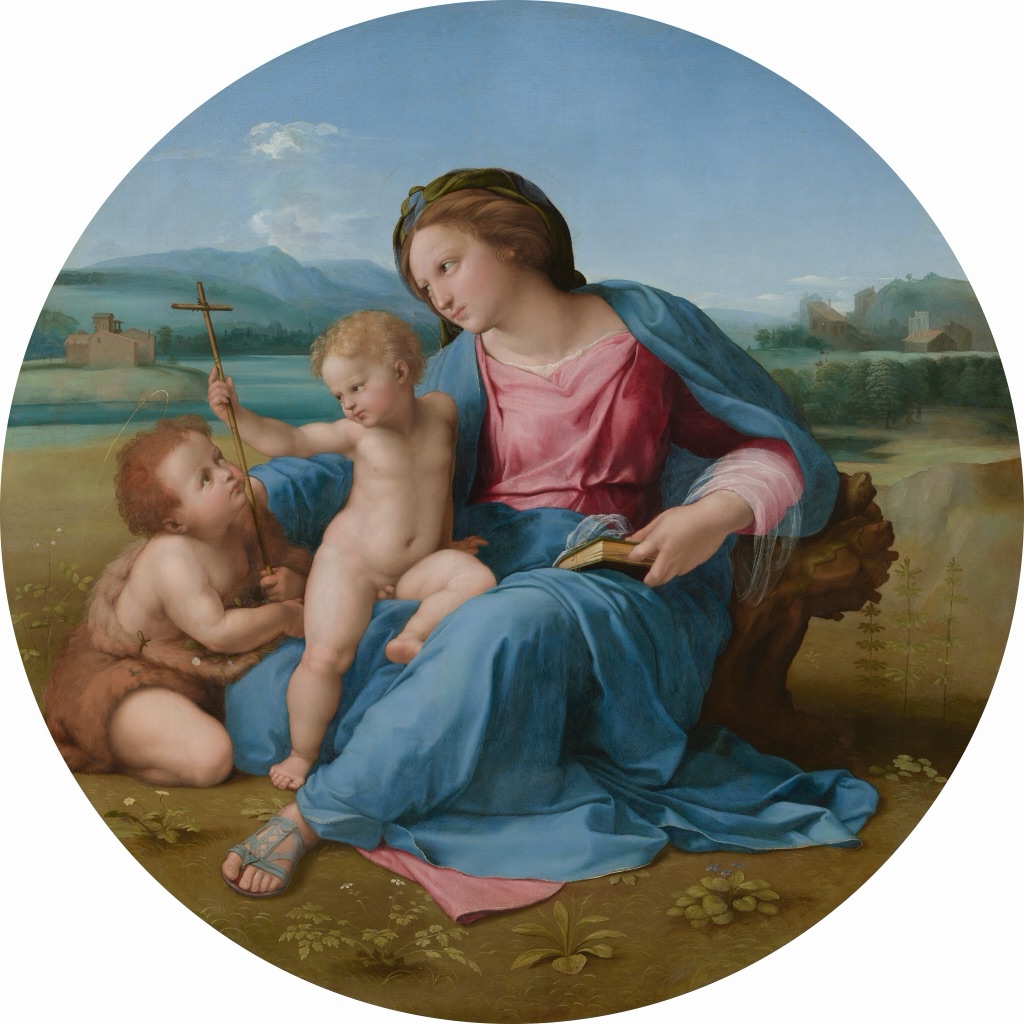
Raphael's The Alba Madonna, about 1510, interlocks Mary, Christ and the young John within a round panel held by the National Gallery of Art.[3] Mary sits widest and highest, the children occupy the lower field, and the cross sets a strong diagonal among their hands and glances.
The support changes the pyramid
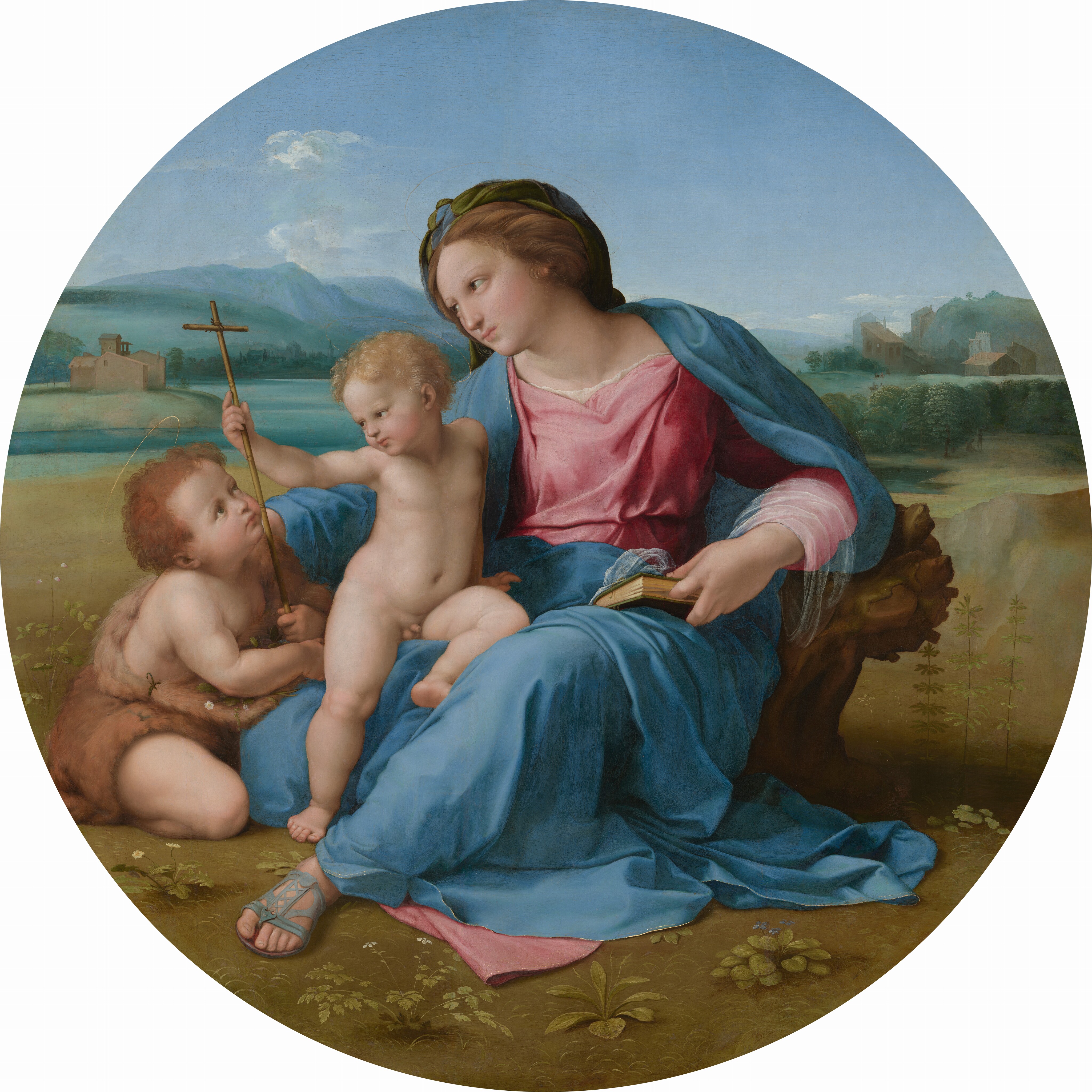
The circular edge presses on every interval. Raphael therefore bends and lowers the group so it belongs to the tondo rather than placing a perfect equilateral triangle inside it. The figures make a broad, stable unit, yet the exchanged cross and downward attention animate the centre.
A National Gallery discussion of another Raphael Madonna describes its “upward pyramidal movement” while also noting gaze, colour and landscape.[4] That combination is instructive: the pyramid names one organising tendency, not the whole meaning of the painting.
Two alternatives clarify the idea
Vermeer: compact does not necessarily mean pyramidal
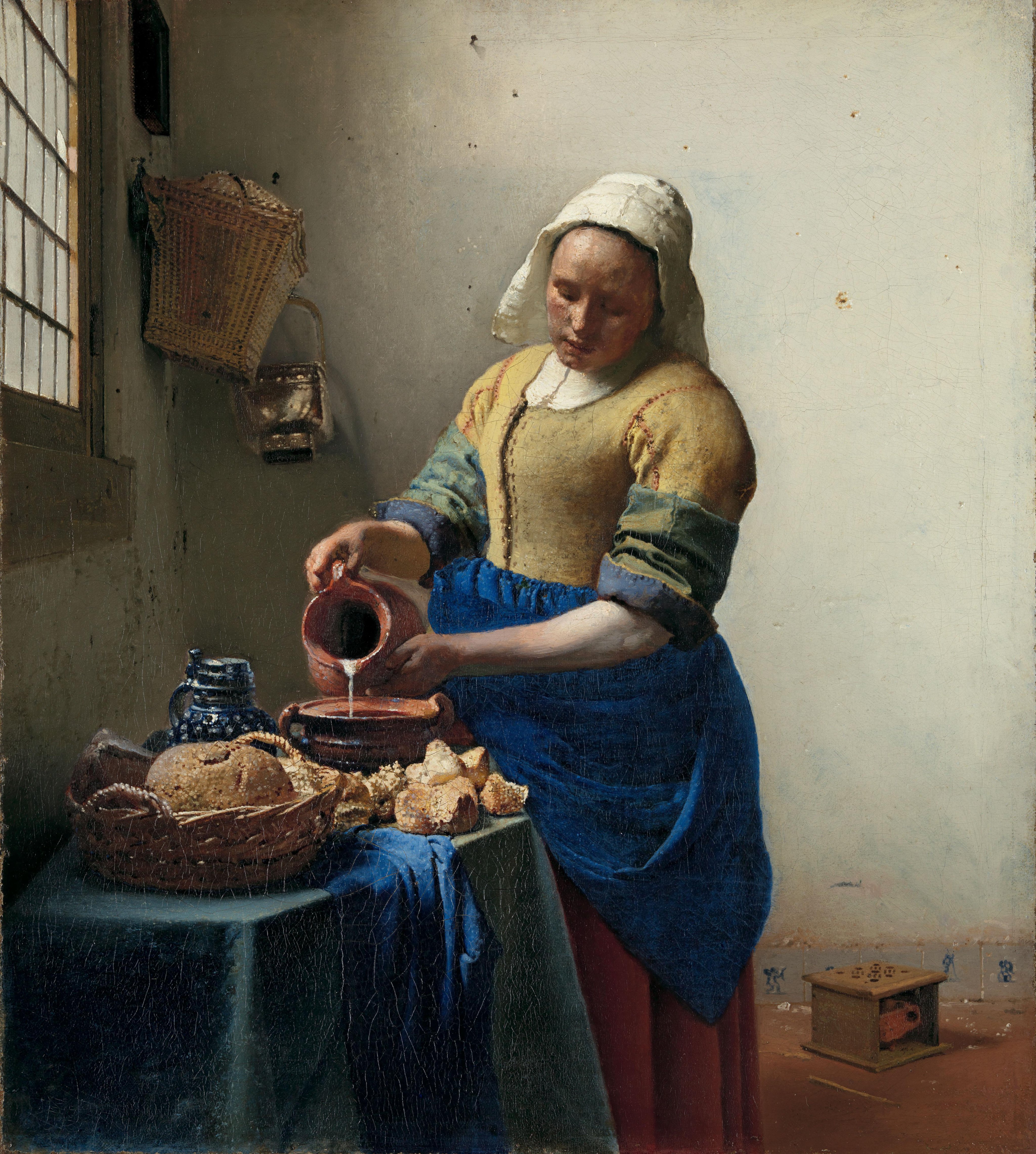
In Johannes Vermeer's The Milkmaid, around 1660, the woman and tabletop objects form a dense lower-left group against a pale wall.[5] Her head rises above the table, but the window, wall, floor line and light establish a stronger rectangular framework than a single enclosing pyramid.
Calling every bottom-heavy arrangement pyramidal would erase these differences. The picture is compact, weighted and vertically organised; those are useful descriptions even when the pyramid label adds little.
Poussin: several groups across a field
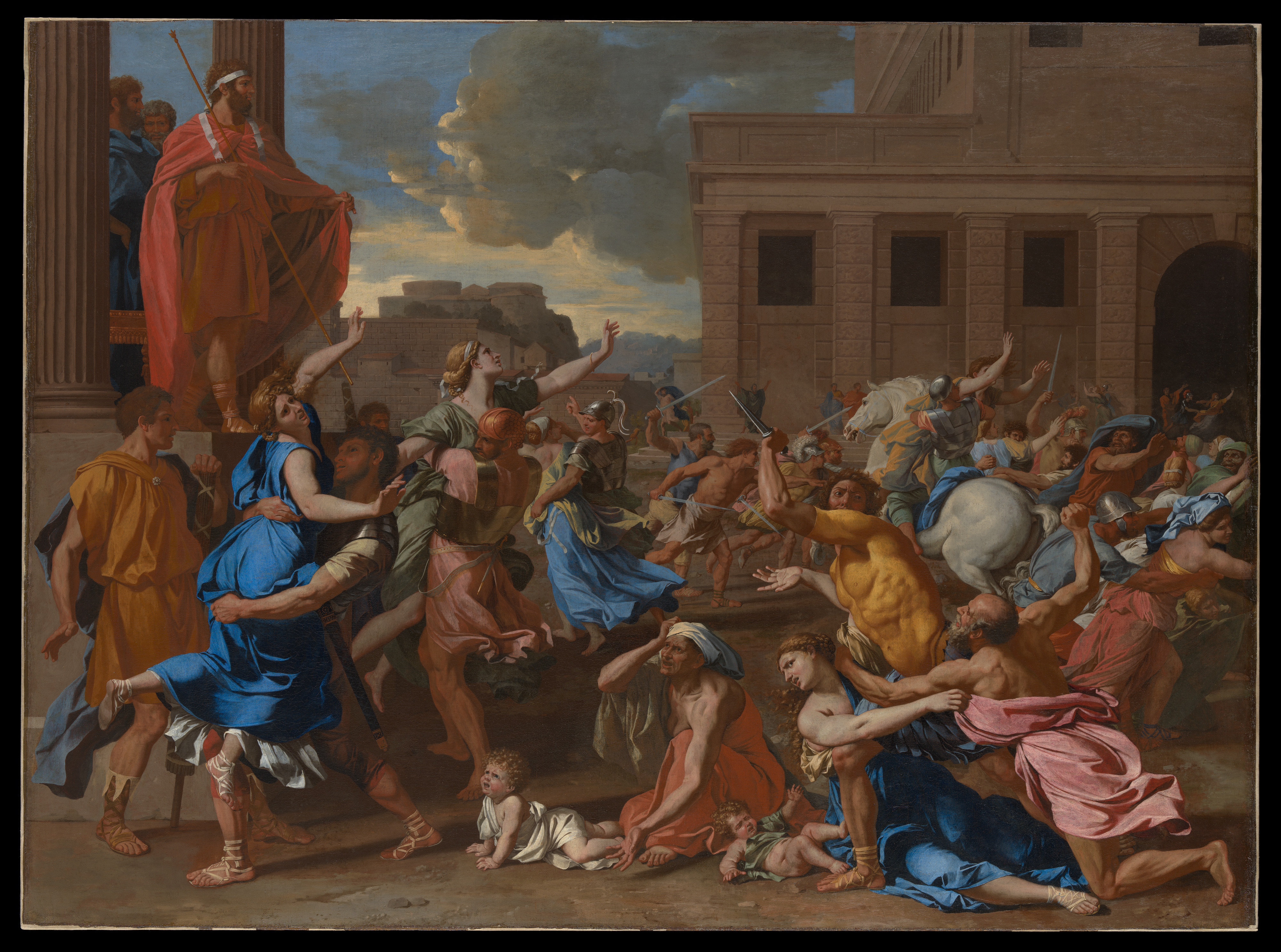
Nicolas Poussin's The Abduction of the Sabine Women, probably 1633–34, spreads struggling pairs and clusters across a classical square.[6] Architecture, paving and open intervals keep many simultaneous actions legible.
Small triangular groups can be found, but no single pyramid explains the complete scene. Repeated gestures and opposing diagonals distribute attention laterally. The comparison shows why composition should be read at both local and whole-work scales.
Pyramid, triangle and hierarchy
A triangle is a two-dimensional shape; a compositional pyramid suggests volume or a group turning through depth. In practice the words often overlap, but asking about depth improves the reading. Are figures stacked on one plane, or do they overlap and recede? Does the base feel like a line, an area or a cluster of bodies?
Hierarchy is also not automatic. A summit attracts notice when scale, light, colour, gaze or narrative importance reinforces it. A tiny bright accent low in the field may compete strongly with a larger head above. Emphasis in Art helps describe that competition; Unity in Art addresses how varied parts remain connected.
Make and test a pyramid composition
Use three to five simple shapes. Place two wider forms low, one form above, and overlap them enough to create depth. Add two directional bonds—perhaps a gaze and an arm—between the upper and lower areas. Then make a second thumbnail that distributes the same shapes across the width.
Compare the thumbnails without assuming that stability is always preferable. Which arrangement suits the subject? Does the pyramid become stiff? Does the distributed version lose focus or gain useful breadth? Move the summit off-centre, interrupt one side or allow a secondary accent to pull outward.
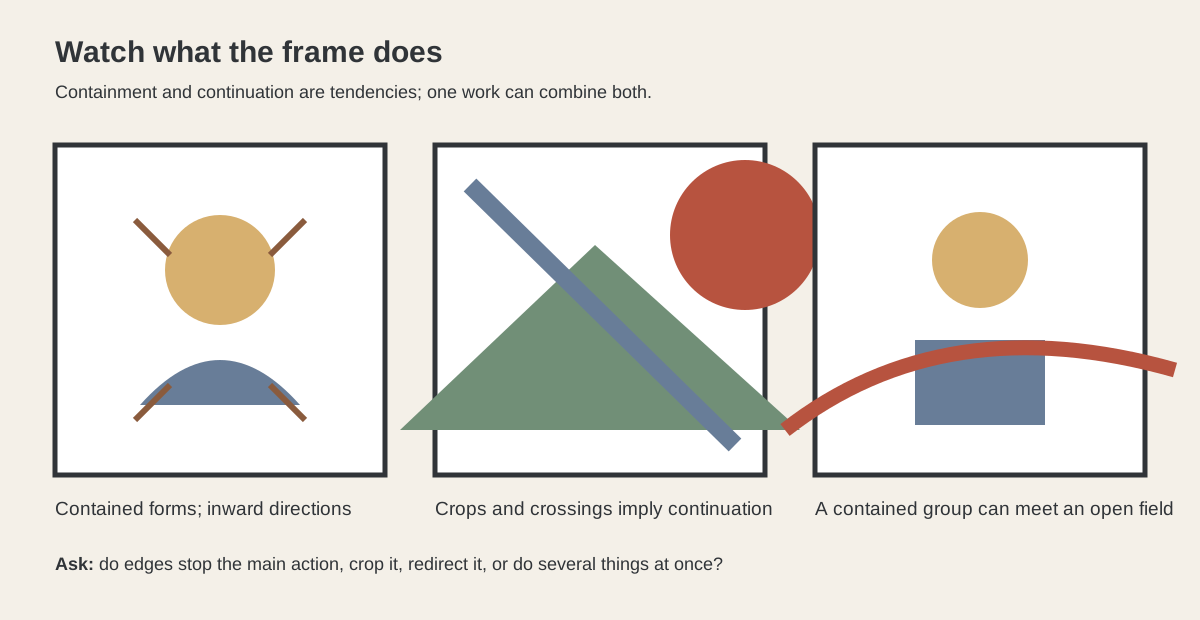
When studying an existing work, distinguish description from attribution. A visible pyramidal grouping can be described confidently; a claim about the artist's method needs drawings, statements or technical evidence. Return to Composition in Art to relate the structure to frame, depth and the complete field.[7]
Watch: Pyramid Composition through Formal Analysis
Choose a museum-led whole-work analysis, a close reading, or a foundations overview for considering pyramid composition.
Introducing Formal Analysis: Landscape
Follow how recurring shapes, colours and intervals contribute to a larger visual organisation.
Watch on YouTubeFrequently Asked Questions
It is an arrangement in which important parts form a broad base and rise towards a narrower apex, often creating a stable group.
The terms overlap, but pyramid composition usually stresses the visual mass and stability of a rising group rather than any isolated triangle.
Modern analysis can identify a pyramidal grouping, but historical intention requires documentary, preparatory or technical evidence.
No. The base, apex and internal directions can be unequal while the group still reads as a coherent rising mass.
Mark the broad base and apex, trace overlaps and directional bonds inside the group, then compare the result after changing scale, crop or spacing.
Discussion
Which example on this page has the clearest pyramidal silhouette, and which internal relationship prevents it from feeling static?
Reader Insights
Identify the broadest supporting interval and the point towards which the group rises.
Follow overlaps, gestures, contours and sight lines rather than relying on an outline alone.
A pyramid may strengthen or dissolve when the frame changes.
Join the Conversation
Share one precise observation or a useful museum example below.
References
- Smarthistory, “Leonardo, The Virgin of the Rocks”
- The Metropolitan Museum of Art, “Renaissance Drawings: Material and Function”
- National Gallery of Art, Raphael, The Alba Madonna, c. 1510
- National Gallery, “Picture of the month: March 2022”
- Rijksmuseum, Johannes Vermeer, The Milkmaid, c. 1660
- The Metropolitan Museum of Art, Nicolas Poussin, The Abduction of the Sabine Women, probably 1633–34
- TheHistoryOfArt.org, “Composition in Art”