by Tom Gurney
Tom Gurney BSc (Hons) is an art history expert with over 20 years experience
Page created on September 3, 2026 / Page updated on September 13, 2026
Email: tomgurney1@gmail.com / Phone: +44 7429 011000
How Unequal Visual Weights Can Share a Stable Field
Steelyard composition is a form of asymmetrical balance in which a large visual mass near an imagined pivot is answered by a smaller accent farther away. The name comes from a weighing beam: a small movable weight on a long arm can balance a heavier load close to the fulcrum.[1]
In an artwork the “weights” are perceptual, not physical. Size matters, but so do contrast, colour, detail, recognition, isolation and distance from the centre. The method is therefore a useful analogy for arranging and testing a picture, not an exact equation.
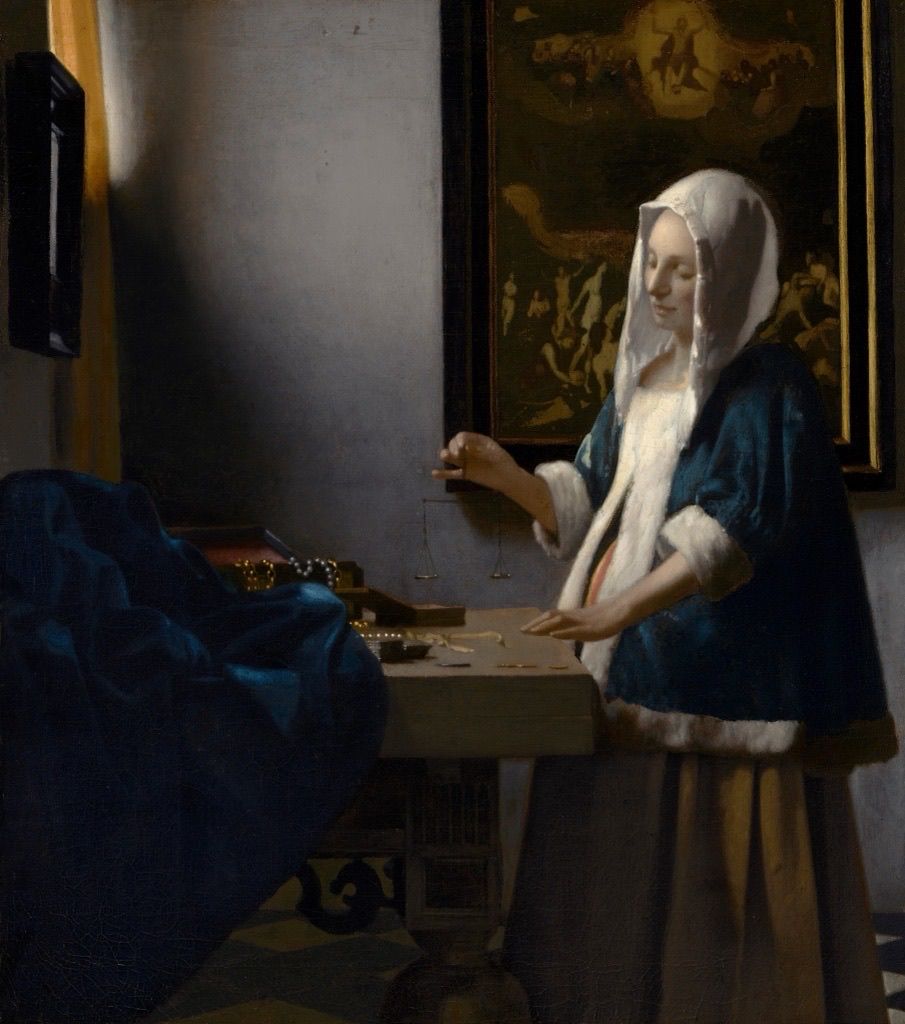
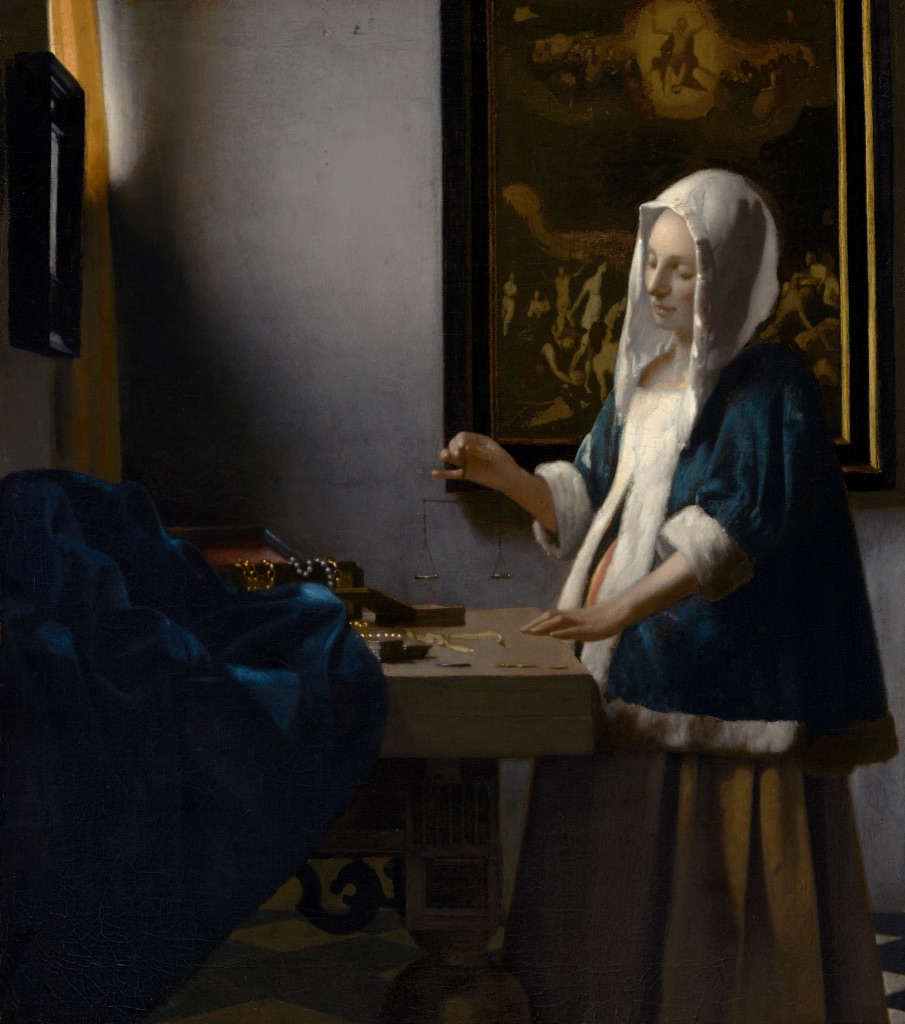
Johannes Vermeer, Woman Holding a Balance, c. 1664. The literal balance is not a diagram of the composition: the useful comparison lies in how the compact figure, tabletop, wall, light and background painting carry unequal perceptual weights across the field. Image: National Gallery of Art, public domain.
At a Glance
- Core relationa large mass nearer an imagined pivot is answered by a smaller, more distant accent.
- Perceptual weightsize interacts with contrast, colour, detail, recognition, isolation and edge distance.
- Keep hierarchythe counterweight should support the whole without becoming a competing principal subject.
- Works through depthforeground and distance can balance one another as well as left and right.
- Use as a testcover, shift or weaken the accent before claiming the analogy explains the work.
Contents
Where the idea comes from
Henry Rankin Poore gave “Balance of the Steelyard” a dedicated section in his 1903 book Pictorial Composition and the Critical Judgment of Pictures. He argued that an important object a short distance from the centre could be balanced by a much smaller object placed farther away.[1]
Poore also observed that isolation and nearness to an edge can increase an object's attraction. Crucially, he warned that the small balancing accent should not become a second principal subject. The counterweight must help the picture cohere without dividing attention.[1]
This is historical composition theory, not a law of human vision. Its continuing value lies in the question it asks: how can unequal areas share a stable field?
Read the balance guide
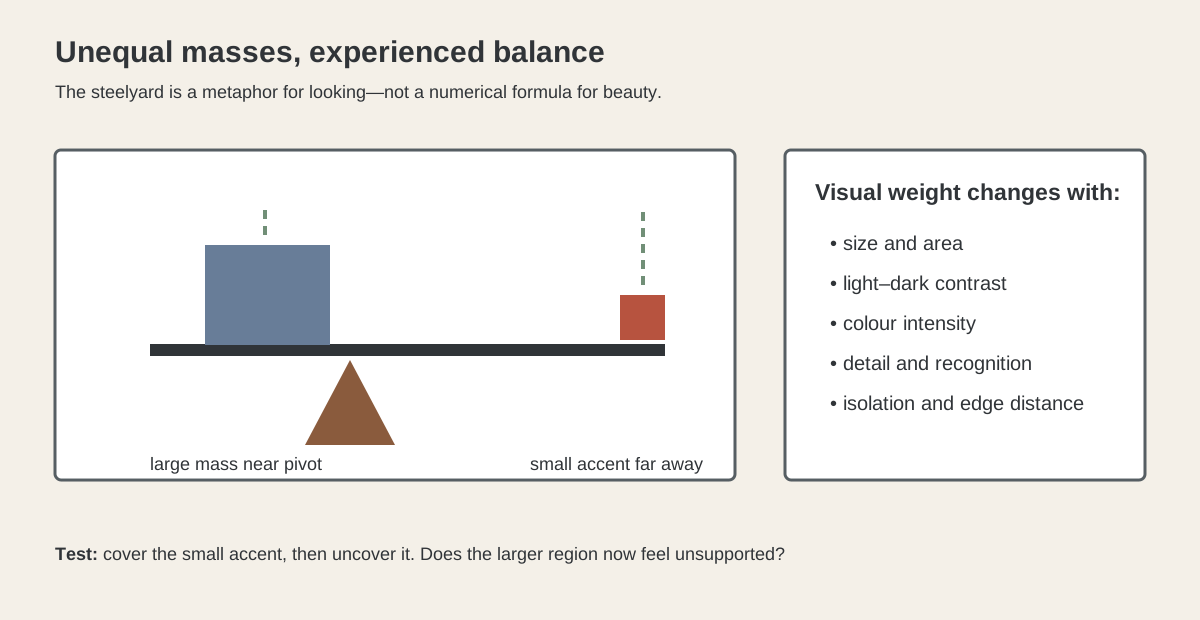
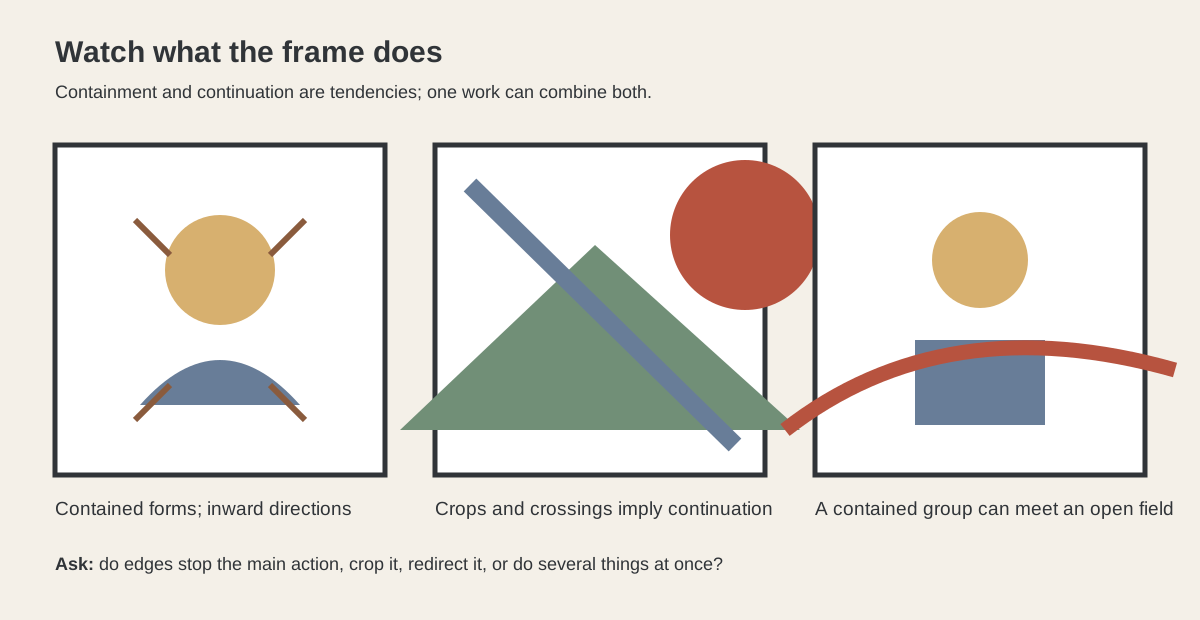
The first panel turns the metaphor into a simple beam: a large block sits close to the pivot and a small block farther along the other arm. The second panel lists variables that make a form feel visually weighty. The removal test at the bottom is more useful than measuring pixels.
Visual weight is more than size
A small bright mark in a dark region may command more attention than a broad quiet shape. A face, hand or word can attract notice through recognition. An isolated form near a corner may pull outward because nothing nearby absorbs it. A dense cluster close to centre may need only a restrained remote accent.
Distance therefore interacts with attraction. The Balance in Art guide explains the wider principle, while Emphasis helps identify which part remains dominant. Steelyard composition joins the two: the counterweight supports balance while remaining subordinate.
The pivot need not be a drawn vertical line, and the balance can work through depth. Poore explicitly extended the idea beyond left and right, asking how foreground, middle distance and background carry one another.[1]
Four artwork tests
These examples demonstrate ways to ask steelyard questions. Only the first is named by Poore in his discussion; none proves that the historical artist used the term as a construction system.
Bruegel: dark hunters and a distant valley
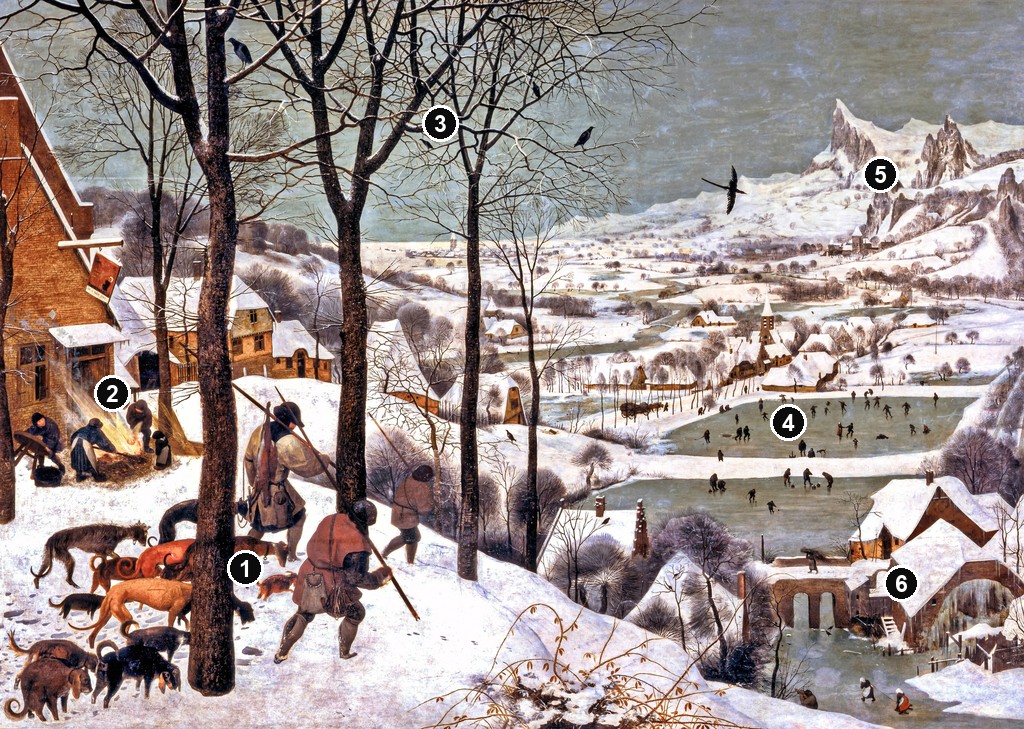
Pieter Bruegel the Elder's Hunters in the Snow (Winter), 1565, belongs to the Kunsthistorisches Museum.[2] Hunters, dogs and dark trees descend from the left foreground, while a wide snow-covered valley opens to the right and into the distance.
Poore invokes the painting when discussing balance across breadth and depth.[1] The dark near group is concentrated; the valley is larger but paler and filled with many small incidents. Distant mountains, buildings, birds and skaters prevent the open expanse from becoming inert. The relationship is richer than one heavy object opposed by one dot, but the steelyard metaphor makes its inequality easier to examine.
Cassatt: a low figure answered across the room
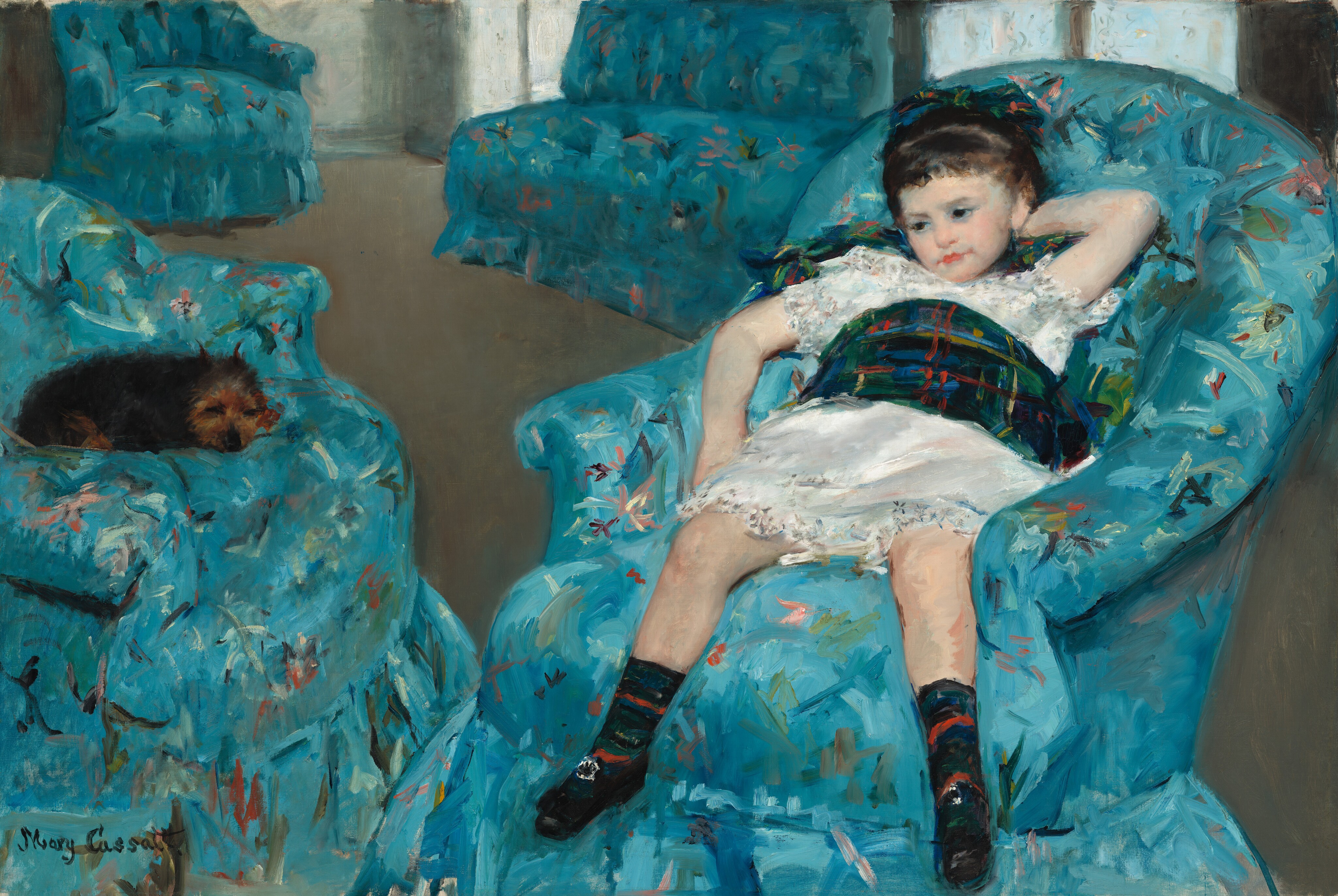
Mary Cassatt's Little Girl in a Blue Armchair, 1878, is held by the National Gallery of Art.[3] The child reclines low in one chair, while other blue chairs and a small dog spread through the surrounding room.
The child remains the principal subject because face, pose and contrast gather attention. Repeated chairs extend visual mass across the canvas, and the dog becomes a modest remote accent. Cover the dog and the arrangement still works, but the far chair becomes quieter; uncover it and the right side gains a precise point of life.
Hokusai: a huge wave and a tiny mountain
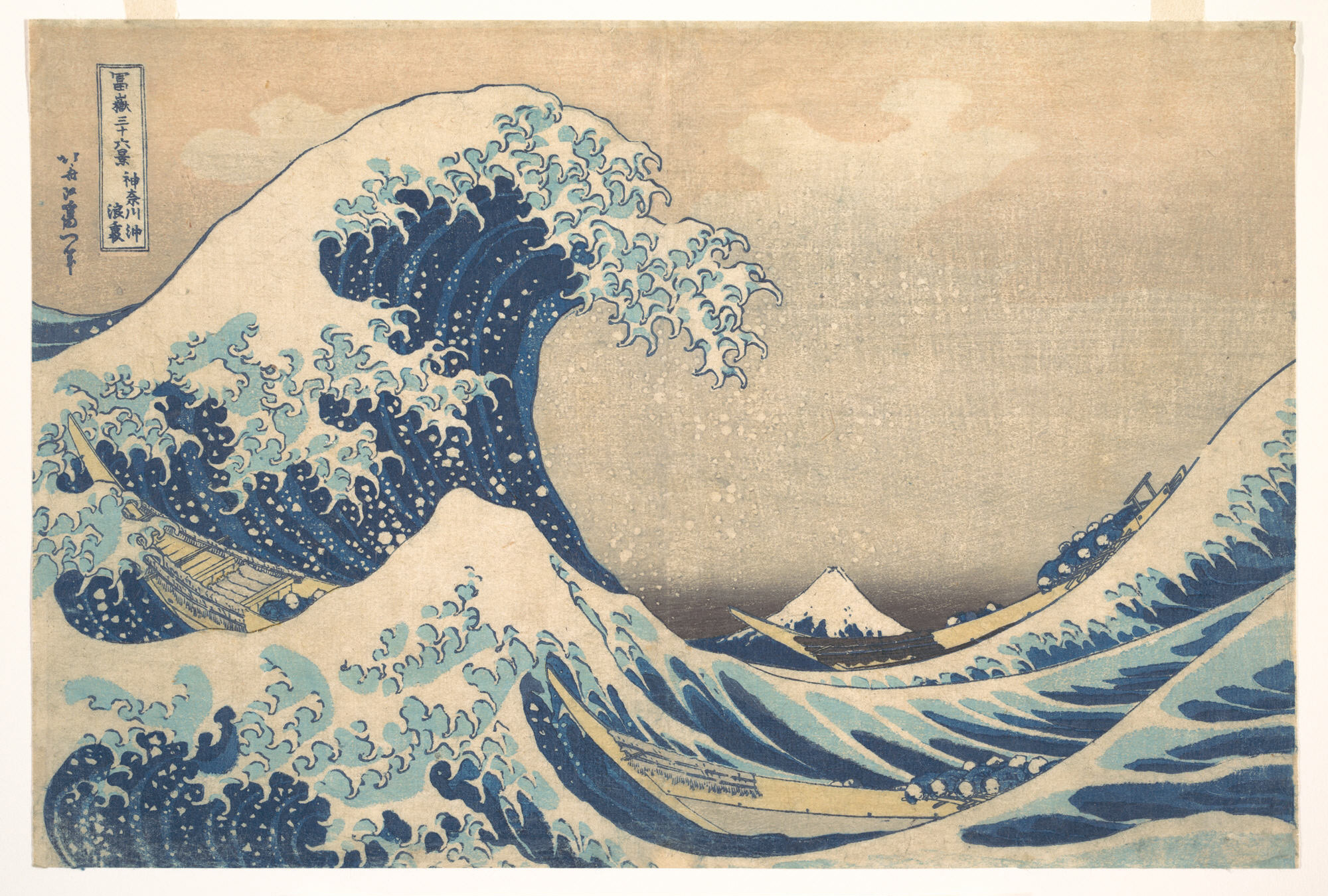
Katsushika Hokusai's Under the Wave off Kanagawa, about 1830–32, places an immense foreground wave above three boats, with Mount Fuji very small in the distance. The Metropolitan Museum holds this impression.[4]
The print is not a literal left–right scale. Its useful steelyard relation works through depth and recognition: Fuji is tiny yet isolated, stable and culturally legible, while the wave is vast, active and near. Foam, boats and repeated slopes carry attention between them.
Manet: concentrated passengers in a blue field

Édouard Manet's Boating, 1874, is in the Metropolitan Museum.[5] Two passengers, a boat, mast and large sail occupy much of one side, surrounded by blue water. The man's cropped body adds pressure at the right edge.
A small distant object does not provide the counterweight here. Instead, colour, water pattern and the extension of the boat distribute the field. This negative case is useful: not every asymmetrical image is best explained by the named scheme.
Steelyard versus symmetry and thirds
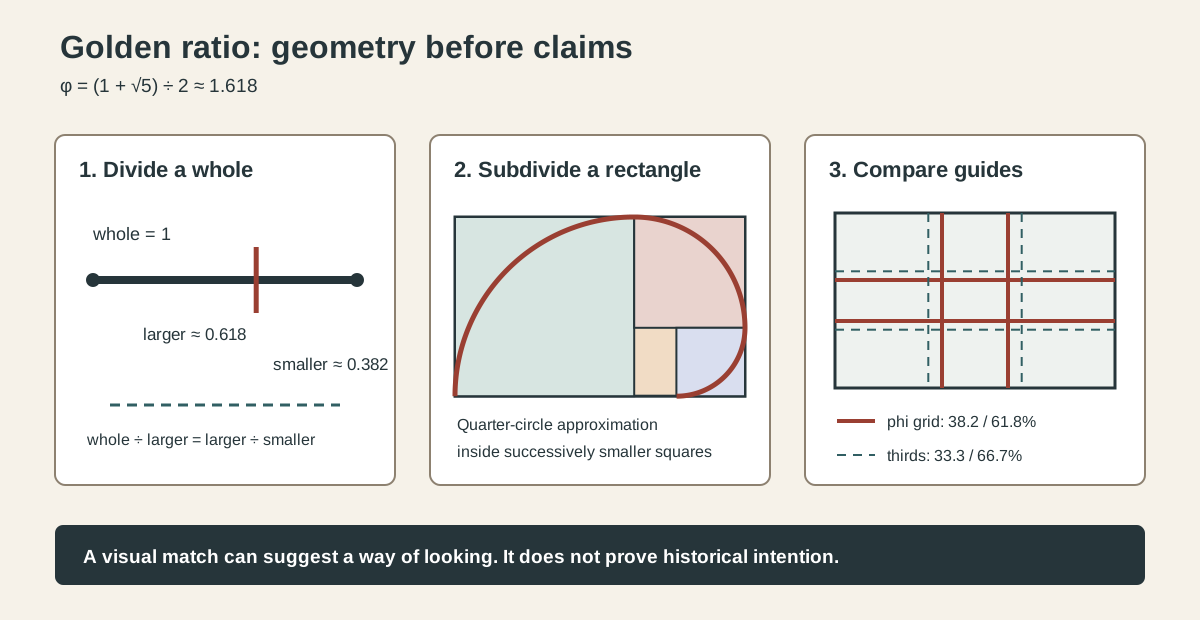
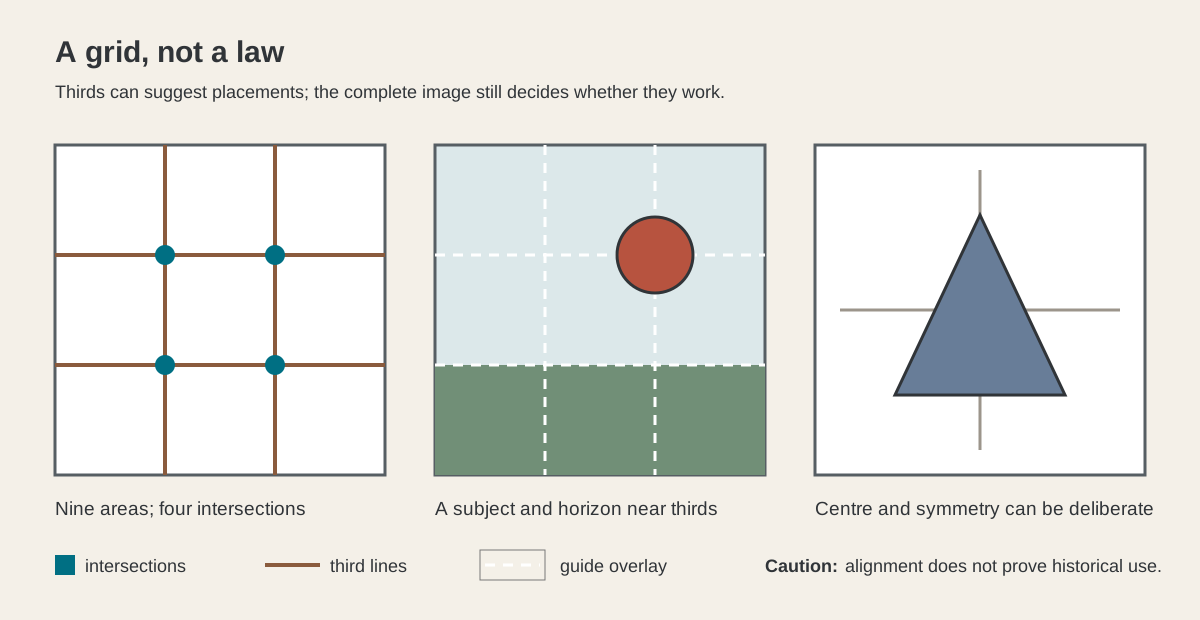
Symmetrical balance repeats or closely corresponds across an axis. Steelyard balance accepts unequal masses and asks how distance and attraction make them coexist. The Rule of Thirds in Art supplies possible coordinates, but it does not calculate visual weight. A small accent near an intersection may be too strong, too weak or irrelevant.
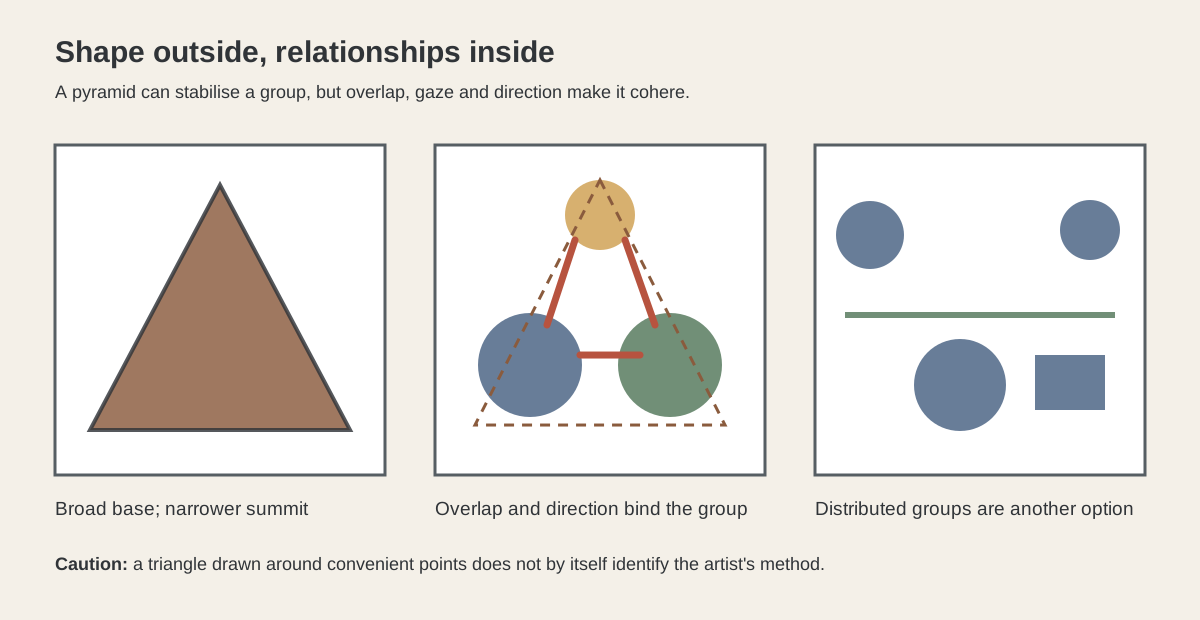
The method also differs from Pyramid Composition, which gathers forms into a rising group. A pyramid can itself sit off-centre and participate in a steelyard relationship with a remote detail. These structures can overlap without becoming synonyms.
Try the cover-and-shift test
Place a large shape a little off-centre. Add a much smaller shape on the opposite side, farther from the middle. Change only one variable at a time: darken the accent, intensify its colour, move it toward the edge or surround it with more empty space.
Then cover the accent. Does the large mass now feel stranded or merely dominant? Restore it and ask whether it supports the whole or competes for equal attention. If it splits the picture, reduce contrast, size or isolation. If it does nothing, strengthen one of those properties.
Use the test as a comparison, not a verdict. The complete Composition in Art includes edges, depth, movement and grouping as well as balance. Steelyard composition is most illuminating when it explains a specific unequal relationship—and least useful when every off-centre picture is forced onto an imaginary scale.
Watch: Steelyard Composition through Formal Analysis
Choose a museum-led whole-work analysis, a close reading, or a foundations overview for considering steelyard composition.
Introducing Formal Analysis: Landscape
Follow how recurring shapes, colours and intervals contribute to a larger visual organisation.
Watch on YouTubeFrequently Asked Questions
It is an asymmetrical arrangement in which a large visual mass nearer an imagined pivot is answered by a smaller accent farther away.
The name refers to a weighing beam on which a small movable weight at a distance can balance a heavier load close to the fulcrum.
No. Contrast, colour, detail, recognition, isolation, edge distance and depth can make a small feature unusually prominent.
No. Thirds suggest positions, while the steelyard analogy asks how unequal perceptual weights relate across a field.
Cover the small accent, restore it, then change its distance, contrast or isolation to see whether it supports the principal mass or competes with it.
Discussion
Which example best shows that a small distant accent can carry more visual weight than its size suggests?
Reader Insights
Identify the dominant concentrated area before looking for a counterweight.
Cover it and judge what changes in the complete field.
Shift distance, contrast, colour or isolation separately.
Join the Conversation
Share one precise observation or a useful museum example below.
References
- Henry Rankin Poore, Pictorial Composition and the Critical Judgment of Pictures, 1903, Project Gutenberg
- Kunsthistorisches Museum, Pieter Bruegel the Elder, Hunters in the Snow (Winter), 1565
- National Gallery of Art, Mary Cassatt, Little Girl in a Blue Armchair, 1878
- The Metropolitan Museum of Art, Katsushika Hokusai, Under the Wave off Kanagawa, ca. 1830–32
- The Metropolitan Museum of Art, Édouard Manet, Boating, 1874