


 by Tom Gurney
Tom Gurney BSc (Hons) is an art history expert with over 20 years experience
Published on June 19, 2020 / Updated on August 29, 2026
Email: tomgurney1@gmail.com / Phone: +44 7429 011000
Overview
J. M. W. Turner's paintings changed what British landscape and marine art could claim. He began from drawing, topography and watercolour, but oil painting gave him the scale, authority and public visibility needed to compete with history painting, old-master landscape, marine drama and modern subject matter. His painted career stretches from early sea pictures and British views to classical cities, Alpine storms, Venetian light, burning buildings, steam power, abolitionist horror and late works in which sky, sea and colour seem to press against the limits of recognisable form. The National Gallery identifies him as an artist whose works include watercolours, oils and engravings and notes his movement from topographical beginnings toward increasingly expressive colour and contemporary technology. [1]
Turner was never only an oil painter, and any account of his paintings has to remember the surrounding practices that shaped them. He drew constantly, travelled with sketchbooks, made watercolours for collectors and print projects, and adapted lessons from one medium to another. The Met observes that he worked across watercolour, oil and etching and that his output ranged from local topography to storms and awe-inspiring terrain. [2] Yet the paintings occupy a special place because they are where Turner most visibly tested the status of landscape in the public exhibition world. Oil gave him weight, size, surface and historical presence. It allowed a seascape, railway, harbour, myth or storm to stand beside the grand traditions of European art.
The standard catalogue backbone for Turner's oil paintings remains the revised two-volume work by Martin Butlin and Evelyn Joll, published in 1984 for the Paul Mellon Centre and Tate Gallery by Yale University Press. WorldCat describes it as a comprehensive and authoritative reference on Turner's paintings, with entries addressing dating, provenance, exhibition history and critical response. [3] That matters because Turner's painted output presents many object-level complications: titles changed, some dates are exhibition dates, some works were left unfinished, some survive in related versions, and later collections sometimes use different naming conventions. A responsible overview should give the career shape without pretending that every title or date is simple.
The broad movement is clear. Turner first earned recognition through topographical and watercolour practice, then used oil painting to enlarge marine and landscape subjects. He placed coast, river and weather into the arena of public ambition. He used classical and biblical subjects to show that landscape could carry historical meaning. He travelled repeatedly and made painted views of Britain, the Continent, Italy and Venice. He responded to modern life through fire, steam, industry and political violence. In the late works, he pushed colour and atmosphere so far that later viewers often see him as a precursor of modern abstraction, while the strongest phrasing keeps him rooted in his own century. [2]
At a Glance
- ScopeOil paintings and finished exhibition pictures
- Catalogue backboneThe Paintings of J.M.W. Turner, revised 1984 [3]
- First Academy oils1796 [1]
- Early strengthMarine painting and British topography
- Historical ambitionClassical, biblical and literary landscape
- TravelBritain, the Continent, Italy and Venice
- Modern subjectsFire, steam, industry and political violence
- Late workSea, weather, light and loosened contour
- National legacyThe Turner Bequest [6]
- Essential cautionTitles, dates, versions and finish require object-level checking
Contents
- Overview
- Painting and the Royal Academy
- Early Marine Painting
- British Landscape and Topography
- Classical and Historical Ambition
- Travel and Italy
- Venice
- Modernity and Technology
- Late Sea and Light
- Titles, Dates and Versions
Turner Paintings in This Cluster
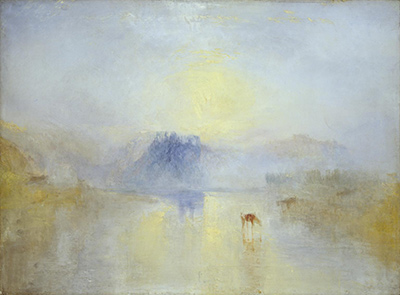
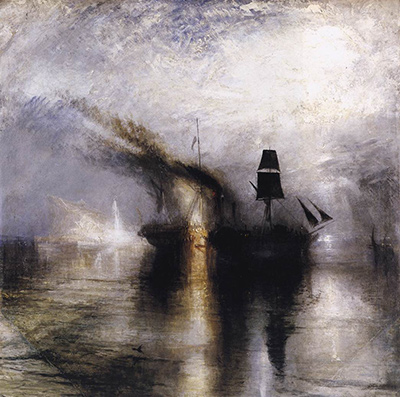
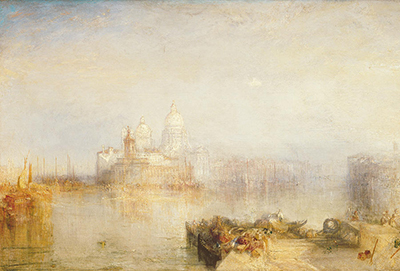
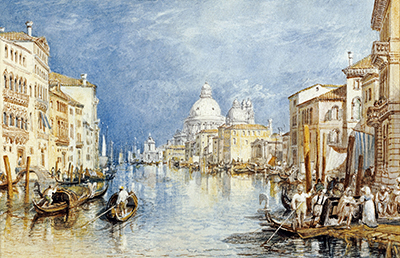
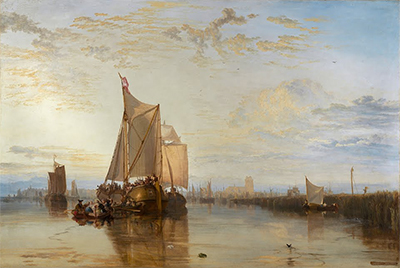
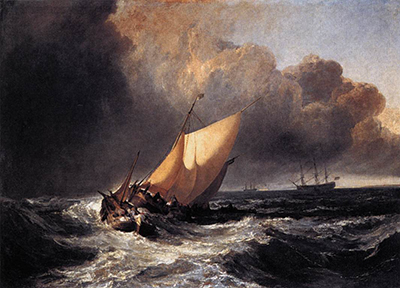
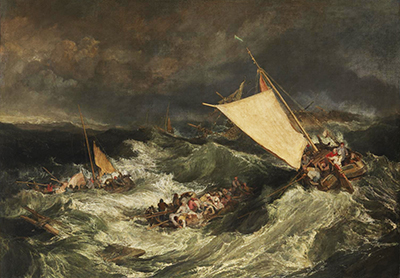
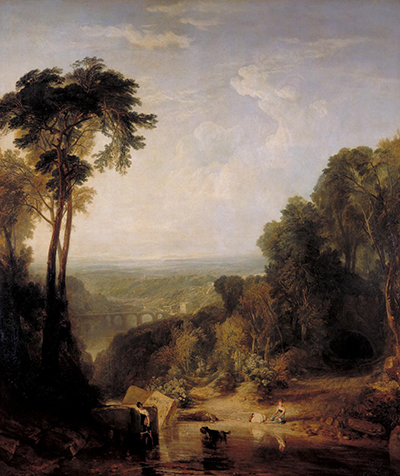
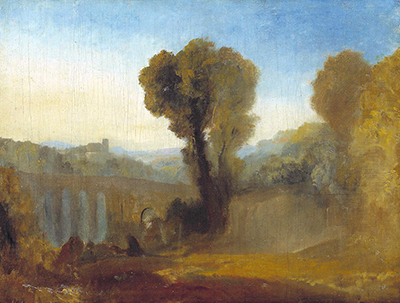
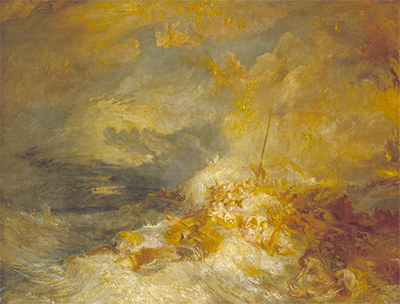
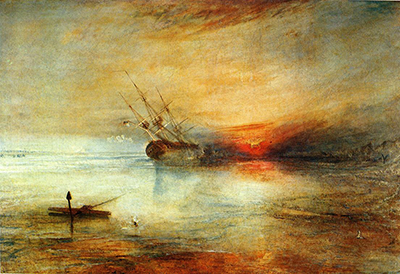
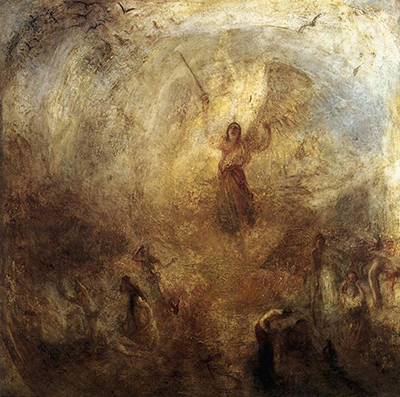
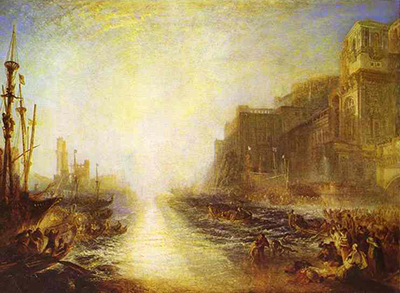
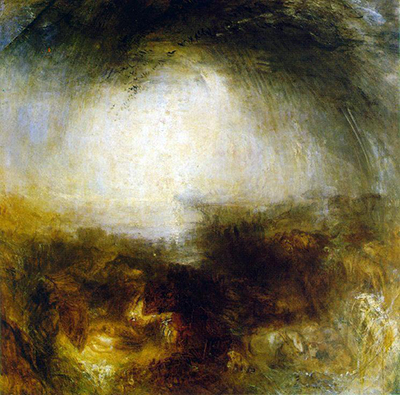
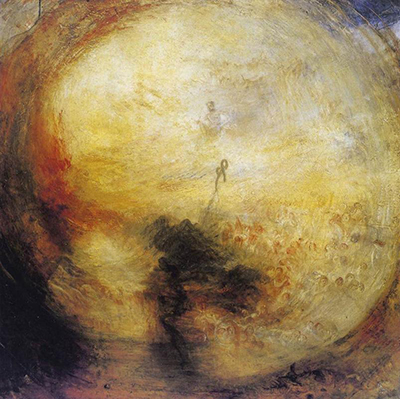
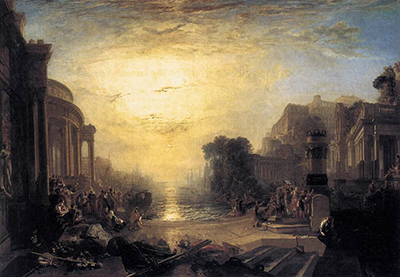





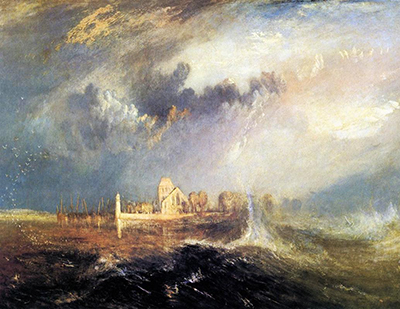
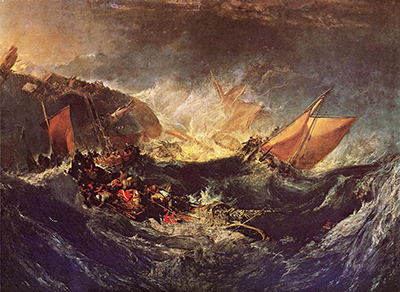
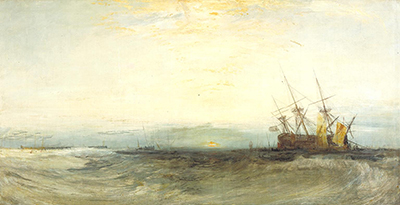
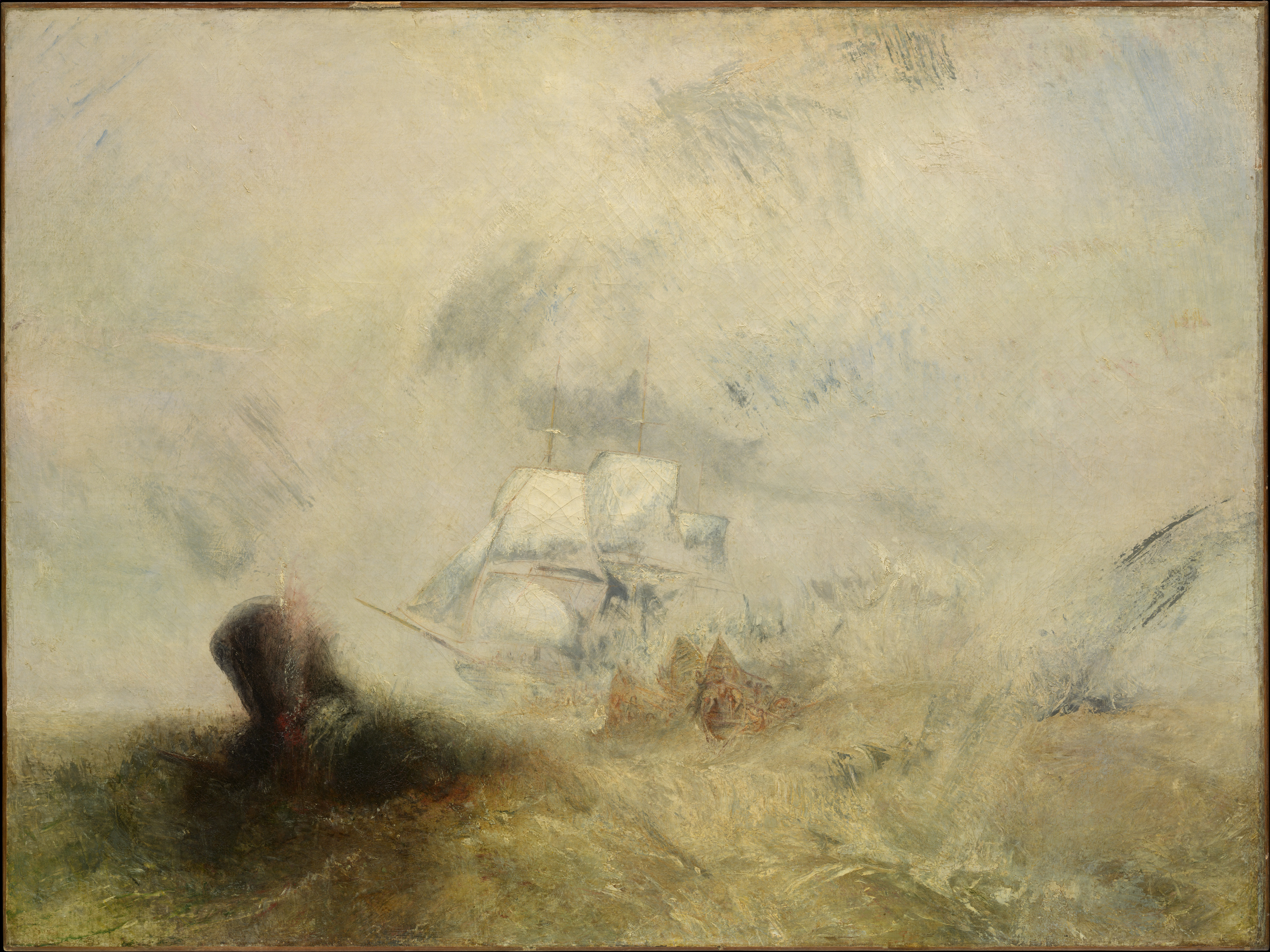
Painting and the Royal Academy
Turner's public career as a painter grew through the Royal Academy. The National Gallery records that he entered the Royal Academy Schools in 1789, exhibited watercolours from 1790 and oils from 1796. [1] This sequence explains the disciplined foundation behind the paintings. Before Turner was known for dazzling colour or turbulent weather, he had learned architectural drawing, topographical description, perspective and exhibition strategy. His oils did not come from nowhere. They grew from the practical skills of a young artist trying to make landscape visible in a competitive London art world.
The Academy gave Turner an audience and a hierarchy to challenge. Landscape had often been placed below historical, religious or mythological subjects. Turner did not simply accept that place. He made landscape larger, more learned and more emotionally forceful. He painted seas, rivers, mountains and cities as settings for memory, danger, empire, myth and modern life. The Met states that Turner believed landscape could convey artistic, historical and emotional meanings and presented himself as heir to great history painters. [2] That ambition is one of the keys to the paintings.
Oil painting was crucial because it carried institutional prestige. Watercolour could be highly finished and commercially important, but oil remained the medium most associated with large public claims. Turner's early oils allowed him to compete in this arena. They also allowed him to work with opacity, glazing, impasto, scraping, layered colour and scale in ways that differed from watercolour while still drawing on watercolour's light. The later paintings often feel luminous because Turner had learned from transparent media how colour could structure atmosphere.
The Academy also forced Turner to think about attention. An exhibited painting had to hold its own among many works, across crowded rooms and before critics. Turner learned how to make a picture announce itself through contrast, scale, weather, light, title and subject. Some paintings gained admiration; others provoked discomfort. That public friction is part of the painted career. The works now treated as central entered the world as arguments.
That exhibition setting helps explain the pressure in many Turner oils. They often do more than show a motif; they declare a position. A marine picture could claim the seriousness of national history. A river view could become an experiment in atmosphere. A classical city could become a meditation on empire. Turner understood that paintings shown publicly needed to be legible enough to enter debate and bold enough to be remembered. The balance between clarity and risk became one of his most productive habits.
The Academy context also clarifies why paintings and watercolours should not be separated too sharply. Turner used watercolour to study light, tonal relation and rapid effect, then drew those lessons into oil. He used oil to enlarge the authority of subjects first cultivated through drawing and travel. The paintings are not isolated monuments; they are the most visible outcomes of a much broader practice.
Early Marine Painting
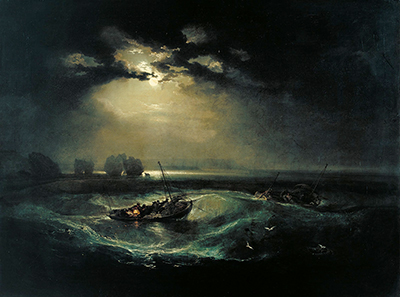
Turner's first major oil reputation was strongly connected to the sea. Fishermen at Sea, exhibited in 1796 and now in Tate's collection, is one of the key early works because it shows how quickly Turner could turn marine painting into a serious public statement. [4] Rather than treating fishermen, moonlight and water as picturesque ingredients, the picture uses darkness, reflected light and exposed boats to make the sea feel immense and uncertain. It announces a young painter who understood that marine art could be dramatic without needing a battle.
Marine painting gave Turner a field rich in precedent. The National Gallery notes his interest in seventeenth-century Dutch artists such as Willem van de Velde. [1] Dutch sea painting offered models of ships, weather, naval action and waterborne commerce. Turner learned from that tradition, but he did not merely continue it. He made the sea more unstable, more atmospheric and more symbolic over time. A Turner sea can be a place of labour, national memory, commercial movement, danger, tragedy or moral pressure.
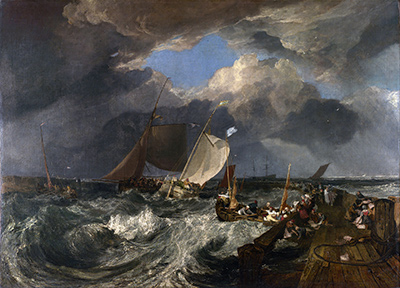
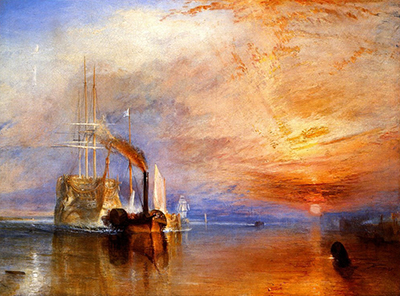
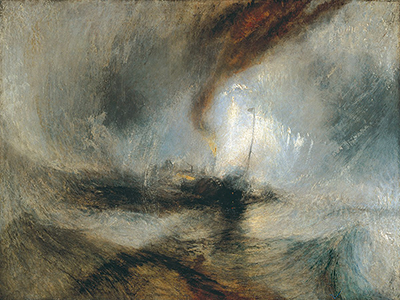
The early marine paintings also reveal Turner's interest in light under stress. Moonlight, storm cloud, spray, fog and reflected brightness are not decorative additions. They determine what can be seen and how securely the viewer can occupy the scene. That concern runs from disaster pictures and naval subjects to the old warship in tow, Wilkie's memorial seascape, the Boston slavery picture and the later steam-boat storm. The subjects differ sharply, but all test how water, weather and human action can be held in paint.
The sea also let Turner join event and atmosphere. A shipwreck, naval memory or steam-boat storm can be described through incident, but Turner often makes weather and light carry the deepest force. The vessel may matter because it is nearly overwhelmed. The human figure may matter because it is almost lost. This relationship between subject and visibility became one of Turner's strongest painted inventions. He made the sea not just a setting but a condition that changes the meaning of everything within it.
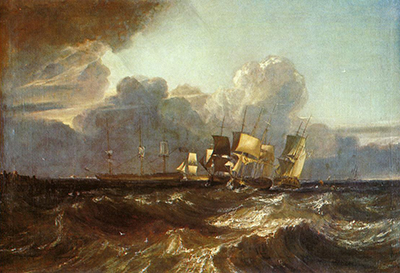
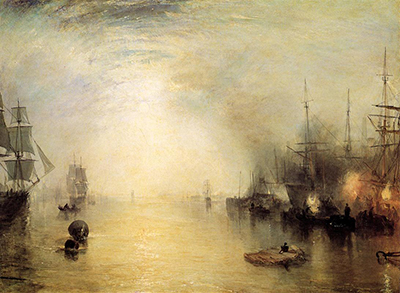
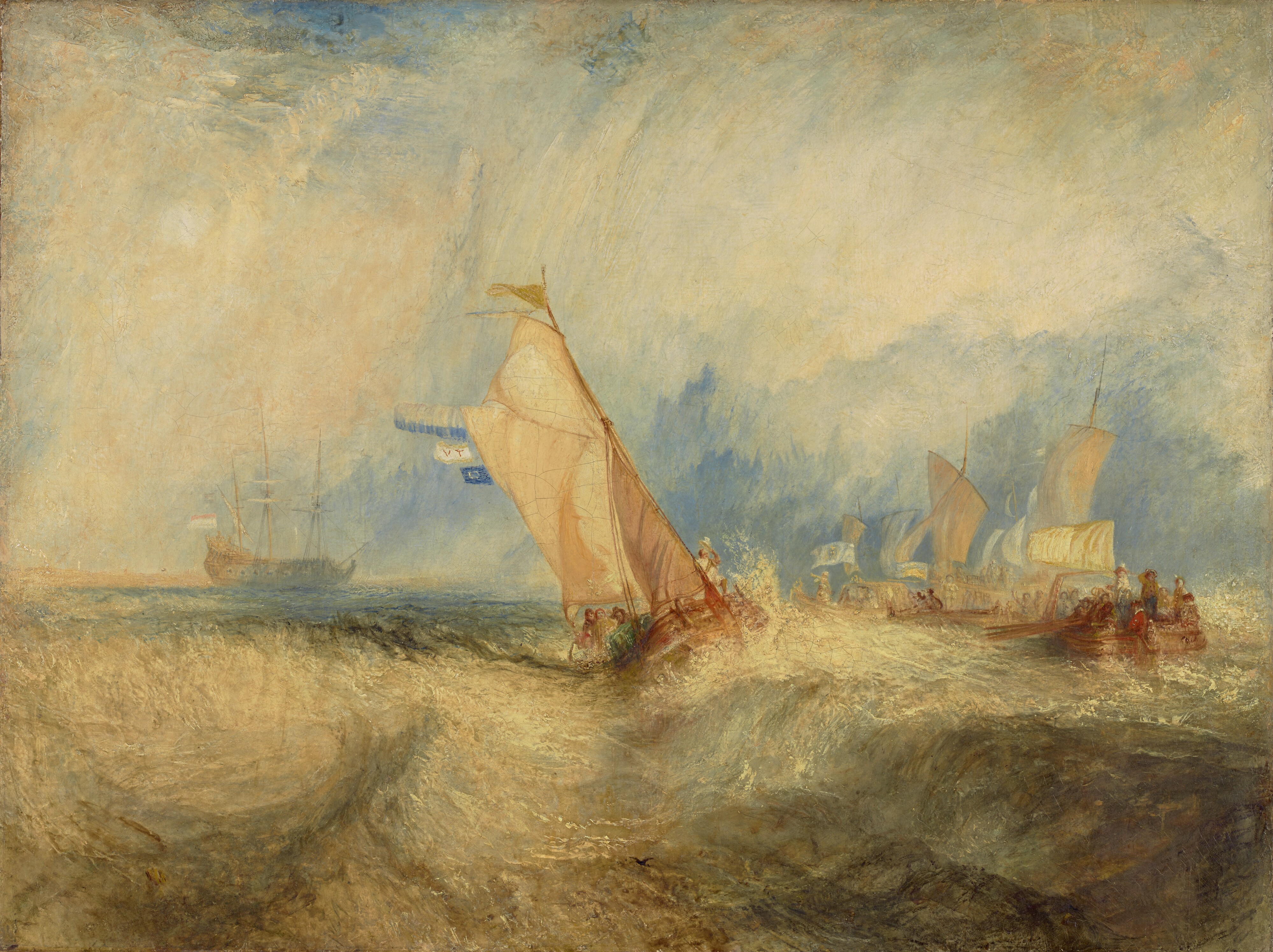
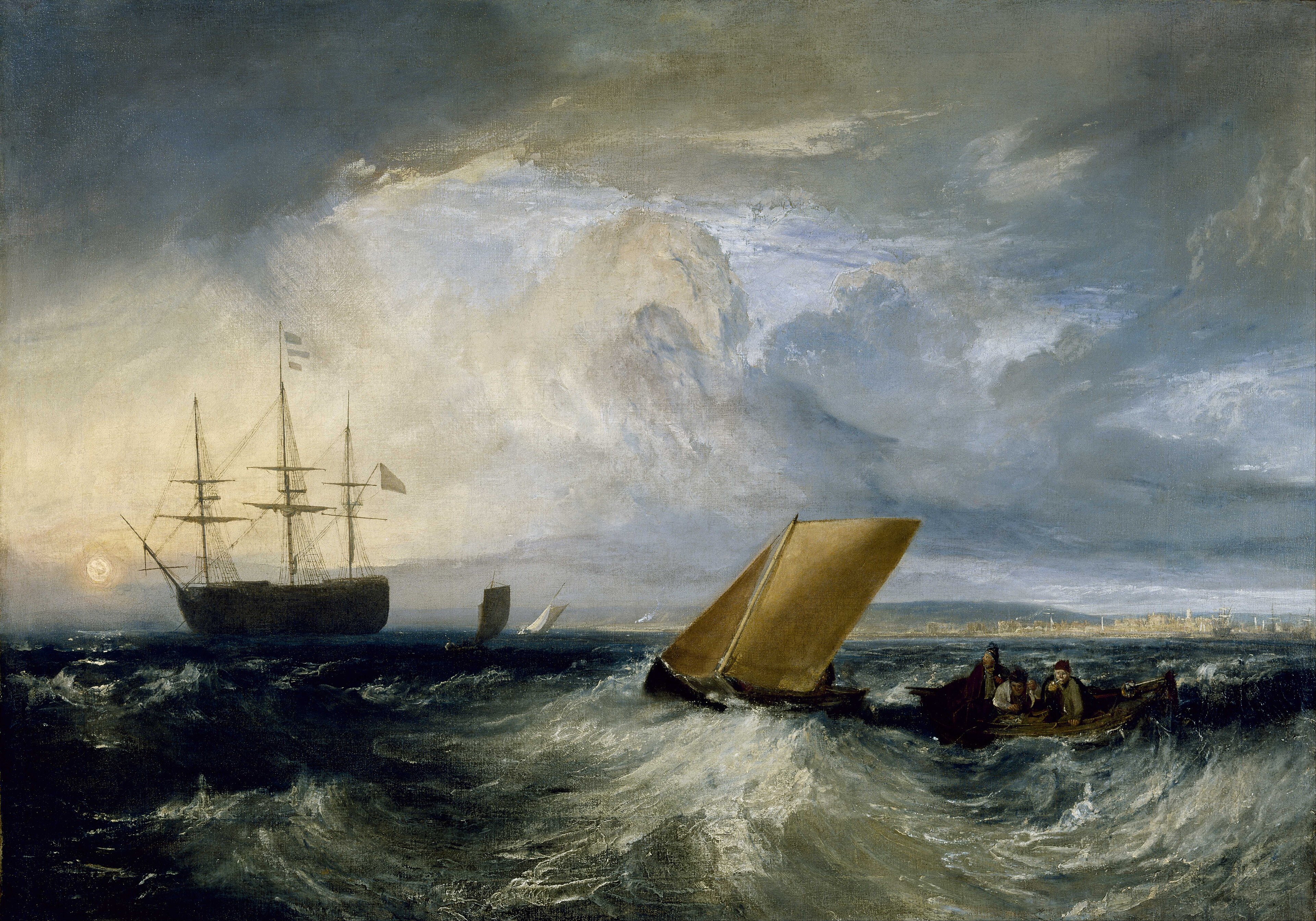
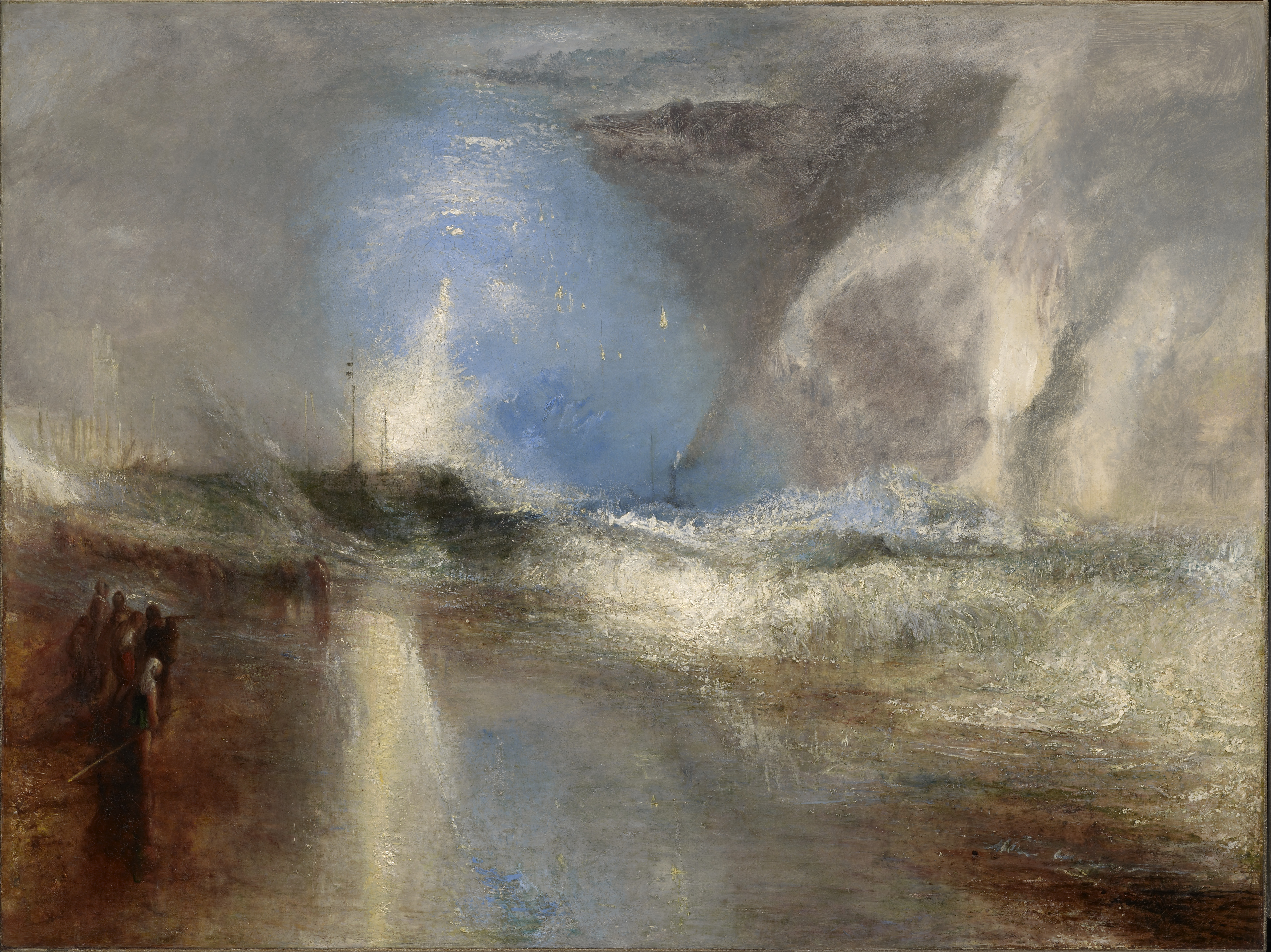
Turner’s marine subjects can be followed through very different kinds of pressure on the ship and the viewer. Van Tromp: A Dutch Admiral in a Sea of Doubt sets Dutch naval memory against uncertainty at sea, while Sheerness as Seen from the Nore considers the guardship within the working Thames estuary. In Longships Lighthouse, Land’s End, warning, wreck and the Atlantic coast become inseparable; Rockets and Blue Lights shifts the encounter to steam, signals and storm off Margate.
British Landscape and Topography
Turner's paintings remained tied to British landscape even as his ambition widened. The National Galleries of Scotland describes him as transforming landscape painting in Britain and moving from detailed topographical studies to expansive atmospheric vistas. [5] That summary is especially useful because it keeps both ends of the career in view. Turner did not abandon topography when his surfaces became freer. He transformed it.
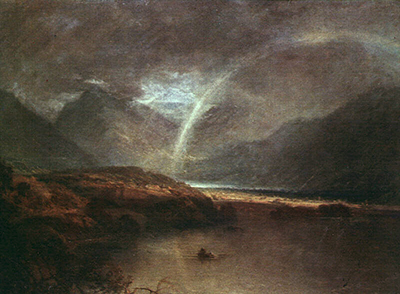
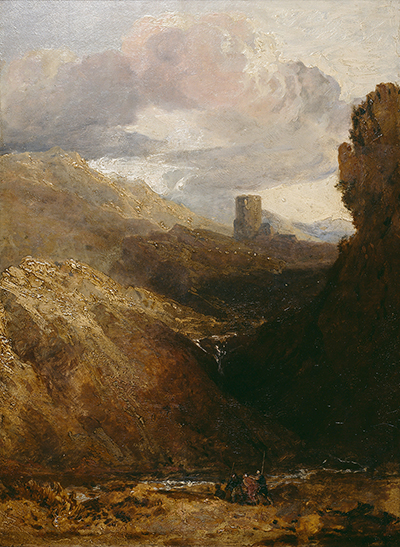
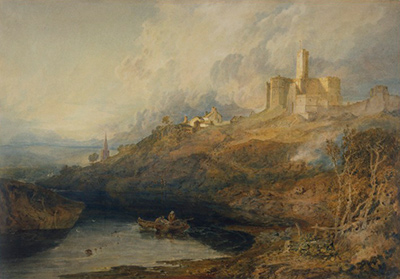
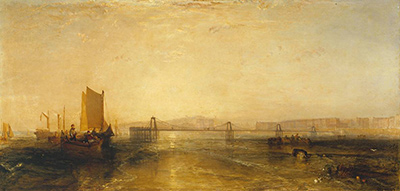
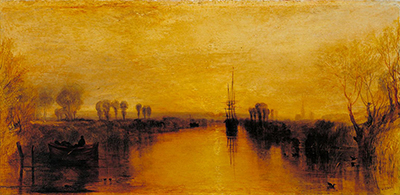
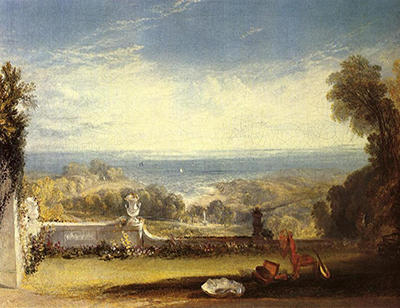
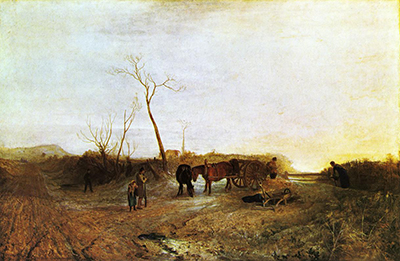
British subjects gave Turner rivers, castles, lakes, bridges, estates, harbours, coastlines and industrial edges. Some paintings developed from tours and sketchbook work; others responded to commissions, patrons or exhibition ambition. Works such as Buttermere Lake, Crossing the Brook, Chichester Canal and The Chain Pier, Brighton show different kinds of British place. Some are grand, some narrower, some explicitly modern, some rooted in local geography. What links them is Turner's ability to make place carry weather, history and pictorial structure.
Topography mattered because it trained Turner to see relationships: building to landscape, river to bank, horizon to weather, road to distance, boat to harbour. In a weaker artist, topographical accuracy might remain descriptive. In Turner, it became a basis for transformation. The recognisable place could be intensified by light, composition or atmosphere until it became more than a record. The viewer still senses a real location, but that location has been made emotionally and historically active.
British landscape also allowed Turner to work across scale. A large exhibition painting could turn a region into a national statement. A smaller work could test light, format or weather. Some subjects belonged to aristocratic patronage, some to travel, some to publication, some to public exhibition. This range helped Turner dominate British landscape not by repeating one image of Britain, but by showing that British places could support many forms of art.
The British paintings also complicate any simple division between rural and modern Turner. Canals, harbours, piers, bridges and rivers were all part of a changing nation. Even when a work appears quiet, it may belong to a world of transport, ownership, engineering, tourism or patronage. Turner often places these forces under weather and light rather than spelling them out as narrative. A canal can become an exercise in horizontal calm; a pier can become an emblem of new coastal infrastructure; a valley view can carry old-master ambition through a British setting.
This is why British landscape remains a major part of the paintings rather than a prelude to continental subjects. Turner did not need Italy or Venice to become serious. Those places expanded him, but the habits of pictorial transformation were already active in British material. The painter of lakes, rivers and coastal structures was learning how to make local scenery sustain large claims.
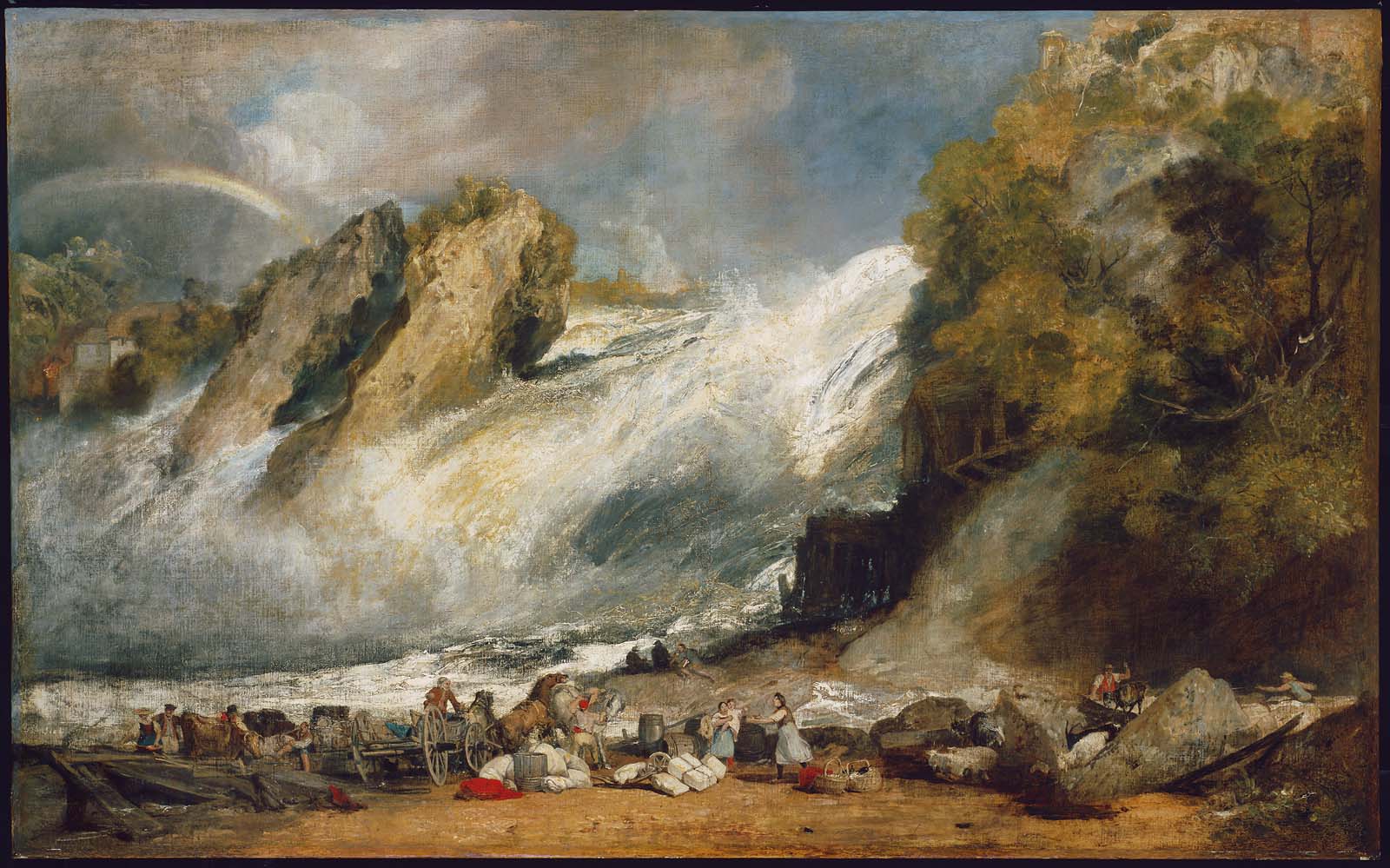
Turner’s landscape practice also carried this tension into continental terrain. Fall of the Rhine at Schaffhausen examines how water, labour and Alpine scale can occupy the same composition, extending the topographical discipline learned in Britain into a more forceful encounter with the sublime.
Classical and Historical Ambition
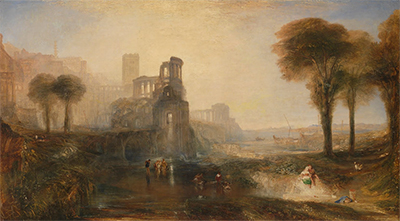
Turner's paintings repeatedly challenge the boundary between landscape and history painting. The National Gallery notes his admiration for Claude Lorrain and Richard Wilson, and the Turner Bequest later made the Claude comparison permanent through the display condition attached to Dido building Carthage and Sun Rising through Vapour. [1][6] This was not a minor matter of taste. Claude represented one of the great old-master models for ideal landscape, harbour light and classical distance. Turner wanted to be seen in that conversation.
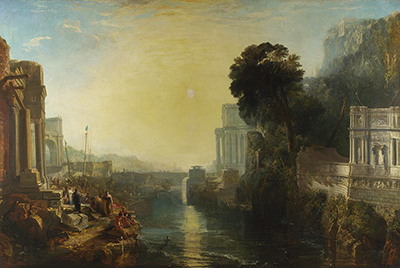
Dido building Carthage, or The Rise of the Carthaginian Empire is central to this ambition. The National Gallery records the work as a Turner Bequest painting and explains its subject from Virgil's Aeneid. [7] The painting uses architecture, water, figures and radiant light to turn landscape into the setting for imperial foundation and future loss. It is not just a classical costume scene. It is a claim that landscape can hold narrative time, political imagination and old-master rivalry.
Turner's classical and historical paintings also include subjects from scripture, ancient history and literature. They show him competing with the prestige traditionally granted to grand narrative art. Yet he often makes the landscape or weather bear the emotional weight. Storm, sunlight, sea, architecture and distance become structural participants. The figures may establish narrative, but the environment often carries the mood and meaning.
This approach explains why Turner could move from myth to modernity without changing his fundamental ambition. A classical harbour, a burning parliament building and a railway bridge are very different subjects, but Turner treats each as a way to test how painting can organise history, light and feeling. The continuity lies not in subject matter alone, but in the scale of pictorial thought.
Classical and historical works also show Turner's need for comparison. He wanted his landscapes to stand against Claude, but also against the wider authority of European painting. That ambition sometimes produced large, learned compositions with literary or historical titles. It also produced pictures in which the human story is almost secondary to the environment that holds it. In Turner, history often arrives through the weather, through architecture, or through the way light makes time visible.
The historical paintings should not be treated as departures from landscape. They are evidence that Turner wanted landscape to become a vehicle for historical thinking. A city at sunrise, a storm crossing a mountain range or a harbour built under classical memory can all bear narrative pressure. This is one of his great changes to British painting: he made landscape intellectually ambitious without making it cease to be landscape.
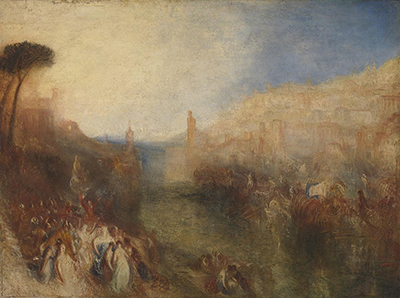
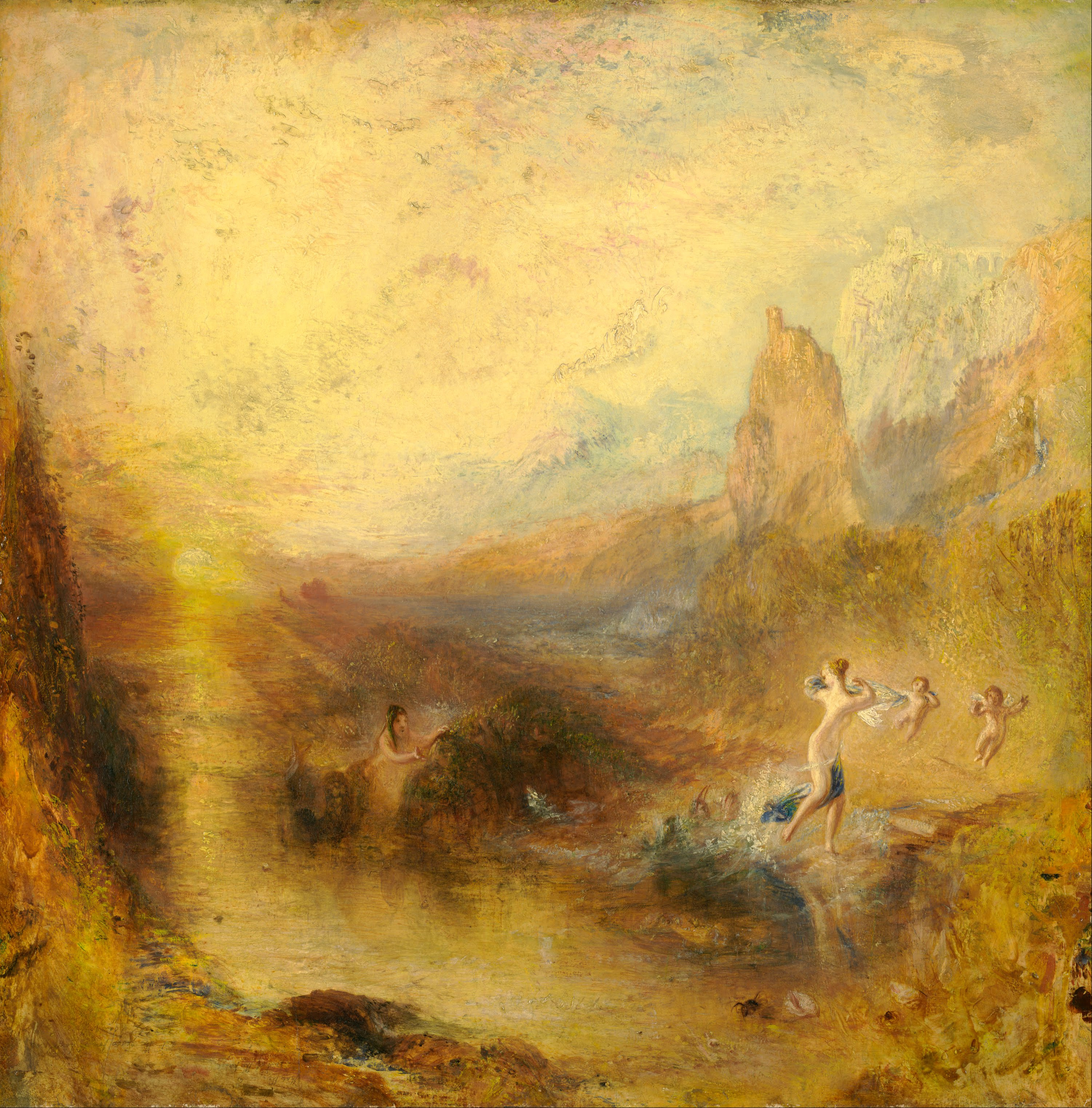
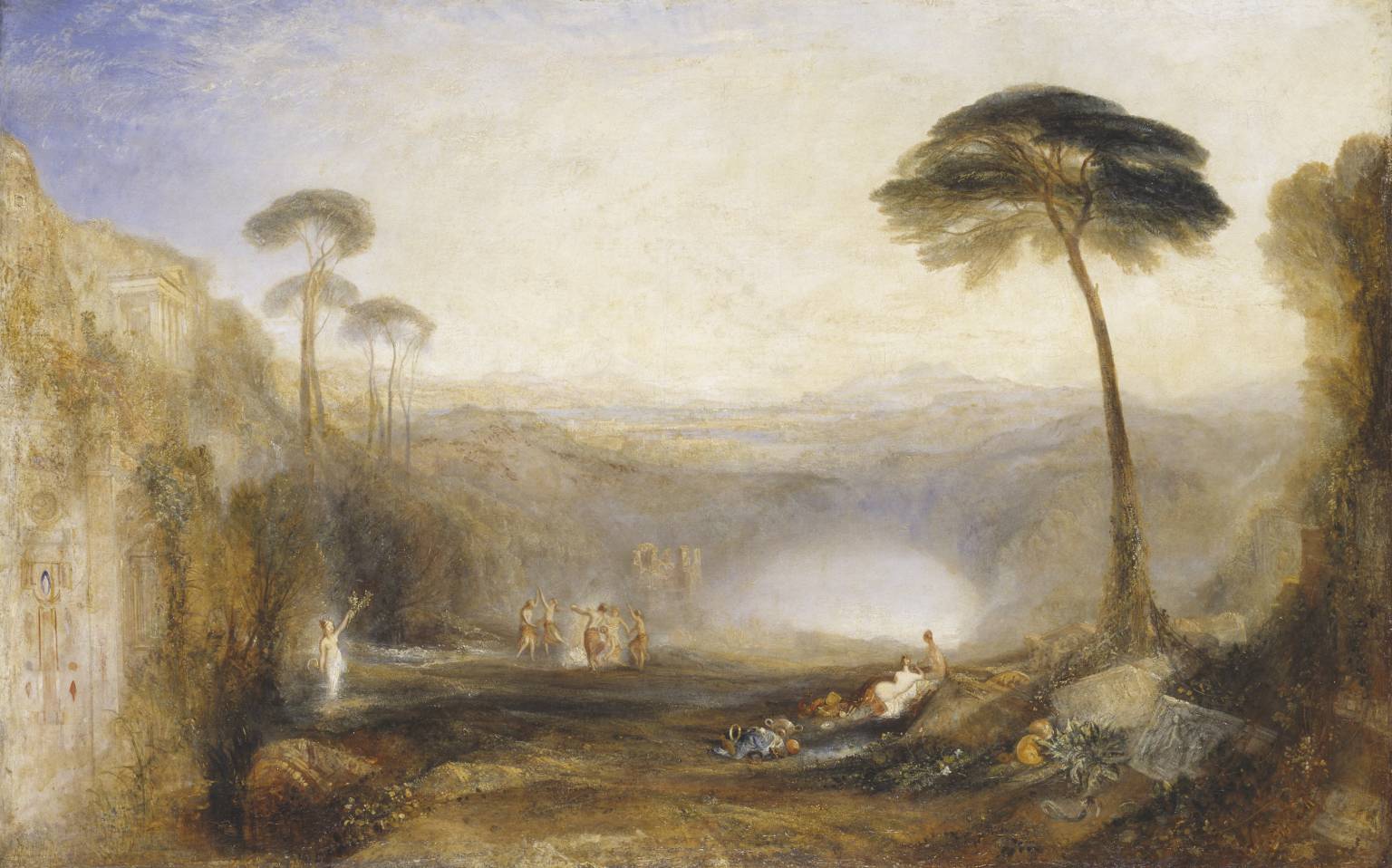
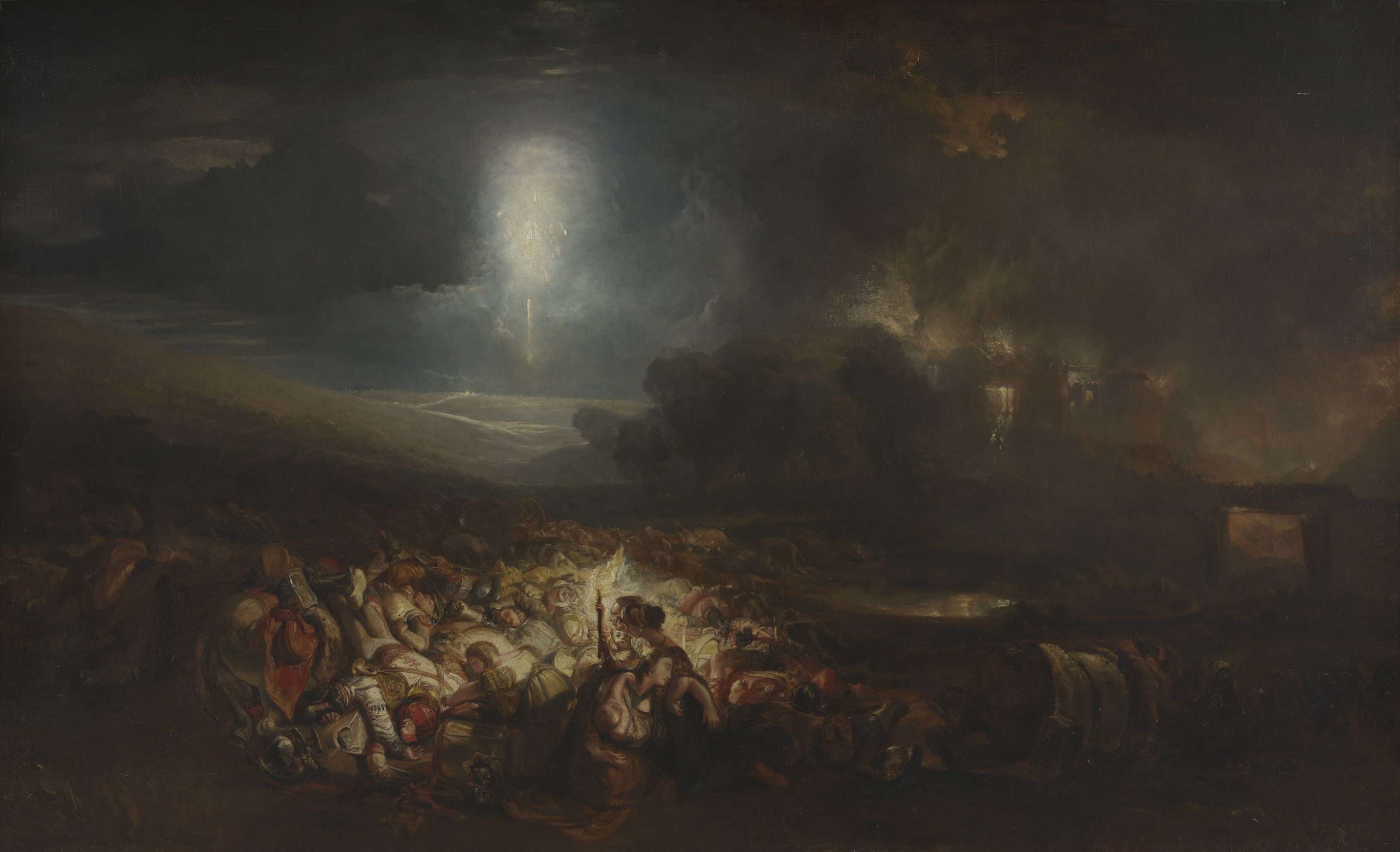
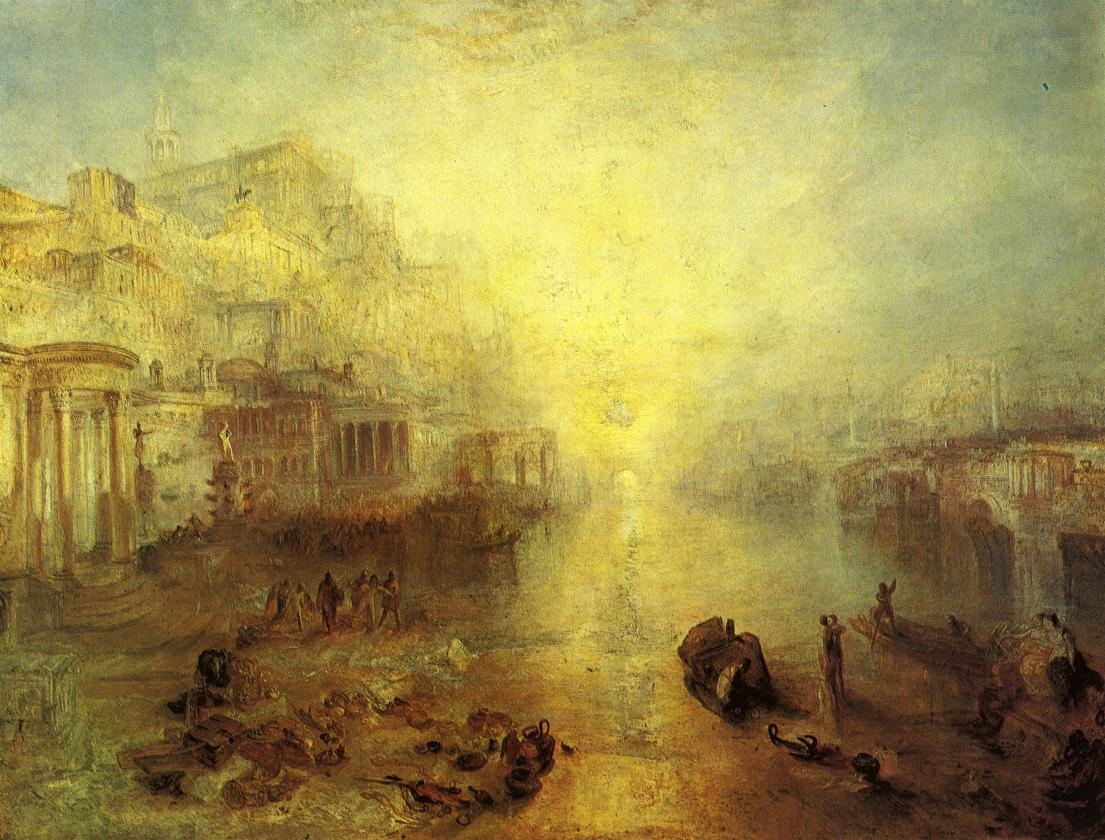
Turner’s narrative paintings broaden the same ambition across myth, poetry and public history. Glaucus and Scylla joins metamorphosis to a luminous seascape; The Golden Bough draws on Virgil and the landscape of Avernus; The Field of Waterloo turns victory towards grief and human cost; and Ancient Italy: Ovid Banished from Rome uses Ovidian exile to reflect on Rome, memory and departure.
Travel and Italy
Travel supplied Turner with a vast store of motifs for painting. The Met describes decades of sketchbook use across Britain and the Continent, including Belgium, France, Holland, Italy, the Rhineland and Switzerland. [2] These journeys mattered for his paintings because they gave him firsthand material that could be transformed later. He did not simply paint travel souvenirs. He built a memory system from drawings, watercolours, visual notes and returning subjects.
Italy was especially important because it brought Turner into direct contact with ancient, Renaissance and baroque associations. Rome offered ruins, architecture, history and artistic memory. Italian light offered another kind of pictorial challenge. Turner could use Italy to engage Raphael, Claude, Poussin, Titian and other predecessors named in the Met's account of his old-master interests. [2] The paintings that emerged from this field are not merely views of Italy; they are arguments about inheritance.
Travel also allowed Turner to complicate the relation between observation and invention. A painting could be based on places he saw, but the final image might combine viewpoints, compress space or heighten atmosphere. The Met notes that his 1835 Venice painting at the Royal Academy combined multiple viewpoints into an impossible view. [2] That example helps explain his broader travel practice. Turner used observation as material for construction, not as a limit.
The travel paintings also show Turner's shifting balance between structure and atmosphere. In some works, architecture, mountain or city remains firmly legible. In others, weather and light begin to dominate the scene. This is not a simple march toward vagueness. It is an expanding range of effects. Turner could hold detail or dissolve it depending on what the painting needed.
Travel also altered Turner's palette and sense of atmospheric distance. Mountain light, Mediterranean architecture, river haze and lagoon reflection gave him different problems from those of London, Yorkshire or the English coast. The paintings do not merely record those differences; they convert them into pictorial method. A continental scene might become an experiment in distance; an Italian subject might become a debate with old masters; a Venetian view might become a study in how buildings survive inside reflected light.
The studio remained crucial. Turner could travel, sketch and remember, but the final oil often belonged to a later act of reconstruction. This distance between seeing and painting gave him freedom. He could intensify a weather condition, reorganise a view or make a work answer earlier art. Travel supplied material; painting gave that material a new order.
Venice
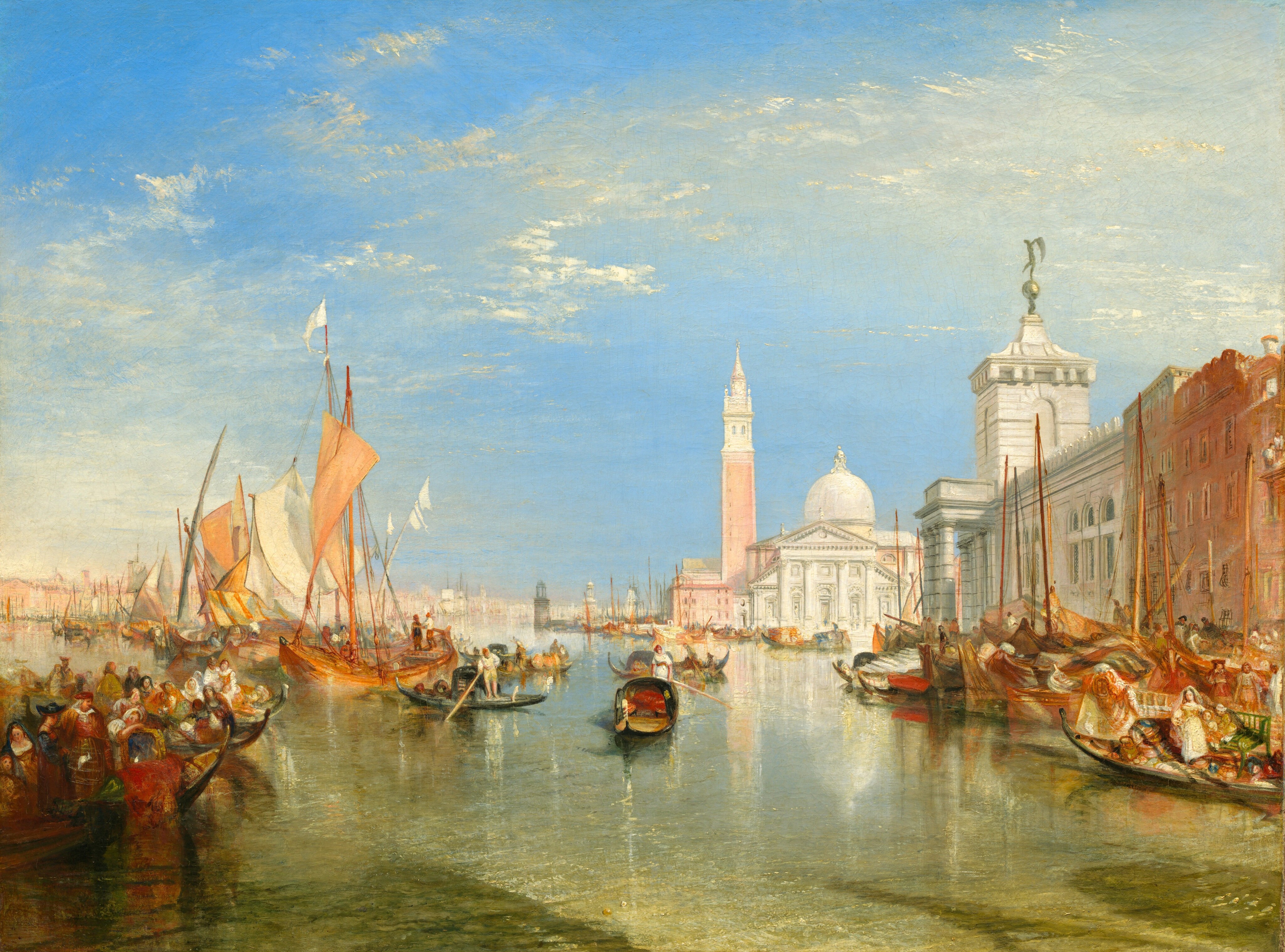
Venice became one of Turner's greatest painted subjects. It offered water, architecture, colour, old-master memory, trade, tourism and reflections that could make solid buildings appear unstable. The National Gallery of Art in Washington holds several important Turner Venice oils, including Venice: The Dogana and San Giorgio Maggiore and Approach to Venice, and its artist record identifies a broader group of Turner works in the collection. [8] These objects show how Venice allowed Turner to test light as a force that can both reveal and dissolve a city.
The Venetian paintings should not be reduced to scenic charm. Turner was interested in the way Venice appears through water and air. Domes, towers, boats and quays may be identifiable, but they are often mediated by reflection, haze or strong colour. Architecture becomes less a fixed mass than a participant in light. This is one reason the Venice works became so important for later viewers: they seem to make atmosphere as substantial as stone.
Venice also connects travel with memory. Turner visited, sketched, remembered and reworked the city. Some compositions feel like observed views; others behave more like reconstructed impressions. The Met's point about combined viewpoints in a Venice picture is relevant beyond a single work. [2] Turner could make the city more visually persuasive by refusing literal single-point accuracy. The painting becomes an image of experience rather than a survey.
The Venice works also sit between old and modern Turner. They belong to a city saturated with art history, yet their light and colour can feel startlingly fresh. They show that Turner's late painting did not need violent weather to become experimental. Calm water, haze and architectural reflection could be just as radical. Venice gave him a subject where dissolution could be luminous rather than catastrophic.
Washington's Turner holdings make this point especially clear because several Venetian pictures can be considered beside other river and harbour subjects. The National Gallery of Art lists Approach to Venice, Venice: The Dogana and San Giorgio Maggiore, and additional Turner works that range beyond Venice. [8] The group shows that Turner's painted imagination moved between place-specific observation and broader experiments with water, light and recession.
Venice also helped Turner turn colour into structure. Reflections flatten and deepen space at once. Boats provide small dark intervals against glowing water. Domes and towers hold the scene just long enough for haze to soften them. The paintings are not simply bright. They are carefully organised around the instability of seeing across water.
Modernity and Technology
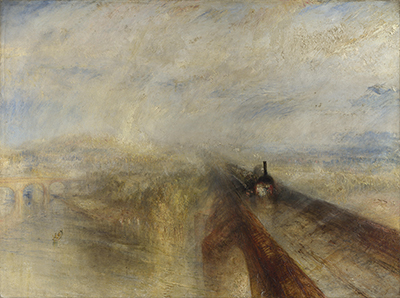
Turner's paintings repeatedly confront the modern world. The National Gallery connects his mature work with contemporary technology and names the Temeraire subject and the Great Western Railway picture as key examples. [1] These works do not simply illustrate machines. They place technology inside atmosphere, memory and landscape. Steam, smoke, rain, river and ship become part of one visual field.
Rain, Steam, and Speed - The Great Western Railway is one of the clearest examples. The National Gallery's object record identifies the railway, rain and Maidenhead Railway Bridge context. [9] Turner turns the train into a force emerging through weather rather than a diagram of engineering. The bridge and track matter, but the viewer experiences speed, moisture and visual compression as much as architecture. The painting asks what modern velocity does to perception.
The Fighting Temeraire uses a different kind of modernity. The National Gallery presents the subject as the final journey of the old warship to be broken up, towed by a steam tug. [10] The painting is not only about naval history; it is about transition. Sail and steam, memory and modern utility, sunset and industrial smoke are brought into one image. Turner makes a technological change feel elegiac without reducing it to nostalgia.
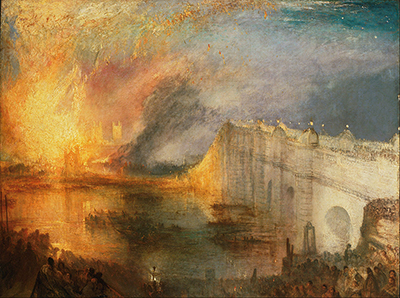
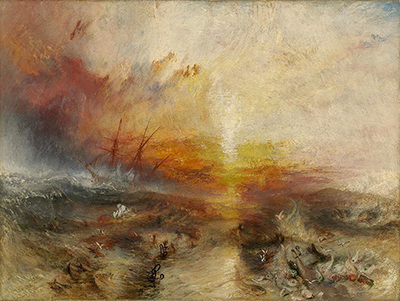
Modernity in Turner also includes fire, industry and violence. The burning of the Houses of Parliament, industrial river scenes, coal, steam vessels and the Slave Ship each show that the contemporary world could be both dramatic and morally disturbing. The MFA Boston record for Slave Ship anchors the work as an 1840 oil painting now in Boston and identifies the expanded title that names the throwing overboard of the dead and dying. [11] The overview must treat that subject carefully: its beauty of colour is inseparable from its horror, not a way around it.
Turner's modern subjects are powerful because they rarely behave as simple illustrations of progress. The railway is thrilling and disorienting. The steam tug in the Temeraire picture is small yet historically decisive. Fire can create a sublime drama while destroying public architecture. Industrial labour can glow under moonlight and remain physically hard. Turner does not need to announce a political program in every painting; the painted conditions themselves show that modern life brings speed, smoke, danger and historical displacement.
This is also where the paintings become especially relevant to later viewers. Turner makes modernity visible as an experience of perception. New technologies alter how people move, how distance is felt and how older forms of power appear. By placing steam, fire and industry inside weather and light, Turner made modern change feel atmospheric, not just mechanical.
Late Sea and Light
Turner's late paintings are often the works through which later viewers imagine him most strongly. They can appear to loosen drawing, dissolve form and push colour into a nearly independent force. The Met notes that Turner has been hailed as a forerunner of modernist abstraction, while also grounding him in older landscape and history painting influences. [2] That balance is essential. The late paintings are not modern abstraction in a literal historical sense. They are nineteenth-century works that later viewers found newly relevant.
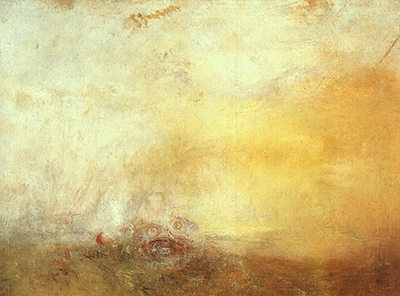
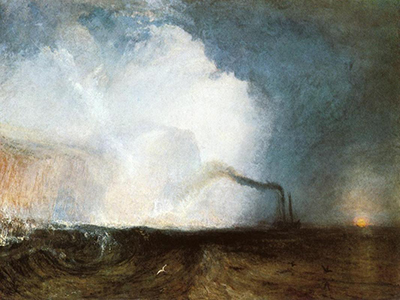
Late marine and atmospheric works include unfinished studio pictures as well as exhibited paintings. Tate records works such as Snow Storm - Steam-Boat off a Harbour's Mouth, exhibited in 1842, and Sunrise with Sea Monsters, dated around 1845. [12][13] These works require caution because finish, title and subject may be complex. A late Turner painting can be open-ended without being careless. It can be difficult to identify without being meaningless.
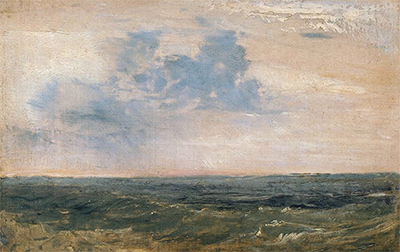
The late sea pictures often make vision unstable. The viewer may struggle to separate water, cloud, smoke, spray and light. This instability is not a failure of observation. It is a subject in itself. Turner had spent decades studying how weather changes perception. In the late works, that study becomes more intense. A ship may be less an object than a pressure within storm or glare. A horizon may nearly disappear. Colour may become the structure through which space is felt.
These paintings should not be explained by biography alone. It is tempting to attribute every late freedom to age, isolation or failing sight, but stronger evidence lies in the works and in Turner's long technical development. Watercolour, print, travel, perspective and oil practice all prepared him to make pictures where the visible world seems to be in motion. The late paintings are best approached as part of a long career, not as a detached epilogue.
Late Turner also raises the problem of finish. Some works were exhibited and therefore entered public debate; others remained in the studio and may not have been resolved in the same way. The difference matters. A painting left open on the easel is not identical to a painting sent to the Royal Academy. The late material is most revealing when viewers ask what kind of object they are looking at, how securely it is titled, and what evidence supports its date and subject.
The beauty of late Turner often comes from suspension. A form seems to appear and disappear at the same time. A colour field suggests weather before it describes a place. A boat, monster, castle or sun may be only partly legible. Such ambiguity can be frustrating if one expects narrative clarity, but it is central to the late painted language. Turner had spent his career making atmosphere active; in the late paintings, atmosphere can almost become the scene itself.
Titles, Dates and Versions
Turner's paintings demand careful handling of titles and dates. Some works carry titles used at exhibition. Others were named, renamed or clarified later. Some dates refer to exhibition rather than completion. Some paintings survive in related versions or studies. Butlin and Joll's catalogue is important because it was designed to control this complex field through dating, provenance, exhibition history and critical record. [3]
Museum records add current object authority. Tate, the National Gallery, the National Gallery of Art, Yale Center for British Art, MFA Boston and other institutions each preserve specific works with their own accession histories and display information. The National Gallery of Art record for Turner, for example, identifies him as British, gives his dates and links to selected works in Washington, including several oils. [8] Yale's 2025 Turner exhibition foregrounds its own Turner holdings, including works central to American collection history. [14] These institutional records help keep the overview from treating all Turner paintings as if they belonged to one collection or one evidentiary status.
Version control matters especially because Turner returned to subjects and because later collections contain studies, replicas, related compositions or paintings with similar subjects. A title such as a storm, harbour, castle or Venice view may not be enough to identify the object. Dimensions, medium, holder and accession number can be necessary for precision. This overview can name examples, but detailed object discussions should use the current record for each painting.
The same caution applies to late works. An unfinished painting left in Turner's studio should not automatically be discussed as if it were a completed exhibition statement. A title that sounds narrative may not prove a settled subject. A dramatic anecdote may not be secure. Turner's paintings reward close looking, but close looking must be joined to object evidence.
Collections and Afterlife
Turner's paintings now sit across several major collections, and that distribution shapes how the career is understood. The National Gallery records the Turner Bequest and explains the special condition attached to Dido building Carthage and Sun Rising through Vapour, while also noting the wider settlement after the will was contested. [6] Tate holds the great bulk of the bequest material, including many oil paintings and studio works. The National Gallery retains selected major paintings that continue to define Turner's public image.
Important paintings outside Britain complicate the story further. MFA Boston's Slave Ship shows how a major moral and maritime work entered an American collection. [11] The National Gallery of Art in Washington holds paintings that illuminate Venice, river commerce, industry and marine subjects. [8] Yale Center for British Art has foregrounded Turner through its 2025 Romance and Reality exhibition, using its own holdings to place him in a transatlantic collection context. [14] These institutions do not replace Tate or the National Gallery; they expand the map of Turner's painted afterlife.
The collection history matters because Turner is often encountered through a handful of famous pictures. The broader distribution reveals a more varied painter. He was not only the artist of two or three national icons, nor only the late colourist admired by modern viewers. He was a painter of many subjects, formats and evidentiary states. Museum records and catalogues help keep that variety visible.
The afterlife also changed interpretation. A painting once criticised for loose handling might later seem prophetic. A studio work once difficult to classify might become central to discussions of process. A famous oil might become so familiar that viewers forget its original risk. Turner's paintings have not stood still in public meaning. They have continued to be reinterpreted through conservation, cataloguing, exhibitions and changing ideas about modern art.
How to Read Turner's Paintings
A first way to read Turner's paintings is to ask what kind of painting it is. Is it an early exhibition oil, a grand historical landscape, a marine disaster, a British view, a Venetian subject, a modern transport scene or a late studio work? The answer changes what kind of claims are responsible. It affects how much weight should be given to title, finish, date, exhibition history and visual ambiguity.
A second way is to look at the role of light. In Turner, light is rarely just illumination. It can structure space, create memory, expose violence, dissolve architecture, heighten weather or set old and new worlds against each other. The sun in a classical harbour does different work from glare in a steam picture or moonlight in a marine scene. A painting becomes clearer when light is treated as an active part of the subject.
A third way is to notice how small human figures are placed against large conditions. Turner's people are often tiny before sea, weather, architecture or modern force. This does not always mean indifference. Sometimes small scale makes vulnerability visible. Sometimes it turns human activity into part of a wider environment. Sometimes it lets the painting move between event and atmosphere without choosing one over the other.
A final way is to resist the urge to judge the whole career by the late works alone. The late paintings are powerful because they come after decades of drawing, topography, Academy ambition, travel and technical experiment. Early precision and late dissolution belong to the same career. Turner matters because he could do both, and because he made the movement between them historically meaningful.
It also helps to look at the edge between description and transformation. Turner may give enough information to identify a bridge, vessel, city or coastline, then let light alter its stability. That edge is where many paintings become most alive. The work is not either factual or imaginative; it is often both. A harbour can be a remembered place and a stage for colour. A storm can be weather and history. A train can be engineering and perception. Turner made painting out of these crossings.
Frequently Asked Questions
Turner's best-known oils include the old warship towed by steam, the Great Western Railway picture, the Boston slavery subject, Dido building Carthage, the early moonlit fishermen painting and the later steam-boat storm. Each belongs to a different part of his career, so they should be read as related examples rather than a single formula.
Turner was a landscape and marine painter, but his landscapes often carry history, literature, technology, travel, politics and moral pressure. Museums describe him through landscape, watercolour, oils, engravings, topography, storms, contemporary technology and old-master influence, which shows why a narrow label is not enough. [1][2][5]
The late paintings often loosen contour and make colour, weather and light dominate the scene. That freedom should be understood through Turner's long development in drawing, watercolour, oil, travel and perspective rather than explained by a single biographical cause. Some late works were finished exhibition paintings, while others were unfinished or left in the studio.
Martin Butlin and Evelyn Joll's revised 1984 The Paintings of J.M.W. Turner is a major catalogue backbone. WorldCat describes it as a comprehensive and authoritative reference for Turner's oil oeuvre, with attention to dating, provenance, exhibition history and critical response. [3]
Discussion
Which change across Turner's painted career most alters how you read the late works?
Reader Insights
Where does oil painting do something different from drawing or watercolour?
How does Turner make landscape carry history or modern experience?
What happens at the edge between description and transformation?
Join the Conversation
Share a close observation or a question for other readers.
References
- National Gallery, London, "Joseph Mallord William Turner 1775-1851." https://www.nationalgallery.org.uk/artists/joseph-mallord-william-turner
- Elizabeth E. Barker, "Joseph Mallord William Turner (1775-1851)," The Metropolitan Museum of Art, Heilbrunn Timeline of Art History. https://www.metmuseum.org/essays/joseph-mallord-william-turner-1775-1851
- WorldCat, "The paintings of J.M.W. Turner," revised edition by Martin Butlin and Evelyn Joll. https://search.worldcat.org/title/The-paintings-of-J.M.W.-Turner/oclc/10948405
- Tate, "Fishermen at Sea." https://www.tate.org.uk/art/artworks/turner-fishermen-at-sea-t01585
- National Galleries of Scotland, "Joseph Mallord William Turner." https://www.nationalgalleries.org/art-and-artists/artists/joseph-mallord-william-turner
- National Gallery, London, "The Turner Bequest." https://www.nationalgallery.org.uk/about-us/history/the-turner-bequest
- National Gallery, London, "Dido building Carthage, or The Rise of the Carthaginian Empire." https://www.nationalgallery.org.uk/paintings/joseph-mallord-william-turner-dido-building-carthage
- National Gallery of Art, Washington, "Joseph Mallord William Turner." https://www.nga.gov/artists/1939-joseph-mallord-william-turner
- National Gallery, London, "Rain, Steam, and Speed - The Great Western Railway." https://www.nationalgallery.org.uk/paintings/joseph-mallord-william-turner-rain-steam-and-speed-the-great-western-railway
- National Gallery, London, "The Fighting Temeraire." https://www.nationalgallery.org.uk/paintings/joseph-mallord-william-turner-the-fighting-temeraire
- Museum of Fine Arts, Boston, "Slave Ship (Slavers Throwing Overboard the Dead and Dying, Typhoon Coming On)." https://collections.mfa.org/objects/31102/slave-ship-slavers-throwing-overboard-the-dead-and-dying-t
- Tate, "Snow Storm - Steam-Boat off a Harbour's Mouth." https://www.tate.org.uk/art/artworks/turner-snow-storm-steam-boat-off-a-harbours-mouth-n00530
- Tate, "Sunrise with Sea Monsters." https://www.tate.org.uk/art/artworks/turner-sunrise-with-sea-monsters-n01990
- Yale Center for British Art, "J. M. W. Turner: Romance and Reality." https://britishart.yale.edu/exhibitions-programs/j-m-w-turner-romance-and-reality