


 by
Tom Gurney
Tom Gurney BSc (Hons) is an art history expert with over 20 years experience
Email:
tomgurney1@gmail.com
/ Phone:
+44 7429 011000
Paul Cézanne’s Early Years: Aix, Zola and the Making of a Painter: Introduction
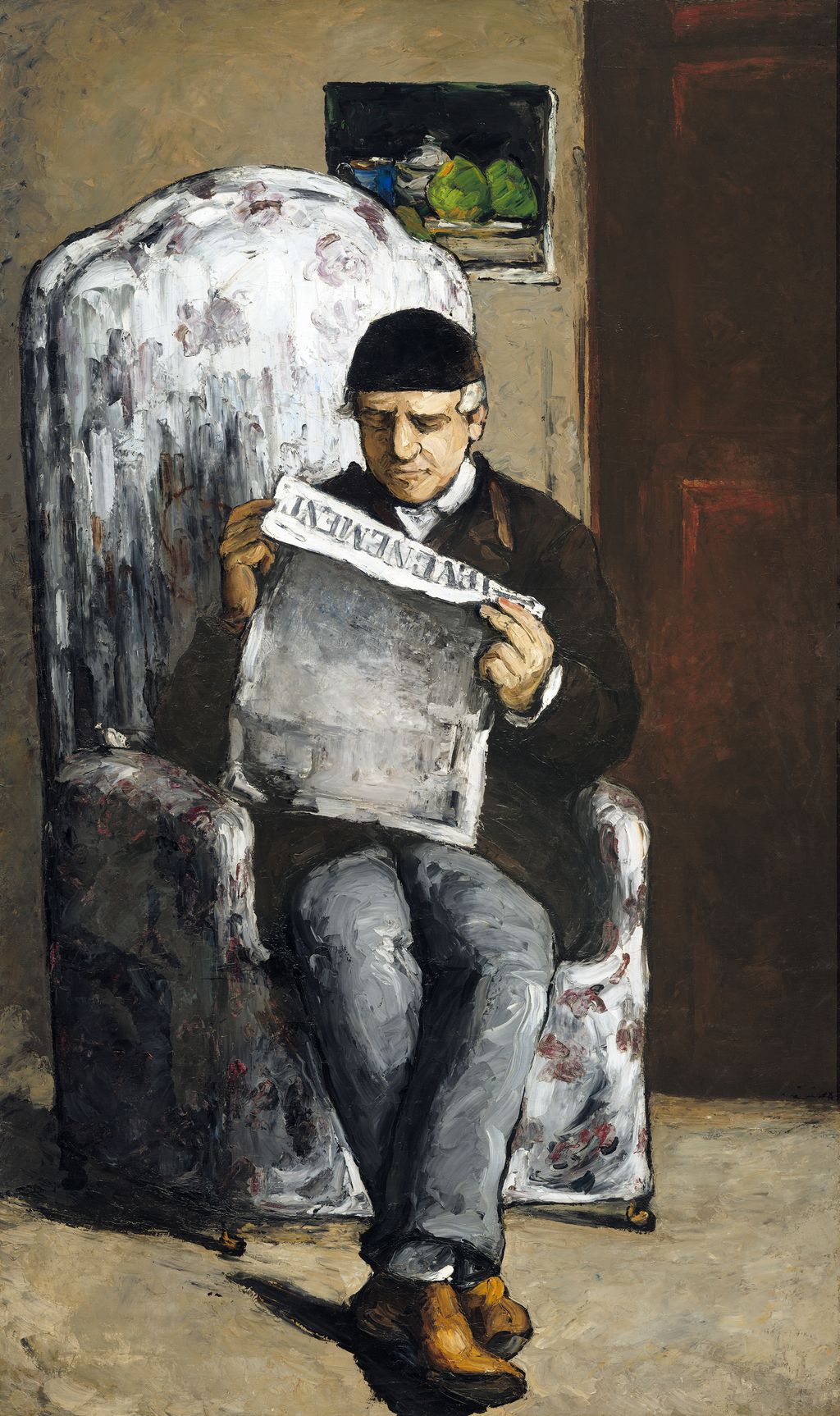
Before Paul Cézanne became closely associated with the landscapes of Provence, he learned to draw beside a museum in Aix, exchanged illustrated letters with Émile Zola, and tested his painting on the walls of his father’s country house. His early career moved repeatedly between Aix and Paris. The journey mattered less as a departure from one place for another than as a way to work between a familiar landscape, live models, old-master pictures and an unsettled artistic circle. [1]
The paintings of the 1860s can be forceful, dark and thickly worked. Yet a plaster-wall portrait, a costumed uncle and a sunlit avenue reveal different experiments. Looking at them separately makes the young painter easier to understand than a single story of youthful rebellion. [1] [2]
At a Glance
- Born 19 January 1839 in Aix-en-Provence. [3]
- Friends Émile Zola and Baptistin Baille at the Collège Bourbon. [1]
- Drawing school Enrolled at Aix’s free school of drawing in 1857. [4]
- First Paris stay 1861, followed by returns to Aix. [1]
- Early working site Jas de Bouffan, bought by his father in 1859. [5]
Contents
- An Aix childhood and a changing family position
- Learning to draw in Aix
- The first Paris stay, and the returns
- Jas de Bouffan: painting directly into a room
- Faces, costume and thick paint
- From the salon wall to the chestnut avenue
An Aix childhood and a changing family position
The civil declaration of Cézanne’s birth identifies his father, Louis-Auguste, as a hatter. Paul was born on 19 January 1839 to Louis-Auguste and Anne-Élisabeth-Honorine Aubert before they married; the later marriage was entered on the birth record in 1844. This documentary starting point matters because calling Louis-Auguste a banker at Paul’s birth folds two stages of the family’s history together. By 1859 he had entered banking and was able to buy the Jas de Bouffan estate outside Aix. [3] [1]
At the Collège Bourbon, Cézanne became close to Zola and Baille. The three are often presented as an inseparable schoolboy group, but the surviving record gives a more particular picture. The school register for 1857–58 lists them in different classes, and Zola left for Paris in February 1858. Their friendship then continued through correspondence. A letter jointly made by Cézanne and Baille to Zola in July 1858 shifts between hands and voices, turning the act of writing into a shared performance. These are more direct traces of their friendship than the familiar later story that Zola offered Cézanne a basket of apples after a childhood rescue. That story comes through Joachim Gasquet’s retrospective account and cannot serve as a dated school record. [4] [6]
Zola later turned the three friends’ shared reading, improvised poems and excursions toward the river into a literary recollection in the opening of his novel La Confession de Claude . It is valuable evidence of how he remembered their circle, though a novel cannot verify each described outing. The mixture of books, landscape and youthful collaboration helps explain why the friendship continued to matter after the boys no longer lived in the same town. [6]
Zola’s move also gave the young Cézanne a correspondent in the capital. Their letters carried poems, teasing and arguments about work. They show a painter whose ambitions developed alongside literary exchange, rather than in isolation from it. Some early letters even contain drawings: an illustrated rebus in a May 1858 letter and a small bathing scene sent in June 1859 make image-making part of the conversation itself. The drawings do not establish a direct path to a particular later painting, but they make clear how early the exchange of pictures and words had begun. [7] [8]
Learning to draw in Aix
Cézanne enrolled at Aix’s École gratuite de dessin in 1857. It occupied the same former priory as the municipal museum, now the Musée Granet. The school offered drawing from the live model and from antique plaster casts and marble sculpture; Joseph Marc Gibert directed both school and museum. This gave Cézanne a local route into formal drawing and into art already collected in Aix, before his first extended encounter with Paris. A large graphite Male Nude (Academy) dated 1862 in the Granet collection points to the scale and sustained figure study involved; his The Muse’s Kiss , after Félix-Nicolas Frillié, shows another form of learning through an existing image. They are different exercises, and neither needs to be treated as a simple rehearsal for the later portraits. [4] [5]
His education also included classical schoolwork and, for a time, law studies in Aix. The presence of those courses should not be made into a neat opposition between an obedient student and a predestined artist. He kept taking drawing classes even after trying work in his father’s bank. What the sources show is an overlapping set of obligations and opportunities. His father’s finances supported access to materials, travel and eventually a large place to work, while Louis-Auguste’s hopes for his son’s career created a real pressure visible in accounts of the early Paris journey. [1] [9]
The first Paris stay, and the returns
Cézanne reached Paris in spring 1861. Zola’s letter to Baille, dated 22 April, records their reunion just after his arrival. Cézanne went to the official Salon, the Louvre and the Académie Suisse, an independent place to draw from models. The latter offered a different sort of training from a state art school: artists could work from the figure without following a fixed course toward an academic prize. Contemporary and later accounts place him among painters including Camille Pissarro, Francisco Oller, Armand Guillaumin and Achille Emperaire, though recollections differ on exactly when some of these meetings occurred. [9] [1]
This was not a permanent move to Paris. Cézanne returned to Aix, worked for a period at the family bank and resumed drawing there; further visits to Paris followed in 1862–63. The back-and-forth is important when reading the early work. Paris supplied models, museums, exhibitions and peers; Aix supplied people who would sit for him and a house where he could paint at a scale unavailable in a rented room. Nor did attendance at the Académie Suisse mean that he had entered the École des Beaux-Arts. His education was assembled from several places and practices. [1] [9]
The Louvre remained a working resource. A detailed study of Cézanne’s copying distinguishes drawings after museum works from painted copies, and warns against imagining him routinely setting up oils before masterpieces. Studying a figure, sculpture or fragment on paper could be a way of testing a form rather than reproducing a whole composition. The surviving corpus has dating uncertainties, so it should not be used to attach every copied drawing to one particular Paris visit. In the 1860s, though, the museum was part of his practical education alongside the live model. [10]
In 1863 Cézanne followed the Salon des Refusés, the exhibition created for works rejected by the official Salon. The distinction between viewing such an exhibition and exhibiting in it is worth keeping clear. During the same decade he encountered painters and writers in Paris cafés and continued to receive Aix friends, including Emperaire, Antony Valabrègue and Antoine-Fortuné Marion, in Provence. His career was taking shape within networks in both cities. [1]
Jas de Bouffan: painting directly into a room
Louis-Auguste bought Jas de Bouffan on 15 September 1859. It was an agricultural estate with a bastide, park, vines and other cultivated ground, and the family seems to have used it seasonally before living there continuously from about 1870. Paul nevertheless began painting on the plaster walls of its grand salon around 1860. The room offered a rare opportunity to attempt large compositions while still learning his craft. [1] [5]
The early wall decorations included The Four Seasons in the alcove and monumental landscapes on other walls. He subsequently painted over parts of his own work and changed themes, a history that complicates any tidy sequence of “first style” followed by “second style.” The wall paintings were later cut away and transferred to canvas, scattering pieces originally conceived for one room. Restoration work reported by Musée Granet found further painted fragments in 2023, including an ensemble named L’Entrée de port . The discovery is a reason to treat old reconstructions of the salon’s complete arrangement as provisional. [1] [5]
One surviving image makes the room’s mixture of family and artistic experiment concrete. The Painter’s Father, Louis-Auguste Cezanne , dated about 1865 by the National Gallery, shows him seated with crossed legs, absorbed in reading. It was painted in oil directly on the alcove’s plaster and later mounted on canvas. That physical history explains why the present object is both a portrait and a remnant of the room. Its large scale and wall support are integral to the way it first addressed anyone entering the salon. [11] [12]
The London plaster portrait differs from the 1866 canvas of Louis-Auguste reading L’Événement . The National Gallery of Art identifies that newspaper portrait as probably the work Cézanne exhibited at the official Salon in 1882; the surviving Salon listing does not make the match certain. The Jas portrait was instead made for the salon wall. [11] [13]
Faces, costume and thick paint
The Jas also became a place for portraits of relatives and friends. In autumn 1866 Cézanne repeatedly painted his maternal uncle, Antoine Dominique Sauveur Aubert. The Metropolitan Museum’s Uncle Dominique shows him in a robe and tasseled blue cap. The cap and robe stage a role for the sitter; they do not identify his everyday occupation. The dense, ridged application of paint gives the face and clothing a physical presence quite unlike the smooth finish expected from a conventional portrait. The Met attributes much of this handling to a palette knife. [2]
The Met dates this cap-and-robe canvas to 1866; the catalogue raisonné lists the same work as FWN 412, dated 1866–67, with slightly different measurements. It is distinct from the Met’s uncle dressed as a monk and another version with a turban. An old “self-portrait” title for the cap picture is misleading: the sitter is Aubert. [2] [14]
Such portraits help explain what “dark early Cézanne” can and cannot mean. The colours and heavy paint belong to an energetic experiment in figure painting, informed in part by painters such as Courbet and Daumier. But the costumes, repeated sittings and strong shifts in handling resist the idea of one fixed youthful manner. Friends and relatives were available models through whom Cézanne could change the terms of a painting from one attempt to the next. [1] [2]
From the salon wall to the chestnut avenue
The estate also offered a landscape close at hand. In The Avenue at the Jas de Bouffan , a path moves between chestnut trunks. The treetops are cropped, so the upright trunks press against the painting’s edge; broad bands of green and yellow hold the space together. The National Gallery notes palette-knife work in the foreground leaves. It is a specific observation about this canvas, a useful reminder that the knife did not belong only to the rough surfaces of portraits. [15]
The avenue cannot securely date a single turning point in his style. The National Gallery labels the painting 1868–70, possibly later, while Tate’s artwork text gives about 1874–75. The catalogue raisonné identifies the same Tate canvas as FWN 55, under the French title Les Marronniers et le bassin du Jas de Bouffan , and likewise allows a date later than 1868–70. Rather than force an exact year, the picture lets us see Cézanne composing a familiar view through the estate’s trees, path, glare and shade. The change of title across records names one painting, not a second avenue. [15] [16] [17]
By the close of the 1860s, Cézanne had built an education from school drawing, museum looking, model sessions, friendships and repeated work at Jas. In 1869 he met Hortense Fiquet in Paris; their shared life and the shift toward painting alongside Pissarro belong to the next chapter. The full biography follows the whole course, while Pissarro and the Impressionist years takes up the outdoor practice and exhibitions that followed. [1]
Cézanne artworks directory
Browse 217 identified works in this researched selection, including paintings, drawings and watercolours. This is a bounded selection, not a complete catalogue of Cézanne’s surviving oeuvre. Unlinked titles have no confirmed article in this collection.
| Name | Date | Medium |
|---|---|---|
| A Head, a Cup, and a Bread Roll | 1891/1894 | Drawing |
| A Man seen from Behind | 1880/1883 | Drawing |
| A Modern Olympia | 1873–74 | Painting |
| A Nude and Foliage | 1879/1882 | Drawing |
| A Smoking Man | 1892–96 (catalogue); c.1890–92 (museum) | Drawing |
| Afternoon in Naples | 1876–77 | Painting |
| An Old Woman with a Rosary | about 1895–96 | Painting |
| Apples and Oranges | c.1899 | Painting |
| Auvers, Panoramic View | 1873–75 | Painting |
| Avenue at Chantilly | 1888 | Painting |
| Banks of the Marne | 1888–94 | Painting |
| Basket | 1877/1900 | Drawing |
| Bather with Outstretched Arms | 1877–78 | Painting |
| Bellows in Front of a Fireplace | 1887/1892 | Drawing |
| Bibémus Quarry | c.1895 | Painting |
| Boy in a Red Vest, Barnes Foundation | 1888–90 | Painting |
| Boy in a Red Vest, MoMA | 1888–90 | Painting |
| Boy in a Red Waistcoat, National Gallery of Art | 1888–90 | Painting |
| Branch in Flower | 1886/1889 | Drawing |
| Carnival Scene | 1885/1888 | Drawing |
| Chair and Dresser | 1880/1883 | Drawing |
| Chateau Noir | 1903–04 | Painting |
| Chestnut Trees and Farm at Jas de Bouffan | c.1885 | Painting |
| Chestnut Trees and Farm at Jas de Bouffan, Pushkin | c.1886 | Painting |
| Chestnut Trees at Jas de Bouffan in Winter | 1885–86 | Painting |
| Château Noir | 1900–04 | Painting |
| Cistern in the Park of Château Noir | c.1900 | Painting |
| Curtain, Jug and Fruit | 1893–94 | Painting |
| Cushion of an Armchair | 1886/1889 | Drawing |
| Draft Letter and Studies of Bathers | c.1878 | Drawing |
| Farmhouse and Chestnut Trees at Jas de Bouffan | 1884–85 | Painting |
| Figure Resting Head on Hand | c. 1889 | Drawing |
| Fireplace Tongs and Poker | 1887/1892 | Drawing |
| Forest Interior, San Francisco | c.1898–99 | Painting |
| Four Bathers | 1888–90 | Painting |
| Fruit and a Jug on a Table | 1893–94 | Painting |
| Gardanne | 1885–86 | Painting |
| Gardanne, Barnes Foundation | c.1885 | Painting |
| Hand and Shoulder of a Boy | c. 1885 | Drawing |
| Harlequin, National Gallery of Art | 1888–90 | Painting |
| Head of a Boy | 1887/1889 | Drawing |
| Head of a Boy Seen from Behind | c. 1885 | Drawing |
| Head of a Young Woman | c. 1880 | Drawing |
| Head of the Artist's Son | 1888/1889 | Drawing |
| Hillside in Provence | c.1890–92 | Painting |
| Horse Chestnut Trees at Jas de Bouffan | c.1885 | Painting |
| House and Farm at the Jas de Bouffan | c.1887 | Painting |
| House in a Park | 1883/1886 | Drawing |
| House in Provence | c.1885 | Painting |
| House of Père Lacroix | 1873 | Painting |
| House Surrounded by Vegetation | 1889/1892 | Drawing |
| Houses in Provence The Riaux Valley near L’Estaque | c.1883 | Painting |
| Jas de Bouffan, the Pool | c.1876 | Painting |
| Kerosene Lamp | 1878/1881 | Drawing |
| L'Estaque, Melting Snow | c.1870 | Painting |
| Lake Annecy | 1896 | Painting |
| Landscape in Provence, Pola Museum | 1879–82 | Painting |
| Landscape Near Aix-en-Provence | 1877/1880 | Drawing |
| Landscape Seen from the Inside of a Cave | 1889/1892 | Drawing |
| Landscape with Poplars | c.1885–87 | Painting |
| Landscape with Trees | 1895/1898 | Drawing |
| Leda and the Swan | c.1880 (possibly later) | Painting |
| Little Girl with a Doll | 1902–04 | Painting |
| Louis Guillaume | 1879–1890 | Painting |
| Madame Cezanne | 1888/1891 | Drawing |
| Madame Cezanne | 1886/1889 | Drawing |
| Madame Cezanne | 1882/1887 | Drawing |
| Madame Cezanne | 1897/1900 | Drawing |
| Madame Cezanne with her Head Lowered | 1893/1896 | Drawing |
| Madame Cézanne in a Red Armchair | c.1877 | Painting |
| Madame Cézanne in a Red Dress, Metropolitan Museum of Art | 1888–90 | Painting |
| Madame Cézanne in a Yellow Chair | 1888–90 | Painting |
| Madame Cézanne in a Yellow Chair, Fondation Beyeler | 1888–90 | Painting |
| Madame Cézanne in the Conservatory | 1891 | Painting |
| Maincy Bridge | 1879–80 | Painting |
| Maison Maria with a View of Château Noir | c.1895 | Painting |
| Man Bending Forward | 1883/1886 | Drawing |
| Man Smoking a Pipe, Pushkin | c.1891, possibly later | Painting |
| Man with a Pipe | 1891–96 | Painting |
| Man with a Pipe, Nelson-Atkins | 1890–92 | Painting |
| Man with a Straw Hat (Gustave Boyer) | c.1871 | Painting |
| Man with Crossed Arms | c.1899 | Painting |
| Man with Pipe, National Gallery of Art | 1892–96 | Painting |
| Mont Sainte-Victoire | c.1902–06 | Painting |
| Mont Sainte-Victoire | 1900–02 | Painting |
| Mont Sainte-Victoire (recto) | c.1895 | Watercolour |
| Mont Sainte-Victoire and the Viaduct of the Arc River Valley | 1882–85 | Painting |
| Mont Sainte-Victoire Seen beyond the Wall of the Jas de Bouffan | c.1885/1888 | Watercolour |
| Mont Sainte-Victoire Seen from Bibémus Quarry | c.1897 | Painting |
| Mont Sainte-Victoire, Barnes Foundation | 1892–95 | Painting |
| Near the Pool at Jas de Bouffan | 1883/1887 | Drawing |
| Pelicans | 1877/1880 | Drawing |
| Peonies | 1890/1893 | Drawing |
| Pierrot and Harlequin | 1888 | Painting |
| Pine Tree | 1882/1885 | Drawing |
| Pont des Trois Sautets | 1906 | Watercolour |
| Poplars | 1879–80 | Painting |
| Portrait of Ambroise Vollard | 1899 | Painting |
| Portrait of Gustave Geffroy | 1895–96 | Painting |
| Portrait of Madame Cezanne with Loosened Hair | 1885–86 | Painting |
| Portrait of the Artist Looking Over His Shoulder | 1883–84 | Painting |
| Portrait of the Gardener Vallier | 1906 | Painting |
| Portrait of Victor Chocquet | 1876–77 | Painting |
| Portrait Of Victor Chocquet Seated | 1877 | Painting |
| Provençal Manor | c.1885 | Painting |
| Pyramid of Skulls | 1898–1900 | Painting |
| Reclining Nude (Leda?) | c.1887 | Painting |
| Scipio | 1866–68 | Painting |
| Seated Man, Oslo | 1898–1900 | Painting |
| Seated Peasant | c.1892–96 | Painting |
| Seated Peasant, Hiroshima | c.1897 | Painting |
| Seated Peasant, Orsay | c.1900 | Painting |
| Self-Portrait | c. 1895 | Drawing |
| Self-Portrait in a Bowler Hat, Ny Carlsberg Glyptotek | 1885–86 | Painting |
| Self-Portrait in a Casquette | c.1875 | Painting |
| Self-Portrait with a Beret | 1898–1900 | Painting |
| Self-Portrait with a Hat, Artizon Museum | c.1890–94 | Painting |
| Self-Portrait with a Pink Background | c.1875 | Painting |
| Self-Portrait with Olive-Coloured Wallpaper | about 1880–81 | Painting |
| Self-Portrait with Palette | 1886–87 | Painting |
| Self-Portrait with White Turban | c.1878–80 | Painting |
| Self-Portrait, c.1895 | c.1895 | Painting |
| Self-Portrait, Pushkin Museum | c.1882 | Painting |
| Spanish Dancers | 1883/1886 | Drawing |
| Still Life with a Curtain | 1892–94 | Painting |
| Still Life with Apples | c.1890 | Painting |
| Still Life with Apples | 1893–94 | Painting |
| Still Life with Apples and a Pot of Primroses | about 1890 | Painting |
| Still Life with Milk Jug and Fruit | c.1900 | Painting |
| Still Life with Open Drawer | 1877–79 | Painting |
| Still Life with Plaster Cupid | about 1894 | Painting |
| Still Life with Skull | 1890–93 | Painting |
| Still Life with Soup Tureen | 1877 | Painting |
| Still Life, Pitcher and Fruit | 1893–94 | Painting |
| Studies Including a Straw Hat | 1895/1898 | Drawing |
| Studies Including Madame Cezanne | 1884/1887 | Drawing |
| Study for "The Judgement of Paris" or "The Amorous Shepherd" | 1883/1886 | Drawing |
| Study for Woman with a Coffee Pot | c.1895 | Painting |
| Study of "The Roman Orator (Germanicus)" | 1883/1886 | Drawing |
| Study of "Venus de Milo" | 1881/1884 | Drawing |
| Study of a Decorative Ornament | 1879/1882 | Drawing |
| Study of a Standing Male Figure after the Antique | c. 1895 | Drawing |
| Study of an Angel in Rubens' "The Prophet Elijah" | 1892/1895 | Drawing |
| Study of Desiderio da Settignano's "Bust of a Child" | c. 1895 | Drawing |
| Study of Houses | 1879/1882 | Drawing |
| Study of Puget's "Hercules Resting" | c. 1879 | Drawing |
| Study of Puget's "Milo of Crotona" | 1895/1898 | Drawing |
| Study of Puget's "Milo of Crotona" | 1880/1883 | Drawing |
| Study of the Allegorical Figure Bellona in Rubens' "The Apotheosis of Henri IV" | 1883/1886 | Drawing |
| Study of the Allegorical Figure Bellona in Rubens' "The Apotheosis of Henri IV" | 1879/1882 | Drawing |
| Study of the Allegorical Figure France in Rubens' "The Exchange of the Two Princesses" | 1882/1885 | Drawing |
| Study of the Allegorical Figure of Health in Rubens' "The Birth of Louis XIII" | 1880/1883 | Drawing |
| Study of the Allegorical Figure of the Genius of Health from Rubens' "The Birth of Louis XIII at Fontainbleau" | 1895/1898 | Drawing |
| Sugar Bowl, Pears and Blue Cup | 1865–66 | Painting |
| The Aqueduct, Pushkin Museum | Dating differs between museum records | Painting |
| The Artist's Father, Reading L'Evenement | autumn 1866 | Painting |
| The Artist's Son | c. 1887 | Drawing |
| The Artist's Son Leaning on his Elbow | c. 1887 | Drawing |
| The Artist's Son Reading | c. 1887 | Drawing |
| The Artist's Son Writing | c. 1887 | Drawing |
| The Artist’s Son, Paul | 1886–87 | Painting |
| The Avenue at Jas de Bouffan | 1868–70 (possibly later) | Painting |
| The Avenue at Jas de Bouffan, Geneva | c.1890 | Painting |
| The Basket of Apples | c.1893 | Painting |
| The Bather, Museum of Modern Art | c.1885 | Painting |
| The Bay of Marseille seen from L'Estaque | c.1885 | Painting |
| The Blue Vase | 1889–90 | Painting |
| The Boy in the Red Vest, Bührle | 1888–90 | Painting |
| The Buffet | 1877–79 | Painting |
| The Card Players, Barnes Foundation | 1890–92 | Painting |
| The Card Players, Courtauld Gallery | 1892–96 | Painting |
| The Card Players, Metropolitan Museum of Art | 1890–92 | Painting |
| The Card Players, Musée d’Orsay | 1893–96 | Painting |
| The Card Players, Qatar | 1892–96 | Painting |
| The Eternal Feminine | c.1877 | Painting |
| The Gardener Vallier | 1906 | Painting |
| The Gardener Vallier, Tate | 1905–06 | Painting |
| The Grounds of the Château Noir | c.1900–04 | Painting |
| The Gulf of Marseille Seen from L’Estaque | c.1885 | Painting |
| The Hanged Man's House in Auvers | c.1873 | Painting |
| The House of Doctor Gachet at Auvers | 1872–73 | Painting |
| The House with the Cracked Walls | 1892–94 | Painting |
| The Kiss of the Muse | c.1860 | Painting |
| The Large Bathers, Barnes Foundation | 1895–1906 | Painting |
| The Large Bathers, National Gallery | 1895–1905 | Painting |
| The Large Bathers, Philadelphia Museum of Art | 1900–06 | Painting |
| The Mill | 1889/1892 | Drawing |
| The Painter’s Father, Louis-Auguste Cézanne | c.1865 | Painting |
| The Peasant | 1890–92 | Painting |
| The Plaster Mill (La Moulin à plâtre) | 1889/1892 | Drawing |
| The Smoker, Hermitage | c.1891 | Painting |
| The Smoker, Mannheim | c.1891 | Painting |
| The Stove in the Studio | c.1865 | Painting |
| The Vase of Tulips | c.1890 | Painting |
| Thistle | 1893/1896 | Drawing |
| Three Heads, One of Madame Cezanne | 1882/1885 | Drawing |
| Three Skulls | c.1898 | Painting |
| Three Skulls on a Patterned Carpet | 1904 | Painting |
| Trees and Shrubs | 1883/1887 | Drawing |
| Turning Road at Montgeroult | 1898 | Painting |
| Two Bathers | 1884/1887 | Drawing |
| Two Heads | 1888 | Drawing |
| Two Heads | 1890/1896 | Drawing |
| Two Heads of Women | 1890/1894 | Drawing |
| Two Studies for "The Judgement of Paris" or "The Amorous Shepherd" | 1883/1886 | Drawing |
| Uncle Dominique in a Tasseled Cap | 1866 | Painting |
| Uncle Dominique in a Turban | 1866–67 | Painting |
| Victor Chocquet and an Angel for "The Apotheosis of Delacroix" | 1878/1880 | Drawing |
| Woman in Blue | c.1904 | Painting |
| Woman Leaning Forward | 1888/1891 | Drawing |
| Woman Leaning Forward | 1890/1894 | Drawing |
| Woman Leaning Forward | 1890/1894 | Drawing |
| Woman with a Coffee Pot | c.1895 | Painting |
| Women Bathers and a Roll of Paper | 1882/1885 | Drawing |
| Young Girl with a Doll | c.1895 | Painting |
| Young Italian Woman at a Table | c.1895–1900 | Painting |
| Young Man and Skull | 1896–98 | Painting |
Frequently Asked Questions
Discussion
Look again at the images and ideas explored in Paul Cézanne’s Early Years: Aix, Zola and the Making of a Painter. These editorial prompts invite your observations.
Reader Insights
The wall portrait of Louis-Auguste asks us to imagine a painting as part of a room. How does knowing it began on plaster change the way you see the seated figure?
The letters shared among Cézanne, Zola and Baille preserve youthful play as well as ambition. Which seems more revealing: their later reputations or the drawings and jokes that passed between them?
Look at the uncle’s thick paint and then at the clipped trunks of the chestnut avenue. What carries the stronger sense of experiment for you: the paint’s surface or the way the scene is arranged?
Join the Conversation
Share a detail, comparison or question about Paul Cézanne’s Early Years: Aix, Zola and the Making of a Painter below.
References
- Musée Granet , Cezanne au Jas de Bouffan , bilingual visitor guide, 2025, pp. 7–9, 17–19. View source .
- The Metropolitan Museum of Art , Antoine Dominique Sauveur Aubert (born 1817), the Artist’s Uncle , object 53.140.1, current collection entry. View source .
- Société Paul Cezanne , François Chédeville, “1839,” documentary chronology, 2016 (in French). View source .
- Société Paul Cezanne , François Chédeville, “1857,” documentary chronology, 2016 (in French). View source .
- Musée Granet / Aix-en-Provence , Cezanne au Jas de Bouffan , English press pack, 2025, pp. 7–10. View source .
- Société Paul Cezanne , François Chédeville, “1852,” documentary chronology including Gasquet’s later account, 2016 (in French). View source .
- Société Paul Cezanne , François Chédeville, “1858,” documentary chronology and reproduced correspondence, 2016 (in French). View source .
- Société Paul Cezanne , Noriko Yoshida, “Cezanne et Zola: peinture et littérature – Quelques réflexions à partir de leurs premières lettres,” 2020 (in French). View source .
- Société Paul Cezanne , François Chédeville, “1861,” documentary chronology and correspondence, 2016 (in French). View source .
- Société Paul Cezanne , François Chédeville, “Cezanne copiste sous le Second Empire – Chapitre II,” 2023 (in French). View source .
- The National Gallery , The Painter’s Father, Louis-Auguste Cezanne , NG6385, current collection entry. View source .
- The Paintings, Watercolors and Drawings of Paul Cezanne: An Online Catalogue Raisonné , Portrait de Louis-Auguste Cezanne, père de l’artiste , FWN 398, current entry. View source .
- National Gallery of Art , The Artist’s Father, Reading “L’Événement” , object 1970.5.1, current collection entry and exhibition history. View source .
- The Paintings, Watercolors and Drawings of Paul Cezanne: An Online Catalogue Raisonné , L’Homme au bonnet de coton (l’Oncle Dominique) , FWN 412, current entry. View source .
- The National Gallery , The Avenue at the Jas de Bouffan , L697, current collection entry for a Tate painting. View source .
- Tate , The Avenue at the Jas de Bouffan , artwork account and object data, current shop entry. View source .
- The Paintings, Watercolors and Drawings of Paul Cezanne: An Online Catalogue Raisonné , Les Marronniers et le bassin du Jas de Bouffan , FWN 55, current entry. View source .
- Société Paul Cezanne,online catalogue structure and objectidentification. View source.
- National Gallery of Art,Cezanne Sketchbook,1992.51.9. View source.
- Splash image, Paul Cézanne, The Artist’s Father,Reading L’Événement,1866,oil on canvas,National Gallery of Art,Washington,1970.5.1;FWN402. Image source. CC0 / Public domain. Proportional web export only; actual master unchanged.


