


 by
Tom Gurney
Tom Gurney BSc (Hons) is an art history expert with over 20 years experience
Email:
tomgurney1@gmail.com
/ Phone:
+44 7429 011000
Paul Cézanne’s Late Years in Aix: Work, Places and Recognition: Introduction
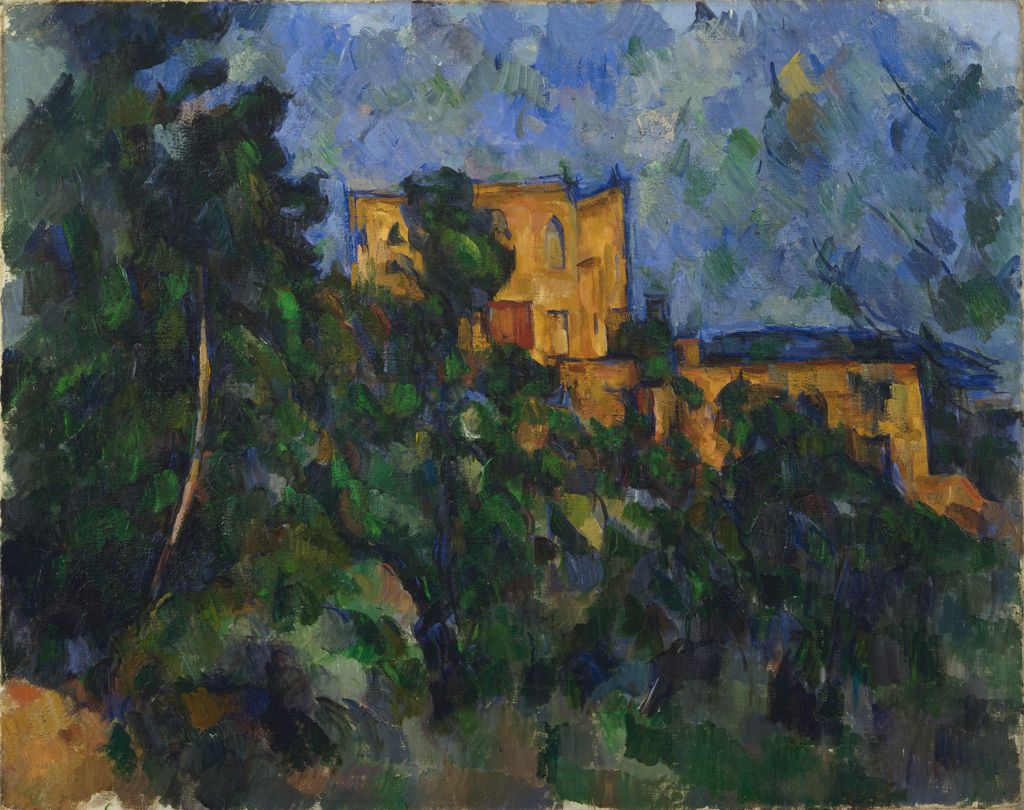
Paul Cézanne’s late working geography extended across Aix and its surrounding landscape. A family estate, a quarry cabin, a town apartment and a purpose-built studio each gave him different conditions for painting. He walked or travelled out to riverbanks, rocky slopes and mountain viewpoints; portraits and large figure paintings occupied him indoors and in the studio garden. The changes in workplace help trace how his subjects and working conditions developed. [1]
Recognition also reached him while he was still working. Ambroise Vollard’s 1895 Paris exhibition brought a much larger body of paintings before artists, collectors and critics, though responses were far from unanimous. In Aix, Cézanne continued to correspond, receive visitors, manage family and practical affairs, and ask how a painting could give shape to what he saw. [2]
At a Glance
- Period From the Jas de Bouffan peasant paintings of about 1890 to Cézanne’s death in October 1906. [1]
- Main Aix workplaces Jas de Bouffan until its sale in 1899, an apartment at 23 rue Boulegon, and the Lauves studio completed in 1902. [1]
- Outdoor sites Bibémus quarry, Château Noir, Mont Sainte-Victoire viewpoints and the Arc River. [1]
- Public turning point Vollard’s first solo Cézanne exhibition in Paris, 1895. [1]
- End of life He died at rue Boulegon in the night of 22–23 October 1906. [1]
Contents
- Jas de Bouffan: a base for painting and family life
- What changed with Vollard’s exhibition?
- Rue Boulegon, Lauves and the work beyond the studio
- Letters, visitors and a public reputation
- October 1906 and what followed
Jas de Bouffan: a base for painting and family life
Cézanne’s father had acquired Jas de Bouffan in 1859. For decades its rooms and grounds were subjects as well as places to work: the walls of the main salon carried his early painted experiments, and a roof studio was added in the 1880s. During the 1890s the estate remained a practical centre even as he sought motifs elsewhere. The history of this site runs across most of his career; it was never simply the picturesque prelude to a separate “late style.” [3]
Around 1890, Cézanne began painting people associated with the Jas in his peasant and Card Players project. Across studies and canvases, seated figures, pipes, hands and the edges of a table became a sustained problem of placement and balance. Their stillness came from repeated work with models and compositions, rather than from an interchangeable image of Provençal rustic life. The project is one reason the late Aix story must include people as well as landscape. [1] [4]
After family travel in 1890, Cézanne returned to Aix while his wife Hortense and their son Paul went to Paris. In 1891 he arranged separate accommodation for them in Aix while he stayed with his mother and sister at the Jas. These are movements and living arrangements, not evidence from which to infer what either spouse privately felt. Hortense’s own letters show her maintaining family and social ties; her long service as a portrait sitter was also work within the painter’s practice. [1] [5]
From the estate to the quarry
The Jas was a base rather than a boundary. Cézanne returned to Château Noir and the ochre rock faces of Bibémus; in 1897 he rented a cabin at the quarry to paint there. At these places, walls of stone, trees and openings through foliage let him test how near and far planes meet. They are specific environments, with particular paths and views, not interchangeable versions of “the Provence landscape.” [1]
His mother died in October 1897. Cézanne and his sisters sold the Jas in 1899, ending the long use of its rooms and grounds as a family and artistic centre. Vollard bought the contents of his studio. The painter’s subsequent move did not sever his link with Aix; it changed the place from which he set out and the scale of the room available for work. [1]
What changed with Vollard’s exhibition?
Vollard’s 1895 exhibition in Paris was Cézanne’s first solo show, but it did not introduce an entirely unknown artist. Pissarro, Chocquet and other supporters had admired or collected his work earlier. The exhibition mattered because it gathered a range of paintings for sustained public comparison and gave Vollard an ongoing part in circulating them. Cézanne remained in Aix with his ill mother and did not attend. He also sent two landscapes to an Aix exhibition that year: the Paris event did not erase the local context. [1] [2]
Vollard visited the Jas studio in 1896, a reminder that the dealer’s connection with the painter continued after the Paris opening. That summer Cézanne travelled with Hortense and their son to Vichy and Annecy. [1]
The surviving 1895 record gives a more interesting response than instant triumph. Pissarro described an unusually complete display to his wife while doubting how well it would be understood. His letters to his son discuss Cézanne as a painter who had learned from others and influenced Pissarro in turn. Vollard’s account books record transactions; Julie Manet’s diary describes a visit with Degas and Renoir, including their interest in a pear watercolour. These are different kinds of evidence—private judgments, sales records and a viewer’s report—but together they show active engagement while Cézanne lived. [2]
A planned portrait of the critic Gustave Geffroy belongs to the same expanding network, although accounts of the sittings and their ending diverge. Geffroy later rejected an explanation attributed to other witnesses, so a confident story about Cézanne’s motive would go beyond the documents. The unfinished appearance of a portrait can be described without turning a disputed reminiscence into an account of his private state. [2]
Vollard’s relationship with him extended beyond exhibiting oils. Art historian Douglas Druick places Cézanne’s lithographs within Vollard’s collaborative publishing ventures, with printer Auguste Clot involved in production. The date a print was issued cannot simply be treated as the date Cézanne drew its design, and later impressions do not all belong to his lifetime. That distinction makes the print projects evidence of continuing contact with Parisian art production, without turning them into proof of a sudden change in his painting. [6]
Rue Boulegon, Lauves and the work beyond the studio
After the sale of the Jas, Cézanne settled at 23 rue Boulegon in Aix. He bought land at Les Lauves in November 1901, and his new studio was completed in 1902. Its spacious upper room accommodated large canvases and still-life arrangements; it was also close to a view of Mont Sainte-Victoire. A studio, however, was only one part of his working circuit. The mountain, Château Noir, the quarry and the Arc remained subjects pursued from selected positions outdoors. [1] [7]
The Mont Sainte-Victoire paintings were not repetitions of a fixed postcard view. A ridge might rise as a firm diagonal in one composition while blue and green passages make its relation to the plain harder to separate in another. In a letter of 8 September 1906 to his son, Cézanne described how a slight change in angle could provide months of study beside the river. He also wrote of the difficulty of realising his sensations and of his trust in Paul to handle their affairs. The painter’s search for a viewpoint and the family’s practical concerns appear on the same pages. [8]
Watercolour was part of this investigation. In her study of the late sheets, Geneviève Monnier compares pale, broadly washed Sainte-Victoire images with the stronger curved marks in watercolour portraits of the gardener Vallier. She also emphasises how difficult a simple early-to-late progression is to establish: drawing could appear beneath colour, over it, or scarcely at all. Exposed paper could carry light and space, but it does not by itself tell us whether a sheet was finished. Her comparison illuminates changing choices across subjects, while individual dates and identities still depend on current object records. [9]
Cézanne’s large Bathers paintings occupied a different kind of time and space. Figures and trees were reconsidered over years at an ambitious scale. The Philadelphia Large Bathers , dated 1900–06 by its museum, was one of several monumental bather canvases, each a separate work. It belongs in this late Aix account as evidence that the painter’s studio work grew in ambition alongside his outdoor studies, rather than being displaced by them. [10]
Vallier in the studio garden
Vallier, a gardener, sat for late portraits. Their shared title can conceal substantial differences. The catalogue records the Tate’s Le Jardinier Vallier (FWN 547, 1905–06) as a frontal, full-length sitter on a stool. Another Le Jardinier Vallier (FWN 549, 1906), in a private collection, presents him in profile. A dark-capped Vallier in the National Gallery of Art is a further canvas. The works can be compared as repeated encounters with one model; they cannot be collapsed into a single image or assigned a reliable order merely by appearance. [11] [12]
Accounts of Cézanne’s final illness mention work on a Vallier portrait in the Lauves garden. That testimony should not make any one surviving Vallier canvas his securely identified “last painting.” The report documents a sitting, while the surviving paintings have broad catalogue dates. Portraiture remained active beside mountain, river and bather work at the end of his life. [8]
Letters, visitors and a public reputation
Cézanne’s late letters make him visible as a working painter in conversation with others. In April 1904 he advised the younger artist Émile Bernard to treat nature through cylinder, sphere and cone in perspective , and went on to speak about colour and depth. Detached from that sentence, the three solids can sound like a recipe for turning every tree and head into geometry. In the letter they are part of advice about observing a world with spatial depth. Another 1904 letter, to Louis Aurenche, says that expressing a strong sensation of nature also requires long experience with the means of art. [13]
Bernard, Charles Camoin and Maurice Denis were among younger artists who came to Aix. Memoirs of conversations were written later and need to be read as such. His paintings also appeared at the Salon d’Automne during his final years. Such visibility did not make critical opinion uniform: admiration, bafflement and hostility could coexist. [1] [8]
October 1906 and what followed
On 15 October 1906, Cézanne was caught in a storm while painting near Lauves and became ill. His sister Marie’s letter of 20 October to his son describes the exposure to rain, his weakness and his attempt to work on a Vallier portrait the following morning. A 17 October note to a paint supplier presses for an overdue colour order; a similar note dated 19 October may have remained a draft. These documents show both his condition and the practical continuity of his painting. [8]
He developed pneumonia and died in his rue Boulegon apartment during the night of 22–23 October; he was buried at Aix’s Saint-Pierre cemetery. The 1907 Salon d’Automne retrospective enlarged an already developing reputation. Artists and collectors had seen, argued over and bought his work during his life, particularly after the Vollard exhibition. The posthumous displays gave later viewers a chance to see a larger arc of work, but they were a new stage in its reception, not the moment it first came into view. [1] [14]
Cézanne artworks directory
Browse 217 identified works in this researched selection, including paintings, drawings and watercolours. This is a bounded selection, not a complete catalogue of Cézanne’s surviving oeuvre. Unlinked titles have no confirmed article in this collection.
| Name | Date | Medium |
|---|---|---|
| A Head, a Cup, and a Bread Roll | 1891/1894 | Drawing |
| A Man seen from Behind | 1880/1883 | Drawing |
| A Modern Olympia | 1873–74 | Painting |
| A Nude and Foliage | 1879/1882 | Drawing |
| A Smoking Man | 1892–96 (catalogue); c.1890–92 (museum) | Drawing |
| Afternoon in Naples | 1876–77 | Painting |
| An Old Woman with a Rosary | about 1895–96 | Painting |
| Apples and Oranges | c.1899 | Painting |
| Auvers, Panoramic View | 1873–75 | Painting |
| Avenue at Chantilly | 1888 | Painting |
| Banks of the Marne | 1888–94 | Painting |
| Basket | 1877/1900 | Drawing |
| Bather with Outstretched Arms | 1877–78 | Painting |
| Bellows in Front of a Fireplace | 1887/1892 | Drawing |
| Bibémus Quarry | c.1895 | Painting |
| Boy in a Red Vest, Barnes Foundation | 1888–90 | Painting |
| Boy in a Red Vest, MoMA | 1888–90 | Painting |
| Boy in a Red Waistcoat, National Gallery of Art | 1888–90 | Painting |
| Branch in Flower | 1886/1889 | Drawing |
| Carnival Scene | 1885/1888 | Drawing |
| Chair and Dresser | 1880/1883 | Drawing |
| Chateau Noir | 1903–04 | Painting |
| Chestnut Trees and Farm at Jas de Bouffan | c.1885 | Painting |
| Chestnut Trees and Farm at Jas de Bouffan, Pushkin | c.1886 | Painting |
| Chestnut Trees at Jas de Bouffan in Winter | 1885–86 | Painting |
| Château Noir | 1900–04 | Painting |
| Cistern in the Park of Château Noir | c.1900 | Painting |
| Curtain, Jug and Fruit | 1893–94 | Painting |
| Cushion of an Armchair | 1886/1889 | Drawing |
| Draft Letter and Studies of Bathers | c.1878 | Drawing |
| Farmhouse and Chestnut Trees at Jas de Bouffan | 1884–85 | Painting |
| Figure Resting Head on Hand | c. 1889 | Drawing |
| Fireplace Tongs and Poker | 1887/1892 | Drawing |
| Forest Interior, San Francisco | c.1898–99 | Painting |
| Four Bathers | 1888–90 | Painting |
| Fruit and a Jug on a Table | 1893–94 | Painting |
| Gardanne | 1885–86 | Painting |
| Gardanne, Barnes Foundation | c.1885 | Painting |
| Hand and Shoulder of a Boy | c. 1885 | Drawing |
| Harlequin, National Gallery of Art | 1888–90 | Painting |
| Head of a Boy | 1887/1889 | Drawing |
| Head of a Boy Seen from Behind | c. 1885 | Drawing |
| Head of a Young Woman | c. 1880 | Drawing |
| Head of the Artist's Son | 1888/1889 | Drawing |
| Hillside in Provence | c.1890–92 | Painting |
| Horse Chestnut Trees at Jas de Bouffan | c.1885 | Painting |
| House and Farm at the Jas de Bouffan | c.1887 | Painting |
| House in a Park | 1883/1886 | Drawing |
| House in Provence | c.1885 | Painting |
| House of Père Lacroix | 1873 | Painting |
| House Surrounded by Vegetation | 1889/1892 | Drawing |
| Houses in Provence The Riaux Valley near L’Estaque | c.1883 | Painting |
| Jas de Bouffan, the Pool | c.1876 | Painting |
| Kerosene Lamp | 1878/1881 | Drawing |
| L'Estaque, Melting Snow | c.1870 | Painting |
| Lake Annecy | 1896 | Painting |
| Landscape in Provence, Pola Museum | 1879–82 | Painting |
| Landscape Near Aix-en-Provence | 1877/1880 | Drawing |
| Landscape Seen from the Inside of a Cave | 1889/1892 | Drawing |
| Landscape with Poplars | c.1885–87 | Painting |
| Landscape with Trees | 1895/1898 | Drawing |
| Leda and the Swan | c.1880 (possibly later) | Painting |
| Little Girl with a Doll | 1902–04 | Painting |
| Louis Guillaume | 1879–1890 | Painting |
| Madame Cezanne | 1888/1891 | Drawing |
| Madame Cezanne | 1886/1889 | Drawing |
| Madame Cezanne | 1882/1887 | Drawing |
| Madame Cezanne | 1897/1900 | Drawing |
| Madame Cezanne with her Head Lowered | 1893/1896 | Drawing |
| Madame Cézanne in a Red Armchair | c.1877 | Painting |
| Madame Cézanne in a Red Dress, Metropolitan Museum of Art | 1888–90 | Painting |
| Madame Cézanne in a Yellow Chair | 1888–90 | Painting |
| Madame Cézanne in a Yellow Chair, Fondation Beyeler | 1888–90 | Painting |
| Madame Cézanne in the Conservatory | 1891 | Painting |
| Maincy Bridge | 1879–80 | Painting |
| Maison Maria with a View of Château Noir | c.1895 | Painting |
| Man Bending Forward | 1883/1886 | Drawing |
| Man Smoking a Pipe, Pushkin | c.1891, possibly later | Painting |
| Man with a Pipe | 1891–96 | Painting |
| Man with a Pipe, Nelson-Atkins | 1890–92 | Painting |
| Man with a Straw Hat (Gustave Boyer) | c.1871 | Painting |
| Man with Crossed Arms | c.1899 | Painting |
| Man with Pipe, National Gallery of Art | 1892–96 | Painting |
| Mont Sainte-Victoire | c.1902–06 | Painting |
| Mont Sainte-Victoire | 1900–02 | Painting |
| Mont Sainte-Victoire (recto) | c.1895 | Watercolour |
| Mont Sainte-Victoire and the Viaduct of the Arc River Valley | 1882–85 | Painting |
| Mont Sainte-Victoire Seen beyond the Wall of the Jas de Bouffan | c.1885/1888 | Watercolour |
| Mont Sainte-Victoire Seen from Bibémus Quarry | c.1897 | Painting |
| Mont Sainte-Victoire, Barnes Foundation | 1892–95 | Painting |
| Near the Pool at Jas de Bouffan | 1883/1887 | Drawing |
| Pelicans | 1877/1880 | Drawing |
| Peonies | 1890/1893 | Drawing |
| Pierrot and Harlequin | 1888 | Painting |
| Pine Tree | 1882/1885 | Drawing |
| Pont des Trois Sautets | 1906 | Watercolour |
| Poplars | 1879–80 | Painting |
| Portrait of Ambroise Vollard | 1899 | Painting |
| Portrait of Gustave Geffroy | 1895–96 | Painting |
| Portrait of Madame Cezanne with Loosened Hair | 1885–86 | Painting |
| Portrait of the Artist Looking Over His Shoulder | 1883–84 | Painting |
| Portrait of the Gardener Vallier | 1906 | Painting |
| Portrait of Victor Chocquet | 1876–77 | Painting |
| Portrait Of Victor Chocquet Seated | 1877 | Painting |
| Provençal Manor | c.1885 | Painting |
| Pyramid of Skulls | 1898–1900 | Painting |
| Reclining Nude (Leda?) | c.1887 | Painting |
| Scipio | 1866–68 | Painting |
| Seated Man, Oslo | 1898–1900 | Painting |
| Seated Peasant | c.1892–96 | Painting |
| Seated Peasant, Hiroshima | c.1897 | Painting |
| Seated Peasant, Orsay | c.1900 | Painting |
| Self-Portrait | c. 1895 | Drawing |
| Self-Portrait in a Bowler Hat, Ny Carlsberg Glyptotek | 1885–86 | Painting |
| Self-Portrait in a Casquette | c.1875 | Painting |
| Self-Portrait with a Beret | 1898–1900 | Painting |
| Self-Portrait with a Hat, Artizon Museum | c.1890–94 | Painting |
| Self-Portrait with a Pink Background | c.1875 | Painting |
| Self-Portrait with Olive-Coloured Wallpaper | about 1880–81 | Painting |
| Self-Portrait with Palette | 1886–87 | Painting |
| Self-Portrait with White Turban | c.1878–80 | Painting |
| Self-Portrait, c.1895 | c.1895 | Painting |
| Self-Portrait, Pushkin Museum | c.1882 | Painting |
| Spanish Dancers | 1883/1886 | Drawing |
| Still Life with a Curtain | 1892–94 | Painting |
| Still Life with Apples | c.1890 | Painting |
| Still Life with Apples | 1893–94 | Painting |
| Still Life with Apples and a Pot of Primroses | about 1890 | Painting |
| Still Life with Milk Jug and Fruit | c.1900 | Painting |
| Still Life with Open Drawer | 1877–79 | Painting |
| Still Life with Plaster Cupid | about 1894 | Painting |
| Still Life with Skull | 1890–93 | Painting |
| Still Life with Soup Tureen | 1877 | Painting |
| Still Life, Pitcher and Fruit | 1893–94 | Painting |
| Studies Including a Straw Hat | 1895/1898 | Drawing |
| Studies Including Madame Cezanne | 1884/1887 | Drawing |
| Study for "The Judgement of Paris" or "The Amorous Shepherd" | 1883/1886 | Drawing |
| Study for Woman with a Coffee Pot | c.1895 | Painting |
| Study of "The Roman Orator (Germanicus)" | 1883/1886 | Drawing |
| Study of "Venus de Milo" | 1881/1884 | Drawing |
| Study of a Decorative Ornament | 1879/1882 | Drawing |
| Study of a Standing Male Figure after the Antique | c. 1895 | Drawing |
| Study of an Angel in Rubens' "The Prophet Elijah" | 1892/1895 | Drawing |
| Study of Desiderio da Settignano's "Bust of a Child" | c. 1895 | Drawing |
| Study of Houses | 1879/1882 | Drawing |
| Study of Puget's "Hercules Resting" | c. 1879 | Drawing |
| Study of Puget's "Milo of Crotona" | 1895/1898 | Drawing |
| Study of Puget's "Milo of Crotona" | 1880/1883 | Drawing |
| Study of the Allegorical Figure Bellona in Rubens' "The Apotheosis of Henri IV" | 1883/1886 | Drawing |
| Study of the Allegorical Figure Bellona in Rubens' "The Apotheosis of Henri IV" | 1879/1882 | Drawing |
| Study of the Allegorical Figure France in Rubens' "The Exchange of the Two Princesses" | 1882/1885 | Drawing |
| Study of the Allegorical Figure of Health in Rubens' "The Birth of Louis XIII" | 1880/1883 | Drawing |
| Study of the Allegorical Figure of the Genius of Health from Rubens' "The Birth of Louis XIII at Fontainbleau" | 1895/1898 | Drawing |
| Sugar Bowl, Pears and Blue Cup | 1865–66 | Painting |
| The Aqueduct, Pushkin Museum | Dating differs between museum records | Painting |
| The Artist's Father, Reading L'Evenement | autumn 1866 | Painting |
| The Artist's Son | c. 1887 | Drawing |
| The Artist's Son Leaning on his Elbow | c. 1887 | Drawing |
| The Artist's Son Reading | c. 1887 | Drawing |
| The Artist's Son Writing | c. 1887 | Drawing |
| The Artist’s Son, Paul | 1886–87 | Painting |
| The Avenue at Jas de Bouffan | 1868–70 (possibly later) | Painting |
| The Avenue at Jas de Bouffan, Geneva | c.1890 | Painting |
| The Basket of Apples | c.1893 | Painting |
| The Bather, Museum of Modern Art | c.1885 | Painting |
| The Bay of Marseille seen from L'Estaque | c.1885 | Painting |
| The Blue Vase | 1889–90 | Painting |
| The Boy in the Red Vest, Bührle | 1888–90 | Painting |
| The Buffet | 1877–79 | Painting |
| The Card Players, Barnes Foundation | 1890–92 | Painting |
| The Card Players, Courtauld Gallery | 1892–96 | Painting |
| The Card Players, Metropolitan Museum of Art | 1890–92 | Painting |
| The Card Players, Musée d’Orsay | 1893–96 | Painting |
| The Card Players, Qatar | 1892–96 | Painting |
| The Eternal Feminine | c.1877 | Painting |
| The Gardener Vallier | 1906 | Painting |
| The Gardener Vallier, Tate | 1905–06 | Painting |
| The Grounds of the Château Noir | c.1900–04 | Painting |
| The Gulf of Marseille Seen from L’Estaque | c.1885 | Painting |
| The Hanged Man's House in Auvers | c.1873 | Painting |
| The House of Doctor Gachet at Auvers | 1872–73 | Painting |
| The House with the Cracked Walls | 1892–94 | Painting |
| The Kiss of the Muse | c.1860 | Painting |
| The Large Bathers, Barnes Foundation | 1895–1906 | Painting |
| The Large Bathers, National Gallery | 1895–1905 | Painting |
| The Large Bathers, Philadelphia Museum of Art | 1900–06 | Painting |
| The Mill | 1889/1892 | Drawing |
| The Painter’s Father, Louis-Auguste Cézanne | c.1865 | Painting |
| The Peasant | 1890–92 | Painting |
| The Plaster Mill (La Moulin à plâtre) | 1889/1892 | Drawing |
| The Smoker, Hermitage | c.1891 | Painting |
| The Smoker, Mannheim | c.1891 | Painting |
| The Stove in the Studio | c.1865 | Painting |
| The Vase of Tulips | c.1890 | Painting |
| Thistle | 1893/1896 | Drawing |
| Three Heads, One of Madame Cezanne | 1882/1885 | Drawing |
| Three Skulls | c.1898 | Painting |
| Three Skulls on a Patterned Carpet | 1904 | Painting |
| Trees and Shrubs | 1883/1887 | Drawing |
| Turning Road at Montgeroult | 1898 | Painting |
| Two Bathers | 1884/1887 | Drawing |
| Two Heads | 1888 | Drawing |
| Two Heads | 1890/1896 | Drawing |
| Two Heads of Women | 1890/1894 | Drawing |
| Two Studies for "The Judgement of Paris" or "The Amorous Shepherd" | 1883/1886 | Drawing |
| Uncle Dominique in a Tasseled Cap | 1866 | Painting |
| Uncle Dominique in a Turban | 1866–67 | Painting |
| Victor Chocquet and an Angel for "The Apotheosis of Delacroix" | 1878/1880 | Drawing |
| Woman in Blue | c.1904 | Painting |
| Woman Leaning Forward | 1888/1891 | Drawing |
| Woman Leaning Forward | 1890/1894 | Drawing |
| Woman Leaning Forward | 1890/1894 | Drawing |
| Woman with a Coffee Pot | c.1895 | Painting |
| Women Bathers and a Roll of Paper | 1882/1885 | Drawing |
| Young Girl with a Doll | c.1895 | Painting |
| Young Italian Woman at a Table | c.1895–1900 | Painting |
| Young Man and Skull | 1896–98 | Painting |
Frequently Asked Questions
The Jas was sold in 1899. Cézanne lived at rue Boulegon, bought the Lauves plot in 1901 and had the new studio ready by 1902. He continued going out to nearby motifs. [1]
The 1895 solo exhibition widened the audience and market for his work, with real purchases and debate. It built on earlier support and was followed by uneven criticism and further exhibitions. [2]
Discussion
Look again at the images and ideas explored in Paul Cézanne’s Late Years in Aix: Work, Places and Recognition. These editorial prompts invite your observations.
Reader Insights
Follow the places in sequence: what changed when a family estate gave way to a town apartment and then a dedicated studio, and what kept drawing Cézanne outdoors?
Compare a pale Sainte-Victoire watercolour with a strongly marked Vallier study. How differently can exposed paper and colour make a mountain or a person feel present?
Look again at a late portrait beside a bather composition. Where does repeated adjustment make a figure feel settled, and where does the work remain visibly open?
Join the Conversation
Share a detail, comparison or question about Paul Cézanne’s Late Years in Aix: Work, Places and Recognition below.
References
- Musée Granet , Cezanne au Jas de Bouffan: Visitor Booklet , 2025, especially chronology pp. 17–23. View source .
- Société Paul Cezanne , François Chédeville, “1895,” documentary chronology with letters, notices and Vollard records, 2016 (in French). View source .
- Musée Granet , Cezanne 2025 Press Pack , 2025, pp. 27–29. View source .
- The Metropolitan Museum of Art , “Cezanne’s Card Players,” technical study, 2022. View source .
- The Metropolitan Museum of Art , Rachel High, “Interview with Dita Amory, Curator and Co-author of Madame Cézanne,” 1 December 2014. View source .
- Museum of Modern Art , Douglas Druick, “Cézanne’s Lithographs,” in Cézanne: The Late Work , 1977, pp. 119–137. View source .
- Société Paul Cezanne , Denis Coutagne, “Biographie de Cézanne,” 2013 (in French). View source .
- Société Paul Cezanne , François Chédeville, “1906,” documentary chronology with correspondence, 2016 (in French). View source .
- Museum of Modern Art , Geneviève Monnier, “The Late Watercolors,” translated by Frances Frenaye, in Cézanne: The Late Work , 1977, pp. 113–118. View source .
- Philadelphia Museum of Art , “The Large Bathers,” collection record. View source .
- Société Paul Cezanne , Online Catalogue Raisonné , “Le Jardinier Vallier,” FWN 547, 1905–06. View source .
- Société Paul Cezanne , Online Catalogue Raisonné , “Le Jardinier Vallier,” FWN 549, 1906. View source .
- Société Paul Cezanne , François Chédeville, “1904,” documentary chronology with letters to Bernard and Aurenche, 2016 (in French). View source .
- The Metropolitan Museum of Art , James Voorhies, “Paul Cézanne (1839–1906),” 2004. View source .
- Société Paul Cezanne,online catalogue structure and objectidentification. View source.
- National Gallery of Art,Cezanne Sketchbook,1992.51.9. View source.
- Splash image, Paul Cézanne, Château Noir,1903–04,oil on canvas,73.6×93.2cm,MoMA,New York,137.1957;FWN360. Image source. Public domain. Proportional web export only; actual master unchanged.


