by Tom Gurney
Tom Gurney BSc (Hons) is an art history expert with over 20 years experience
Page created on September 3, 2026 / Page updated on September 13, 2026
Email: tomgurney1@gmail.com / Phone: +44 7429 011000
How Renaissance Artists Made Viewpoint a Working System
Perspective in Renaissance art was not one invention switched on at a single moment. Fifteenth- and sixteenth-century artists developed, recorded, taught, and combined several ways of organising depth: measured linear convergence, atmospheric change, foreshortened bodies, overlap, scale, and viewpoint. The celebrated Florentine system mattered because it made a spatial relationship among observer, picture plane, and represented world repeatable.[1][2]
Filippo Brunelleschi's lost demonstration, probably made around 1420, is known through later accounts; Leon Battista Alberti's De pictura of 1435 provides the crucial surviving written codification.[1][3] Keeping demonstration and text separate avoids a simple origin myth. Artists already represented depth, and Renaissance practice remained diverse across cities, courts, workshops, media, and cultures.
At a Glance
- Key shiftmeasured projection made the relation among viewer, picture plane and represented space repeatable.
- Early landmarksBrunelleschi's lost demonstration and Alberti's surviving 1435 codification.
- Related methodslinear convergence, atmospheric recession, overlap, scale and foreshortening.
- Circulationworkshops, treatises and prints adapted the methods across media and regions.
- Important limitRenaissance artists did not use one uniform system or invent every global way of showing depth.
Contents
A timeline with several branches
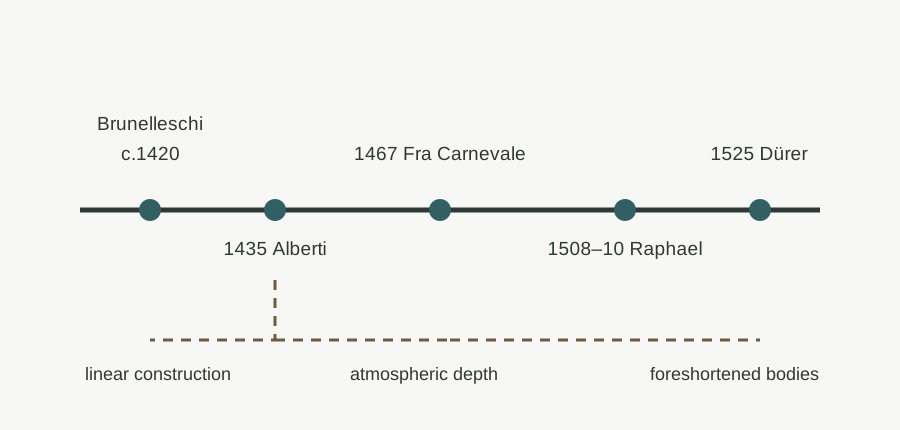
The diagram marks Brunelleschi, Alberti, Fra Carnevale, Raphael, and Dürer, then branches towards linear construction, atmospheric depth, and foreshortened bodies. These strands overlap rather than forming a single march. Museum teaching resources connect Renaissance perspective to mathematics, observation, naturalistic figures, and humanist interest in the visible world.[4][5]
Demonstration, codification, and practice
The timeline uses dates, labels, points, and dashed branches without relying on colour. It is an orientation aid, not a claim that all developments began or ended at those markers.
Eight works, alternatives, and legacies
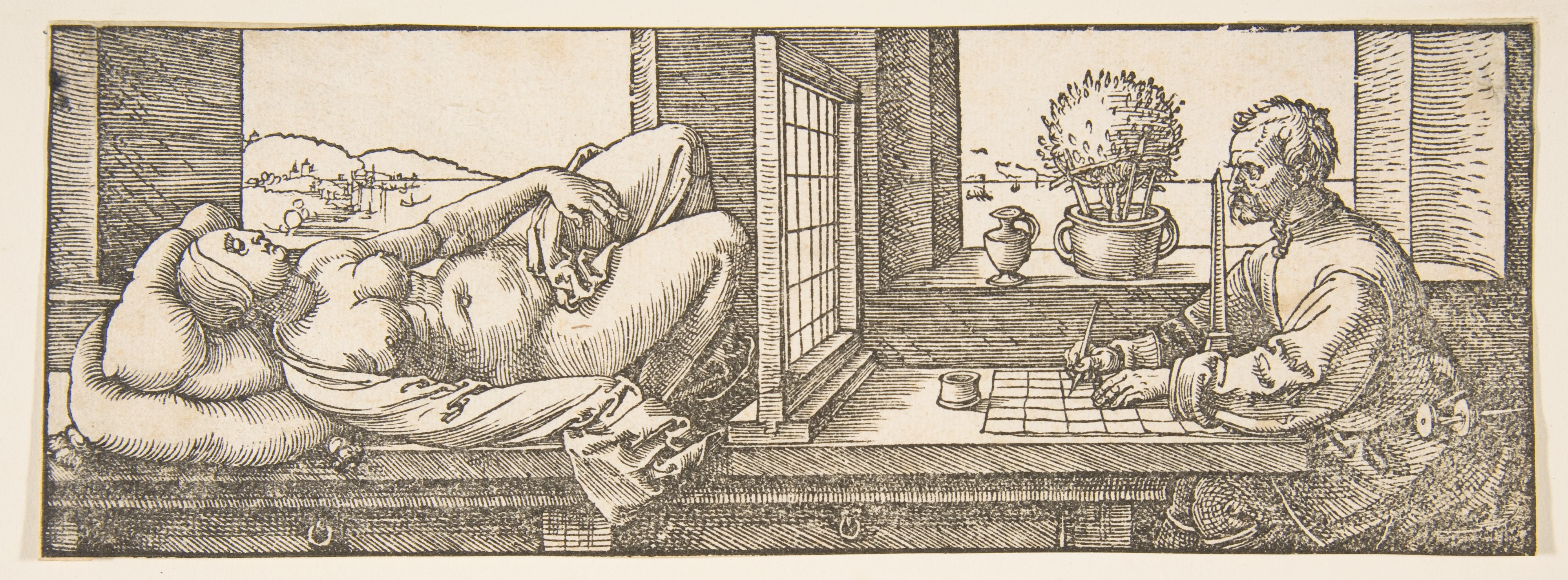
Albrecht Dürer — Draughtsman Making a Perspective Drawing of a Reclining Woman
Dürer's print shows a fixed observer, gridded plane, model, and drawing surface.[6] Published perspective studies helped make projection portable across northern Europe. The apparatus also reveals that irregular bodies demanded translation, not just architectural convergence.
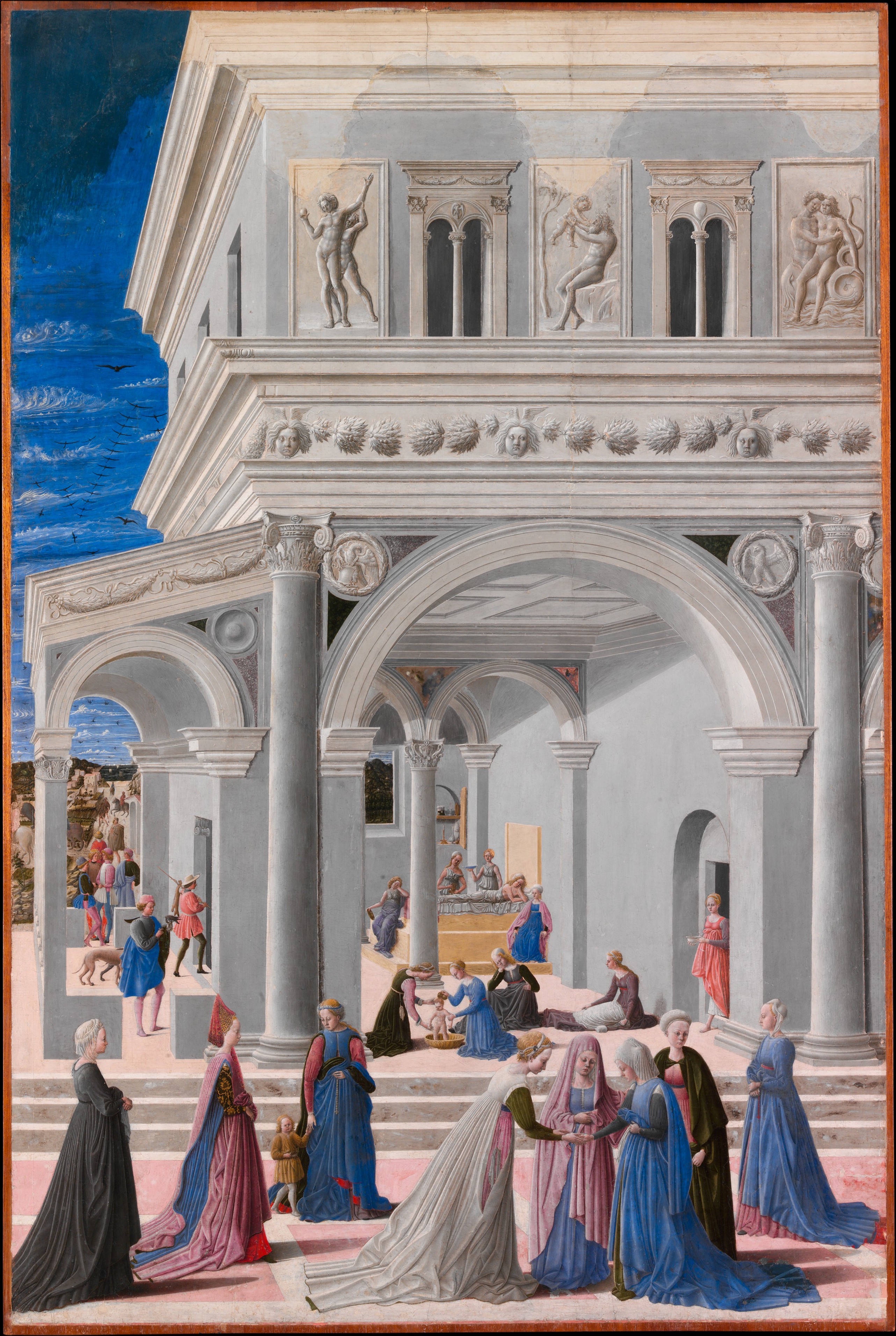
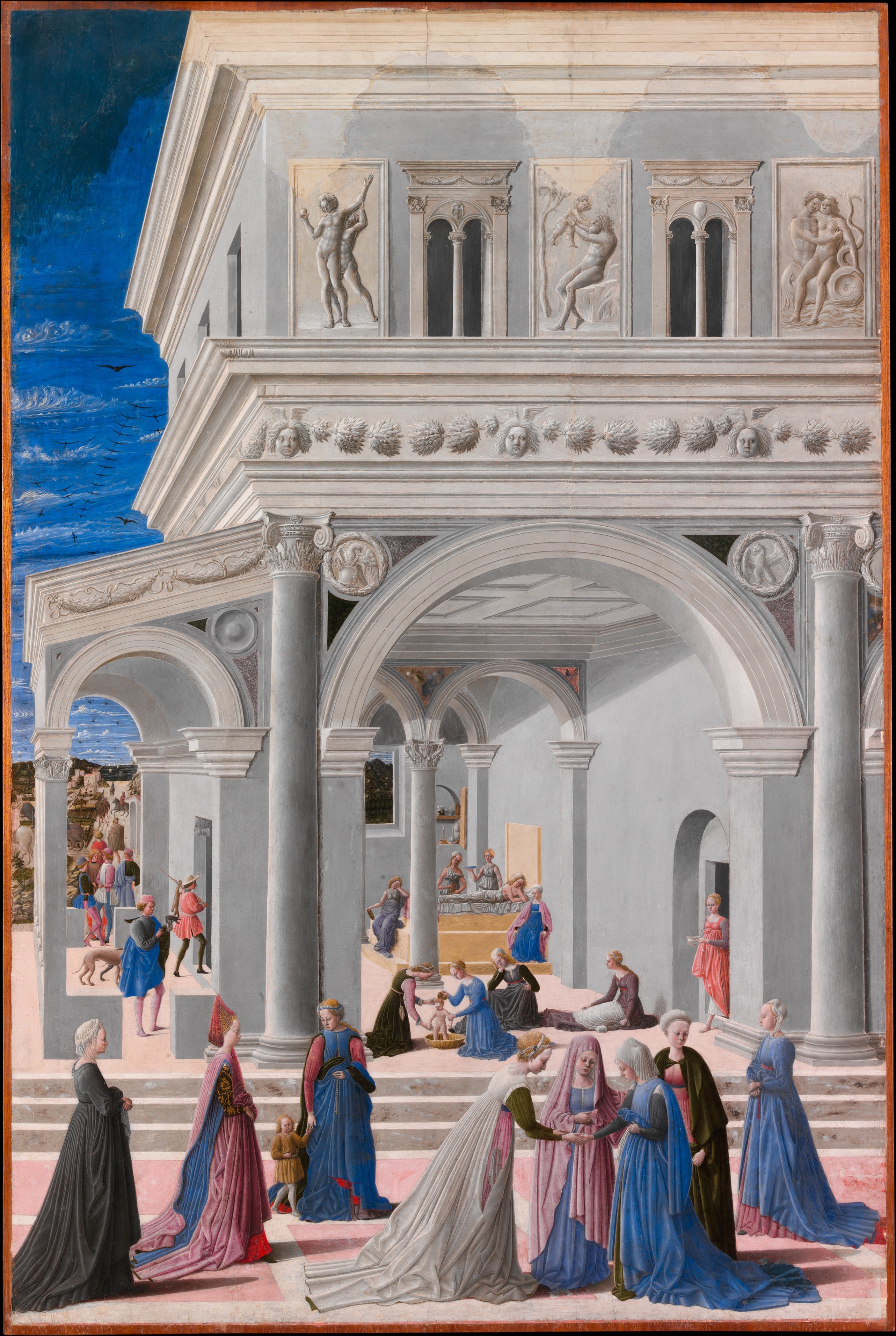
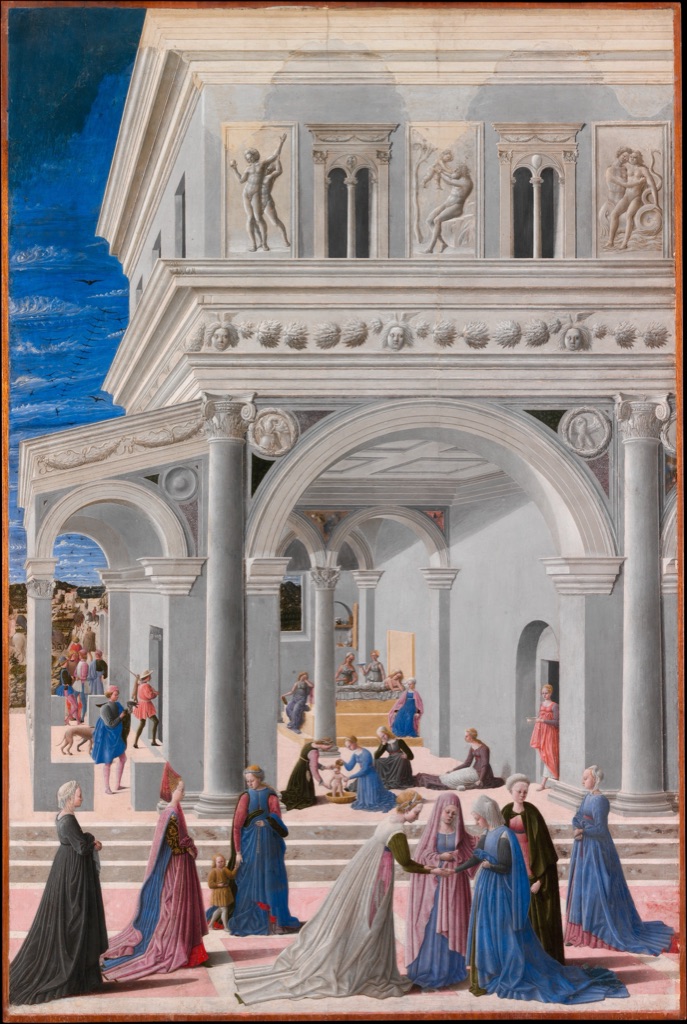
Fra Carnevale — The Birth of the Virgin
Fra Carnevale's 1467 palace uses tiled floors, arches, cornices, openings, and diminishing figures to coordinate deep space.[7] Geometry unifies several narrative incidents and makes architecture an instrument for directing attention—a mature application rather than a bare demonstration.
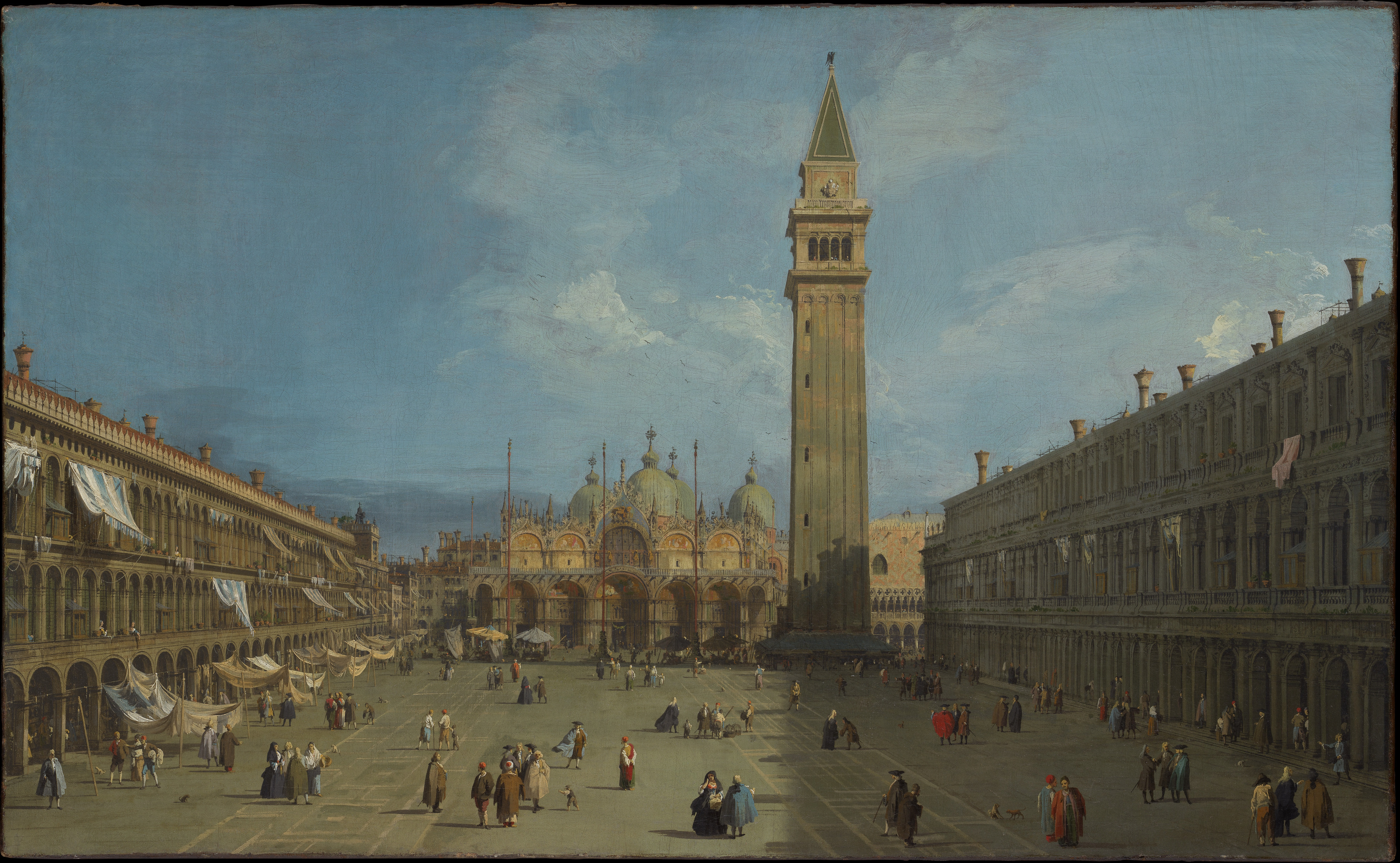
Canaletto — Piazza San Marco
Canaletto's eighteenth-century square is a later legacy. Multiple building directions and measured intervals show how Renaissance linear practices became tools for expansive urban views.[10] The system remained adaptable rather than frozen in a fifteenth-century formula.
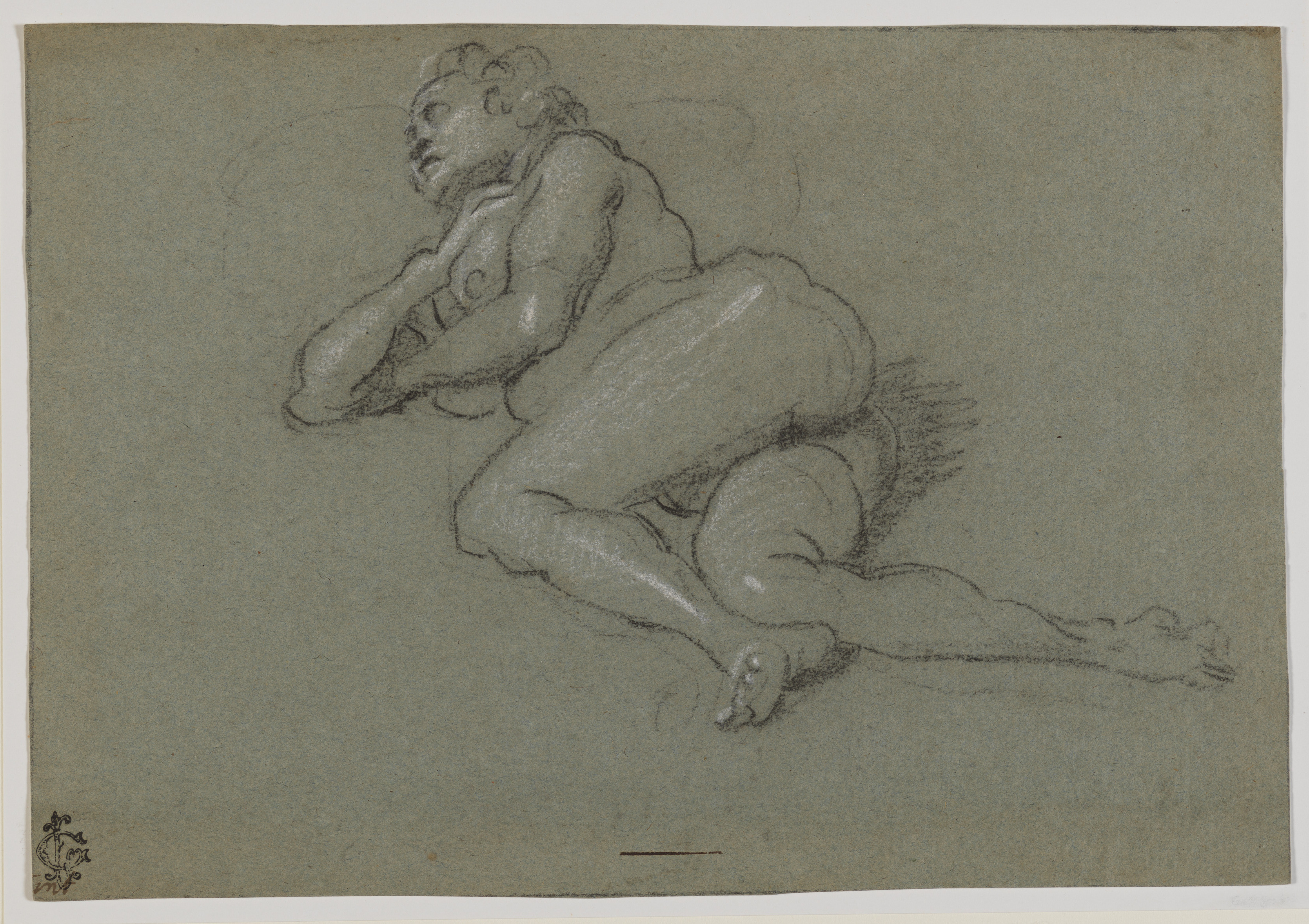
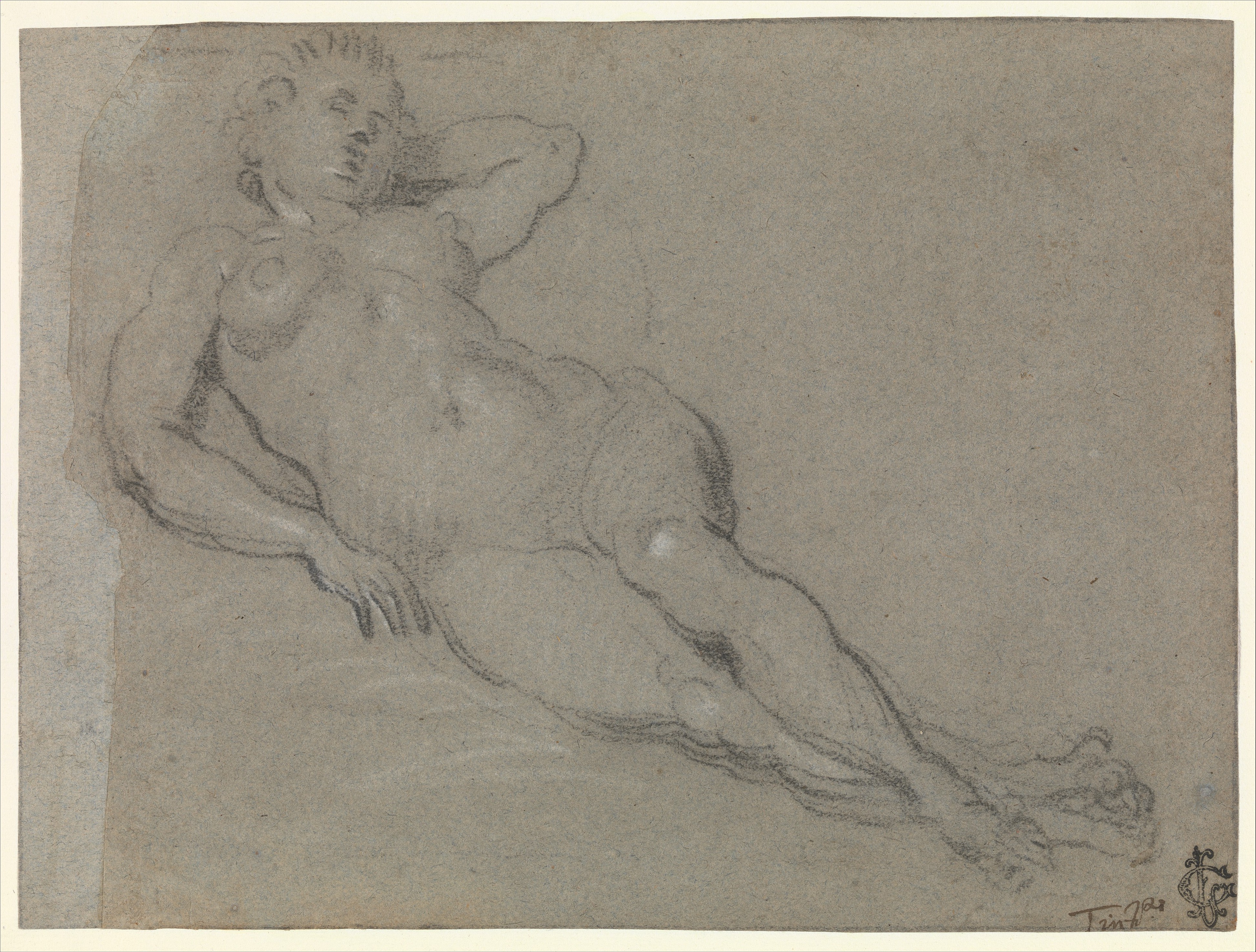
Domenico Tintoretto — Reclining Female Nude
Tintoretto's chalk figure represents the bodily branch. Limbs overlap and lengths compress as the body turns through depth.[9] Renaissance and early modern artists studied such poses because convincing spatial worlds required bodies as well as buildings.
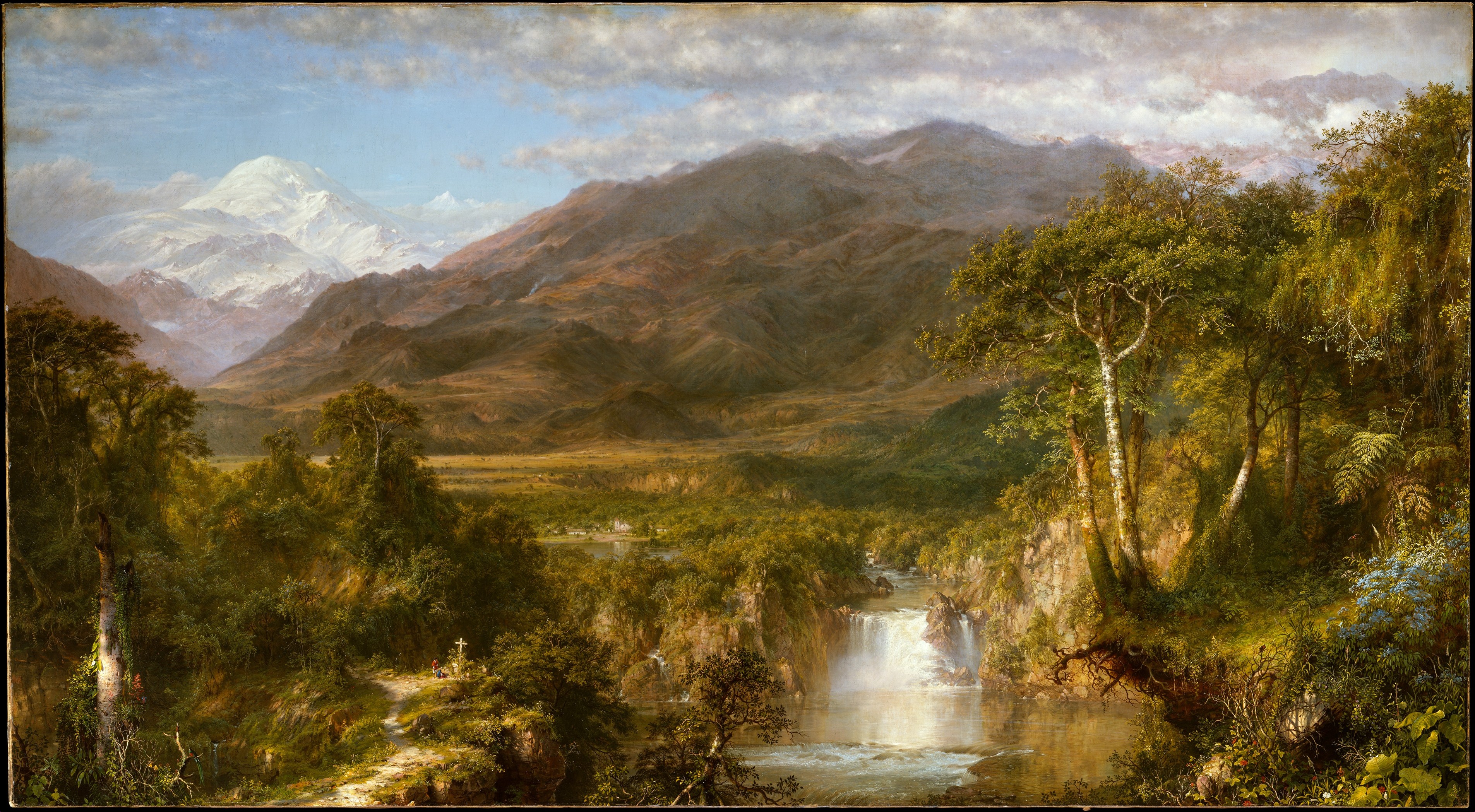
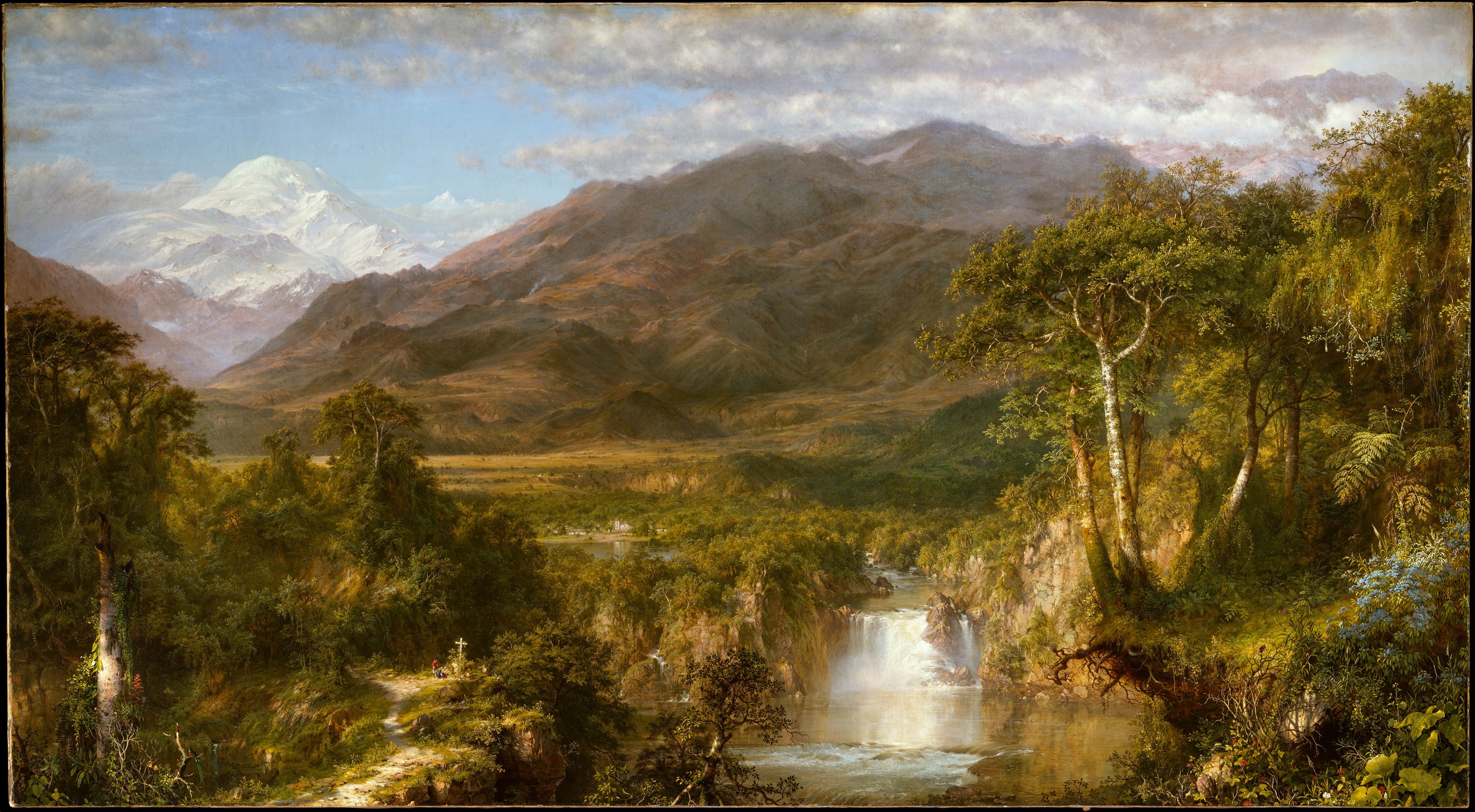
Frederic Edwin Church — Heart of the Andes
Church's nineteenth-century landscape extends another legacy: atmospheric recession. Dark detailed foreground forms yield to paler distant mountains.[11] Leonardo's study of fading and blurred distance belongs to the Renaissance history of this cue, though he did not invent every global use of tonal recession.
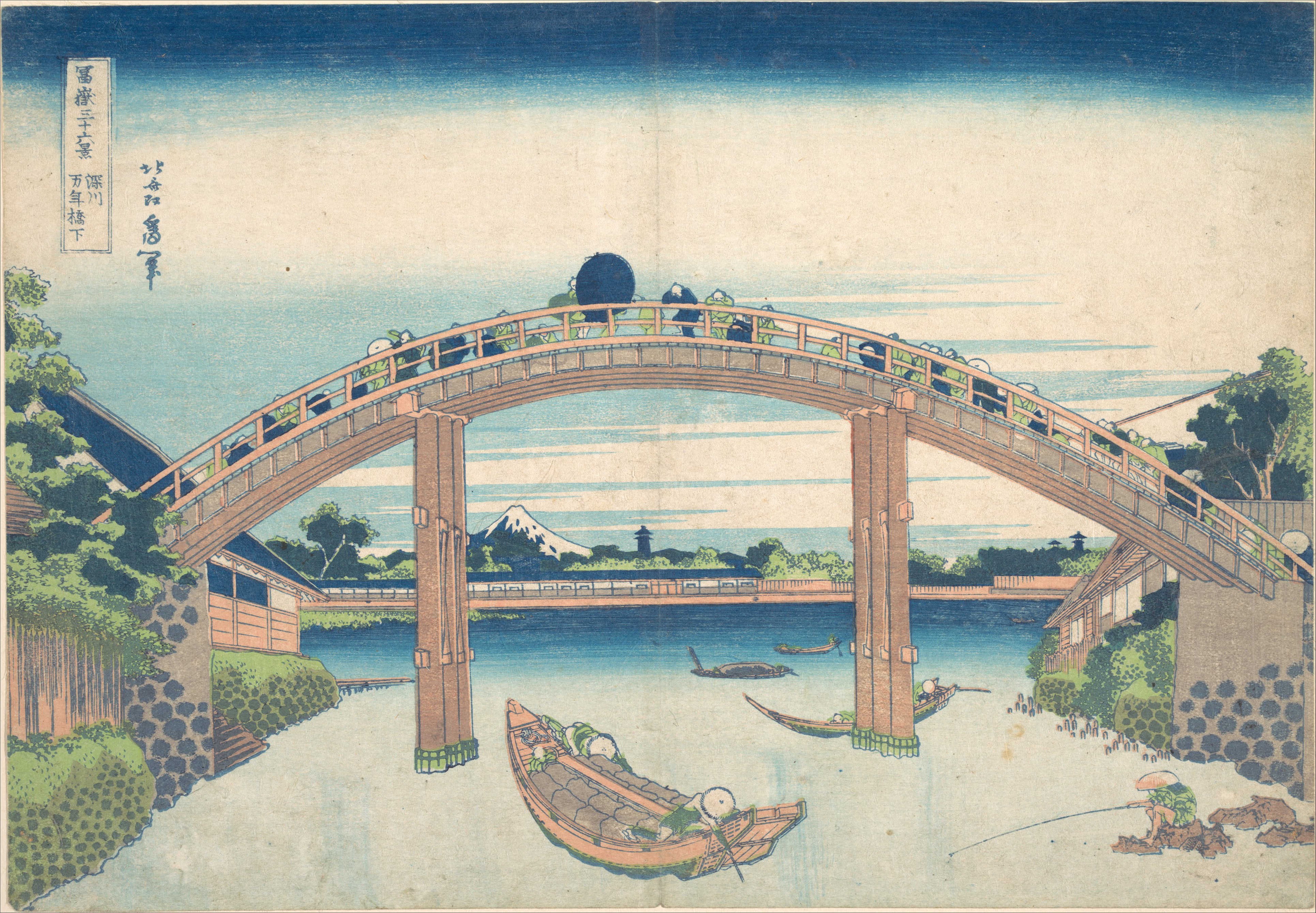
Katsushika Hokusai — Under the Mannen Bridge at Fukagawa
Hokusai's print demonstrates transformation beyond Europe. Oblique bridge structure, scale change, overlap, and framing interact with imported perspective ideas.[12] The designed flatness of colour and contour remains active, warning against treating Renaissance projection as a universal endpoint.
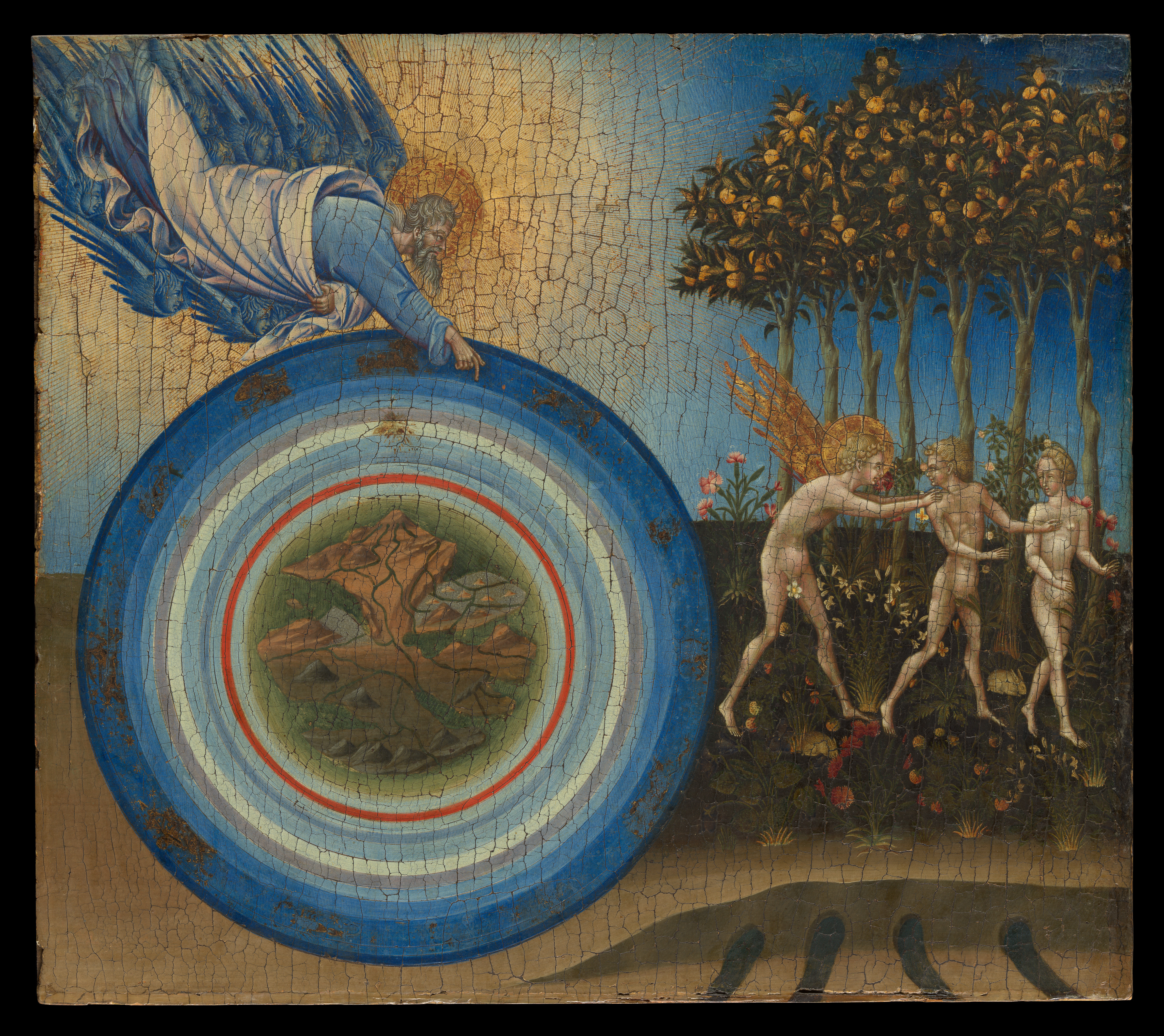
Giovanni di Paolo — The Creation of the World and the Expulsion from Paradise
Giovanni di Paolo's 1445 panel belongs inside the Renaissance yet prioritises concentric cosmos, gold ground, and symbolic narrative sequence.[8] Its order is exact without one continuous optical viewpoint. Renaissance art contained positive alternatives alongside measured naturalism.
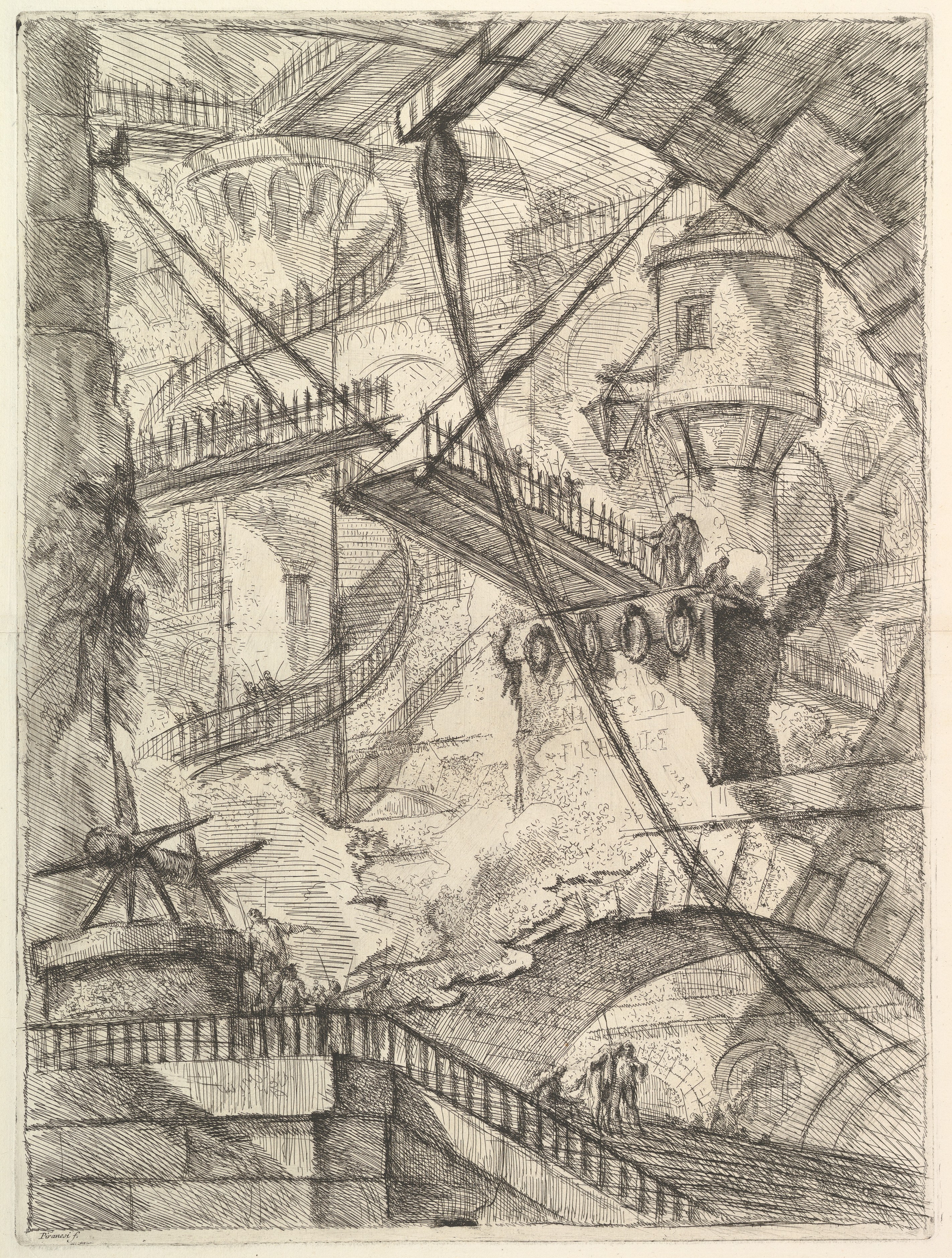
Giovanni Battista Piranesi — The Drawbridge
Piranesi's eighteenth-century prison is a critical afterlife. Stairs, bridges, and arches supply abundant perspective cues, but their systems compete and routes disappear.[13] Once codified, perspective could be exaggerated until the viewer's struggle to orient themselves became expressive.
What changed—and what did not
Measured projection gave artists a repeatable method for coordinating architecture, figures, and narrative with an implied viewer. Treatises and prints helped circulate it; workshops adapted it to fresco, panel, drawing, intaglio, stage design, and built interiors. It also supported claims that painting involved mathematical and intellectual knowledge.[2][3]
Yet adoption was uneven and selective. Artists displaced vanishing points, combined several systems, preserved gold grounds, used atmospheric distance, or privileged symbolic scale. Northern, Italian, and later global encounters did not produce one uniform visual language. “Renaissance perspective” is therefore best understood as a field of experiments and choices.
How to read a Renaissance perspective
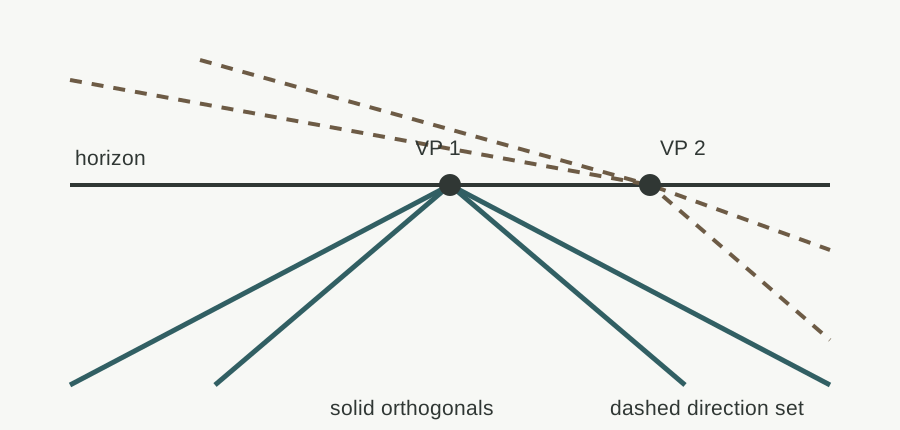
First identify the implied viewer and picture plane. Group converging architectural edges, compare repeated intervals, and locate the horizon. Then examine bodies for foreshortening and landscapes for tonal recession. Ask whether these cues agree, whether they direct attention towards a sacred or narrative centre, and whether the work preserves a competing decorative or symbolic order.
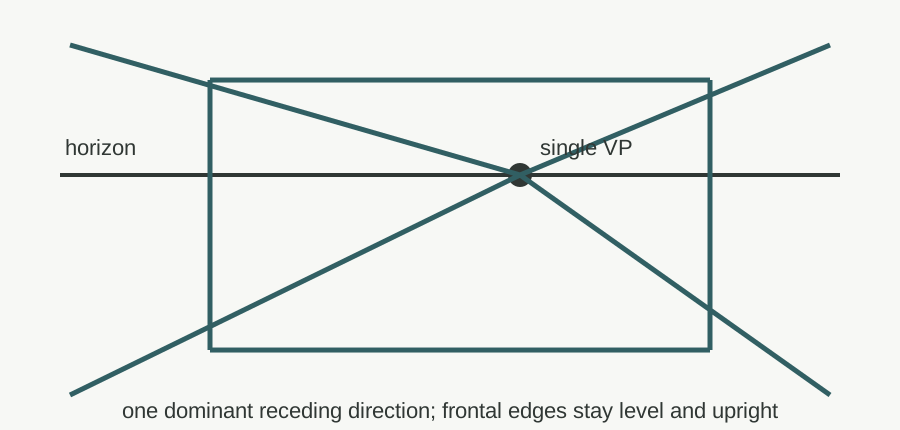
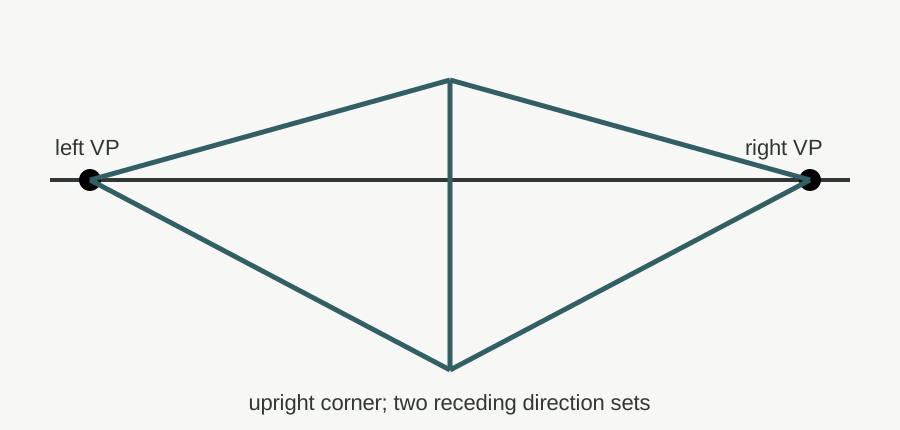
The cluster's Linear Perspective, One-Point Perspective, Two-Point Perspective, Foreshortening, and Aerial Perspective guides isolate the systems. Read together, they show the Renaissance not as the discovery of depth itself, but as a period in which particular spatial methods were formalised, circulated, contested, and made newly consequential.
Explore perspective in art
All seven evidence-checked guides are available in this local perspective group.
Watch Renaissance Perspective Become a System
Choose Brunelleschi's historical experiment, a geometric explanation of one-point construction, or a comparison with foreshortened bodies.
Linear Perspective: Brunelleschi's Experiment
See how Brunelleschi's lost demonstration connected a fixed observer, picture plane and projected Florentine space.
Watch on YouTubeFrequently Asked Questions
Brunelleschi is associated with a foundational Florentine demonstration around 1420, while Alberti's 1435 treatise supplied the crucial surviving written codification; neither fact means that earlier or non-European artists lacked ways of representing depth.
It offered a repeatable way to coordinate an implied observer, picture plane, architecture, figures and measured intervals within a spatial construction.
No. Artists combined, adjusted or rejected measured convergence and also used atmospheric change, overlap, scale, symbolic order and multiple viewpoints.
Foreshortening made bodies and objects aimed through depth appear compressed, helping artists integrate difficult figures into spatial settings and illusionistic ceilings.
They show how Renaissance systems acquired long afterlives, were transformed through cultural exchange and could be exaggerated or contested rather than treated as a universal endpoint.
Discussion
Which work best demonstrates the power of a coordinated viewpoint—and which most usefully shows an alternative, transformation or expressive refusal?
Reader Insights
Keep Brunelleschi's reconstructed experiment distinct from Alberti's surviving written codification when telling the origin story.
Test bodies for foreshortening and landscapes for atmospheric change as well as tracing converging edges.
Ask where geometry supports narrative or sacred focus and where symbolic, decorative or multiple spatial orders remain active.
Join the Conversation
Share one precise observation or a useful museum example below.
References
- National Gallery, “Linear perspective.” https://www.nationalgallery.org.uk/paintings/glossary/linear-perspective
- Getty, “The Geometry of Seeing.” https://www.getty.edu/art/exhibitions/geometry/index.html
- The Met, “Architecture in Renaissance Italy.” https://www.metmuseum.org/essays/architecture-in-renaissance-italy
- National Gallery of Art, “Renaissance Art.” https://www.nga.gov/educational-resources/renaissance-art
- The Met, The Art of Renaissance Europe. https://resources.metmuseum.org/resources/metpublications/pdf/The_Art_of_Renaissance_Europe_A_Resource_for_Educators.pdf
- The Met, object 366555. https://www.metmuseum.org/art/collection/search/366555
- The Met, object 435848. https://www.metmuseum.org/art/collection/search/435848
- The Met, object 458971. https://www.metmuseum.org/art/collection/search/458971
- The Met, object 459451. https://www.metmuseum.org/art/collection/search/459451
- The Met, object 435839. https://www.metmuseum.org/art/collection/search/435839
- The Met, object 10481. https://www.metmuseum.org/art/collection/search/10481
- The Met, object 56387. https://www.metmuseum.org/art/collection/search/56387
- The Met, object 337060. https://www.metmuseum.org/art/collection/search/337060