by Tom Gurney
Tom Gurney BSc (Hons) is an art history expert with over 20 years experience
Page created on September 3, 2026 / Page updated on September 13, 2026
Email: tomgurney1@gmail.com / Phone: +44 7429 011000
How Two Vanishing Directions Make Corners, Streets and Objects Turn
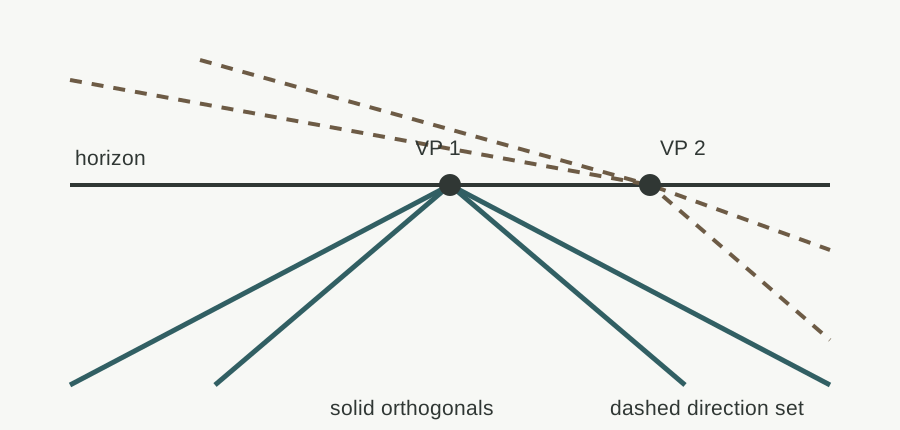
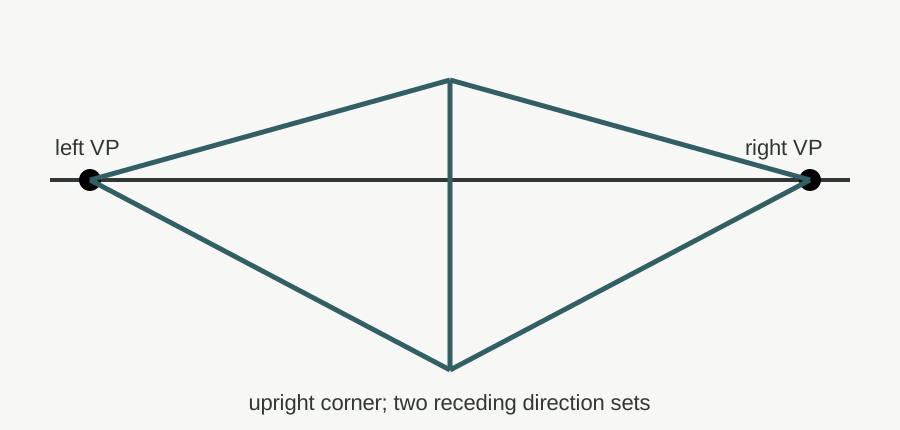
Two-point perspective is a linear system in which two horizontal families of receding parallel edges converge towards two separate vanishing points on one horizon.[1][2] It is easiest to recognise when a corner faces the viewer: one wall recedes left, the other right, and the corner remains upright in the standard form.
The points may lie far beyond the image. Bringing them too close exaggerates the near corner; spacing them widely produces a calmer view. “Two-point” describes two dominant direction sets, not every line, curve, figure, or irregular object in the artwork.
At a Glance
- Core ideatwo horizontal direction sets converge towards separate vanishing points.
- Shared horizonboth points normally sit on the represented eye level.
- Typical subjecta corner, rotated box, building or street seen obliquely.
- Verticalsremain upright in ordinary two-point perspective unless a third point is introduced.
- Important limitreal scenes mix irregular edges, curves, cropping and other depth cues.
Contents
The turned-corner structure
The diagram holds one corner vertical while the upper and lower edges of each face move towards opposite points. The horizon marks eye level. Labels, line direction, and separate points carry the explanation without colour.
Two directions, one horizon
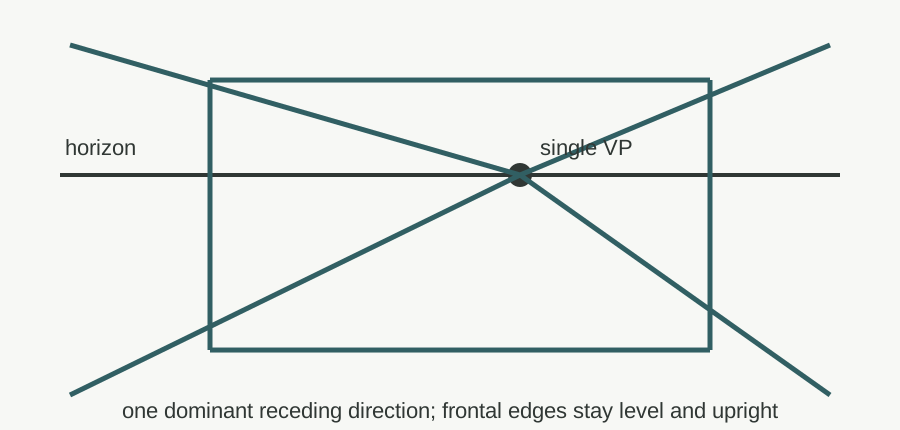
If verticals also converge, the system moves towards three-point perspective. If one face is frontal and only its depth edges converge, one-point organisation is usually the clearer description.
Eight examples and boundary tests
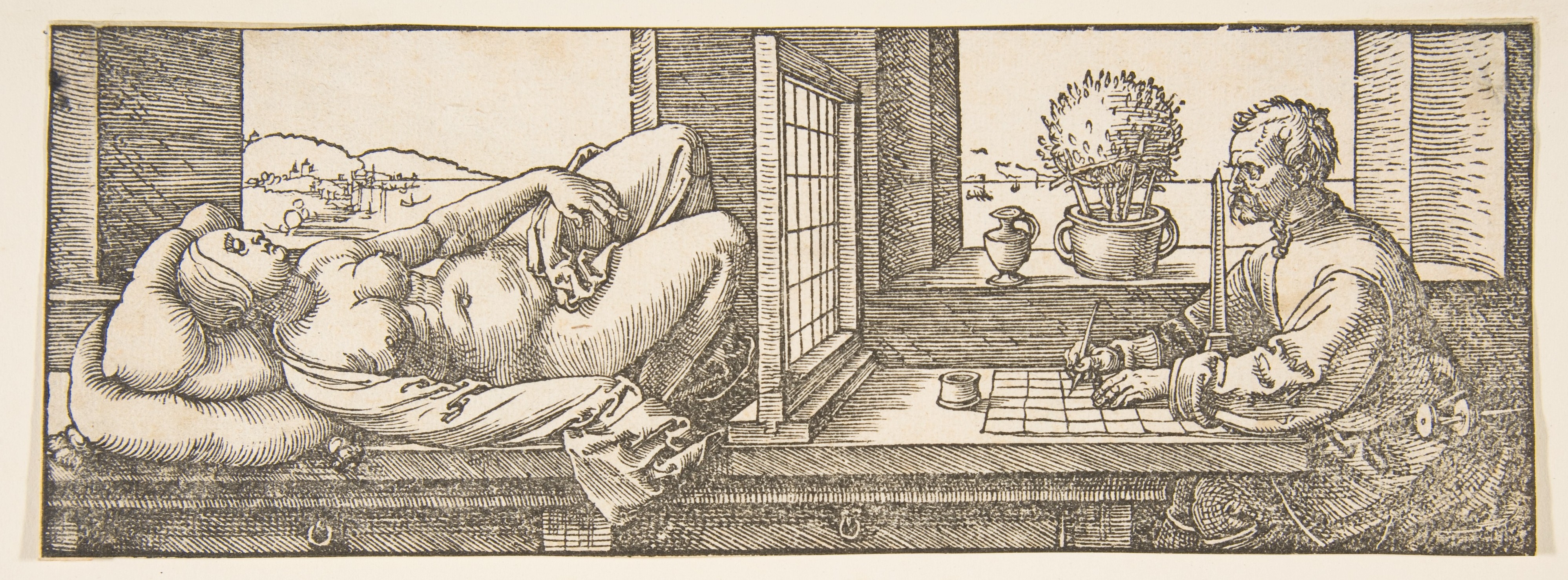
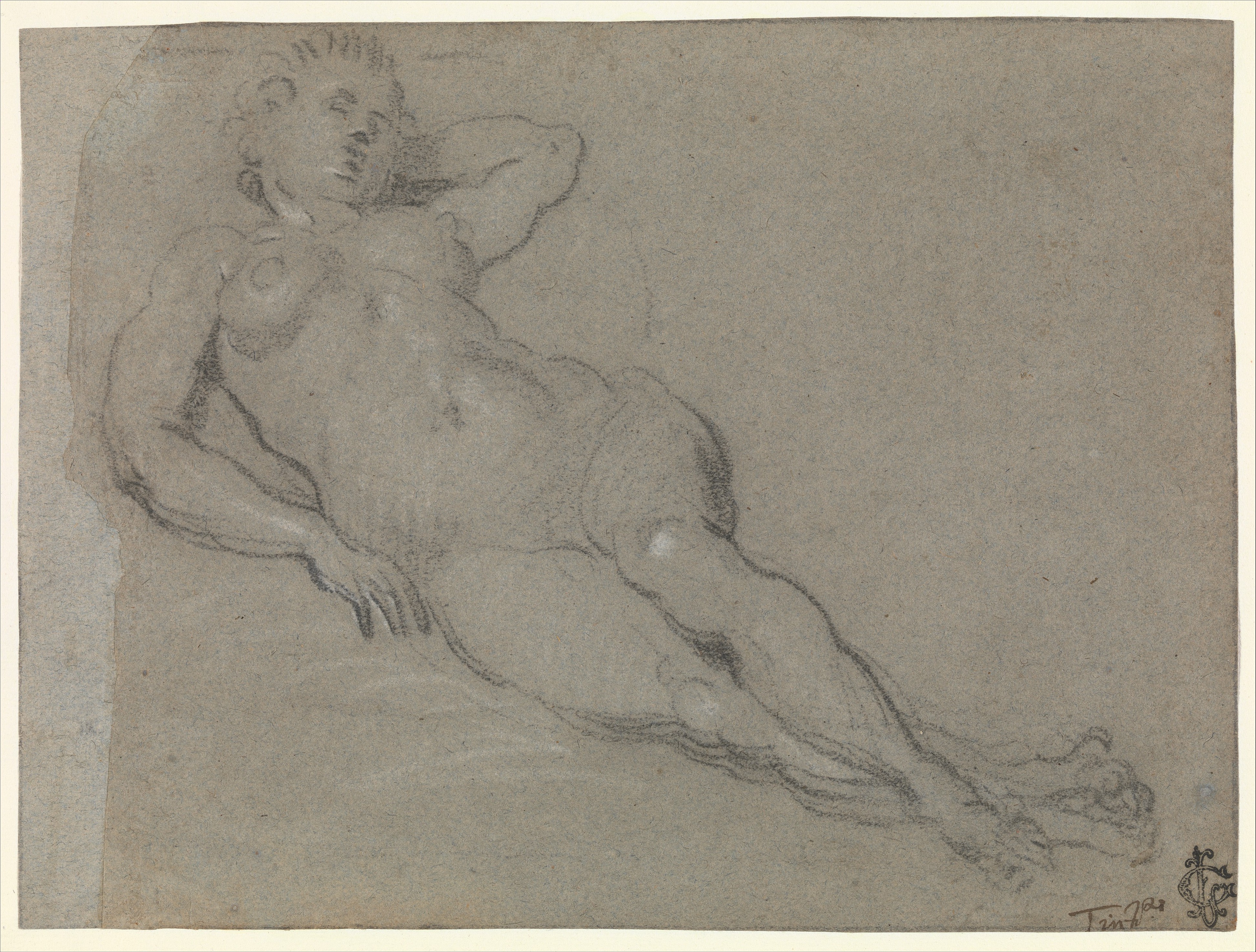
Albrecht Dürer — Draughtsman Making a Perspective Drawing of a Reclining Woman
Dürer's grid makes the fixed observer and picture plane explicit.[2] Rounded bodies require more than two neat line families, but the device explains why changing the eye position changes every projected direction.
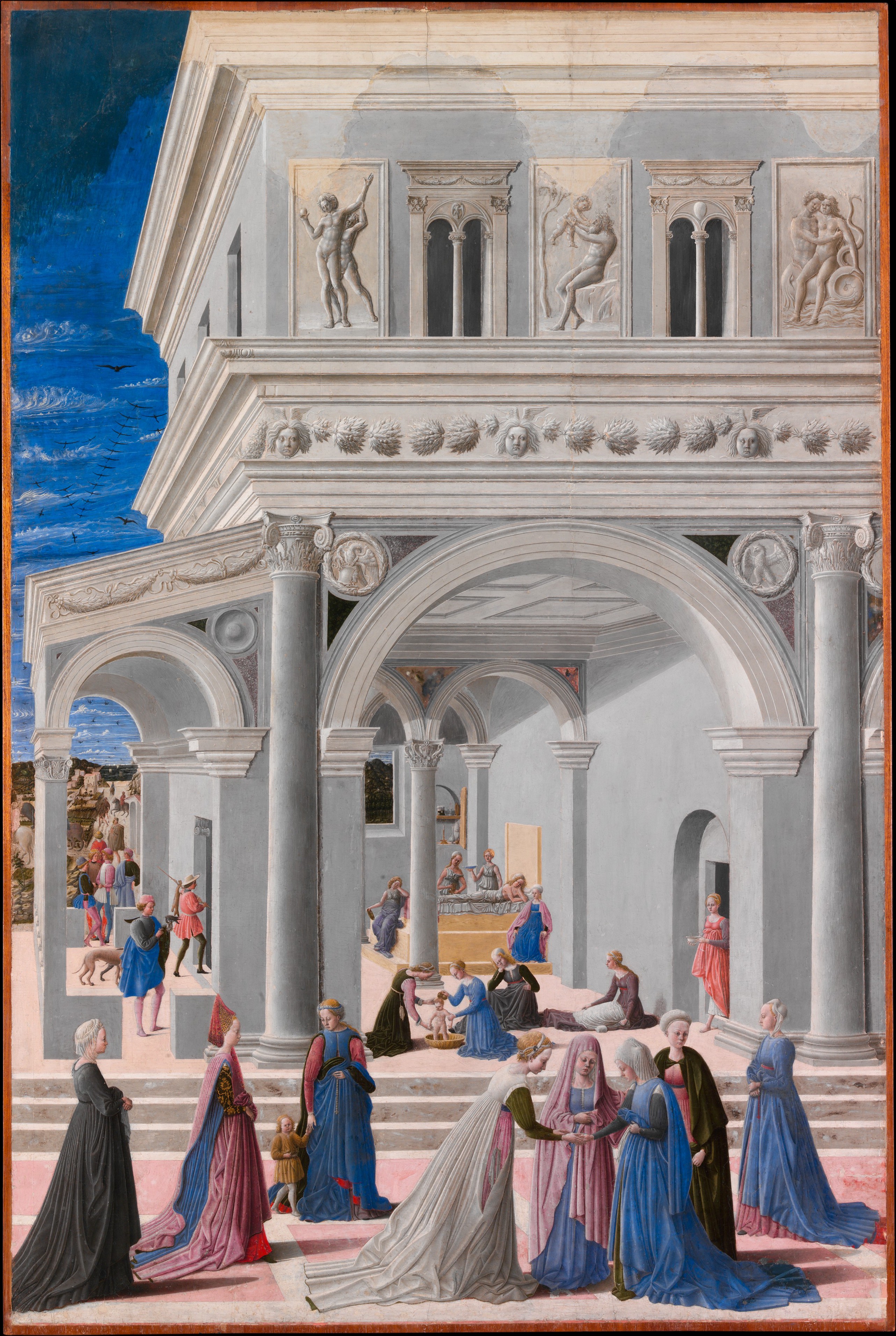
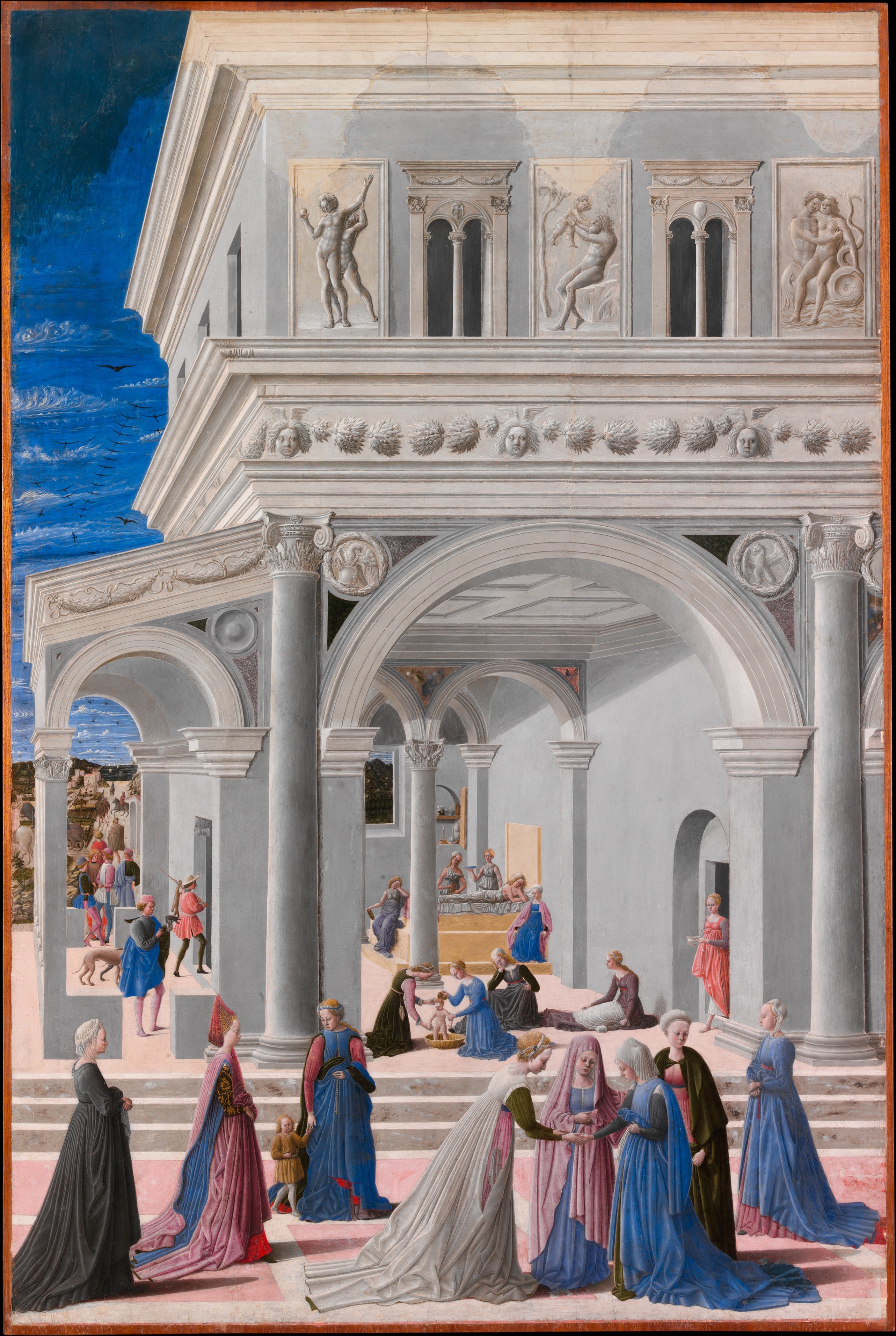
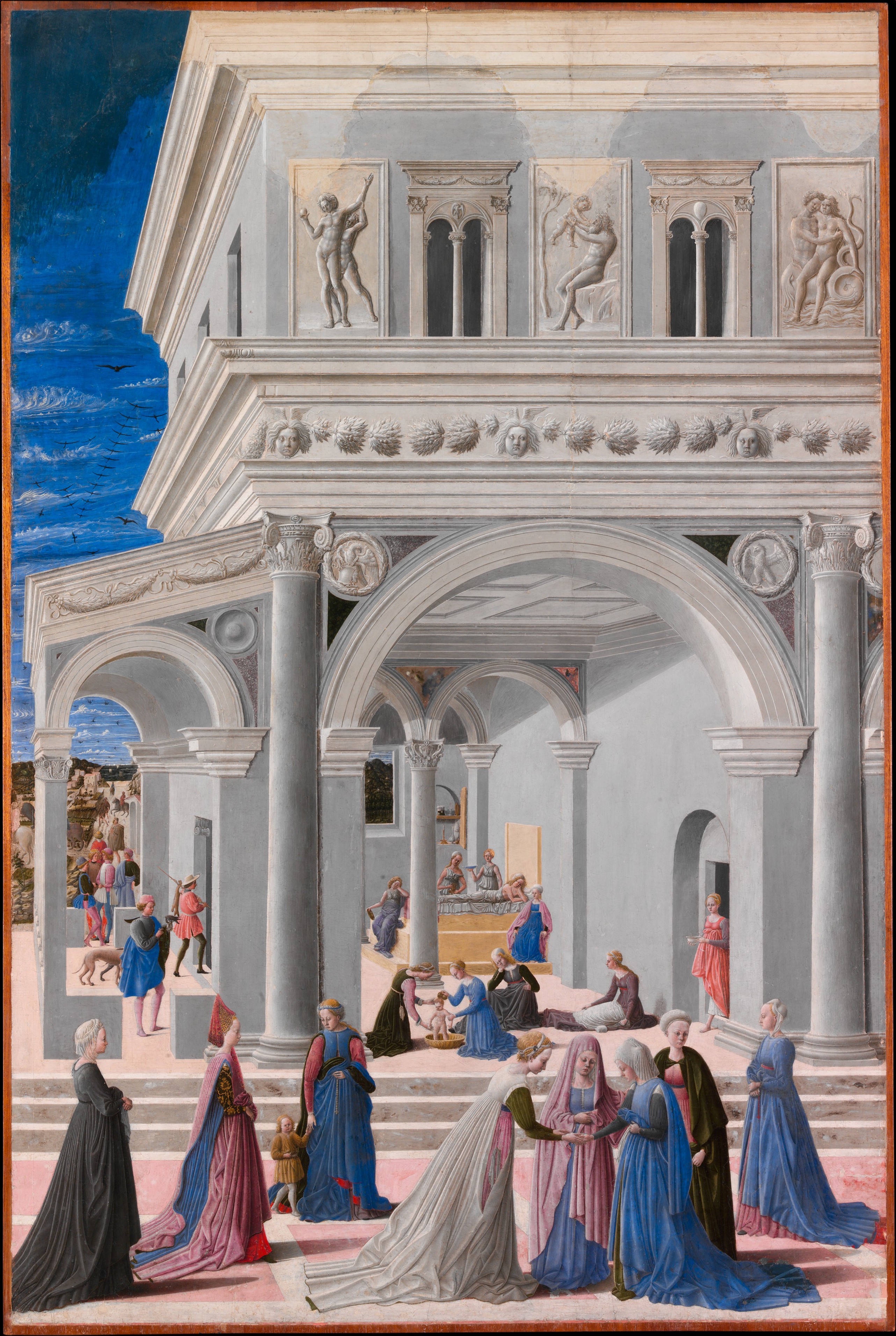
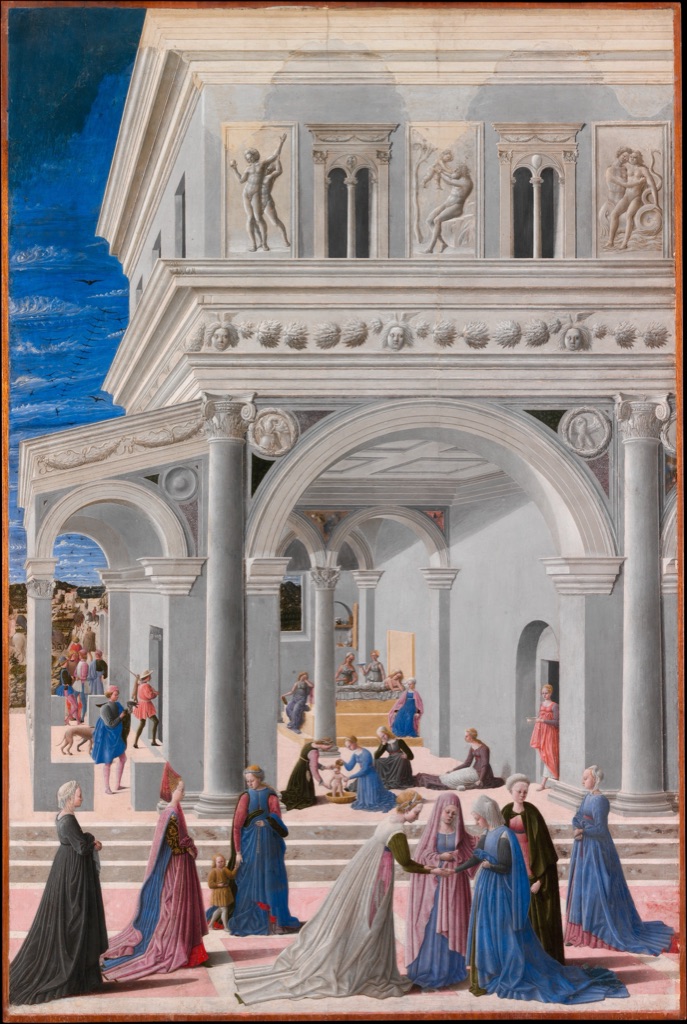
Fra Carnevale — The Birth of the Virgin
Fra Carnevale's palace is dominated by a frontal architectural recession.[1] Its strong one-point order provides a comparison: a turned building corner would divide comparable parallel edges between left and right points.
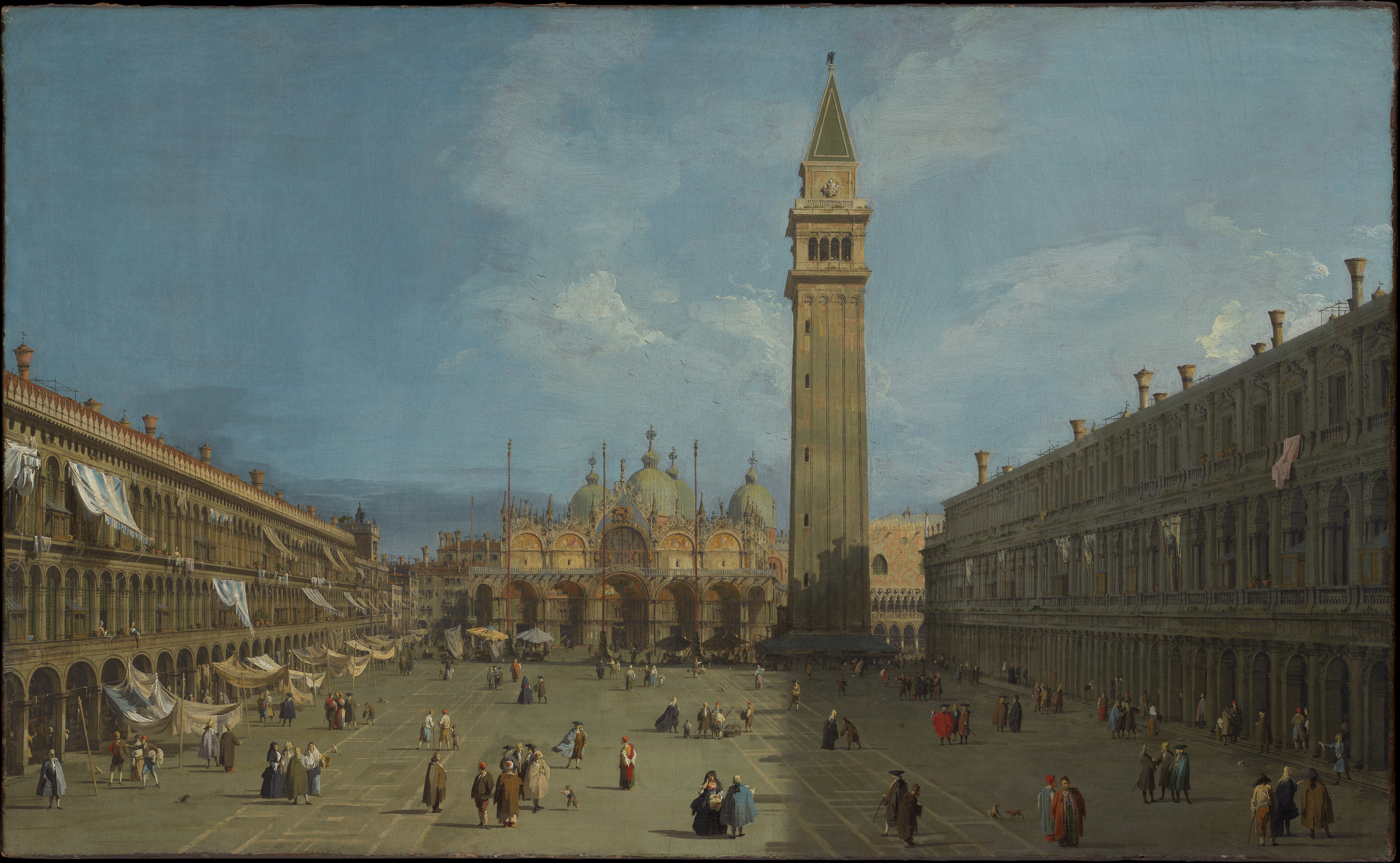
Canaletto — Piazza San Marco
Canaletto looks obliquely across a square, so façades and paving do not all share one direction.[5] Grouping the two sides reveals distinct receding families, while irregular Venice prevents the picture from becoming a mechanical box.
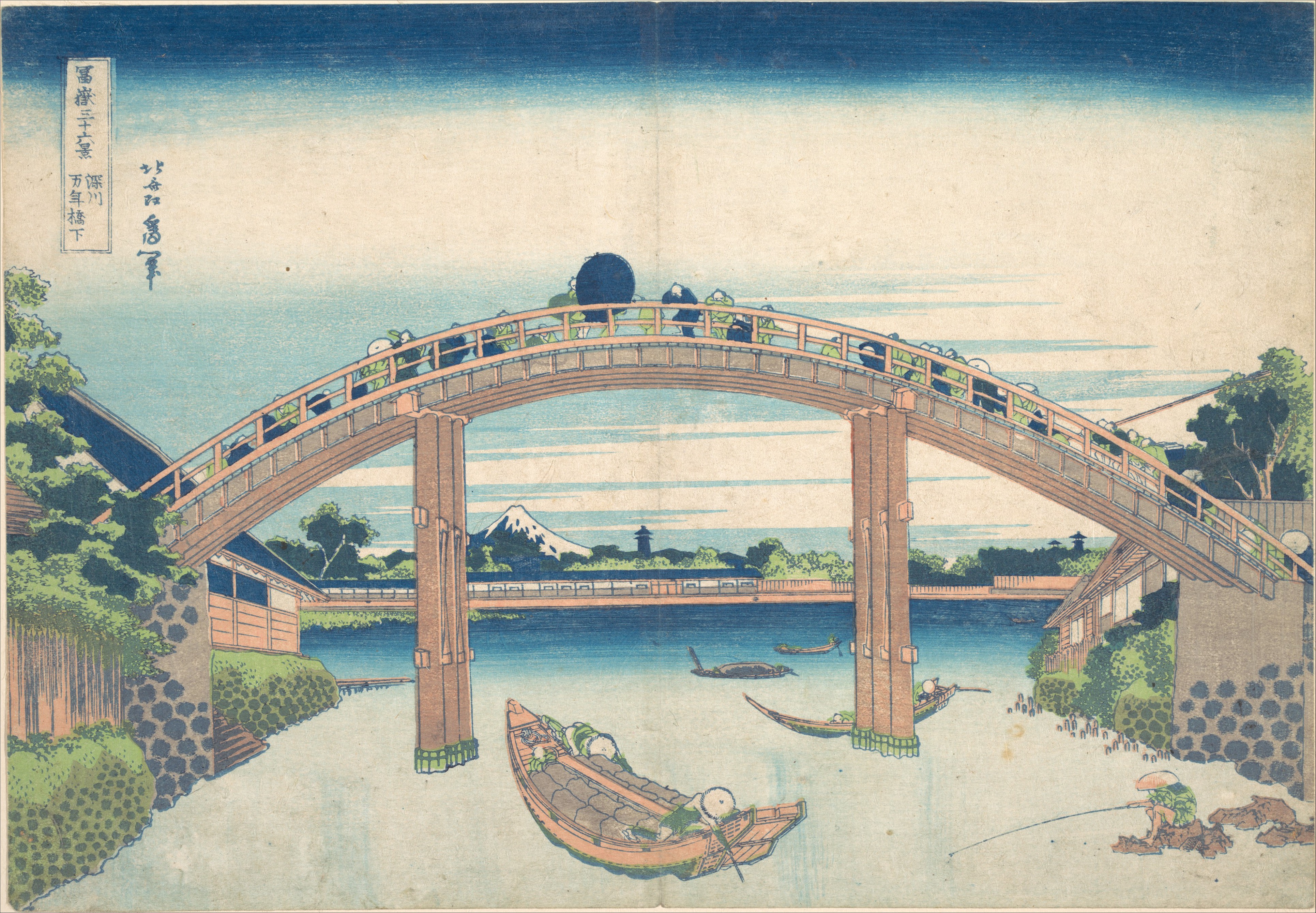
Katsushika Hokusai — Under the Mannen Bridge at Fukagawa
Hokusai's bridge supports and river structures turn at oblique angles.[6] Linear directions coexist with arch, cropping, overlap, and scale. The print shows how imported geometric ideas could be selected and transformed within a strong surface design.
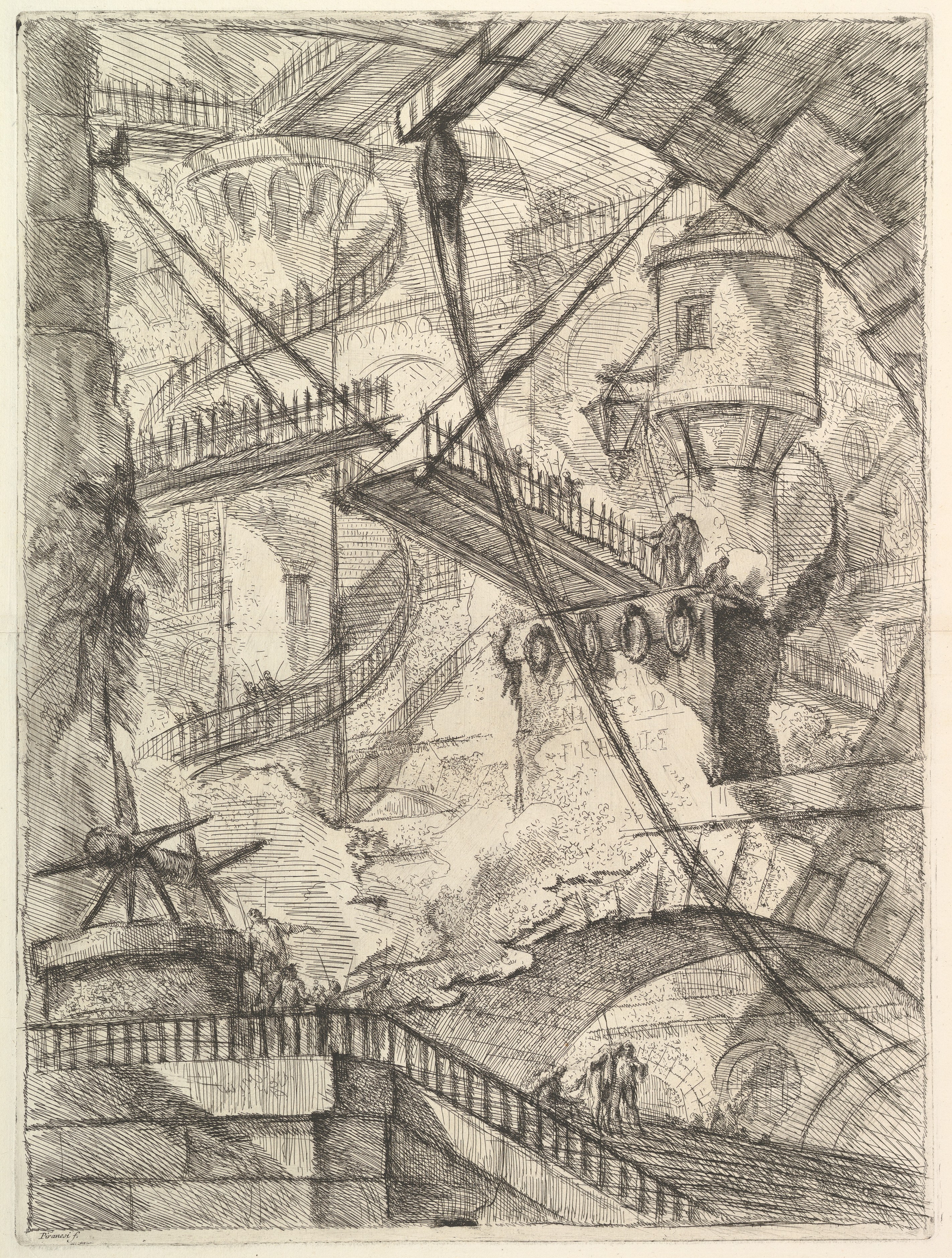
Giovanni Battista Piranesi — The Drawbridge
Piranesi multiplies stairs, platforms, bridges, and arches.[7] Many fragments suggest left-right convergence, but their points and levels conflict. Two-point expectations become expressive material for disorientation.
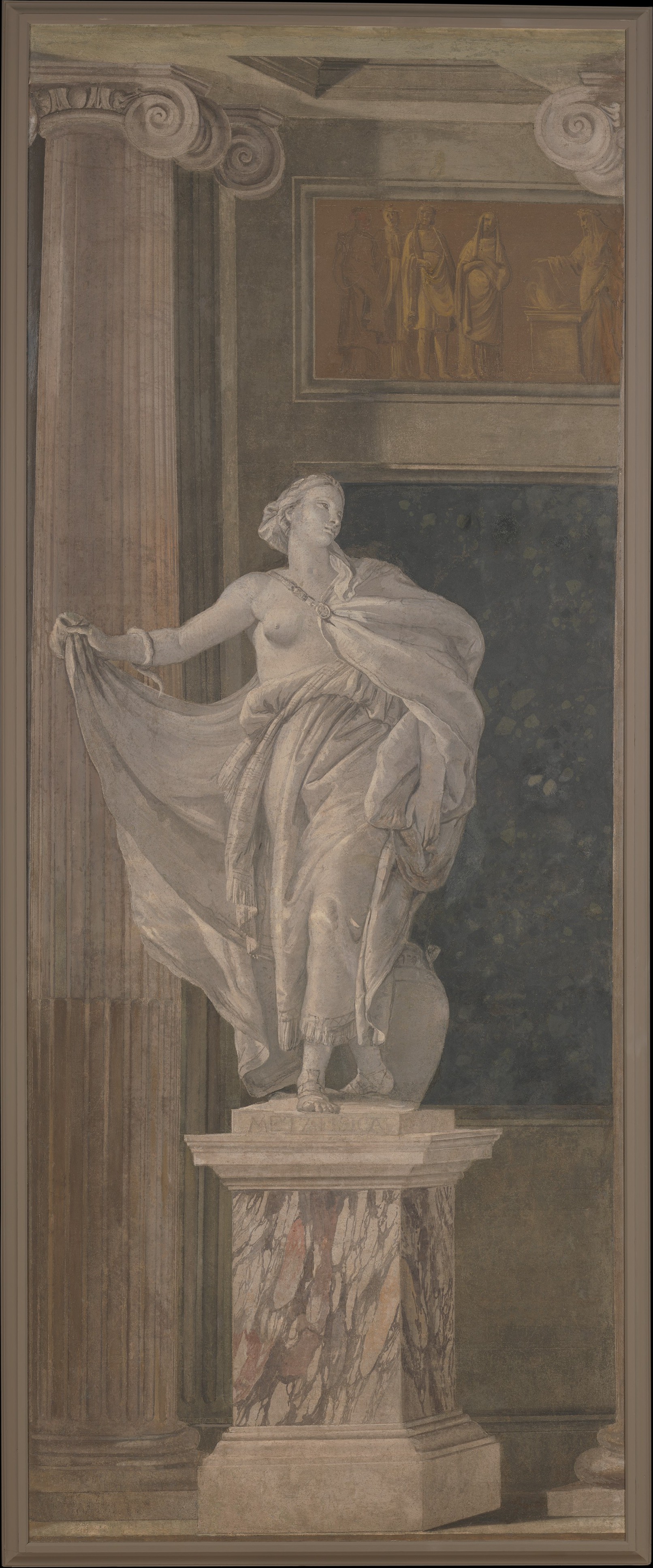
Giovanni Battista Tiepolo and Girolamo Mengozzi — Allegorical Figure Representing Metaphysics
This fresco fragment was aligned to a real room and intended viewing position.[8] Its fictive corner demonstrates that two-direction projection can join painted and actual architecture, but only from a controlled station point.
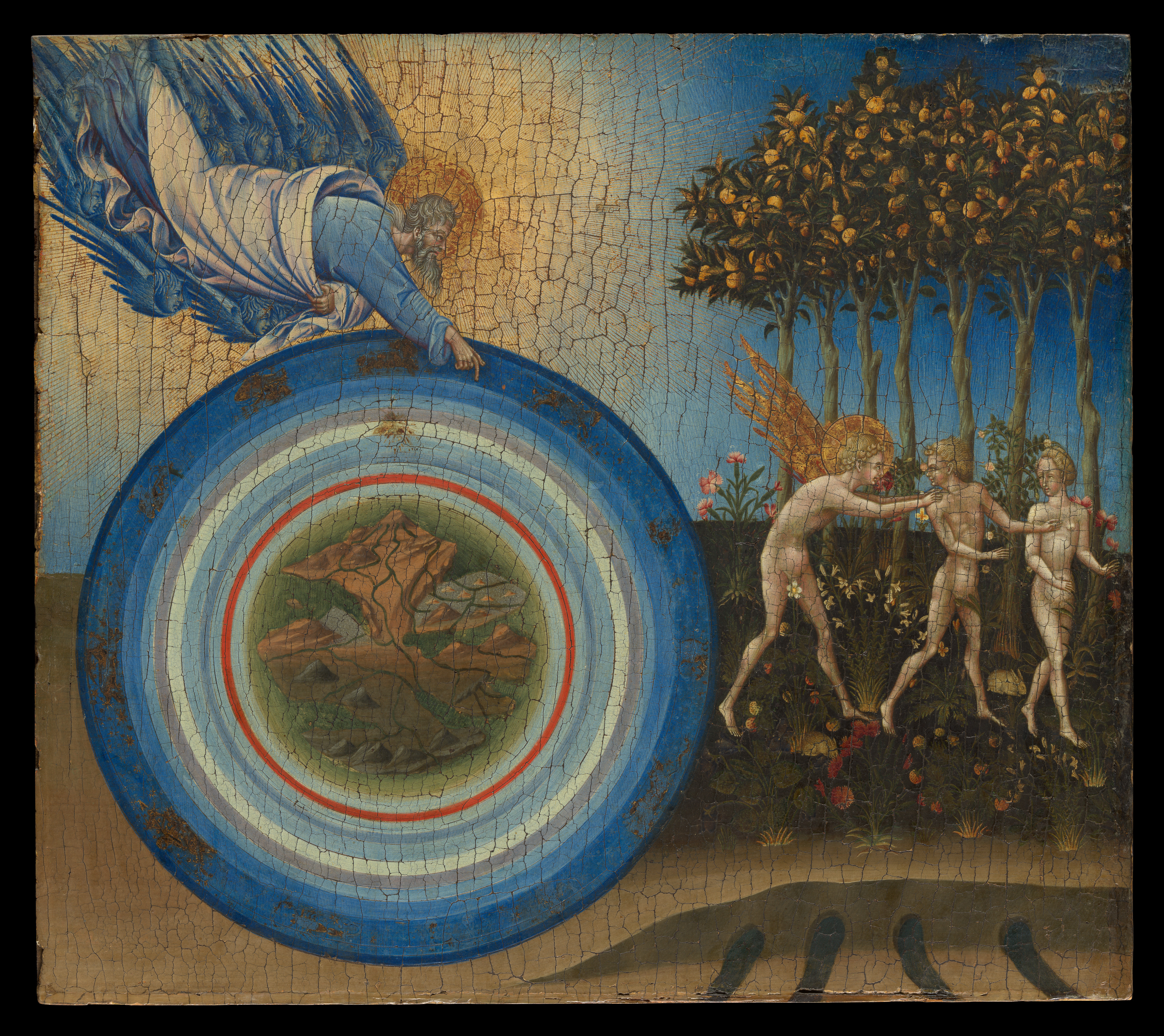
Giovanni di Paolo — The Creation of the World and the Expulsion from Paradise
Giovanni di Paolo orders cosmos and garden symbolically rather than around two vanishing points.[9] It is a boundary case reminding us that coherent space does not depend on turned-corner geometry.
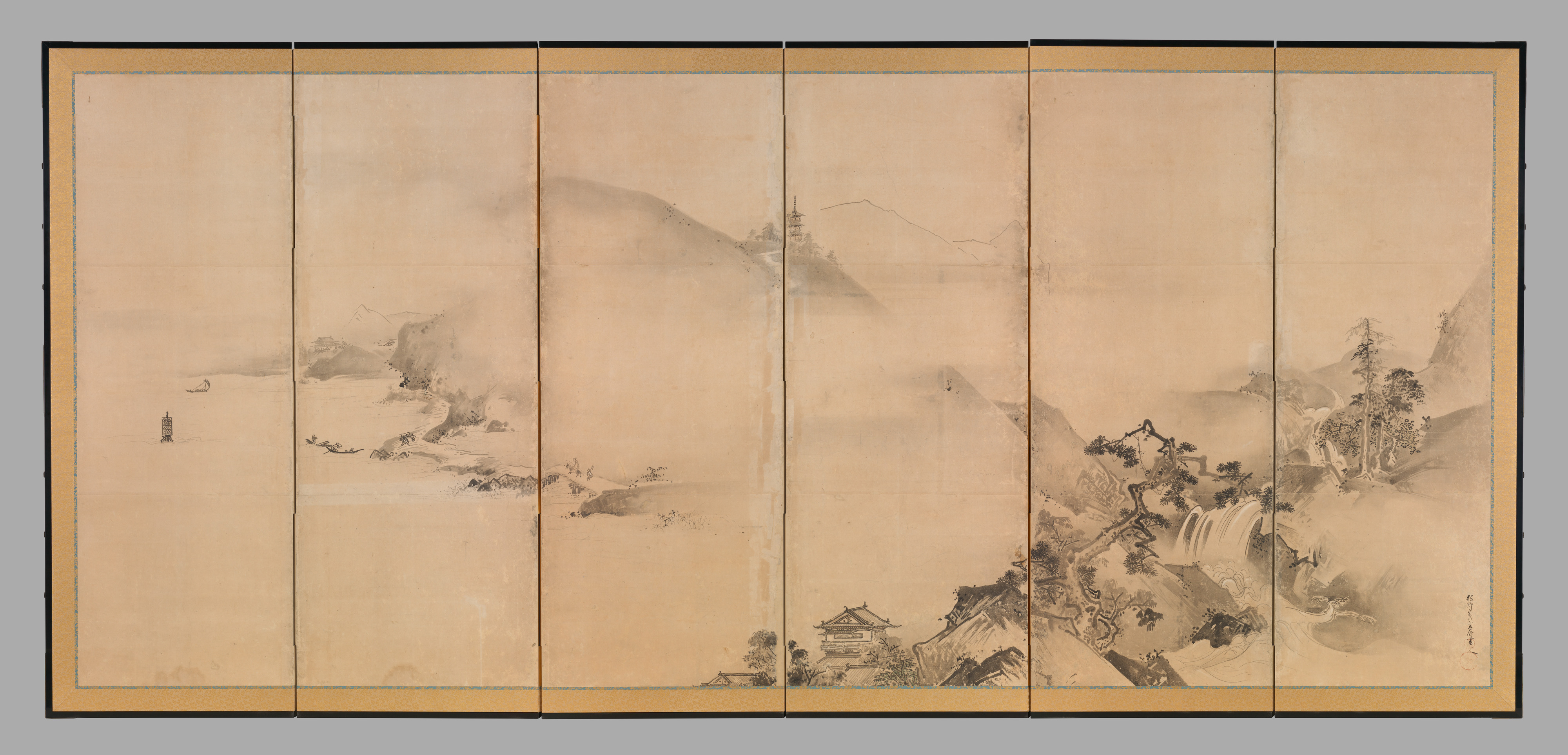
Kanō Tan'yū — Landscapes of the Four Seasons
Kanō Tan'yū's screens shift across folds, ink clusters, and pale intervals.[10] Their multiple local orientations differ from a fixed two-point view and reveal what that system chooses to stabilise.
Recognition and effect
Find a prominent vertical corner, then group the upper and lower edges of each adjoining face. Mentally extend the left family towards one point and the right family towards another. Check whether both points align at eye level and whether repeated details shrink consistently. Do not mistake arbitrary diagonals for parallel edges.
Two-point perspective often makes buildings feel solid and lets viewers see two sides at once. It can also produce dynamism when the corner is close or the points are unevenly placed. Museum records explicitly identify the system in a Torii Kiyotada theatre interior and Van Gogh's Restaurant Rispal, showing its use across different traditions and settings.[3][4]
The One-Point Perspective guide clarifies the frontal alternative, while Linear Perspective explains the wider system. The key is not counting visible diagonals but identifying parallel direction families relative to an implied viewer.
Explore perspective in art
All seven evidence-checked guides are available in this local perspective group.
Watch Two-Point Perspective Build a Turning Space
Choose an architectural demonstration, a longer city drawing, or Brunelleschi's historical context for the fixed viewpoint.
How to Draw in 2-Point Perspective: A Modern House
Follow two direction sets from a building corner towards separate points so the spatial logic remains visible throughout the drawing.
Watch on YouTubeFrequently Asked Questions
Two-point perspective is a linear system in which two horizontal sets of receding parallel directions converge towards separate vanishing points.
It often begins from a near vertical corner, with the object's left and right faces receding towards different points.
In ordinary two-point construction, yes: they share the represented eye level, even if one or both lie outside the picture.
Not in standard two-point perspective. Strong upward or downward convergence introduces a third vanishing direction.
Yes. Different objects, streets or architectural zones may face different directions, and artists often combine linear systems with overlap, scale and atmosphere.
Discussion
Which example makes its two direction sets easiest to follow—and where does the artwork deliberately multiply or frustrate them?
Reader Insights
A vertical edge often separates two planes whose horizontal directions recede to different points.
The two points normally share eye level even when they sit far beyond the visible picture.
Irregular buildings, curves and multiple orientations prevent a real artwork from becoming a perfect box diagram.
Join the Conversation
Share one precise observation or a useful museum example below.
References
- National Gallery, “Linear perspective.” https://www.nationalgallery.org.uk/paintings/glossary/linear-perspective
- Getty, “The Geometry of Seeing.” https://www.getty.edu/art/exhibitions/geometry/index.html
- The Met, object 45035. https://www.metmuseum.org/art/collection/search/45035
- Nelson-Atkins Museum, “Restaurant Rispal.” https://nelson-atkins.org/fpc/post-impressionism/736/
- The Met, object 435839. https://www.metmuseum.org/art/collection/search/435839
- The Met, object 56387. https://www.metmuseum.org/art/collection/search/56387
- The Met, object 337060. https://www.metmuseum.org/art/collection/search/337060
- The Met, object 437801. https://www.metmuseum.org/art/collection/search/437801
- The Met, object 458971. https://www.metmuseum.org/art/collection/search/458971
- The Met, object 53009. https://www.metmuseum.org/art/collection/search/53009