by Tom Gurney
Tom Gurney BSc (Hons) is an art history expert with over 20 years experience
Page created on September 3, 2026 / Page updated on September 13, 2026
Email: tomgurney1@gmail.com / Phone: +44 7429 011000
How Ink Transfers from the Top of a Matrix—or from Below Its Surface
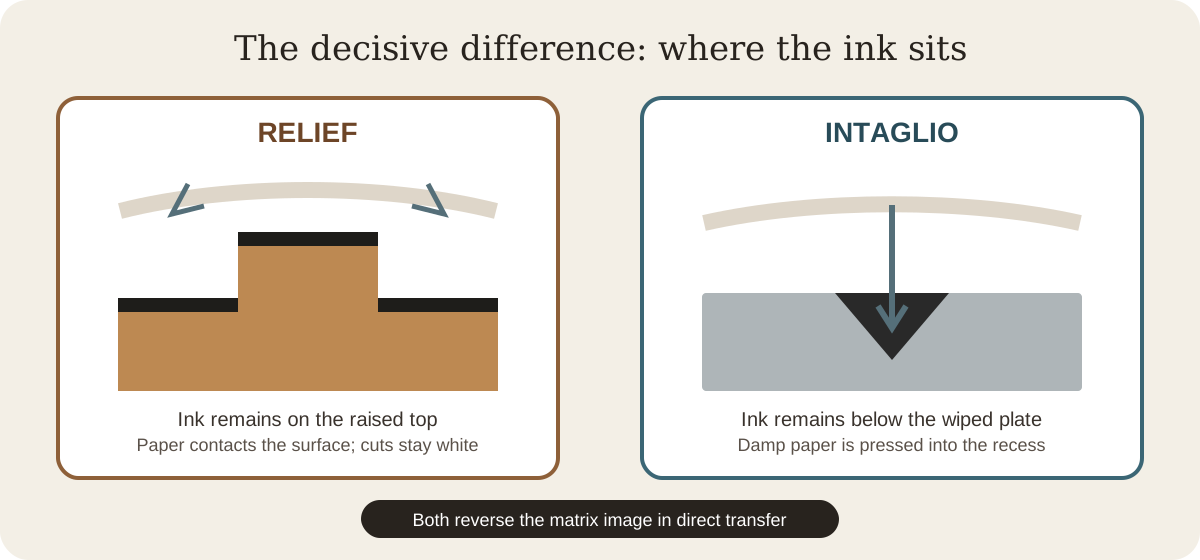
In relief printmaking, ink is applied to the raised surface of a block or matrix; recessed cuts normally stay uninked. In intaglio printmaking, the top of a plate is wiped while ink remains inside lines, pits or textures below the surface. Paper takes the image from opposite levels of the matrix.[1][2][3]
That physical difference is more reliable than style. A relief print can be intricate and tonal. An intaglio print can be spare and graphic. Both can be monochrome or multicolour, both reverse the matrix image during direct transfer, and both may involve a press. Ask where the printing ink was held when paper met the matrix.[3][4][5]
At a Glance
- Reliefraised or uncut surfaces receive ink while cut-away areas normally stay blank.
- Intagliorecessed lines or textures hold ink after the plate surface is wiped.
- Pressurerelief transfers surface ink; intaglio often uses heavier pressure and damp paper.
- Typical memberswoodcut/linocut are relief; engraving, etching and drypoint are intaglio.
- Key warningmixed, embossed and heavily inked prints can complicate quick visual diagnosis.
Process Comparison: Relief and Intaglio
| Feature | Relief | Intaglio |
|---|---|---|
| Ink position | On the highest, uncut or built-up surface | In recesses below a wiped plate surface |
| Paper contact | Paper contacts the inked top | Damp paper is forced into ink-bearing grooves or texture |
| Typical matrix | Wood, linoleum or another raised block | Usually metal plate; other incised matrices can be used |
| Core processes | Woodcut, woodblock print, linocut, wood engraving | Engraving, etching, drypoint, aquatint, mezzotint |
| Making a white | Cut or clear the surface so the roller misses it | Wipe, scrape, burnish or leave the plate without an ink-bearing recess |
| Pressure | Hand rubbing, baren or relief press may be used | Usually substantial roller pressure with dampened paper |
| Common physical clue | Fairly even surface contact; possible embossing from relief | Plate mark and slightly raised ink line may occur |
| Main caution | Fine white lines do not make wood engraving intaglio | A plate mark does not identify the exact intaglio technique |
Institutions do not classify every experimental process identically. Collagraph matrices can carry both raised and recessed information; viscosity inking can select different levels; chine collé and embossing add structures beyond a simple black-and-white diagram. Relief and intaglio remain powerful families, but an exact catalogue record should preserve its more specific medium language.[2][3]
How relief printing transfers an image
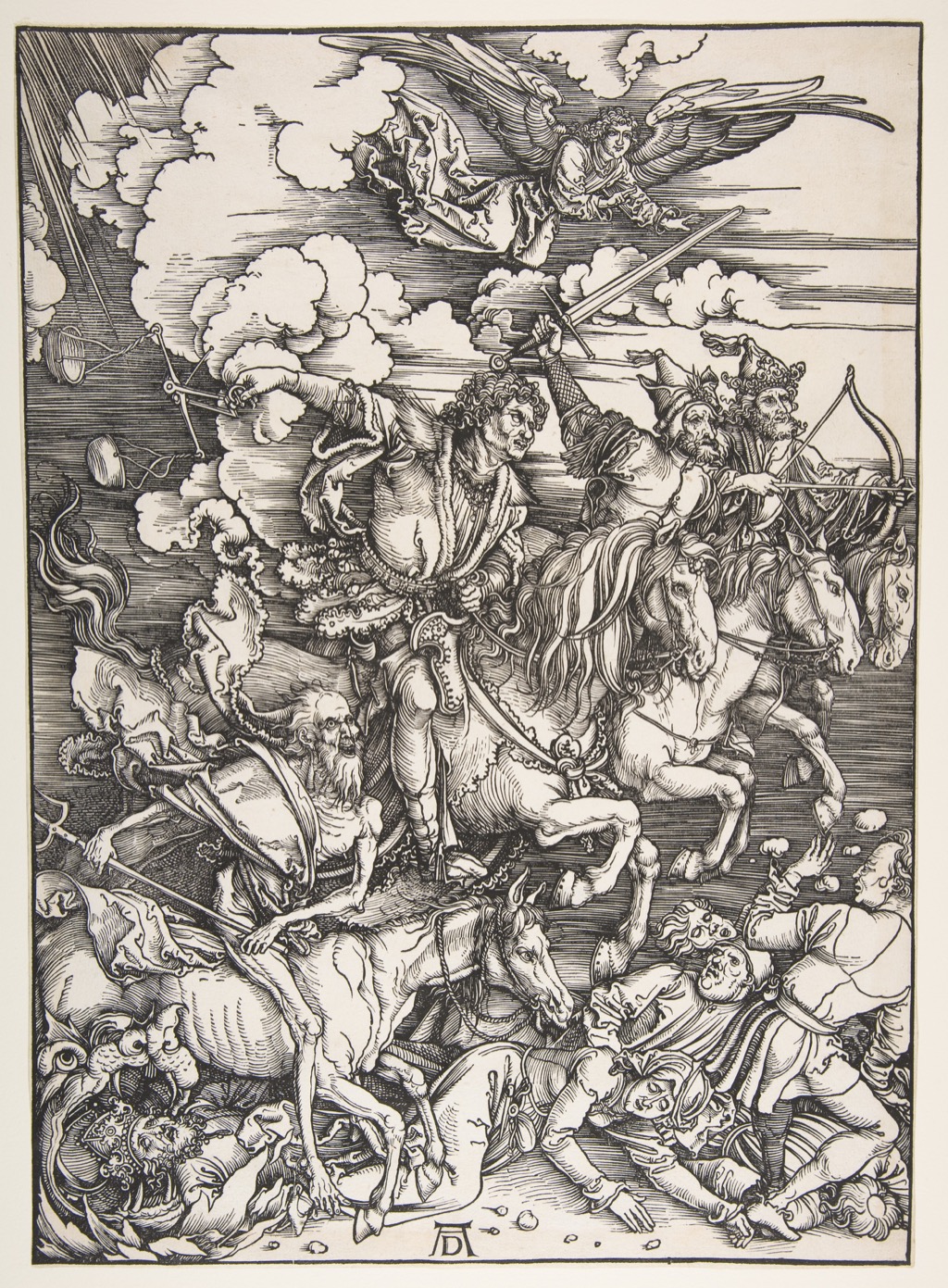
A relief maker establishes a top surface that will print. In a subtractive woodcut or linocut, tools lower the regions meant to remain blank. A roller deposits ink across the surviving ridges and islands without reaching deeper hollows. Paper contacts that inked level under rubbing, a baren or a press.[1][3][4]
This is sometimes compared to a rubber stamp, but fine-art matrices can be much more complex. Fragile raised webs carry hairlines; broad plateaus carry solid colour; separate blocks build registered layers. Ink thickness, roller hardness, paper absorbency and pressure affect whether every raised passage prints cleanly.
Multicolour relief makes registration part of the transfer logic. A separate block may carry each colour, or one block may be progressively cut between printings in a reduction method. Small registration notches, corner guides or workshop marks keep the sheet aligned. Because later ink normally covers rather than mixes inside a groove, opacity and printing order can change the apparent colour where shapes overlap. A slight offset at an edge records a relationship between successive matrices, not a different process family.[1][3]
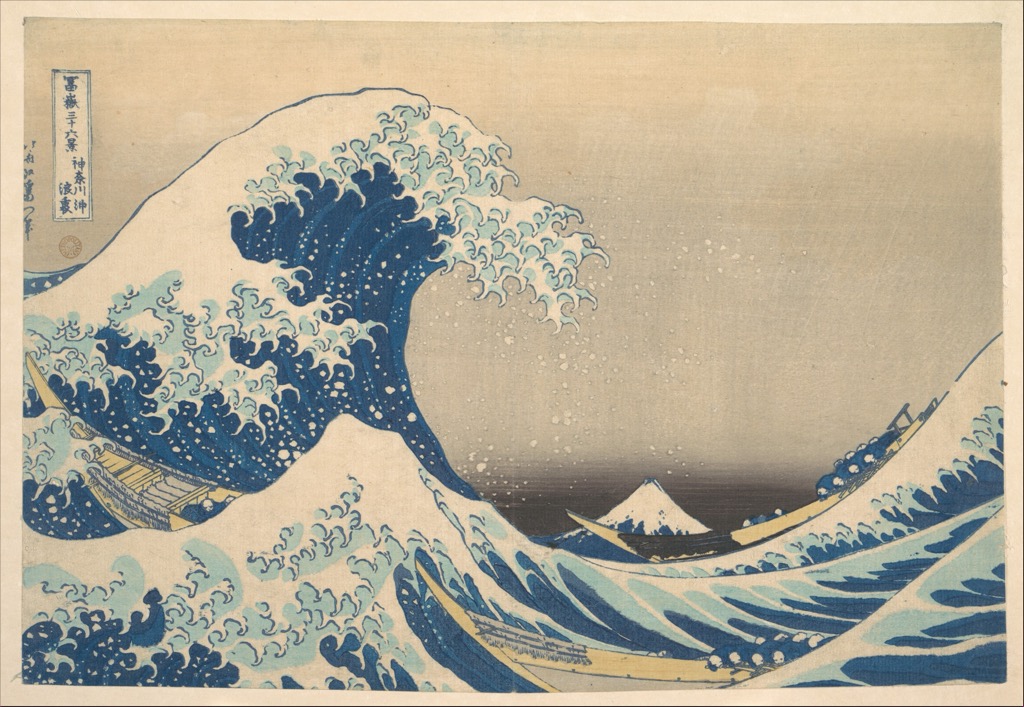
Hokusai's Under the Wave off Kanagawa, about 1830–32, is catalogued by the Met as a woodblock print in ink and colour on paper. The blue contours, dark boats, pale foam and background establish registered areas from wooden matrices. The famous wave is not evidence that relief must look coarse: fine fingers of foam and narrow boat lines survive as controlled surface shapes.[6]
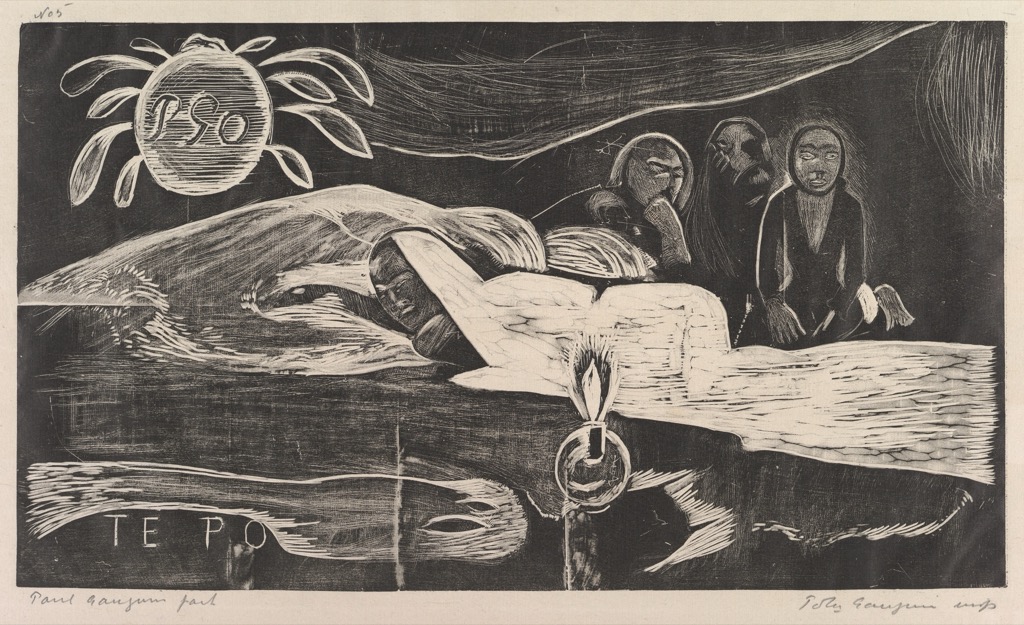
Gauguin's Te Po of 1893–94 is a woodcut, state II. Large dark fields coexist with aggressively cleared white strokes and scraped textures. The design makes the relief logic visually legible—removed wood interrupts what could have been a dark printed plane—yet the object record, not appearance alone, secures the technique.[7]
How intaglio transfers an image
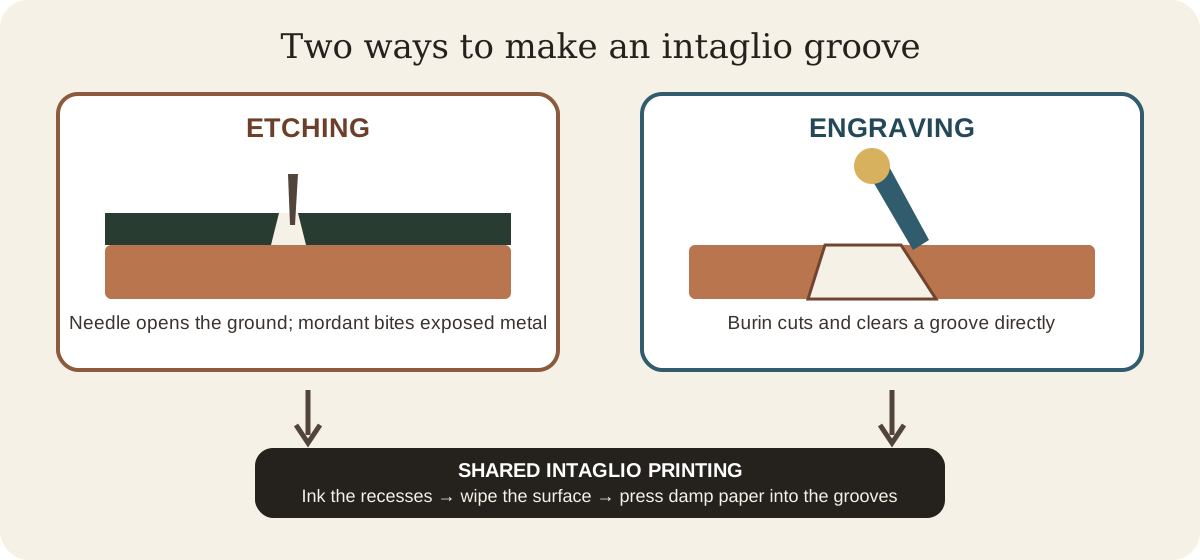
An intaglio plate reverses the ink relationship. Recesses are made directly with a burin or drypoint needle, chemically through an etching ground, or as textured tone in aquatint and mezzotint. Ink is worked across the plate and into those depressions. The printer wipes the top while controlling how much ink remains in grooves and plate tone.[2][4][5]
Damp paper is laid over the plate and passed through an intaglio press under substantial pressure. The softened fibres enter the recesses and lift their ink. A deeply inked line may sit slightly above the finished sheet. Pressure can also emboss the plate edge, producing a plate mark around the image area.[5]
Before that press pass, the printer works ink over the plate rather than aiming only at visible lines. Flexible card or cloth removes the first surplus, followed by tarlatan, a stiff open-weave wiping fabric. The hand can finish selected highlights or leave a veil of ink over nominally blank metal. That residual plate tone means the wiped surface is not always paper-white in the impression. It also makes wiping an interpretive stage: two pulls from an unchanged plate can differ in atmosphere.[10]
The press stack has distinct functions. Metal lies face up on the moving bed; damp paper covers it; felt blankets cushion and distribute force as rollers compress the assembly. The paper must deform enough to enter small recesses without being cut or crushed. Early intaglio could sometimes be hand pressed, but the roller press became the normal answer to this demand for sustained, even pressure.[10][11]
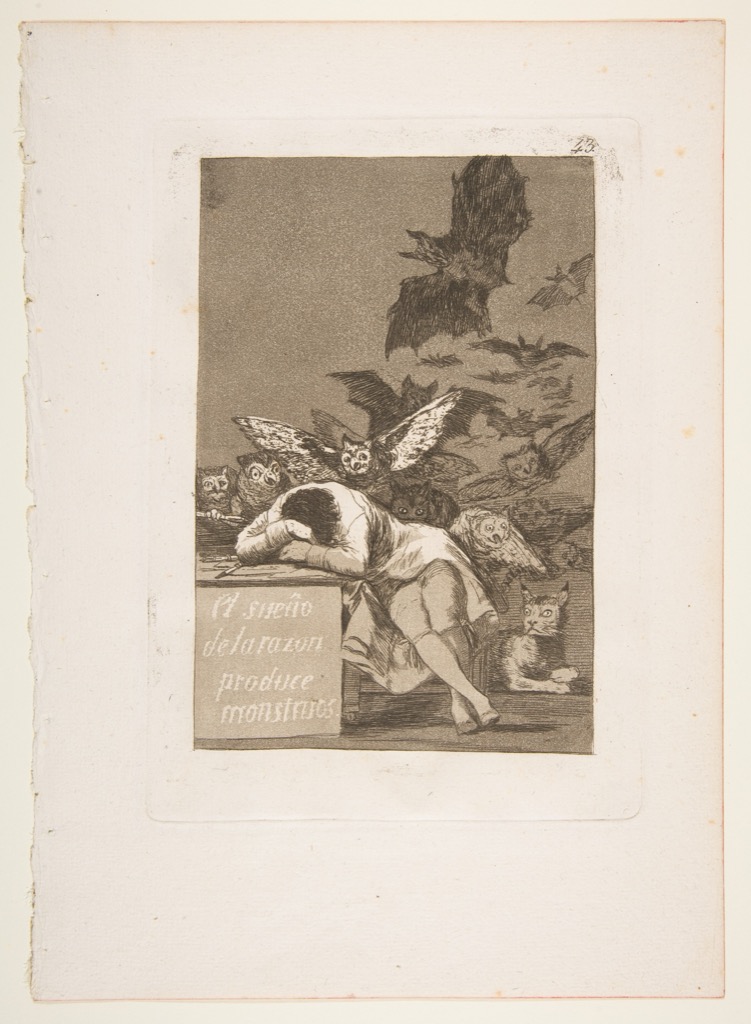
Goya's The sleep of reason produces monsters, plate 43 of Los Caprichos, combines etching and aquatint. Etched line defines the sleeping figure and creatures; aquatint supplies granular fields of grey and deep atmosphere. Both effects are intaglio because ink is retained in bitten or textured recesses, not because every mark has the same appearance.[8]
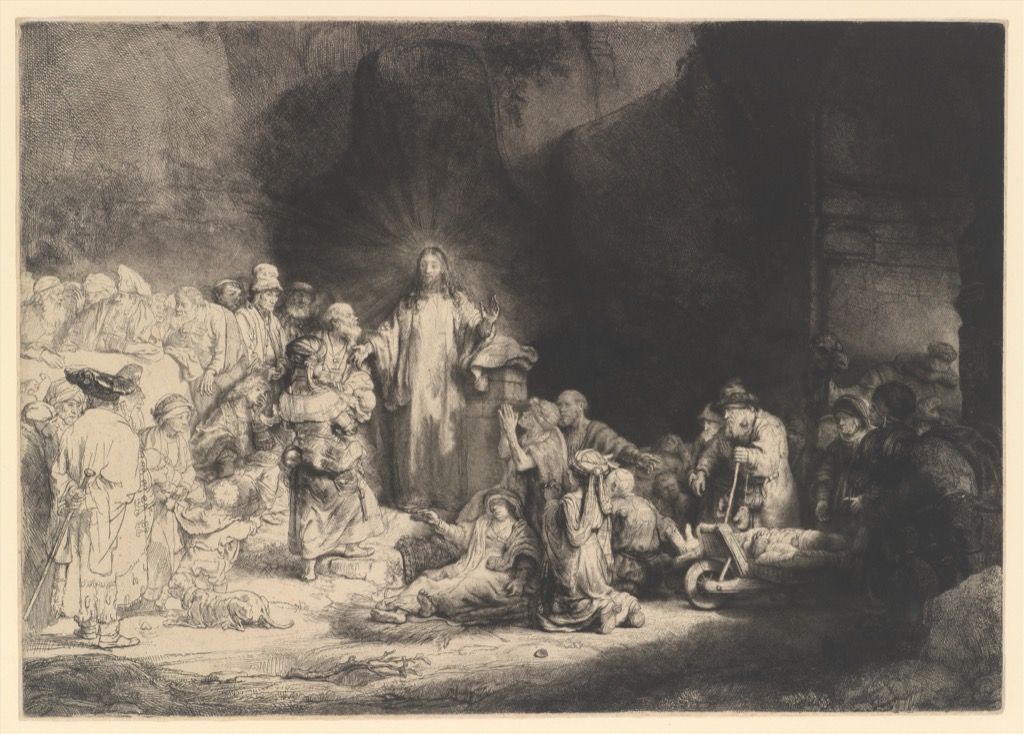
For Rembrandt's The Hundred Guilder Print, the Met specifies etching together with engraving and drypoint in the second of two states. Lightly drawn figures, swelling darks, clean burin additions and burr-rich passages all belong to one intaglio plate. That compound medium line demonstrates why “intaglio” describes a transfer family rather than a single tool or look.[9]
Ink, wiping and the colour of the paper
Relief cutting often behaves as a direct subtraction of printable surface: cut deeper and the roller no longer touches that place. If the paper is white, the cleared mark prints white. A second coloured block can occupy it later, so “white line” really means absent ink in that pass.
In intaglio, cutting or biting usually creates capacity for ink. A deeper or wider groove can hold more, though depth never acts alone: ink viscosity, wiping, paper, pressure and the shape of the recess all matter. Plate tone may remain on the nominally wiped surface, turning blank paper into a deliberate veil.
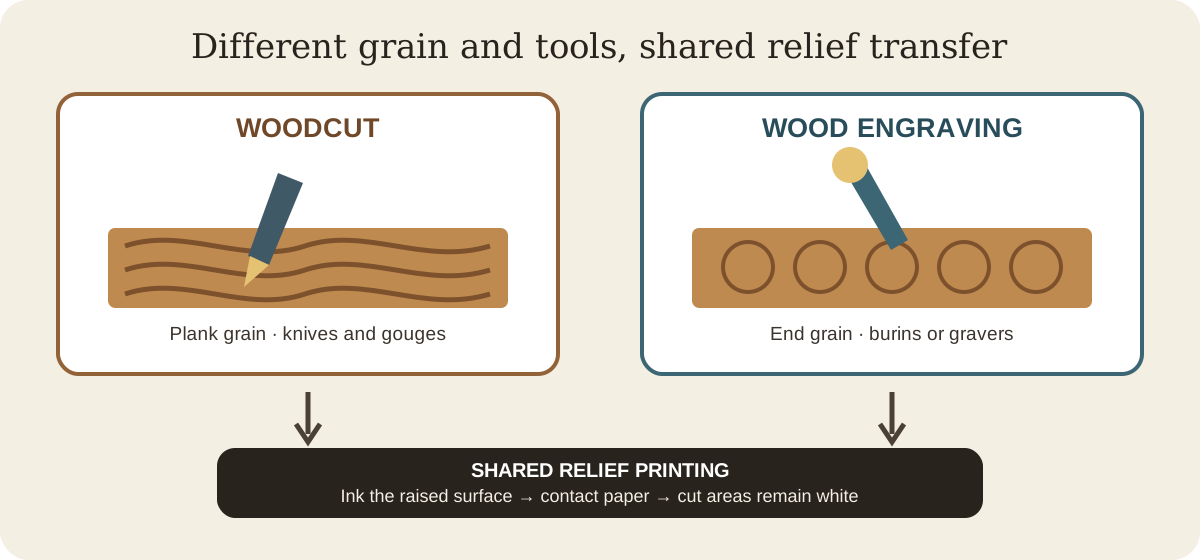
This opposition explains an apparent paradox. A burin-cut line in copper normally prints dark because its groove holds ink. A burin-cut line in an end-grain wood engraving normally prints light because the roller travels over the surrounding top and misses the groove. Tool name does not determine process family; ink location does.
Paper, pressure and plate marks
Both families need controlled contact. Some relief blocks are hand-rubbed; others use presses. Saying “relief needs little pressure” can be useful as a relative description, but it is not a definition. Large blocks, hard papers and layered colour all require carefully judged force.
Intaglio normally uses damp paper and high roller pressure so fibres reach below the plate surface. A visible rectangular plate mark therefore supports an intaglio attribution. It does not prove etching rather than engraving, and it is not guaranteed: a sheet may be trimmed inside the mark, a plate edge may be softened, or another process may emboss a boundary.[5]
Look at ink under magnification. Intaglio lines can have a tactile ridge and dense core. Relief films may sit broadly on the paper surface and show edge squeeze. Digital photographs flatten both, so online identification should remain provisional.
Matrix wear changes those clues across an edition. Repeated relief printing can round or damage narrow raised ridges, weakening their dark line. In intaglio, pressure and wiping can wear shallow grooves and especially a drypoint burr, reducing ink capacity. A later impression is not automatically poor, but it may record a materially different stage of the same matrix. State, edition and impression quality therefore belong beside process family in a careful catalogue description.[5]
Where the two-family model bends
Relief and intaglio describe levels of a printing surface, so artists can deliberately make one matrix operate at more than one level. A collagraph assembled from textured materials may be rolled on top, wiped into recesses or printed both ways. A deeply carved block can be surface rolled for relief and selectively dabbed below that level. Separate relief and intaglio matrices can also be registered on one sheet.
Twentieth-century workshops made such crossings systematic. At Atelier 17, Stanley William Hayter and colleagues developed colour viscosity printing: inks of different stiffness could be taken by different plate levels or textures during a coordinated pass. The method does not abolish relief and intaglio; it exploits their relationship. When a museum calls a work viscosity print, collagraph, mixed technique or names several processes, that precise record is more informative than forcing the entire sheet under one introductory label.[12]
These exceptions also clarify what the comparison diagram can and cannot do. It represents two pure transfer principles. It is not a promise that every contemporary matrix has one height, one ink or one pass.
Which processes belong to each family?
Relief includes woodcut, Japanese woodblock printing, linocut and wood engraving. Their blocks and tools differ, but the roller inks a raised level. Letterpress type also uses relief transfer, although this page is concerned with fine-art processes.[1][3]
Intaglio includes burin engraving, acid or mordant etching, drypoint, aquatint and mezzotint. Engraving clears a groove; etching bites exposed plate; drypoint raises burr; aquatint creates a field of bitten tone; mezzotint begins with a roughened surface and works back toward light.[2][4]
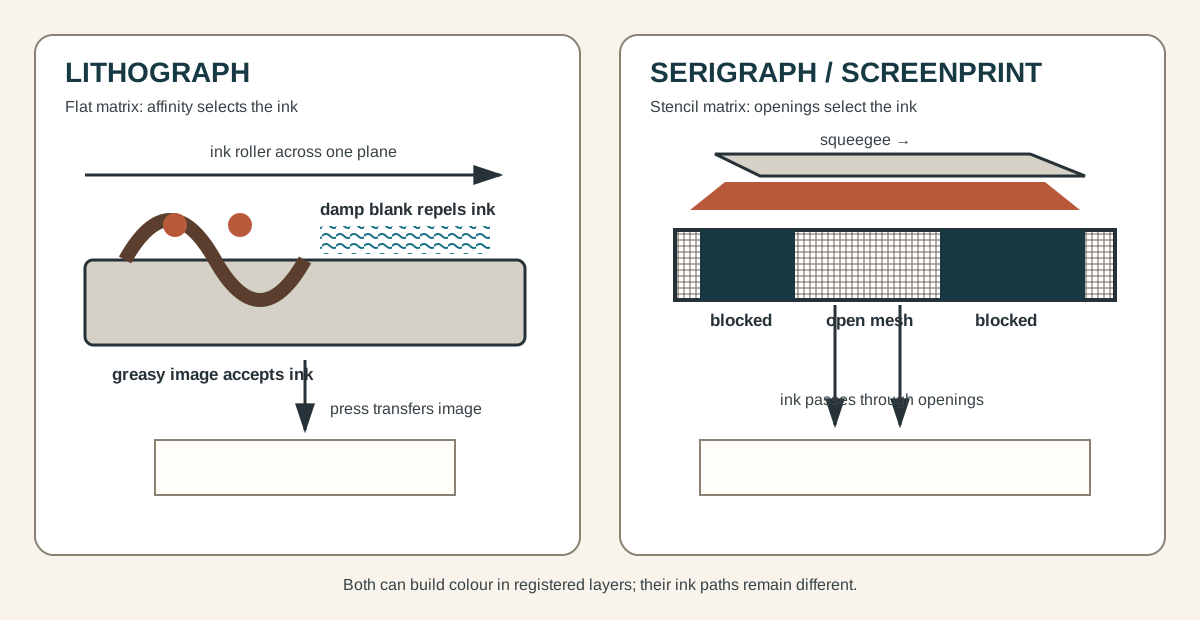
Screenprint and lithography do not belong to either family in the simplest modern taxonomy. Screenprint passes ink through open mesh; lithography separates ink and water on a flat matrix. The Printmaking Techniques hub compares those additional transfer systems.
Why wood engraving is relief
The phrase wood engraving causes predictable confusion. Its maker normally uses burins on dense end grain, yet the finished block is surface-inked. The burin cuts become nonprinting white lines; the wood left standing receives ink. It is therefore relief.[2][3]
Metal engraving uses a similar family of tools on a plate whose incised grooves retain ink. That is intaglio. For the block, grain and tool distinction, see Woodcut vs Wood Engraving. For acid-bitten versus burin-cut metal plates, see Etching vs Engraving.
How to identify the family
- Read the complete medium line. Mixed methods are common and institutional wording matters.
- Locate the ink level. Surface films support relief; ink emerging from grooves supports intaglio.
- Inspect blank marks. Cleared relief areas expose paper; incised intaglio marks normally carry ink.
- Check the sheet edge and image boundary. A plate mark supports intaglio but is not conclusive.
- Use raking light and magnification. Look for raised ink lines, relief edge squeeze, embossing and plate tone.
- Separate tool from transfer. A burin can produce relief wood engraving or intaglio metal engraving.
- Do not rely on colour. Both families can use several matrices or plates.
- Allow hybrids. Catalogue a combined process as combined rather than forcing it into one box.
Watch Surface Ink and Recessed Ink Transfer
Compare MoMA's introductions to both process families, then follow the full intaglio press sequence.
Pressure + Ink: Introduction to Relief Printmaking
See how a raised printing surface carries ink while cut-away areas remain unprinted.
Watch on YouTubeFrequently Asked Questions
Relief prints ink from the matrix top. Intaglio prints ink held below a wiped plate surface.
No. Relief may be hand-rubbed or press-printed. Intaglio characteristically needs strong pressure to push damp paper into recesses, but pressure alone is not the definition.
No. Trimming, plate preparation and other conditions can hide it. A plate mark is evidence, not a universal requirement.
No. Its cuts normally stay white while ink transfers from the raised wood surface, making it relief.
Yes. Artists can print different matrices or exploit multiple levels of one constructed plate. The record should name the combination.
They are specific ways of making intaglio recesses. Intaglio names their shared below-surface ink transfer.
Discussion
Which physical clue best distinguishes relief from intaglio in the examples—and where could paper, pressure or mixed technique mislead a quick judgement?
Reader Insights
Relief prints from the matrix top; intaglio prints from ink retained in recesses.
Plate marks, embossed recesses and raised ink can record the pressure used to make an intaglio impression.
Wood engraving is relief despite its name, while metal engraving belongs to intaglio.
Join the Conversation
Share one precise observation or a useful museum example below.
References
- National Gallery of Art, “Printmaking Basics.” View source
- National Gallery of Art, Gemini G.E.L.: Recent Prints and Sculpture, glossary. View source
- Victoria and Albert Museum, “What is print?” Updated 17 April 2024. View source
- Museum of Modern Art, “German Expressionism: Techniques—Relief Print and Intaglio.” View source
- Metropolitan Museum of Art, How Prints Look. View source
- Metropolitan Museum of Art, Katsushika Hokusai, Under the Wave off Kanagawa, ca. 1830–32, woodblock print; ink and color on paper, object JP10. View source
- Metropolitan Museum of Art, Paul Gauguin, Te Po, 1893–94, woodcut, state II, object 21.38.2. View source
- Metropolitan Museum of Art, Goya, The sleep of reason produces monsters, 1799, etching and aquatint, object 18.64(43). View source
- Metropolitan Museum of Art, Rembrandt, The Hundred Guilder Print, 1648, etching, engraving and drypoint; second state of two, object 29.107.35. View source
- Metropolitan Museum of Art, “Engraving,” 21 December 2018. View source
- Metropolitan Museum of Art, “The Printed Image in the West: History and Techniques.” View source
- Metropolitan Museum of Art, “Expanding Possibilities: Stanley William Hayter and Atelier 17,” 6 December 2016. View source