by Tom Gurney
Tom Gurney BSc (Hons) is an art history expert with over 20 years experience
Published on June 19, 2020 / Updated on October 2, 2026
Email: tomgurney1@gmail.com / Phone: +44 7429 011000
The mother sits in a black gown that stretches across much of the right side of the canvas. One child sits close beside her, another beside the family's large dog at left. The room has flowers, furniture and a decorated screen, yet Renoir gives the three sitters a clear place within it. Madame Georges Charpentier and Her Children is a large 1878 oil painting in The Metropolitan Museum of Art, New York, accession 07.122. Met object record. [1]
The children need careful naming. The child beside Madame Charpentier is her son Paul-Émile-Charles, then three years old, with long hair and clothing similar to his sister's. Georgette-Berthe sits at the left by the family dog. Those details followed contemporary childhood fashion; they are not an error in the museum's identification. The Metropolitan Museum identifies the sitters and explains the clothing in its record. Met object essay. [1]
At a glance
- ArtistPierre-Auguste Renoir
- Date1878
- MediumOil on canvas
- Dimensions153.7 × 190.2 cm
- SittersMarguerite-Louise Lemonnier, Mme Georges Charpentier; her children Georgette-Berthe and Paul-Émile-Charles
- CollectionThe Metropolitan Museum of Art, New York, 07.122, Catharine Lorillard Wolfe Collection, Wolfe Fund, 1907
This work in Renoir’s career
La Grenouillère
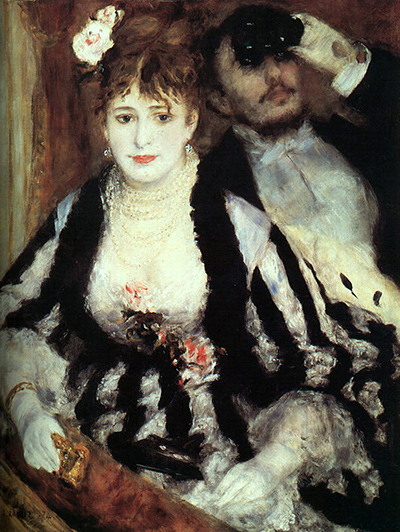
1869La Loge
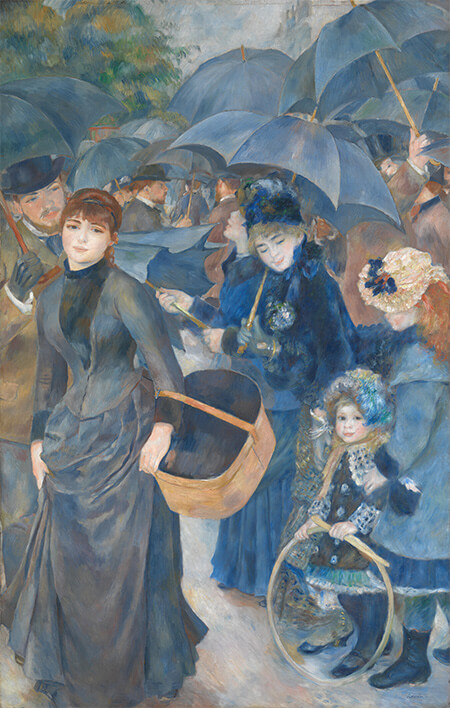
1874The Umbrellas
c. 1881–86The Great Bathers
1884–87The Bathers
1918–19Contents
- Annotated details of the painting
- A family arranged across a room
- Black silk, blue children and a decorated interior
- A son in blue, a daughter by the dog
- Marguerite Charpentier and the salon
- The picture at the Salon of 1879
- A later society portrait at the Met
- From the Charpentier home to the Met
- Looking again
Annotated Details from Madame Georges Charpentier and Her Children
The large portrait places a named mother, daughter and son among dress, dog and Japanese-style furnishings.
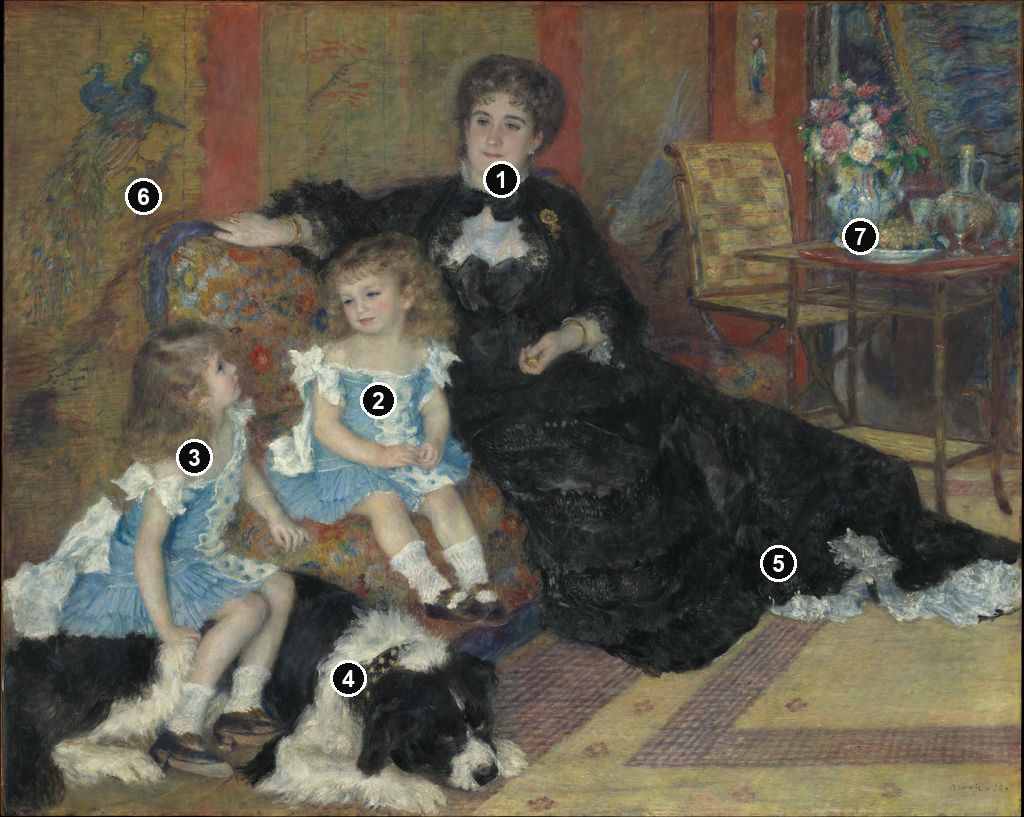
Details from MADAME GEORGES CHARPENTIER AND HER CHILDREN
The child beside Marguerite is her son Paul; Georgette sits by the dog. The clothing reflects period fashion.
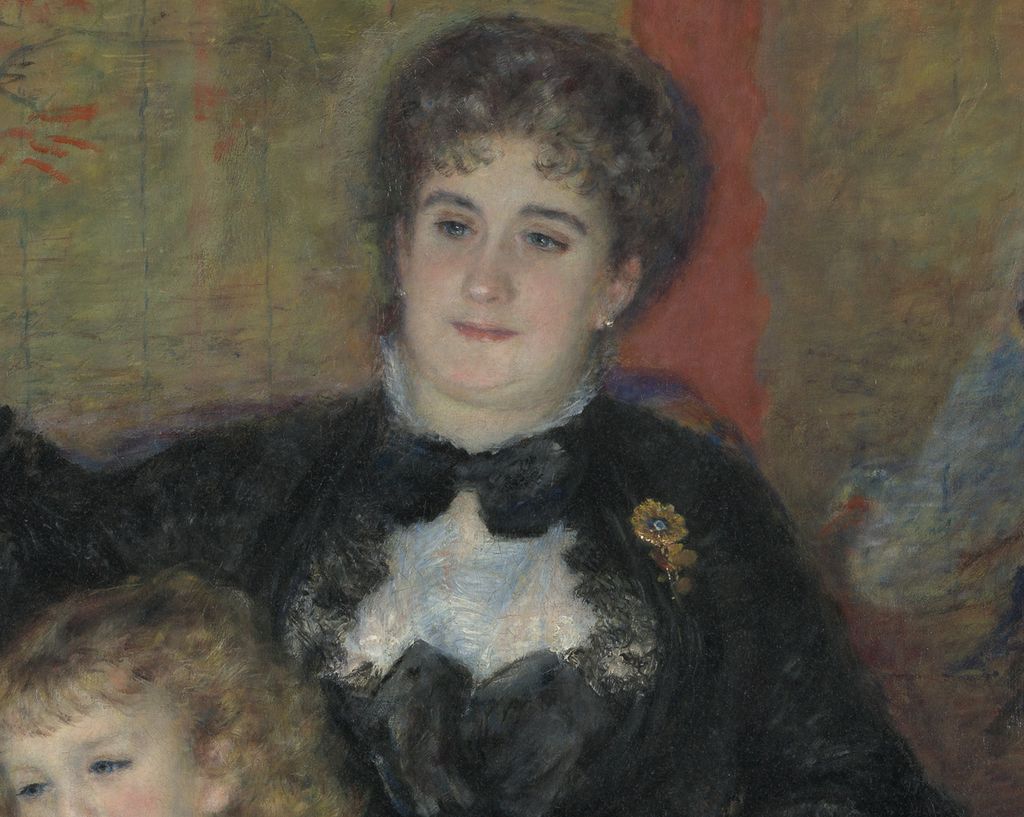
Marguerite Charpentier
The commissioned portrait centres Marguerite in a black gown attributed by the Met to Worth.
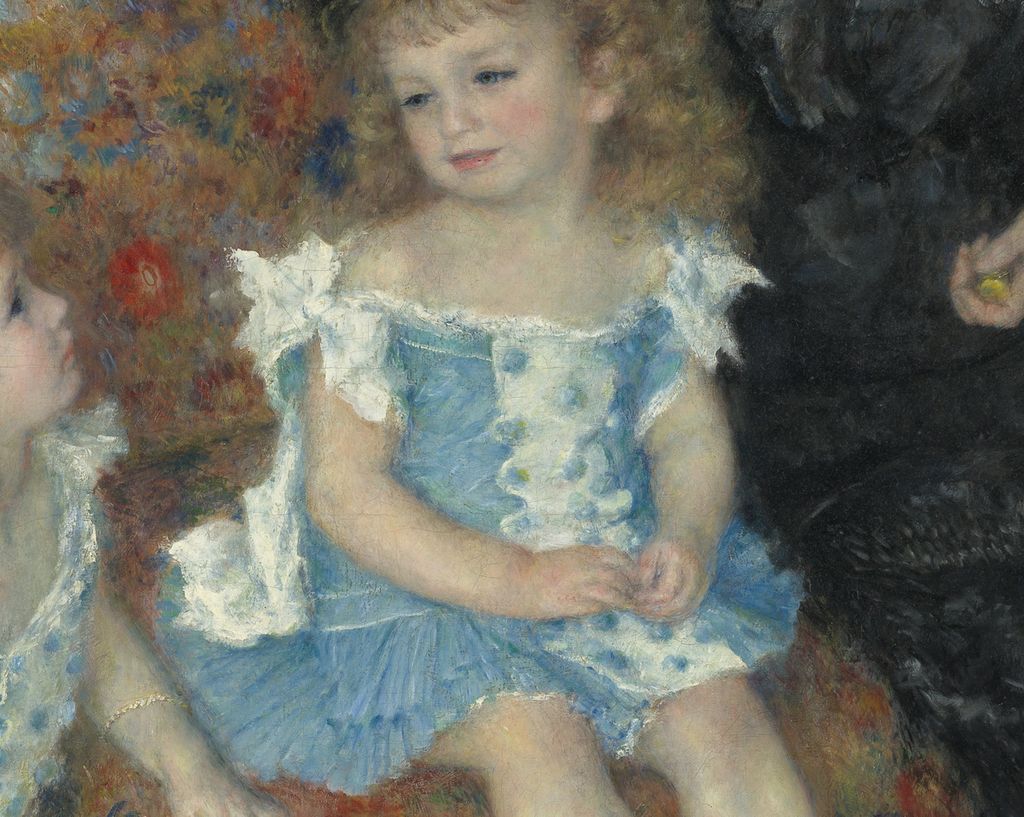
Paul beside his mother
Paul-Émile-Charles was about three; long hair and a blue outfit were contemporary child fashions.
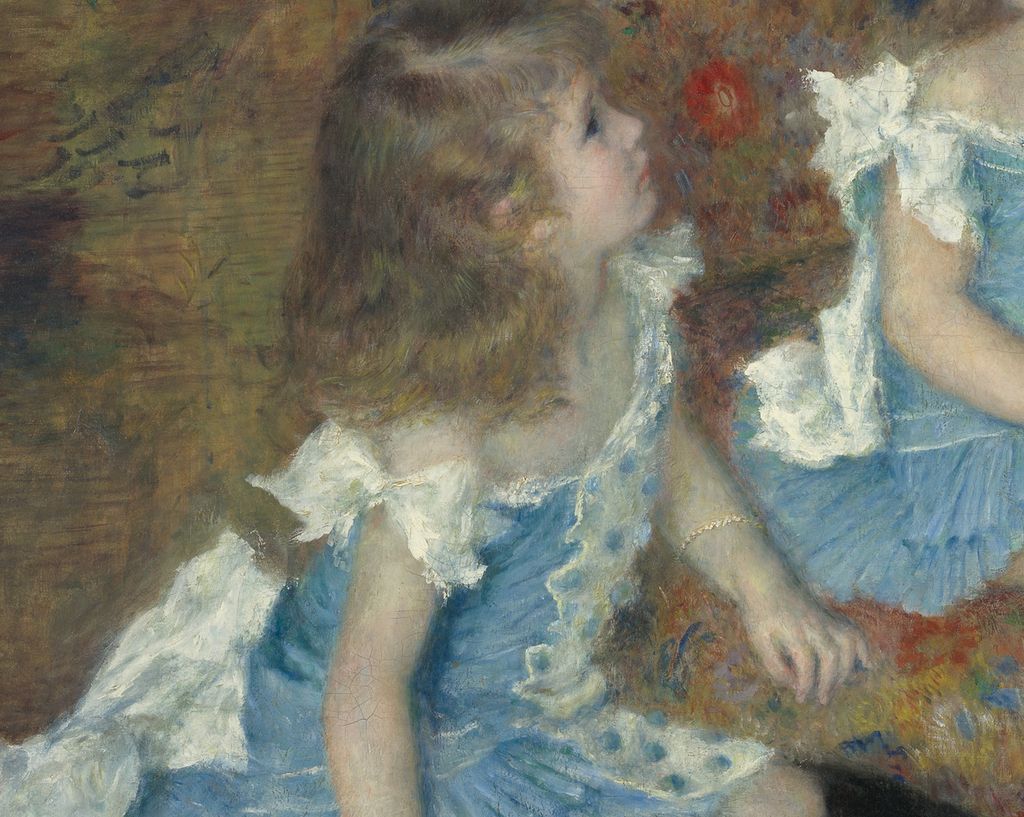
Georgette at left
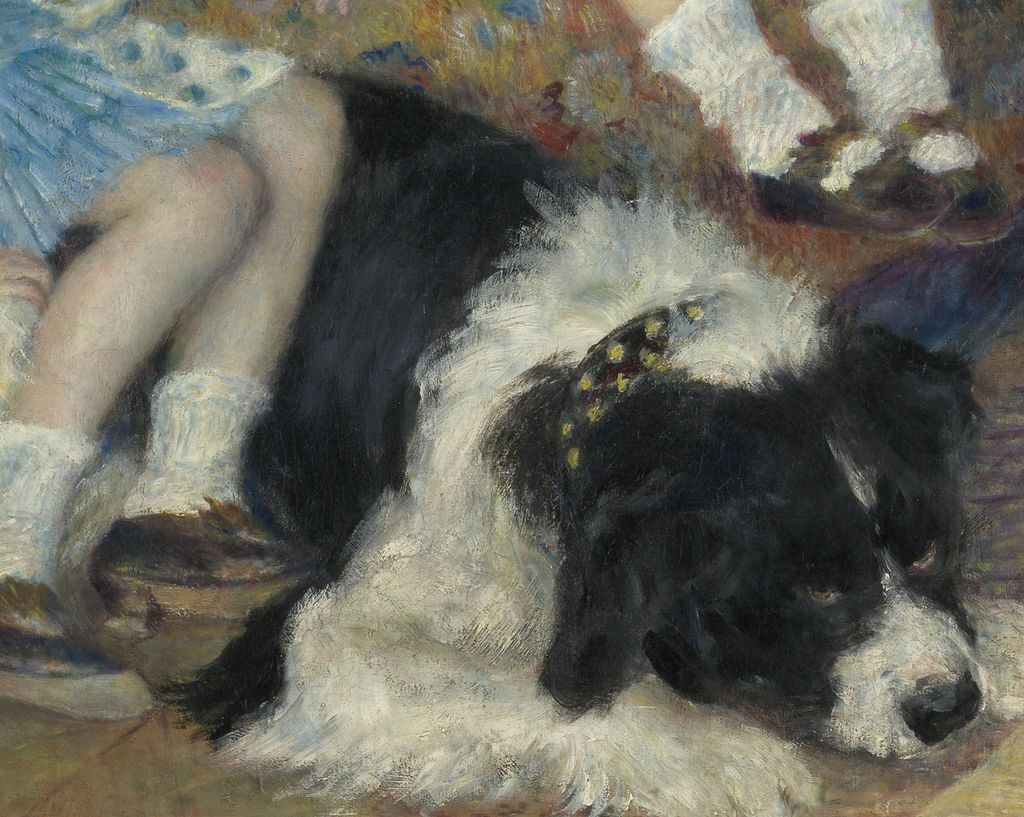
Georgette-Berthe sits near the family dog, visually paired with her brother by blue clothing.
The family dog
The black-and-white dog’s broad form carries the family grouping across the bottom.
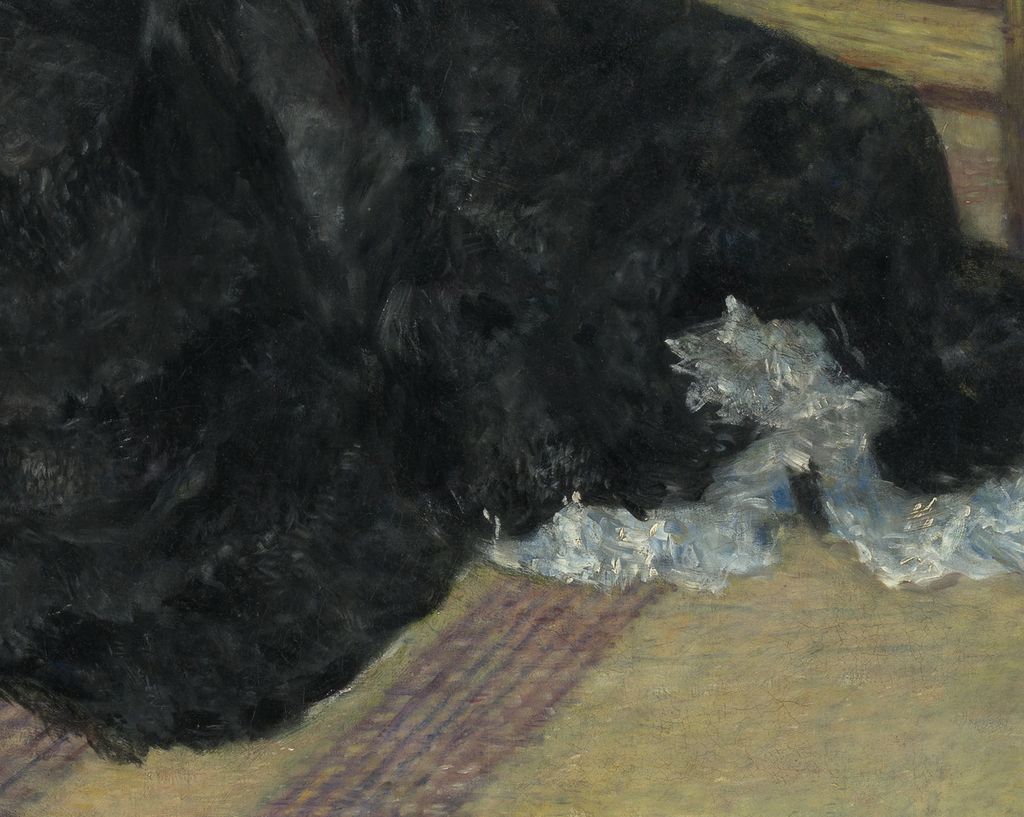
Worth gown and lace
Dark fabric, lighter lace and small highlights give the mother’s dress weight and texture.
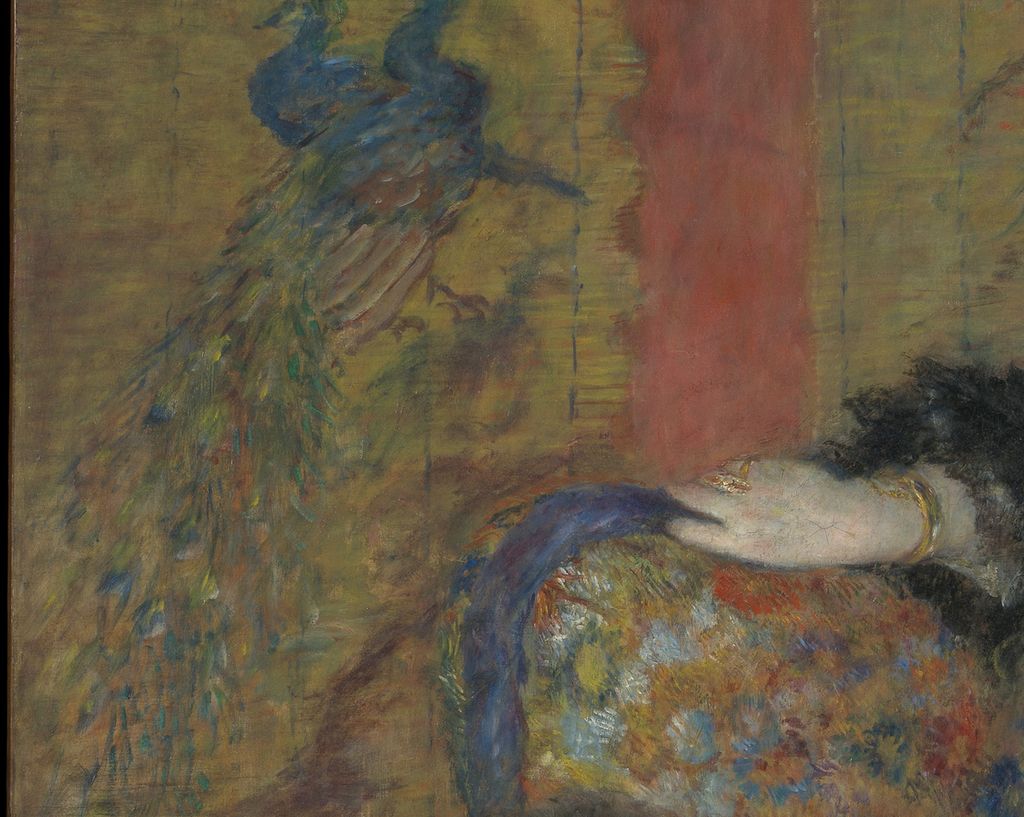
Decorated screen
A Japanese-style screen places the sitters within a fashionable Paris interior.
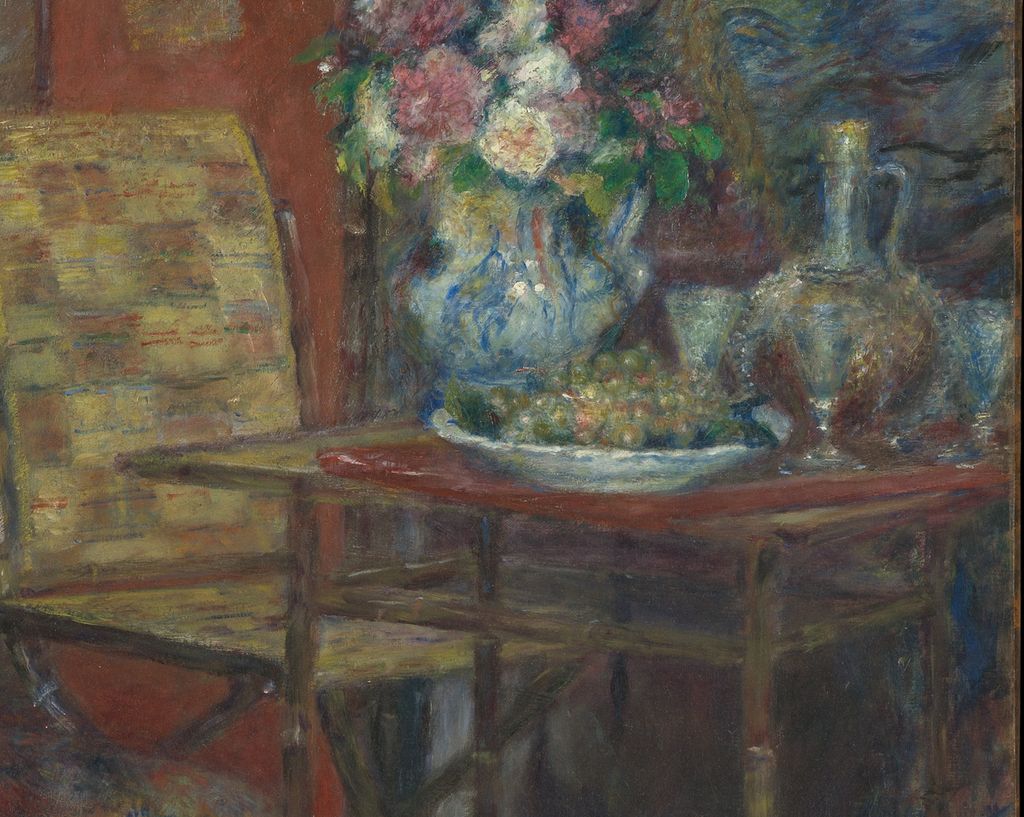
Flowers and furnishings
A chair, table, flowers and vessels extend the household setting beyond the family.
Watch: Pierre-Auguste Renoir
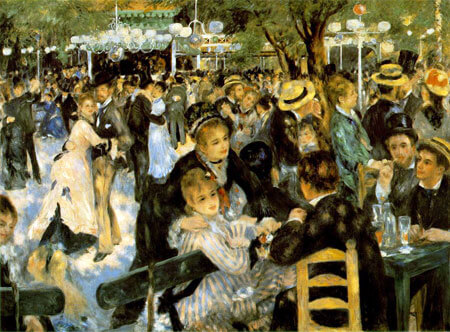
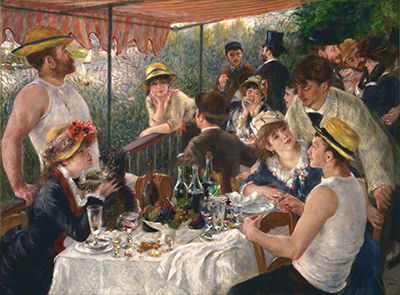
Explore a Montmartre dance, a gathering beside the Seine and the drawings behind Renoir’s paintings.
Renoir, Bal du moulin de la Galette
Dr. Beth Harris and Dr. Steven Zucker discuss Renoir’s 1876 Montmartre dance scene, its light and its crowds.
Watch on YouTubeRenoir artworks directory
A family arranged across a room
Madame Charpentier occupies the centre and right of a wide canvas. Her arm rests along the furnishing behind the children, linking the family without pressing them into a stiff row. The two small figures in blue are placed at different heights: Paul close to her, Georgette lower and farther left by the dog. Their similar clothes create a visual pair; the mother's dark gown gives that pair a setting and a counterweight. The animal's broad black-and-white body carries the eye across the bottom of the image. Met object and image. [1]
Renoir uses the room as more than a neutral background. A decorative screen behind the group, an open chair and a table with flowers and vessels extend the composition to the right. The Met describes this as the Japanese-style sitting room of the Charpentier townhouse. These furnishings signal the family's taste, but they also prevent the portrait from floating outside a place. The faces remain the centre of attention while the surroundings tell us how the family wished to be represented. Met object essay. [1]
The Met’s Renoir essay reads this portrait as a meeting of modern informality with the ordered composition of an older family portrait. Renoir lets Georgette lean on the dog and places Paul close to his mother, yet he holds the figures together through the broad black gown, the blue outfits and the room around them. The Japanese-style screen is also more than a patterned backdrop: the Met treats the interior as evidence of the Charpentiers’ interest in Japanese art. That is a curatorial reading of the family’s taste, while the visible placement of the screen and sitters lets us test how the room helps structure the picture. Met, Cindy Kang, “Auguste Renoir”. [2]
The gown has its own scale. Designed by Charles Frederick Worth, according to the Met, it supplies a deep black field broken by white lace and small highlights. Renoir's handling keeps it textured rather than flat. Its volume matters socially as well as formally: this was a portrait commissioned by Georges Charpentier, an influential publisher, and the fashion of his wife's appearance was part of the picture's public identity. Met essay. [1]
Black silk, blue children and a decorated interior
Look first at the edge of the black gown against the sofa. Its broad shape anchors the right side of the canvas, but the fabric is not a single dark patch. Slight shifts in tone, lace and the white fall of an underskirt keep the seated figure legible. Madame Charpentier's relaxed arm reaches towards Paul, linking her to the children while leaving enough room for all three faces to be seen.
The two blue outfits echo one another across the portrait. Paul sits upright near his mother; Georgette leans lower beside the dog. Their matching colour binds them even as their places and gestures differ. The blue also stands out from the warm furnishings and flower arrangement. Renoir has used clothing to organise a family group, not simply to record what each person wore on a given day.
At left, the dog's broad body and pale patches fill a substantial part of the foreground. Georgette's contact with the animal introduces an informal gesture into a commissioned portrait. Across the room, the small table and decorated screen carry the eye away from the sitters and then back to the mother. These objects announce cultivated domestic taste, yet their colours and shapes also balance the heavy gown and dog. The scene feels abundant because Renoir distributes attention across the whole room.
A son in blue, a daughter by the dog
The Met names both children in its full title. Paul-Émile-Charles Charpentier was born in 1875; he was about three when the canvas was painted. His hair had not yet been cut, and his clothes resemble those worn by Georgette-Berthe, born in 1872. Calling both children daughters because of long hair or matching blue dresses imposes a later assumption on a nineteenth-century image. Met object title and essay. [1]
Georgette's position beside the dog makes the lower left lively. The animal has a heavy body and lowered head, but it is integrated into the family group rather than staged as a separate pet portrait. Paul occupies the centre of the child's blue-and-white colour pattern. Their different poses give Renoir ways to describe childhood without making the mother appear less composed. The portrait can feel affectionate and informal while remaining a carefully arranged commission.
Marguerite Charpentier and the salon
Marguerite-Louise Lemonnier, Mme Georges Charpentier, was more than a sitter in an elegant dress. The Met describes the literary gatherings she hosted, attended by figures including Gustave Flaubert, the Goncourt brothers and Émile Zola. Her social connections helped the painting receive a prominent place in the Paris Salon of 1879. The patronage network was therefore part of how the picture reached a broad audience. Met object essay. [1]
The Charpentier household also connected Renoir to another important patron. The Met records that he met the banker Paul Bérard at Madame Charpentier’s home. Renoir later painted Bérard’s children and stayed at the family’s country house in Wargemont, where he worked on seascapes and still lifes as well as portraits. The connection gives a concrete example of how this literary and social circle could lead to further artistic work. It does not imply that Madame Charpentier arranged every later commission or that the Salon display alone created Renoir’s new patronage. Met, Cindy Kang, “Auguste Renoir”. [2]
This portrait complicates any simple opposition between Impressionism and the Salon in Renoir's career. He took part in the first three Impressionist group exhibitions, declined the fourth in 1879, and submitted the family portrait to the official Salon, where the Met says it was favourably received. The painting's success showed that his handling of light and domestic intimacy could work within a large public portrait. Renoir paintings appeared in the seventh group exhibition in 1882 through dealer Paul Durand-Ruel, but a letter quoted by the French Ministry of Culture makes the distinction clear: the dealer owned those works, and Renoir said he would not exhibit them himself. Met object essay [1]; French Ministry of Culture, seventh Impressionist exhibition. [3]
The Met's 1968 Bulletin calls this commission an important turn toward a more successful career. Such a judgment is about reception and opportunity, not a claim that one canvas changed every part of Renoir's art overnight. The portrait remained recognisably attentive to fabric, surface and the interplay of faces within a room. Met Bulletin. [4]
The picture at the Salon of 1879
Its date and exhibition year are different: Renoir painted the canvas in 1878 and presented it publicly in 1879. The Met says it was praised and given a choice position. That exposure mattered for a large commissioned portrait: visitors could see a contemporary Paris family in a setting of fashionable taste, made by an artist also associated with the independent exhibitions. It placed Renoir's work before a larger public and potential patrons. Met object record. [1]
The painting's scale reinforces that ambition. At more than 1.5 metres high and 1.9 metres wide, it was not a minor domestic sketch. Renoir carried the family's intimacy into a format suited to public display. From a distance, the black gown and blue children establish a strong grouping; close up, the patterned room and small gestures reward slower looking. The effect helped an apparently private scene stand up to the crowded Salon environment.
The contemporary 1879 Salon catalogue gives the work no. 2527 under the title Portraits de Mme G. C... et de ses enfants. That abbreviated catalogue title is useful evidence of what visitors could find in the official exhibition; it is not a different painting or an earlier state. The museum's present full title names all three sitters and lets a modern reader avoid the ambiguity created by their similar clothes. Musée d'Orsay Salon catalogue database [5]; Met object record. [1]
The same catalogue records another Renoir painting, no. 2528, as a portrait of the Comédie-Française actress Jeanne Samary, and two pastels under nos. 4476 and 4477. Their inclusion shows that the Charpentier portrait was part of a broader Salon submission in 1879, although the family canvas had the prominent placement described by the Met. The pastel titles abbreviate their sitters' surnames, so the catalogue alone does not securely identify them with people in this picture. Musée d'Orsay, Renoir's 1879 Salon entries [6]; Met object record. [1]
The portrait's reputation also changed as it moved between audiences. The Met's account records a favourable Paris response and Madame Charpentier's help in securing a prominent display. A 1907 Metropolitan Museum Bulletin text by curator Roger Fry, published when the museum acquired the picture, admired it while acknowledging that Renoir's standing was still debated. The Paris Salon reception and the New York acquisition are therefore different moments in the painting's history, not one uninterrupted verdict of universal approval. Met object essay [1]; Met historical Bulletin. [7]
A later society portrait at the Met
The Met also owns Renoir's The Daughters of Catulle Mendès, painted in 1888. Its record explicitly says he hoped to repeat the public success of the Charpentier portrait with another large image of a well-connected literary family. Three girls gather around a piano, violin and sheet music rather than a mother, children and dog in a sitting room. The later canvas is a separate commission and a different kind of group arrangement. Met, The Daughters of Catulle Mendès. [8]
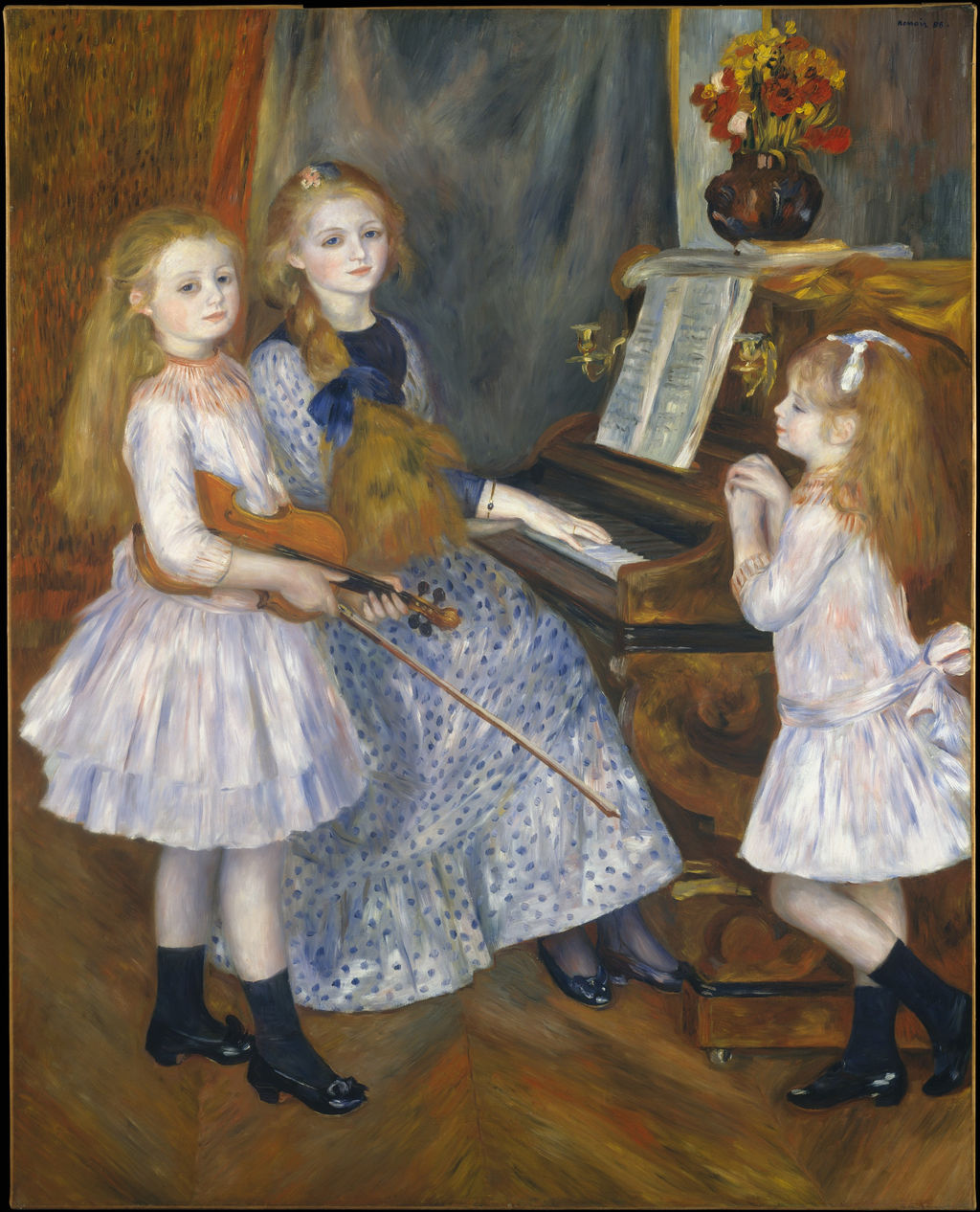
Comparing the two paintings helps explain what the Charpentier picture achieved. Its three sitters occupy a broad room, and the mother, clothing, furnishings and family dog all contribute to a portrait of household identity. In the 1888 work, the girls' instruments and piano create another kind of domestic culture, with a more upright, compact grouping. The Met reports that the later painting's public response was unenthusiastic. The Charpentier success offered Renoir a model to revisit, but no guarantee that a new work would be received in the same way. Met, The Daughters of Catulle Mendès. [8]
From the Charpentier home to the Met
The Met records the canvas as part of its Catharine Lorillard Wolfe Collection, Wolfe Fund, with a 1907 accession. A Met publication from that period says the trustees acquired it at the Charpentier sale in Paris. The route from a Paris publisher's commissioned family portrait to a New York public museum is unusually direct in its outline, though the available records do not establish every intermediate step. Met object record [1]; Met historical Bulletin. [9]
A later Met historical study identifies this 1907 acquisition as the museum’s first purchase of an Impressionist painting and notes that the choice was controversial because some still regarded the work as too modern. “First purchase” is a narrower claim than “first Impressionist work in the collection”: the museum already had other nineteenth-century holdings acquired in different ways. The portrait’s path from a prominent Paris Salon picture to a disputed New York museum purchase shows that institutional acceptance did not arrive all at once. Metropolitan Museum Journal, 2008, study of William Church Osborn and museum collecting. [10]
Looking again
Start with Madame Charpentier's face, then follow her arm toward Paul. Cross to Georgette and the dog, and let the animal's form return you to the dark sweep of the gown. Only then move through the screen, chair and flowers. Renoir made a family portrait that can be read in two ways at once: as a record of named people and as a public image of a household's fashion and standing.
Questions about the Charpentier family portrait
Georgette-Berthe is the daughter at left with the dog. Paul-Émile-Charles is the son beside his mother. His long hair and similar blue clothing reflect the fashion of the time, according to the Met.
Renoir painted it in 1878 and exhibited it at the Paris Salon of 1879.
Georges Charpentier, a publisher, commissioned the family portrait. His wife Marguerite was an influential literary salon host.
At The Metropolitan Museum of Art, New York, accession 07.122. Check the museum's current object page for display details before visiting.
Discussion
Look closely at Madame Georges Charpentier and her Children and use the questions below to compare what you see with the documented history.
Reader Insights
How does the domestic room balance informality with a grand scale?
The Met record documents the family portrait’s Salon and patronage setting.
What does the painting construct beyond a record of three sitters?
Join the Conversation
Share a close observation or a source-backed question about Madame Georges Charpentier and her Children. The prompts above are starting points for discussion.
References
- The Metropolitan Museum of Art, Madame Georges Charpentier and Her Children , 07.122 View source.
- Met, Cindy Kang, “Auguste Renoir”, discussion of Charpentier patronage, Japanese art and the Bérard connection View source.
- French Ministry of Culture, seventh Impressionist exhibition in 1882, Renoir's letter distinguishing dealer-owned works from his own exhibition participation View source.
- The Metropolitan Museum of Art, 1968 Met Bulletin View source.
- Musée d'Orsay Salon catalogue database, 1879 no. 2527, contemporary catalogue title and exhibition identification View source.
- Musée d'Orsay exhibitor record, Renoir's 1879 Salon entries, catalogue numbers 2527–2528 and 4476–4477 View source.
- Met historical Bulletin View source.
- Met, The Daughters of Catulle Mendès, 1998.325.3, distinct later portrait and reception comparison View source.
- Met historical Bulletin View source.
- Metropolitan Museum Journal 43 (2008), study of the Osborn family and Met collecting, the 1907 Impressionist purchase and contemporary resistance View source.
- The Metropolitan Museum of Art, Met Open Access API object 438815 View source.
- Whole-work reproduction from the Met's official public-domain image, painting area cropped from the source's black border. Credit The Metropolitan Museum of Art, Catharine Lorillard Wolfe Collection, Wolfe Fund, 1907, 07.122 View source.