by Tom Gurney
Tom Gurney BSc (Hons) is an art history expert with over 20 years experience
Published on June 19, 2020 / Updated on October 2, 2026
Email: tomgurney1@gmail.com / Phone: +44 7429 011000
A man reaches back to help a woman over a wooded path. She takes his hand while her pale dress catches the broken light among the leaves. Pierre-Auguste Renoir painted this La Promenade in 1870. It belongs to the J. Paul Getty Museum, accession 89.PA.41. The Getty does not know what Renoir himself called the picture; The Promenade is a title supplied by a later owner. Getty close-looking record. [1]
The little action gives the painting its energy. The couple is moving, yet each figure holds a place in a dense patchwork of green, blue and white. The Getty canvas measures 81.3 × 64.8 cm, large enough for the figures to feel present but intimate enough for the handclasp to carry the story. Neither sitter is securely named in the Getty's account. Getty object data and education essay. [1]
At a glance
- ArtistPierre-Auguste Renoir
- Holder titleThe Promenade; French La Promenade
- Date1870
- MediumOil on canvas
- Dimensions81.3 × 64.8 cm
- CollectionJ. Paul Getty Museum, Los Angeles, 89.PA.41
This work in Renoir’s career
La Grenouillère
1869La Promenade
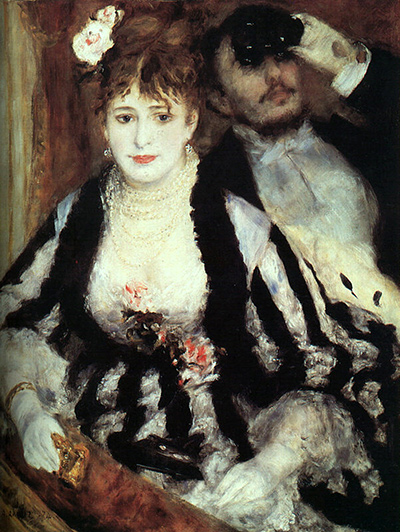
1870La Loge
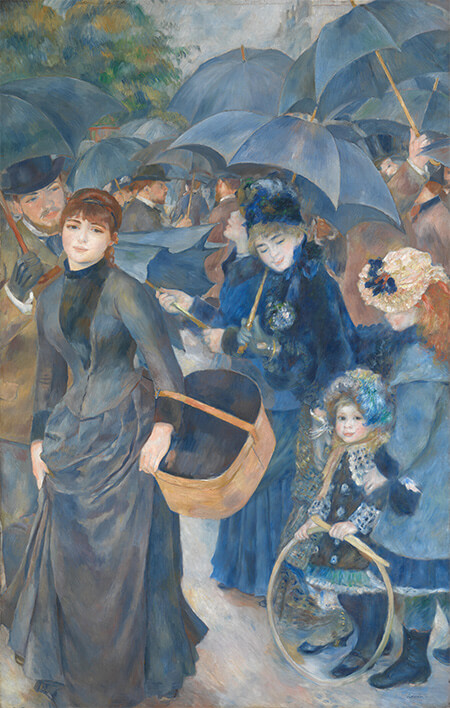
1874The Umbrellas
c. 1881–86The Great Bathers
1884–87The Bathers
1918–19Contents
- Annotated details of the painting
- A gesture in the trees
- How the foliage shapes the figures
- A modern version of an old subject
- Who might the woman be?
- After painting with Monet
- Which Promenade ?
- Looking again
Annotated Details from La Promenade
A man helps a woman along a wooded path in Renoir’s 1870 Getty painting.
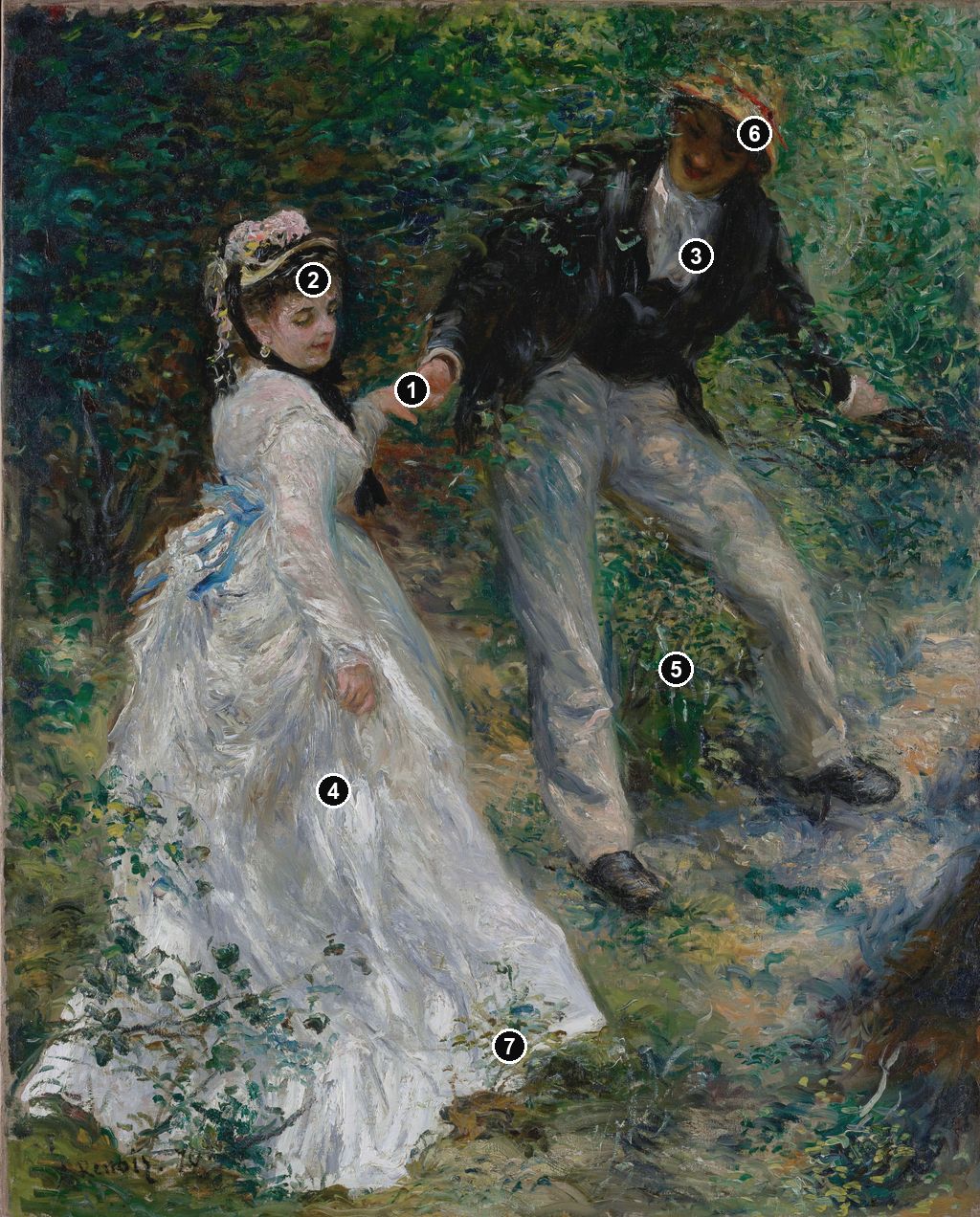
Details from LA PROMENADE
The details show Getty 89.PA.41, not a later Renoir work also titled Promenade.
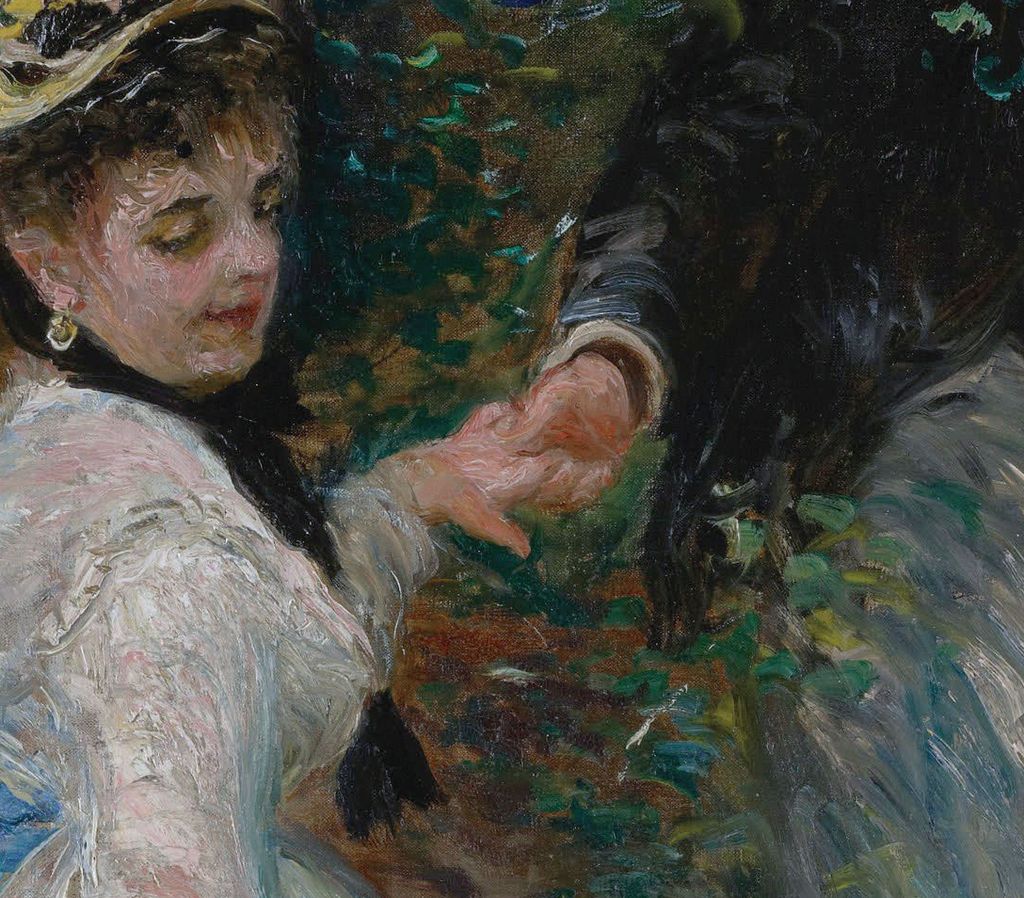
Joined hands
Their joined hands make a small gesture the centre of the scene.
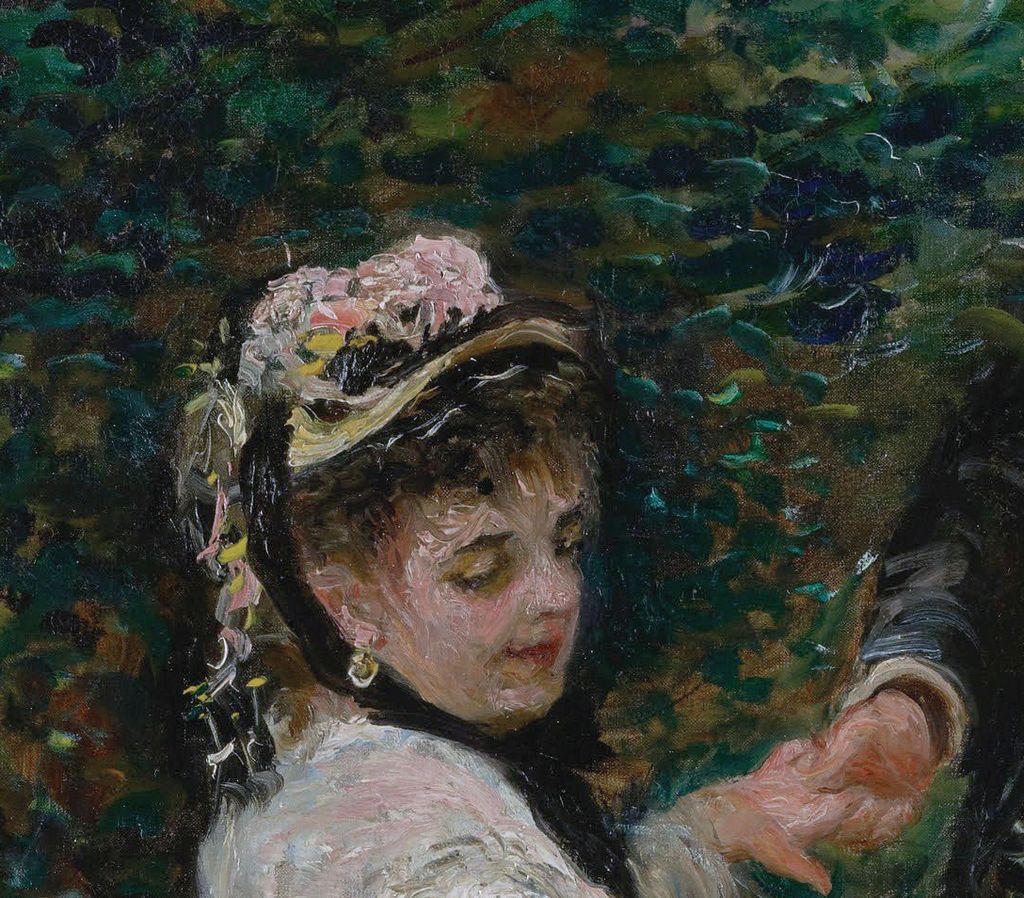
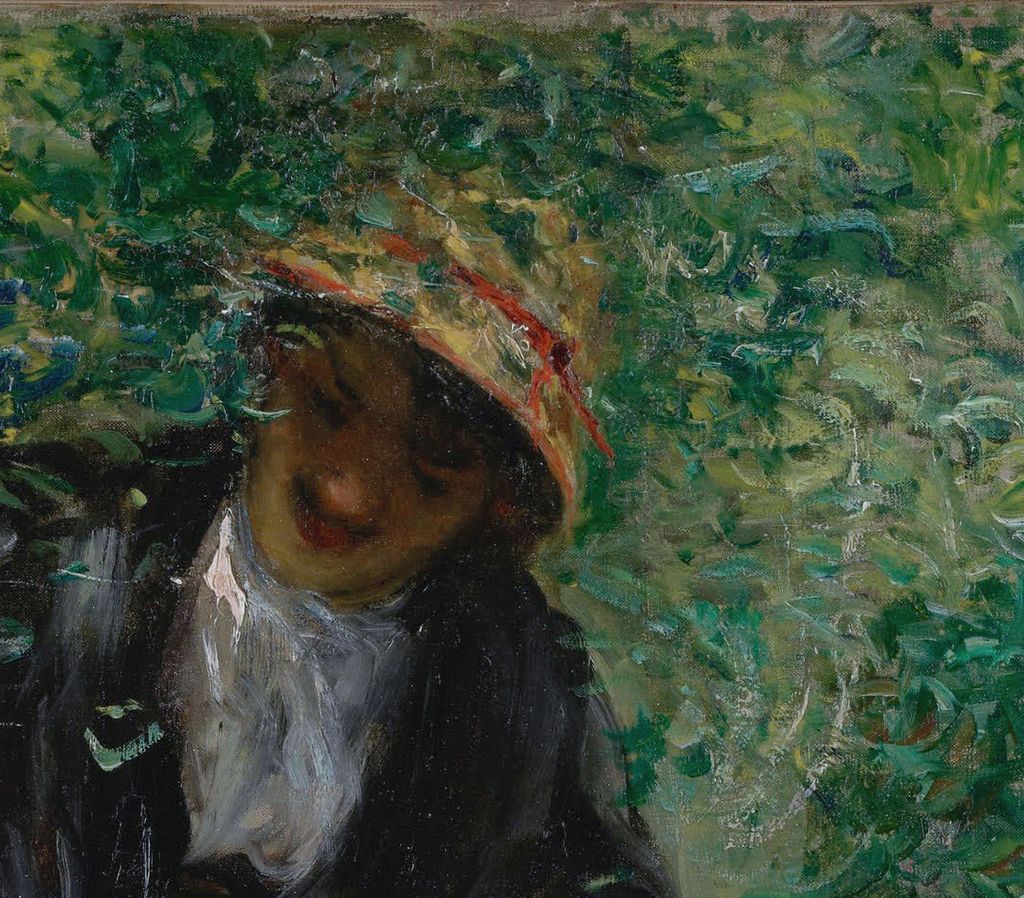
Woman’s face
The woman turns toward her companion while moving through the trees.
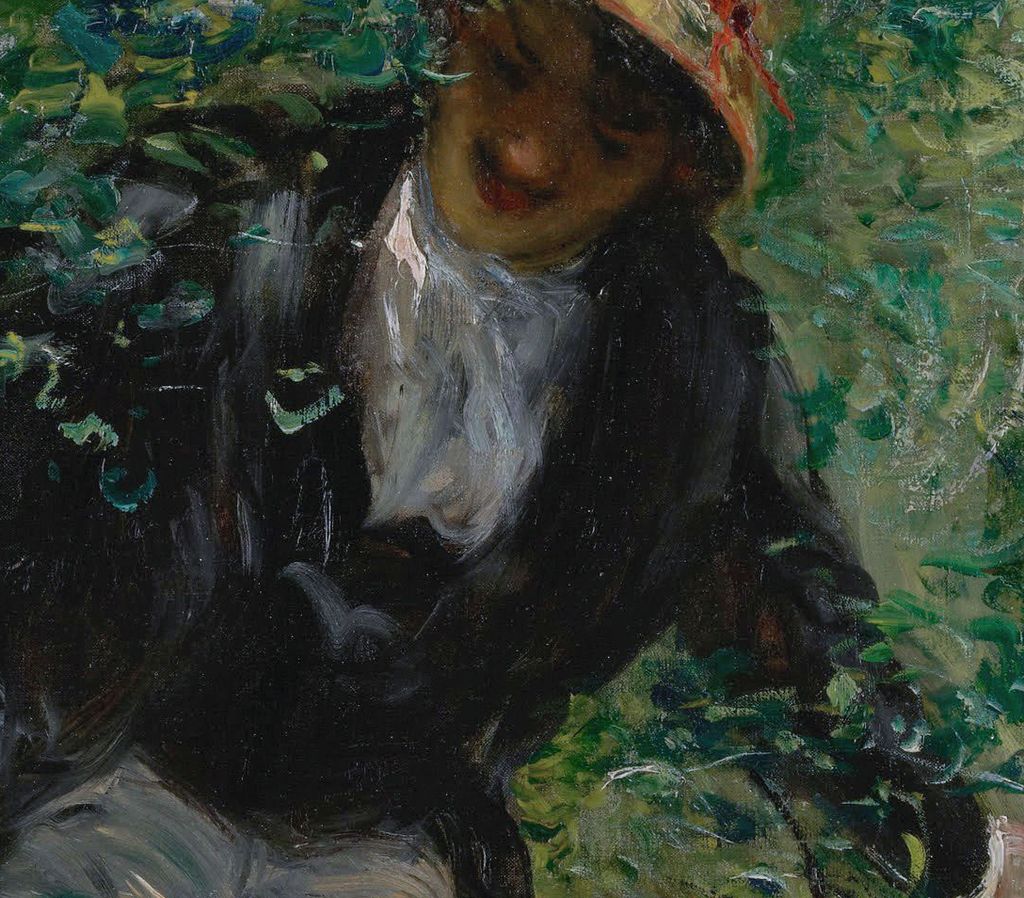
Man leaning forward
The man leans and reaches across the path.
Pale dress
Blue-green and grey touches give the white dress its shifting outdoor light.
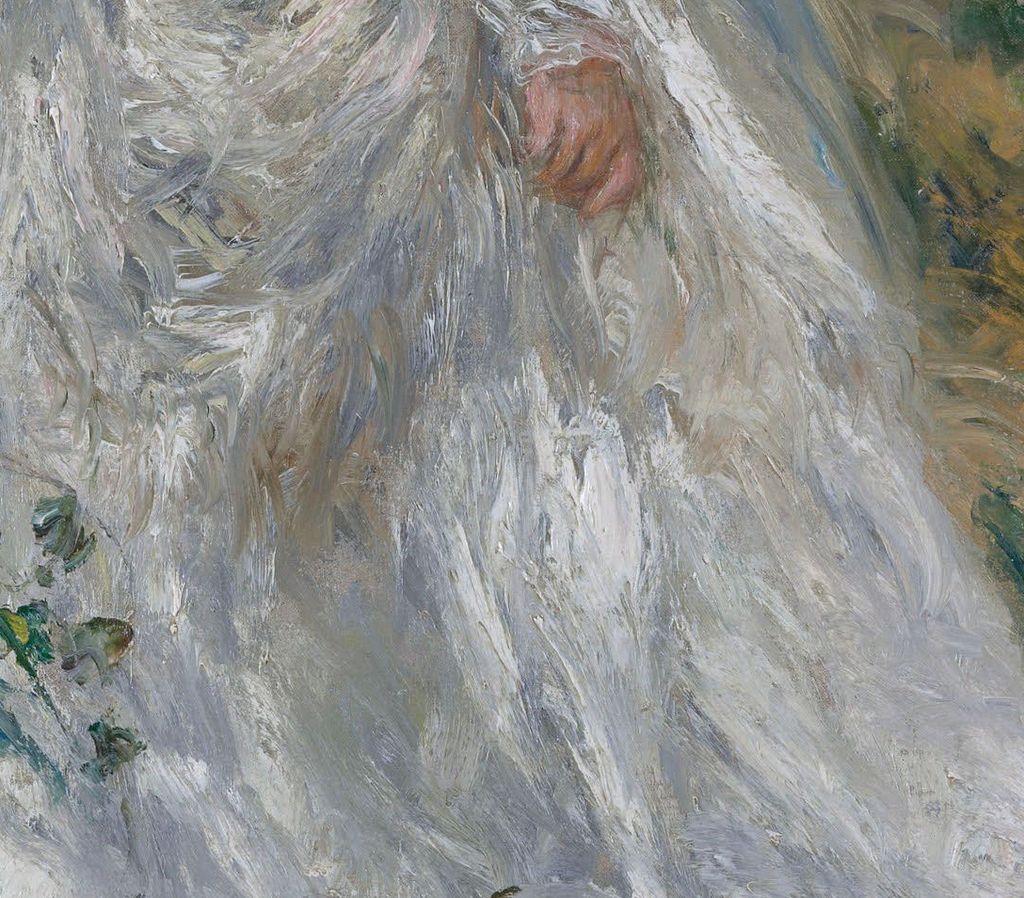
Grey trousers
The man’s trousers pick up colours from the path and foliage.
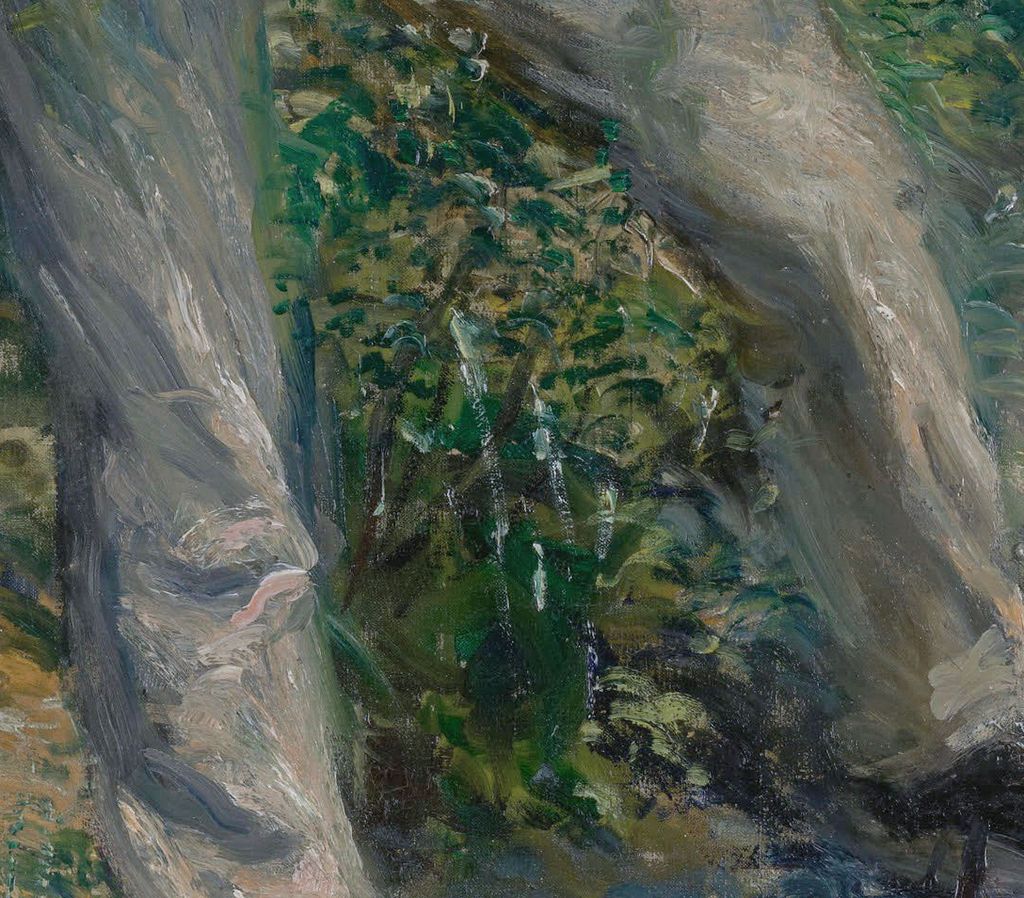
Dense foliage
Broken greens form a leafy canopy rather than a hard backdrop.
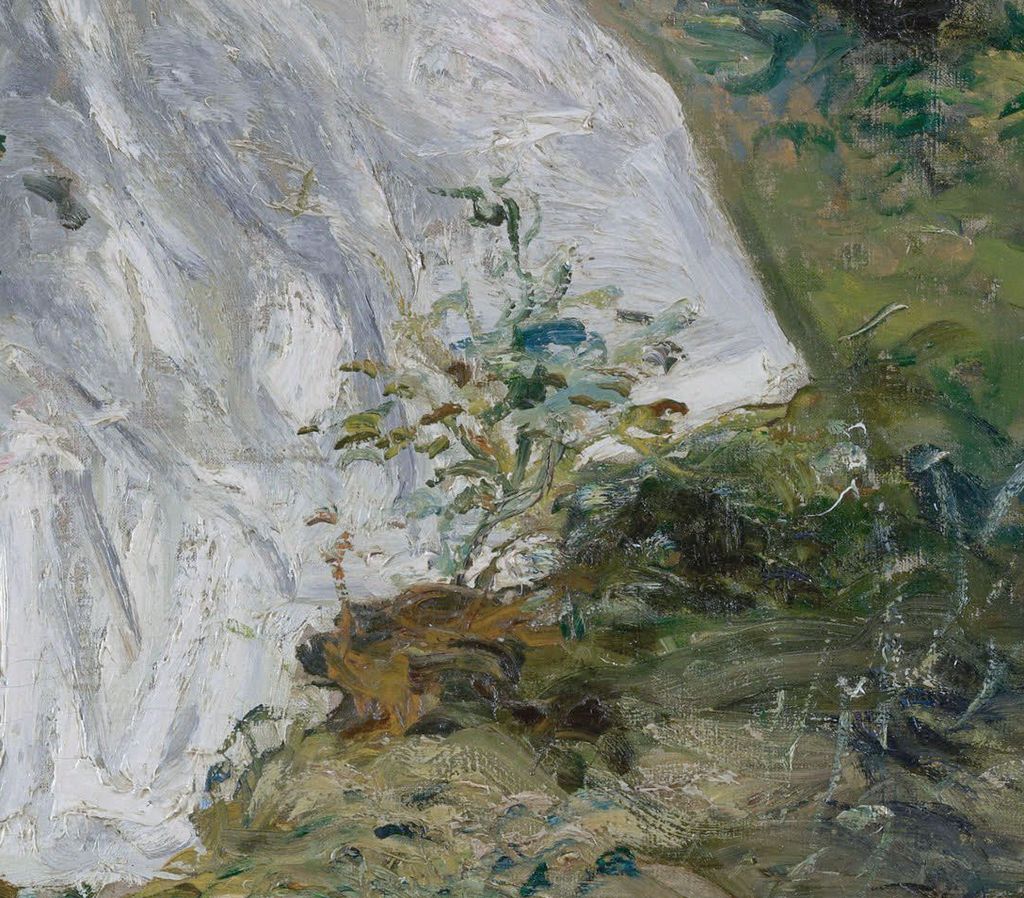
Path and hem
The skirt and path meet at the lower edge, reinforcing the couple’s movement.
Watch: Pierre-Auguste Renoir
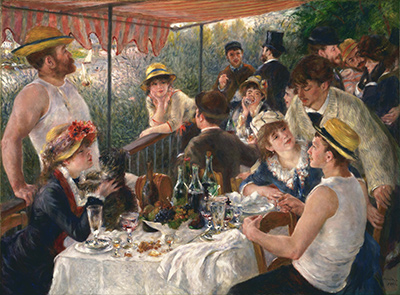
Explore a Montmartre dance, a gathering beside the Seine and the drawings behind Renoir’s paintings.
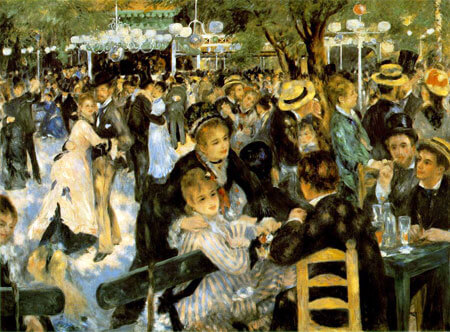
Renoir, Bal du moulin de la Galette
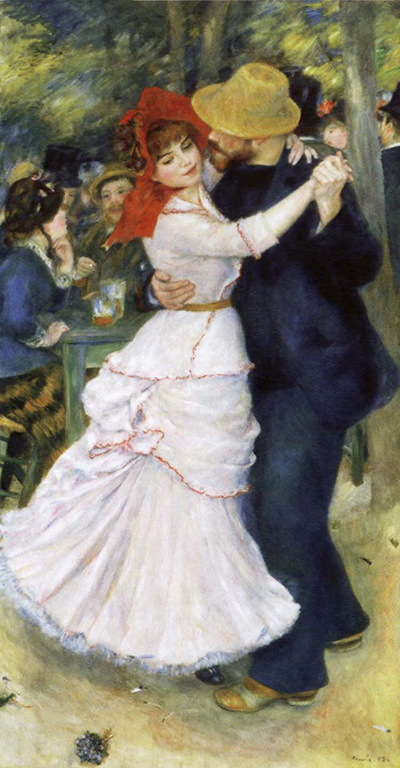
Dr. Beth Harris and Dr. Steven Zucker discuss Renoir’s 1876 Montmartre dance scene, its light and its crowds.
Watch on YouTubeRenoir artworks directory
A gesture in the trees
The man leans across the path with one arm extended. The woman turns back slightly and holds his hand. The gesture is simple enough to read without knowing where they are going. It also divides the canvas into two large areas: her luminous dress and his darker jacket. Their hands join those areas near the middle, where the eye returns after wandering through the foliage. Getty image and close-looking essay. [1]
Renoir leaves much of the landscape unresolved in outline. Bushes and branches overlap the figures; blue-green patches move across clothing and path. Light appears in fragments rather than in one steady beam. The Getty calls attention to the dappled light filtering through foliage and to Renoir's feathery brushwork. The scene feels fleeting because form and light seem to change together as the couple moves. Getty close-looking essay. [1]
The place may be a park or a suburban wooded area, but the Getty does not identify an exact site. The woman's light dress and the man's jacket make the pair look like contemporary city visitors rather than mythological figures. They are stepping into nature without leaving their social world behind. Calling it a walk is reasonable; inventing a destination, relationship or conversation would go beyond the painting. Getty close-looking essay. [1]
The man's movement sets the direction of travel. One leg lifts towards a higher patch of ground, while the other remains among the leaves. He turns his torso back and extends a hand. The woman moves into the gap he opens, gathering her skirt as it meets the plants near the path. Neither figure is shown at rest, and their bodies do not quite point in the same direction. The connected hands hold the composition together for a moment while their different movements suggest what might happen next.
The gesture is easy to read as help over uneven ground. It can also suggest an invitation into a more secluded part of the woods, an interpretation explored in Getty writing about older garden-outing pictures. The canvas does not tell us how the woman feels or where the path ends. What it does give is a visible balance of initiative: the man reaches back, the woman accepts his hand and still turns her face aside. Those actions are enough to sustain the scene without assigning a fixed private story to the pair.
How the foliage shapes the figures
The trees and bushes are not a distant background. Leaves crowd the upper edge, cross behind the man's head and press close to the woman's sleeve and skirt. Blue-green touches appear on clothing as well as in the plants; pale patches of ground echo the woman's dress. This repetition makes the people part of the environment they are moving through. The Getty describes a thin, oily paint mixture and floating glazes that help produce depth and texture in the scene. Getty close-looking essay. [1]
Look at the contrast between the two figures. The man's jacket and hat blend into the shaded greens and browns. The woman's pale clothing stays more legible, especially where it crosses the darker path. Yet its edges are not sealed off from the foliage: small marks of green and blue enter the white. Renoir keeps the handclasp clear while allowing the surrounding forms to mingle. That arrangement directs attention to the human action without turning nature into a neutral stage set.
The painting's vertical format also matters. The couple does not traverse a broad landscape panorama. They rise through a narrow field of vegetation, with the path climbing towards the right. The viewer's eye follows the man's stepping leg upward, crosses the hands and returns down the woman's skirt. The dense upper foliage then encloses the route. Even though the title suggests a leisurely stroll, the design feels like an encounter at a particular bend in a path rather than a view of an entire walk.
A modern version of an old subject
The title The Promenade was assigned by a previous owner, according to Getty. It suits the visible walk and also recalls the painted garden outings of Watteau and Fragonard, eighteenth-century artists Renoir admired. Those earlier works often turned a stroll in nature into an occasion for courtship, movement and changing attention. Renoir's couple belongs to nineteenth-century leisure, but the long tradition helps explain why a single joined hand can suggest a larger encounter. Getty close-looking essay [1]; Getty painting catalogue. [2]
This is a comparison of subjects, not evidence that Renoir copied a specific Watteau or Fragonard canvas. The Getty describes the scene as both modern middle-class experience and a renewal of the older fête galante theme. In the new version, the leaves and loose strokes seem to engulf the couple. The setting is active, not just scenery behind a pair of lovers. Getty painting catalogue. [2]
An older genre can help a viewer ask better questions without turning the two people into known lovers. The Getty publication describes the wooded encounter as a modern version of a courtship motif, but its account is an interpretation of the image and its artistic tradition. The exact identity and relationship of the models remain unproven. The joined hands, elegant dress and sheltered setting invite a reading of intimacy; the picture deliberately provides less biography than that reading might seem to require.
Who might the woman be?
Getty publications have discussed more than one proposed name for the woman, including Lise Tréhot and Rapha, associated with Renoir's friend Edmond Maître. Neither identification is established by the museum's object facts. A Getty study treats Lise as a plausible model rather than a certainty, while a separate Getty catalogue records both names. The man should not be named Renoir simply because one proposed identification for the woman is Lise. Getty study of La Promenade [3]; Getty painting catalogue. [2]
The distinction matters when this picture is compared with Renoir's earlier Lise with a Parasol. Museum Folkwang identifies the standing woman in its 1867 canvas as Lise Tréhot. That secure identification for a different painting cannot be transferred to the Getty canvas on visual resemblance alone. Both pictures place a pale dress among trees, but they arrange the figure, light and company very differently. Museum Folkwang object record. [4]

In Folkwang's portrait, Lise fills a near life-size canvas and stands almost still beneath her parasol. The dark trees make her dress a stable column of light. In La Promenade, the woman's body is smaller, partly mingled with leaves, and drawn into a movement led by the other figure. Comparing the two works clarifies a change in pictorial emphasis without resolving the Getty woman's name. It also keeps the museums' different levels of certainty visible to readers.
After painting with Monet
The Getty links the picture to Renoir's work outdoors with Claude Monet in the preceding summer. Those shared experiments encouraged a lighter palette and attention to changing light. La Promenade carries that interest into a scene led by figures. It is more precise to say the painting grows from that context than to claim that every passage of this specific canvas was completed in front of the motif; the Getty account does not establish a full on-site making history. Getty close-looking essay. [1]
Look at the woman's skirt against the undergrowth. Its broad pale shape is built from varied marks, not one uniform white. The man's grey trousers similarly pick up green and blue from the path. Paint joins figures to the conditions around them. This combination of a legible human gesture and shifting outdoor light is central to Renoir's early work.
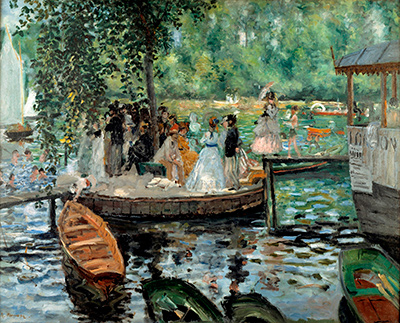
The connection with Monet can be made precisely. In 1869, Renoir and Monet worked side by side at La Grenouillère on the Seine. The Getty points to that summer as a context for Renoir's lighter colour and looser handling in the following year. It does not follow that Monet took part in making La Promenade, or that the wooded path can be identified as the La Grenouillère site. The shared work helps explain a painting problem Renoir was exploring: how changing light affects objects and people in an outdoor scene. Getty education essay. [1]
Renoir kept pursuing that problem in later figure paintings. The Swing of 1876, now at the Musée d'Orsay, brings several people into a wooded leisure setting and lets irregular light spots cross a white dress, jackets and the ground. Its woman is framed by swing ropes and watched by others; the Getty couple instead moves together along a path. Seeing the two side by side reveals a continuing interest in figures among leaves while making their different dates and social arrangements clear. Orsay object record for The Swing. [5]

In The Swing, a man seen from behind interrupts our view of the woman, and a tree divides the foreground group. In La Promenade, the joined hands bridge the dark and pale figures instead. Both pictures draw viewers into a moment that seems already in progress, but one holds its group almost still while the other sends its pair onward. The comparison rests on what the images show rather than a claim that the later work is a sequel.
Which Promenade?
Renoir used walking subjects more than once, and similarly titled images can be confused. The canvas here is the 1870 Getty painting 89.PA.41, with a man helping a woman through the trees. A later work sometimes called La Jeune Mère (La Promenade) has a different subject and history. Collection, date, size and image should travel together when identifying the work. Getty object data. [1]
The Getty acquired its painting in 1989, reflected in its accession number. Its later title and collection history do not change the visible event: two people linked by a step and a hand among foliage. The exact social relationship remains open, which lets the painting's way of seeing movement carry the interpretation. Getty object record. [6]
The first documented appearance of the painting is the Gustave Goupy sale at the Hôtel Drouot, Paris, on 30 March 1898. The dealer Paul Durand-Ruel bought it as lot 33, then sold it to the Berlin dealer Paul Cassirer in 1908. Getty research traces its later passage through several dealers and collectors, the British Rail Pension Fund, and a Sotheby's London sale on 4 April 1989, where the Getty bought it. This record establishes a chain from 1898 onwards; it does not identify an earlier owner or prove what Renoir called the painting. Getty, Pierre-Auguste Renoir: La Promenade. [3]
Looking again
Find the joined hands, then follow the woman's pale skirt down the path. Move across the man's grey trousers and dark jacket into the dense leaves. The same blue-green tones appear in bodies, clothing and foliage. Renoir gives the encounter a momentary human focus while allowing the whole scene to shimmer.
Questions about La Promenade
The Getty does not identify them securely. The painting shows a man offering his hand to a woman on a wooded path.
Getty says Renoir's own title is unknown. The Promenade came from a later owner.
Getty links it to Renoir's outdoor work with Monet the previous summer. The source does not establish that every part of this canvas was painted on site.
At the J. Paul Getty Museum, Los Angeles, accession 89.PA.41. Check the museum's current object page for display information.
Discussion
Look closely at La Promenade and use the questions below to compare what you see with the documented history.
Reader Insights
Why does the small joined-hand gesture carry the scene?
Getty says Renoir’s own title and the sitters’ identities are unknown.
How does the older garden-outing tradition help without naming a specific model?
Join the Conversation
Share a close observation or a source-backed question about La Promenade. The prompts above are starting points for discussion.
References
- Getty, The Promenade, 89.PA.41, object data and close-looking essay View source.
- Getty, Masterpieces of Painting, modern leisure and older garden-outing comparisons View source.
- Getty, Pierre-Auguste Renoir: La Promenade, title and recorded provenance, with qualified discussion of the sitter View source.
- Museum Folkwang, Museum Folkwang, Lise with a Parasol View source.
- Museum Folkwang, Musée d'Orsay, The Swing View source.
- Getty object record View source.
- Whole-work reproduction: Commons Google Art Project-derived file, Public Domain Mark faithful reproduction, with a thin surrounding frame cropped in the image shown here View source.