Pierre-Auguste Renoir.jpg)
 by Tom Gurney
Tom Gurney BSc (Hons) is an art history expert with over 20 years experience
Published on June 19, 2020 / Updated on October 2, 2026
Email: tomgurney1@gmail.com / Phone: +44 7429 011000
Two girls lean together over an open book. Their broad hats nearly touch, and one face turns toward the other while both look down at the small pages. Pierre-Auguste Renoir painted Two Girls Reading around 1890–91. The painting is in the Los Angeles County Museum of Art (LACMA), accession M.68.46.1. Its old page address includes “1885–1893,” a broad range that should not replace the museum’s more precise current date. LACMA collection record. [1]
This is a compact oil painting, 56.52 × 48.26 cm. It invites close looking because the reading matter is small and the figures fill nearly all the canvas. LACMA describes the girls as engaged in a leisure activity and sees both Renoir’s earlier interest in lively colour and his later attention to the figure. The museum does not name the readers or identify their book; this page leaves those details open. LACMA collection record [1]; LACMA education guide, Renoir after Impressionism. [2]
At a glance
- ArtistPierre-Auguste Renoir
- TitleTwo Girls Reading
- Datec. 1890–91
- MediumOil on canvas
- Size56.52 × 48.26 cm
- CollectionLos Angeles County Museum of Art, M.68.46.1
- Acquisition creditFrances and Armand Hammer Purchase Fund
Watch: Pierre-Auguste Renoir
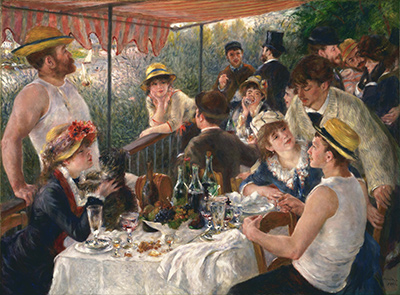
Explore a Montmartre dance, a gathering beside the Seine and the drawings behind Renoir’s paintings.
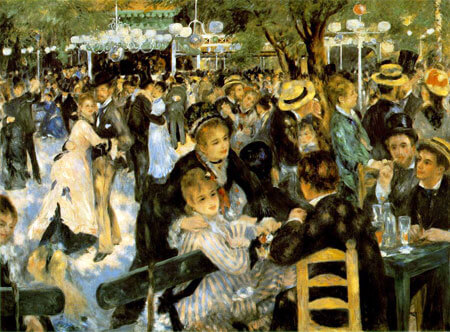
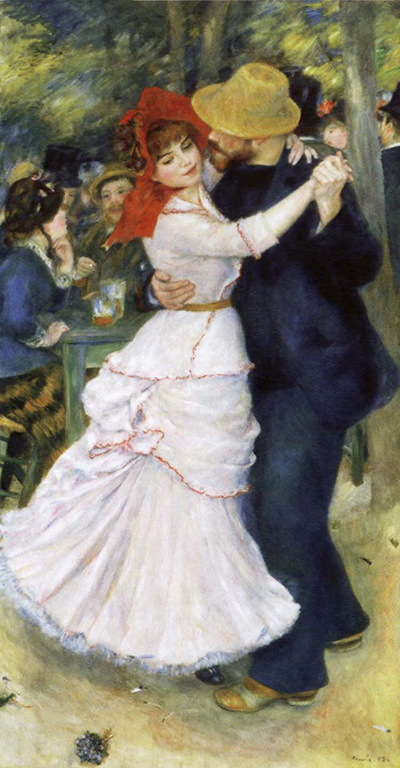
Renoir, Bal du moulin de la Galette
Dr. Beth Harris and Dr. Steven Zucker discuss Renoir’s 1876 Montmartre dance scene, its light and its crowds.
Watch on YouTubeHow the book draws the figures together
The book sits low in the composition, below the wide hats and the curve of the nearer girl's shoulder. Its pale pages are a bright patch inside the warmer colours of their clothes and hair. Both heads incline towards that patch. The reading action therefore connects faces, hands and pages even though the book itself occupies little space. The girl at left props her cheek with one hand, while the figure at right bends forward in profile. Their different poses make the shared act feel observed rather than perfectly symmetrical. LACMA object image and record. [1]
The brim at left makes a sweeping arc across the upper half of the painting. The right hat has a lighter, rounded crown, held between large reddish bows. Those shapes almost meet at the centre. Behind them, green and brown strokes suggest foliage without defining a particular garden. LACMA’s teaching material reads the colour and loose paint as suggesting a bright day. That is an interpretation of the painted effect; the collection record gives no named outdoor location or evidence that Renoir painted the whole canvas outside. LACMA education guide. [2]
The clothing helps distinguish the readers. A pale, patterned sleeve occupies much of the right half, turning this girl's body into a large light shape beneath her smaller face. At left, softer pink and cream fabric leads the eye toward the supporting arm. Dark hair and green background interrupt the light areas, so the book remains visible despite its scale. Look at the way the right girl's shoulder approaches the pages, then return to the left girl's lowered eyes: Renoir builds the scene from adjacent shapes as well as from a recognizable story. LACMA collection image. [1]
A familiar activity, carefully composed
LACMA places the picture among Renoir's images of women and children at leisure. Its education guide also compares the scene's concentrated everyday activity with earlier European genre painting. The comparison is about a pictorial tradition, not proof that these girls are specific relatives, pupils or characters in a story. Their identities remain unrecorded in LACMA's public object notice. The quiet mood comes from their joined attention and close placement rather than from an identifiable passage in the book. LACMA education guide [2]; collection record. [1]
Around 1890 Renoir was working through a range of figure paintings. The guide describes this canvas as combining qualities of his Impressionist practice with those of his later work. The soft, varied brushwork and bright palette can be seen beside a tightly arranged pair of bodies. It is tempting to call the scene a passing instant, yet the geometry of the two hats and the placement of the book make it feel composed. Those features can coexist; a painting need not be assigned wholly to one stage of an artist's career. LACMA education guide. [2]
The date is important here. The URL's “1885–1893” wording could lead a reader to treat the work as securely dated to 1885, or as a painting continuously made over eight years. Neither follows from LACMA's object record, which dates it circa 1890–91. The route is retained for existing links, while the visible heading and factual summary use the owner's date. Nor should it be conflated with Renoir's other reading subjects: the accession number identifies this particular pair of girls at LACMA. LACMA collection record. [1]
From collection to public view
LACMA records the painting under the Frances and Armand Hammer Purchase Fund and accession M.68.46.1. The public record gives this acquisition credit but not a full chain of earlier owners. It would be misleading to add one from a similar Renoir reading scene. The museum's current webpage also lists the picture as on view, but that display status may change; the accession and collection are the stable identifiers. LACMA collection record. [1]
The museum's education guide uses Two Girls Reading to introduce Renoir's development after Impressionism. That makes the work useful beyond its appealing subject. A reader can test the guide's description against the canvas: notice where individual strokes stay visible in the green background, where the pale fabric becomes broad and opaque, and how the small faces remain legible amid those varied marks. These are observations of the reproduction, not claims about an undocumented preliminary drawing or a named sitting. LACMA education guide. [2]
Looking again
Start at the red bows above the girls' heads, follow the overlapping hats down to their faces, and then let their gaze carry you to the open book. The painting's attention is concentrated in that short downward movement. Renoir makes a shared, ordinary activity the reason the two figures belong in one frame.
Renoir artworks directory
Questions about Two Girls Reading
LACMA dates its canvas c. 1890–91. The older 1885–1893 wording in the page address is a broad historical label, not the museum's current date.
It belongs to the Los Angeles County Museum of Art, accession M.68.46.1.
LACMA's public object record does not name either reader or identify the book. Their shared attention is visible, but a specific identity or text would be conjecture.
No. This is the two-reader canvas at LACMA. The piano pictures depict a different activity and have separate collection records and accession numbers.
Discussion
What do you notice when you return to Two Girls Reading (c. 1890–91)?
How do the girls’ hats and lowered faces lead your eye toward the small book?
Reader Insights
How do the girls’ hats and lowered faces lead your eye toward the small book?
LACMA dates its M.68.46.1 canvas c. 1890–91, more narrowly than the old page address.
What can the image tell us about shared attention without naming the readers or book?
Join the Conversation
Share a close observation or a source-backed question about Renoir’s Two Girls Reading (c. 1890–91).
References
- LACMA, Two Girls Reading, M.68.46.1. Current title, date, medium, measurements, acquisition credit and owner image View source.
- LACMA, Renoir after Impressionism, education guide. Museum interpretation of the painting's subject, colour, style and genre context View source.
- Whole-work reproduction, 2011 version of Jeunes Filles lisant on Wikimedia Commons View source.
- Creative Commons, Public Domain View source.