


 by Tom Gurney
Tom Gurney BSc (Hons) is an art history expert with over 20 years experience
Email: tomgurney1@gmail.com / Phone: +44 7429 011000
The short answer
The Blue Mosque is an early seventeenth-century Ottoman congregational mosque designed within Istanbul’s imperial mosque tradition; Hagia Sophia began as a sixth-century Byzantine cathedral, was converted into a mosque, later became a museum, and now functions again as a mosque. Their neighbouring domed silhouettes reflect dialogue across time, not a shared original date or purpose. The resemblance implied by the familiar names or silhouettes is therefore a prompt for comparison, not evidence that the buildings or traditions belong to one design family.[1][2]
The most reliable method is to compare like with like: date with date, purpose with purpose, plan with plan, structure with structure, and present condition with documented earlier phases. Only after those categories are established should ornament or atmosphere carry interpretive weight. That order prevents a celebrated photograph from replacing architectural evidence.
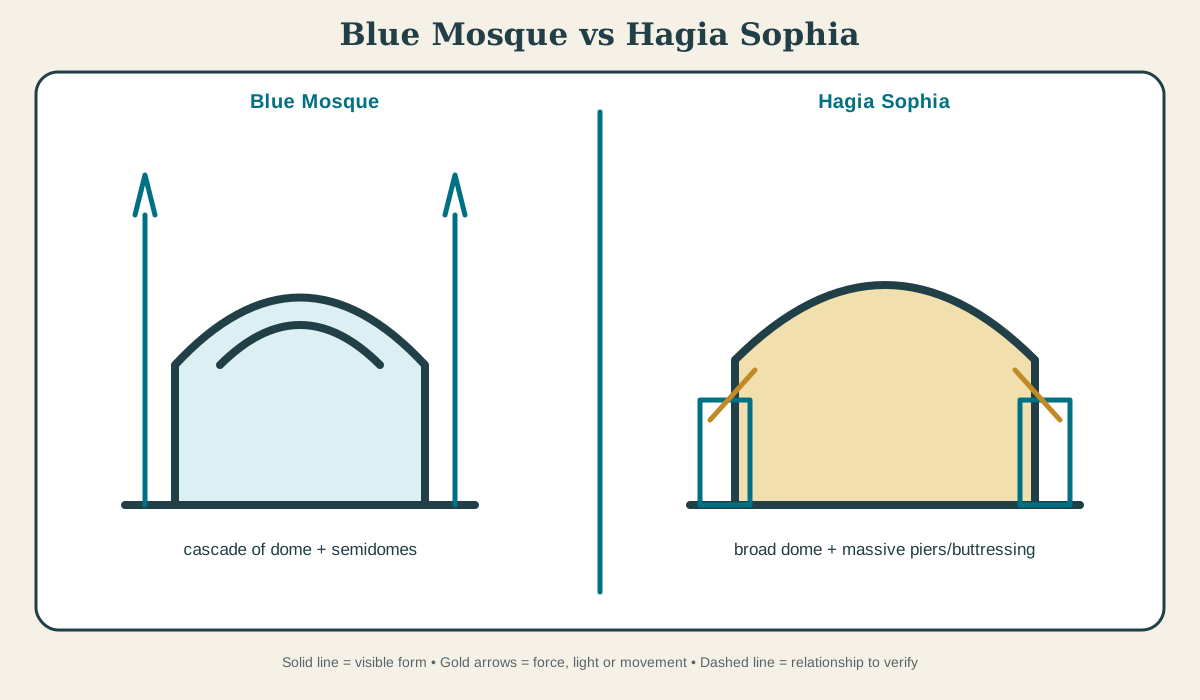
At a Glance
- PeriodBuilt 1609–1617 under Sultan Ahmed I
- Principal purposePurpose-built imperial congregational mosque and complex
- PlanCentralised prayer hall organised by a main dome, semidomes and courtyards
- StructureMasonry piers, arches, semidomes and buttressing in an Ottoman system
- Recognition cueSix minarets, cascade of domes, Iznik tile interiors
Contents
Chronology and commission
Blue Mosque belongs to Built 1609–1617 under Sultan Ahmed I. Its principal purpose in this comparison is purpose-built imperial congregational mosque and complex. Hagia Sophia belongs to Built 532–537 under Justinian I; later Ottoman and modern interventions, and its purpose is cathedral, mosque, museum, then mosque again across distinct political periods. Dates and institutions condition the available labour, materials, rituals, regulations and forms of public address.[1][3]
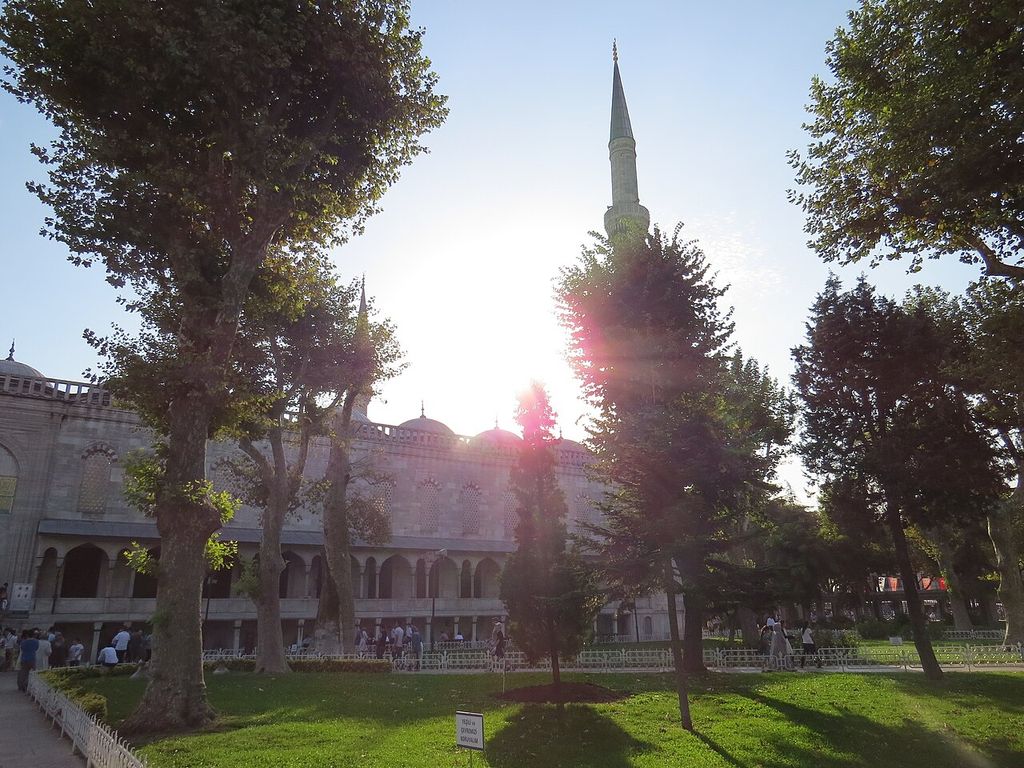
Sultan Ahmed Mosque - Blue Mosque - Istanbul, Turkey (10582544635). Travel Istanbul, Turkey in September 2013, by David Berkowitz. In “Chronology and commission”, this view records the form, material and setting discussed in the passage. Source image dated 2013; that date records the image, not the original construction. David Berkowitz from New York, NY, USA, Sultan Ahmed Mosque - Blue Mosque - Istanbul, Turkey (10582544635); CC BY 2.0. Resized proportionally; no crop, retouch or upscaling.
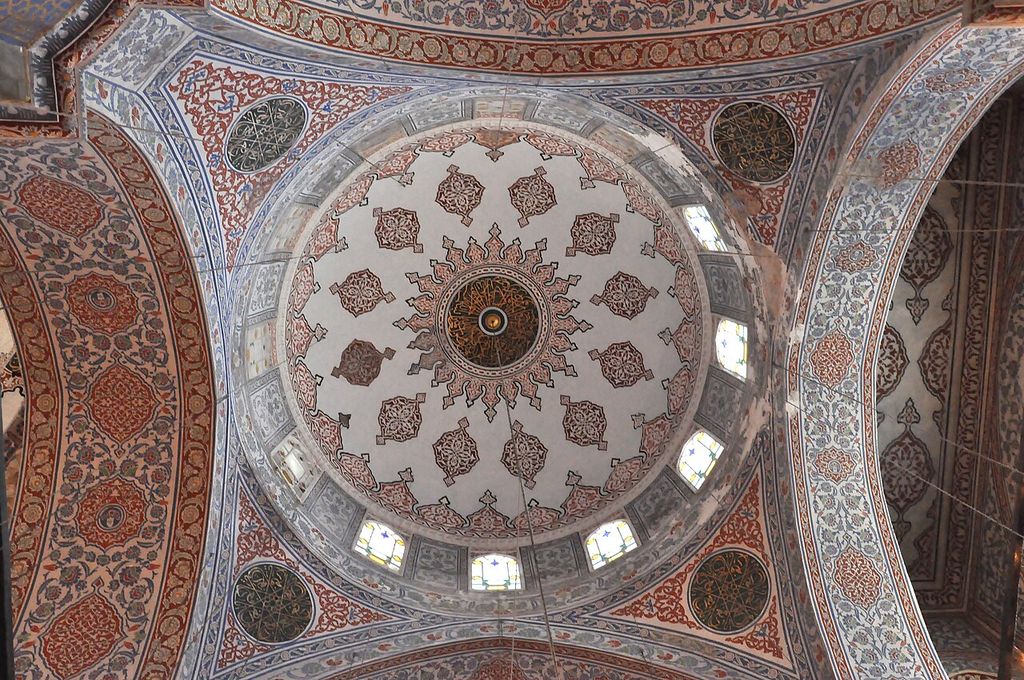
Interior of Blue Mosque in Istanbul, Turkey 002. Dome interior of Sultan Ahmed Mosque in Istanbul , Turkey. In “Chronology and commission”, this view records the form, material and setting discussed in the passage. Source image dated 2012; that date records the image, not the original construction. Moonik, Interior of Blue Mosque in Istanbul, Turkey 002; CC BY-SA 3.0. Resized proportionally; no crop, retouch or upscaling.
Purpose, access and movement
The purpose of Blue Mosque is summarised as purpose-built imperial congregational mosque and complex, while Hagia Sophia is associated with cathedral, mosque, museum, then mosque again across distinct political periods. Neither description means that use was singular or unchanged. Worship, ceremony, work, display, administration, tourism and maintenance can overlap or succeed one another, and conversion may preserve fabric while transforming its meaning.[2][4]
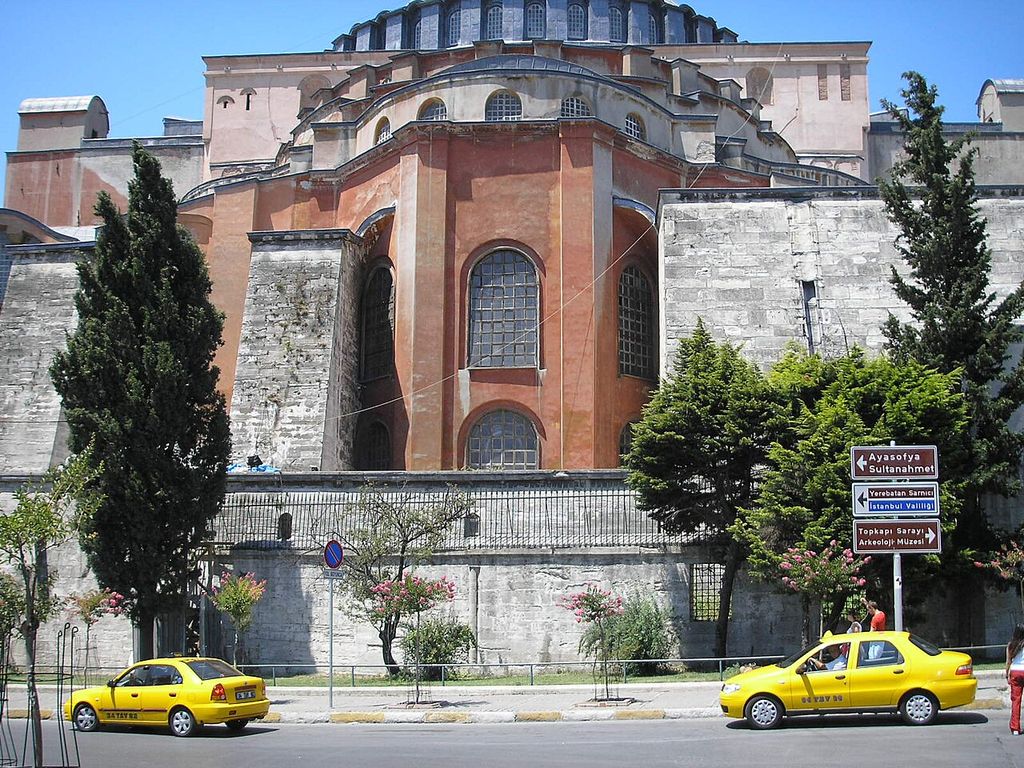
Hagia Sophia exterior 2007 006. The exterior of Hagia Sophia from the backside, next to Topkapi Palace. In “Purpose, access and movement”, this view records the form, material and setting discussed in the passage. Source image dated 2007; that date records the image, not the original construction. Gryffindor, Hagia Sophia exterior 2007 006; Public domain. Resized proportionally; no crop, retouch or upscaling.
Plan makes those differences tangible. Blue Mosque is organised as centralised prayer hall organised by a main dome, semidomes and courtyards; Hagia Sophia as domed basilica combining longitudinal movement with a centralised canopy.
Structure, material and light
For Blue Mosque, the structural summary is masonry piers, arches, semidomes and buttressing in an Ottoman system. For Hagia Sophia, it is pendentives carry the principal dome; semidomes and massive piers distribute loads. These descriptions must be read as complete systems rather than lists of parts. Supports, spans, walls, roofs and foundations work together; applied ornament can echo that work without performing it.[2][3]
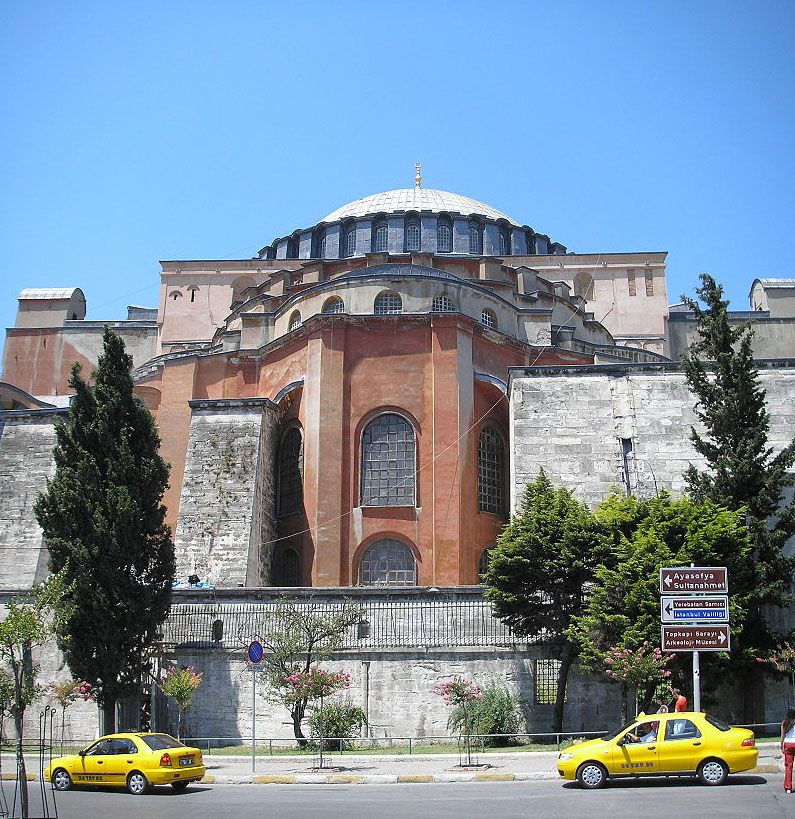
Hagia Sophia exterior 2007 005. The exterior of Hagia Sophia from the backside, next to Topkapi Palace. In “Structure, material and light”, this view records the form, material and setting discussed in the passage. Source image dated 2007; that date records the image, not the original construction. Gryffindor, Hagia Sophia exterior 2007 005; Public domain. Resized proportionally; no crop, retouch or upscaling.
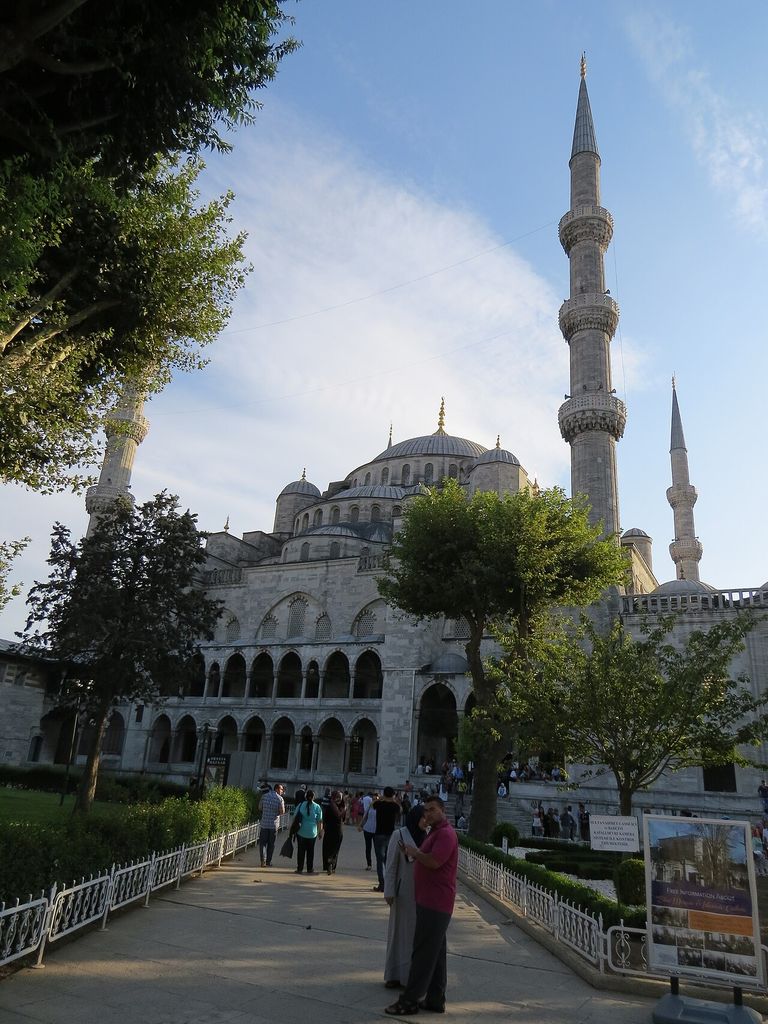
Sultan Ahmed Mosque - Blue Mosque - Istanbul, Turkey (10582542675). Travel Istanbul, Turkey in September 2013, by David Berkowitz. In “Structure, material and light”, this view records the form, material and setting discussed in the passage. Source image dated 2013; that date records the image, not the original construction. David Berkowitz from New York, NY, USA, Sultan Ahmed Mosque - Blue Mosque - Istanbul, Turkey (10582542675); CC BY 2.0. Resized proportionally; no crop, retouch or upscaling.
Material records labour and alteration. Dressing, jointing, lifting, firing, casting, carpentry, finishing and repair constrain what could be built and affect what survives. Wall depth, overhead mass and daylight sources reveal how a visible surface relates to its backing construction.
Light is architectural evidence rather than an atmospheric afterthought. Openings can direct attention, mark ritual or social hierarchy, expose structure and change with later glazing or enclosure.
Recognition and common confusion
The strongest initial cue for Blue Mosque is six minarets, cascade of domes, iznik tile interiors. For Hagia Sophia, look for broad shallow dome, exterior buttressing, galleries and layered christian-islamic fabric. The popular names encourage a façade comparison, but religious use, patronage, sequence, structure and conservation history are essential distinctions.[1][4]
The distinction matters because a visual shorthand can turn unlike historical problems into a style contest. The question is not which side is more advanced, authentic or beautiful, but how different choices produced different spaces and afterlives. A careful comparison can also admit internal diversity: neither subject is exhausted by its most famous example.
Change, conservation and present experience
The surviving appearance of Blue Mosque and Hagia Sophia records maintenance, damage, repair, conversion and changing access as well as original construction. Replacement, structural intervention and modern visitor routes can all obscure original conditions. [3][4]
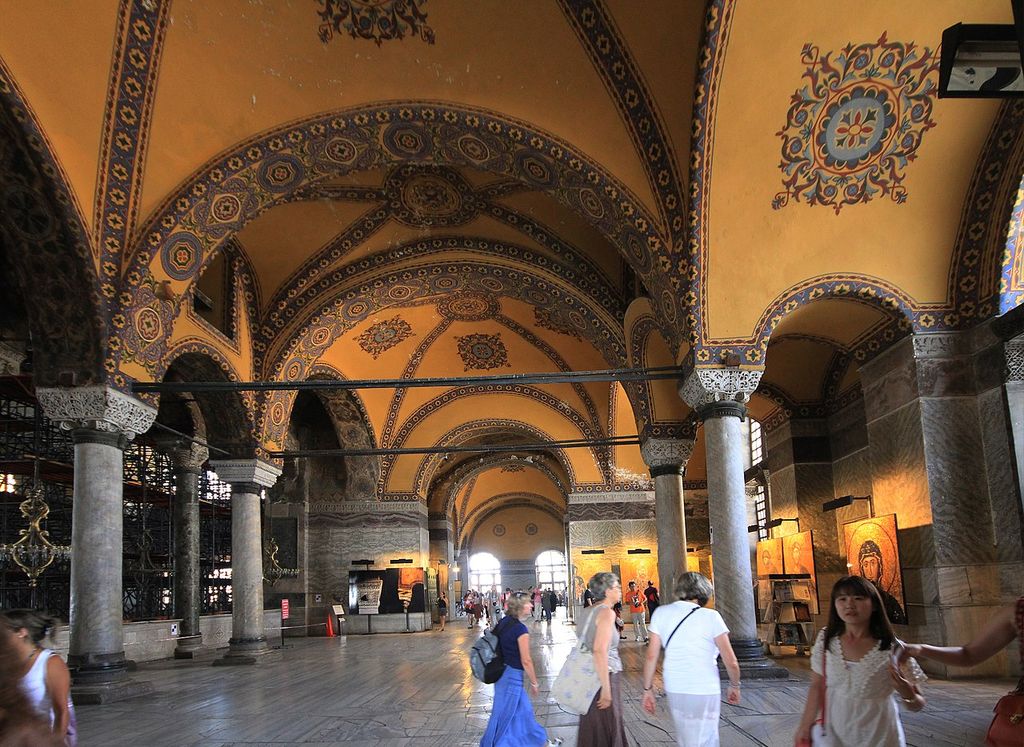
Hagia Sophia Istanbul nave interior. There was a temporary exhibition of pictures, as the originals, across the nave, were out of reach due to restoration. In “Change, conservation and present experience”, this view records the form, material and setting discussed in the passage. Source image dated 2013; that date records the image, not the original construction. Karelj, Hagia Sophia Istanbul nave interior; CC BY 3.0. Resized proportionally; no crop, retouch or upscaling.
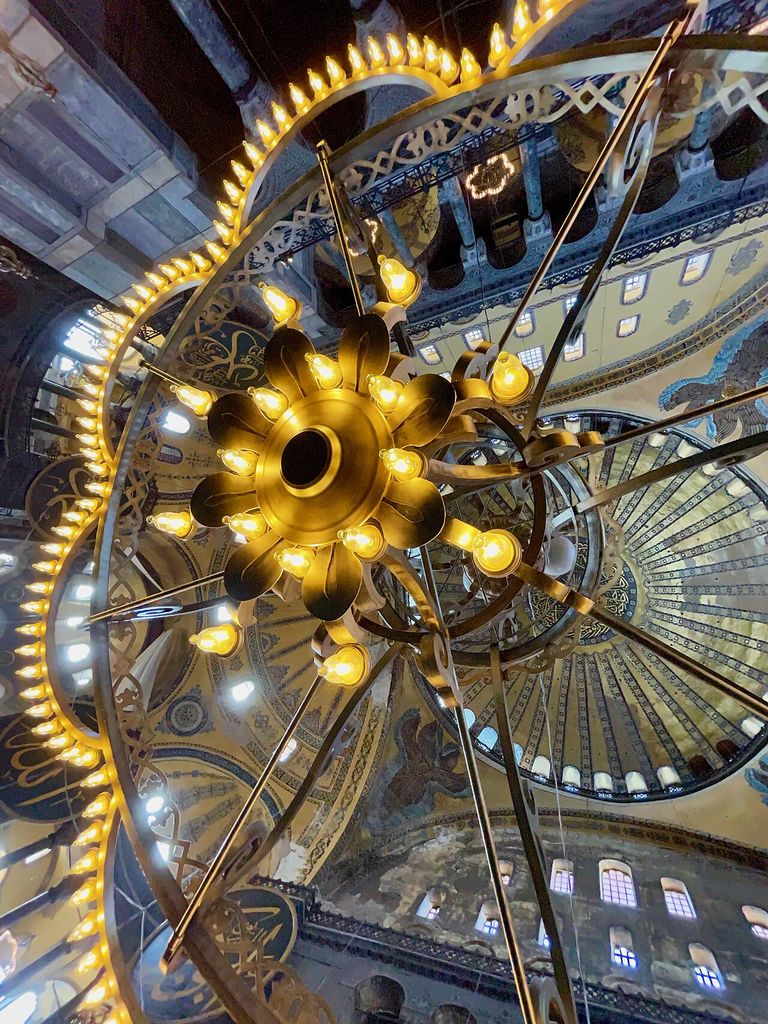
Dome Interior Hagia Sophia, Ayasofya Camii (52366344553). Istanbul, Turkey Hagia Sophia (Ayasofya) is a mosque and cultural site in Istanbul, Turkey. In “Change, conservation and present experience”, this view records the form, material and setting discussed in the passage. Source image dated 2021; that date records the image, not the original construction. Sonse, Dome Interior Hagia Sophia, Ayasofya Camii (52366344553); CC BY 2.0. Resized proportionally; no crop, retouch or upscaling.
What the comparison can teach beyond style
Placing Blue Mosque beside Hagia Sophia opens questions about labour, procurement, access and maintenance that a style label cannot answer. The visible signatures—six minarets, cascade of domes, iznik tile interiors for the former and broad shallow dome, exterior buttressing, galleries and layered christian-islamic fabric for the latter—were made possible by particular materials, skills and institutions. Their costs and difficulties continued after completion through repair, conversion and stewardship.
The most useful conclusion is therefore not a ranking. It is an account of how two different commissions coordinated purpose, plan, structure, light and public image. [1][4]
Interpreting construction without determinism
The construction of Blue Mosque—masonry piers, arches, semidomes and buttressing in an Ottoman system—made some spans, surfaces and maintenance practices feasible; the construction of Hagia Sophia—pendentives carry the principal dome; semidomes and massive piers distribute loads—created a different set of possibilities. Material does not dictate meaning, however. Patronage, ritual, regulation, craft organisation and available knowledge shaped how those systems were selected and presented.[2][4]
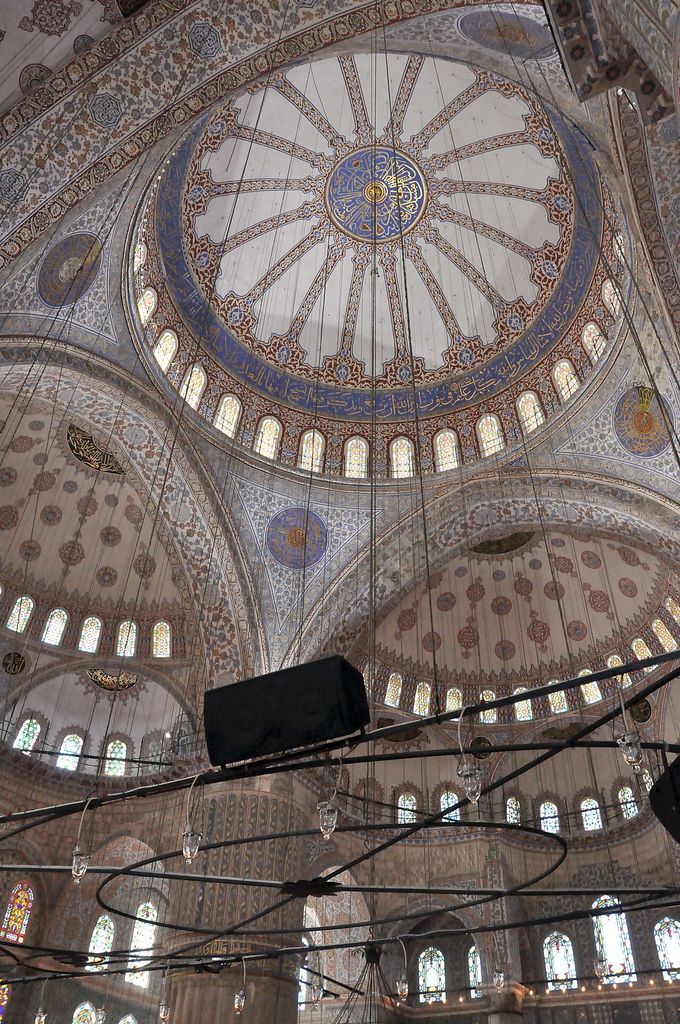
Interior of Blue Mosque in Istanbul, Turkey 001. Dome interior of Sultan Ahmed I Mosque in Istanbul , Turkey. In “Interpreting construction without determinism”, this view records the form, material and setting discussed in the passage. Source image dated 2012; that date records the image, not the original construction. Moonik, Interior of Blue Mosque in Istanbul, Turkey 001; CC BY-SA 3.0. Resized proportionally; no crop, retouch or upscaling.
Nor should later technology be described automatically as progress. A different structural solution may answer a different programme, resource base or desired experience. In the Blue Mosque–Hagia Sophia comparison, the structural contrast becomes clearest when it reveals the route from support to span, the admission of light and the relation between exterior image and interior volume—not when it turns two historically distant works into contestants in a single engineering race.
Watch: Three Ways to Read Blue Mosque vs Hagia Sophia
Choose Blue at the Center of Empire, Hagia Sophia, Istanbul or Sinan, Süleymaniye Mosque. Together, the films connect architectural form with material, use and historical setting.
Blue at the Center of Empire
A short, site-specific account of the Sultan Ahmed Mosque’s imperial and urban setting.
Watch on YouTubeFrequently Asked Questions
The Blue Mosque is an early seventeenth-century Ottoman congregational mosque designed within Istanbul’s imperial mosque tradition; Hagia Sophia began as a sixth-century Byzantine cathedral, was converted into a mosque, later became a museum, and now functions again as a mosque. Their neighbouring domed silhouettes reflect dialogue across time, not a shared original date or purpose.
They share recognisable visual or historical categories, but the popular names encourage a façade comparison, but religious use, patronage, sequence, structure and conservation history are essential distinctions. The grouping is useful only when date, purpose, plan and construction are then compared separately.
Start with the principal dates—Built 1609–1617 under Sultan Ahmed I and Built 532–537 under Justinian I; later Ottoman and modern interventions—then compare plan and structure. Those categories are less vulnerable than a style label to photographic resemblance or later restoration.
No. Resemblance can suggest a research question, but influence requires chronology and a plausible route of transmission such as travel, drawings, texts, training or direct knowledge. Independent responses to similar problems remain possible.
Name the campaign being described. Current appearance, original design and later intervention may all be important, but they are different claims and should not be merged into one timeless image.
Discussion
Using a plan or section rather than an iconic façade alone, which single difference between the pair most changes your interpretation? Identify the evidence and distinguish observation from a sourced historical claim.
Reader Insights
Name the material, joint, opening or route you can observe.
Give the building, place, approximate date and a reliable source.
Separate documented history from your interpretation.
Join the Conversation
Share a concise observation or useful source below.
References
- UNESCO World Heritage Centre. “Historic Areas of Istanbul.” View source
- Smarthistory. “Hagia Sophia, Istanbul.” View source
- Smarthistory. “Hagia Sophia as a mosque.” View source
- Smarthistory. “Common types of mosque architecture.” View source
- Encyclopaedia Britannica. “Blue Mosque.” View source
- DergiPark / Turkish Archaeology and Ethnography Journal. “Mimari Gelişimde, Mekân Olgusu Üzerinden Tarihi Bir Sentez—Aya Sofya.” View source
- DergiPark / Sanat Tarihi Dergisi. “Sinan’ın Camilerinde Yapı Mühendisliği Sanatı.” View source
- DergiPark / Restoration and Conservation Studies. “Kubbe Bezemeleri Koruma ve Onarım Uygulamaları: Ayasofya.” View source
- Erdem / DergiPark. “Arşiv Belgelerine Göre Sultan Ahmed Külliyesi ve İnşâsı.” View source
Explore RELATED Architecture
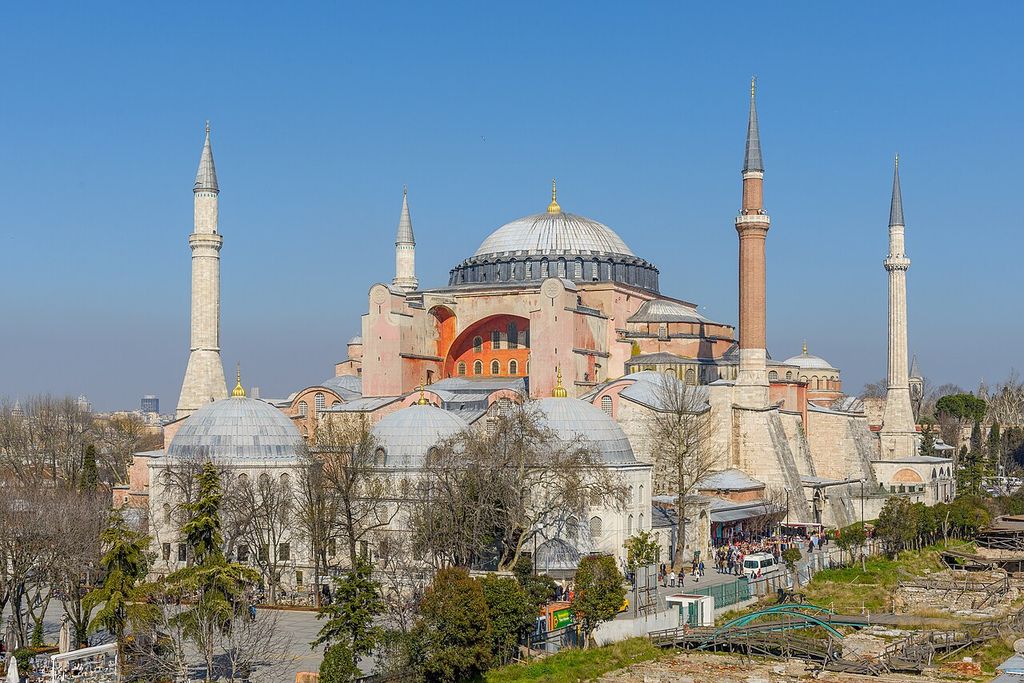
Hagia Sophia
a direct next step for the form, period, building type or case study discussed here.
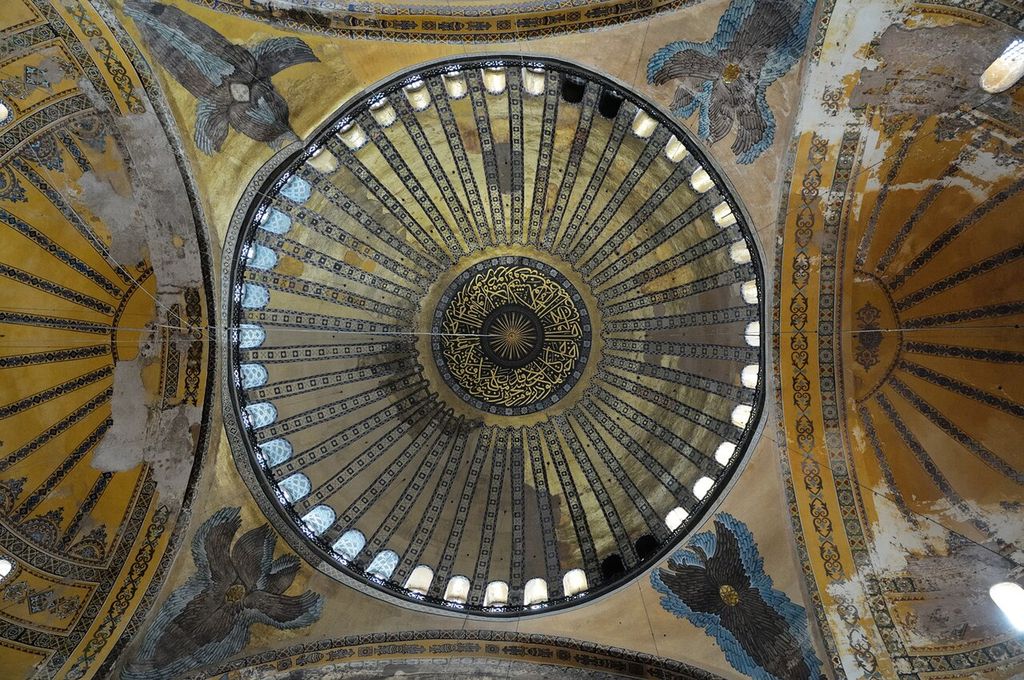
Ottoman Architecture
a direct next step for the form, period, building type or case study discussed here.
Byzantine Architecture
a direct next step for the form, period, building type or case study discussed here.
Islamic Architecture
a direct next step for the form, period, building type or case study discussed here.
Mosques
a direct next step for the form, period, building type or case study discussed here.
Domes
a direct next step for the form, period, building type or case study discussed here.
Pendentives and Squinches
a direct next step for the form, period, building type or case study discussed here.
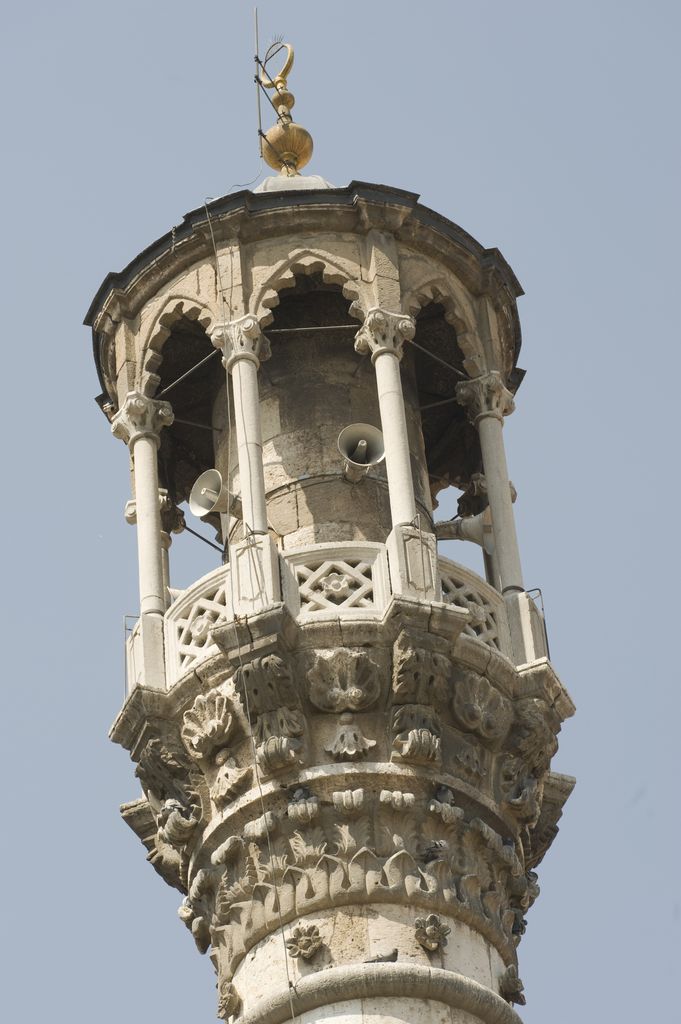
Minaret
a direct next step for the form, period, building type or case study discussed here.