


 by Tom Gurney
Tom Gurney BSc (Hons) is an art history expert with over 20 years experience
Email: tomgurney1@gmail.com / Phone: +44 7429 011000
The short answer
Both are steel-framed Art Deco skyscrapers completed in New York at the start of the 1930s, but the Chrysler Building culminates in a highly ornamental stainless-steel crown while the taller Empire State Building uses a broader, more repetitive commercial mass and stepped tower capped by a mast. The resemblance implied by the familiar names or silhouettes is therefore a prompt for comparison, not evidence that the buildings or traditions belong to one design family.[1][2]
The most reliable method is to compare like with like: date with date, purpose with purpose, plan with plan, structure with structure, and present condition with documented earlier phases. Only after those categories are established should ornament or atmosphere carry interpretive weight. That order prevents a celebrated photograph from replacing architectural evidence.
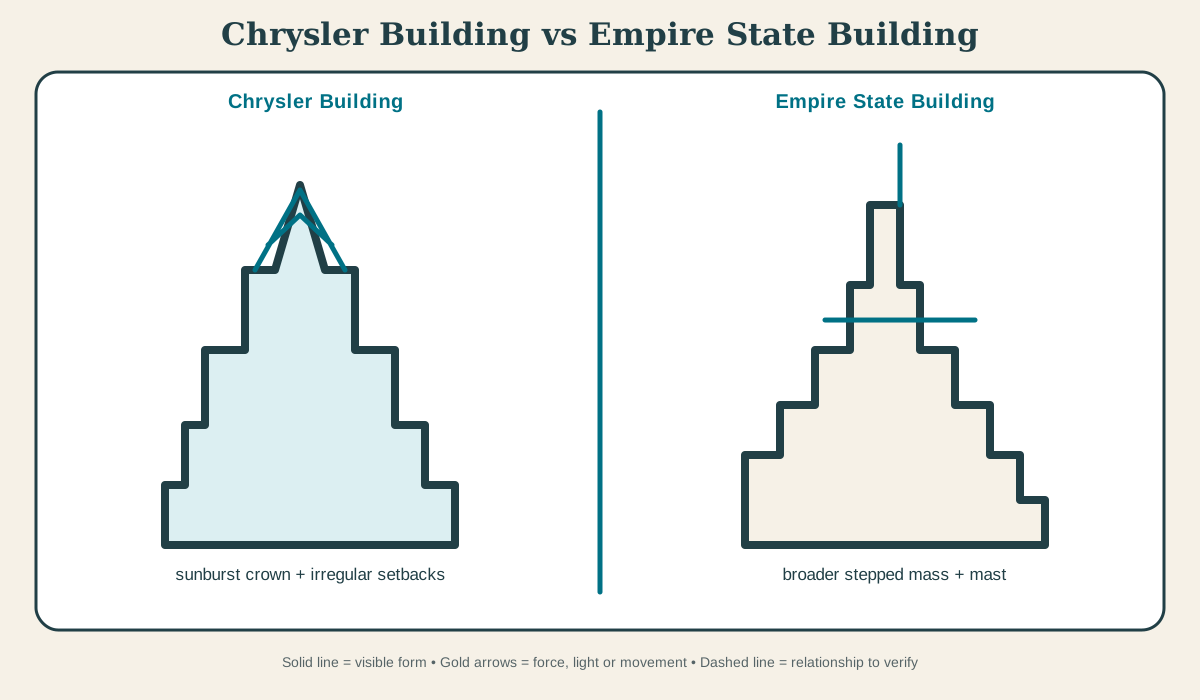
At a Glance
- PeriodDesigned by William Van Alen; completed 1930
- Principal purposeOffice tower commissioned by Walter P. Chrysler
- PlanIrregular lot and multiple zoning setbacks above a masonry-clad base
- StructureSteel frame with brick and decorative metal cladding
- Recognition cueTriangular windows, sunburst crown, hubcaps and eagle gargoyles
Contents
Chronology and commission
Chrysler Building belongs to Designed by William Van Alen; completed 1930. Its principal purpose in this comparison is office tower commissioned by walter p. chrysler. Empire State Building belongs to Designed by Shreve, Lamb & Harmon; completed 1931, and its purpose is speculative office tower developed by empire state, inc.. Dates and institutions condition the available labour, materials, rituals, regulations and forms of public address.[1][3]
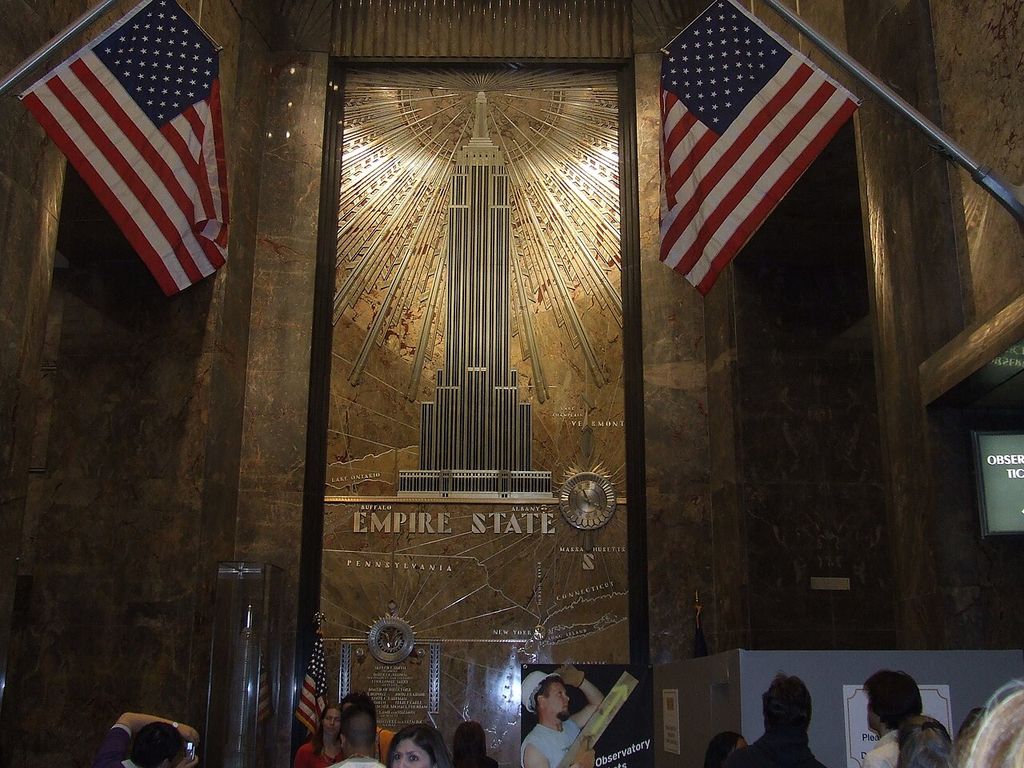
Empire State Building lobby 0439New York City Detail. In “Chronology and commission”, this view records the form, material and setting discussed in the passage. Source image dated 2007; that date records the image, not the original construction. Laslovarga, Empire State Building lobby 0439New York City Detail; CC BY-SA 3.0. Resized proportionally; no crop, retouch or upscaling.
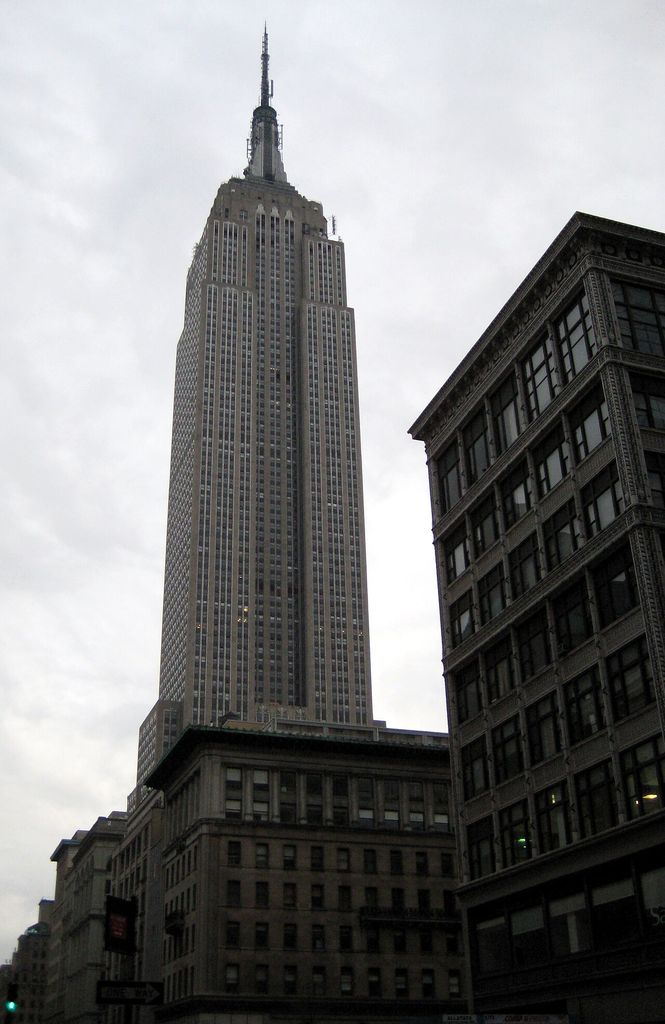
Empire State Building Mar 2008. The Empire State Building, during a cloudy day. In “Chronology and commission”, this view records the form, material and setting discussed in the passage. Source image dated 2008; that date records the image, not the original construction. Umbrella Man, Empire State Building Mar 2008; Public domain. Resized proportionally; no crop, retouch or upscaling.
Purpose, access and movement
The purpose of Chrysler Building is summarised as office tower commissioned by walter p. chrysler, while Empire State Building is associated with speculative office tower developed by empire state, inc.. Neither description means that use was singular or unchanged. Worship, ceremony, work, display, administration, tourism and maintenance can overlap or succeed one another, and conversion may preserve fabric while transforming its meaning.[2][4]
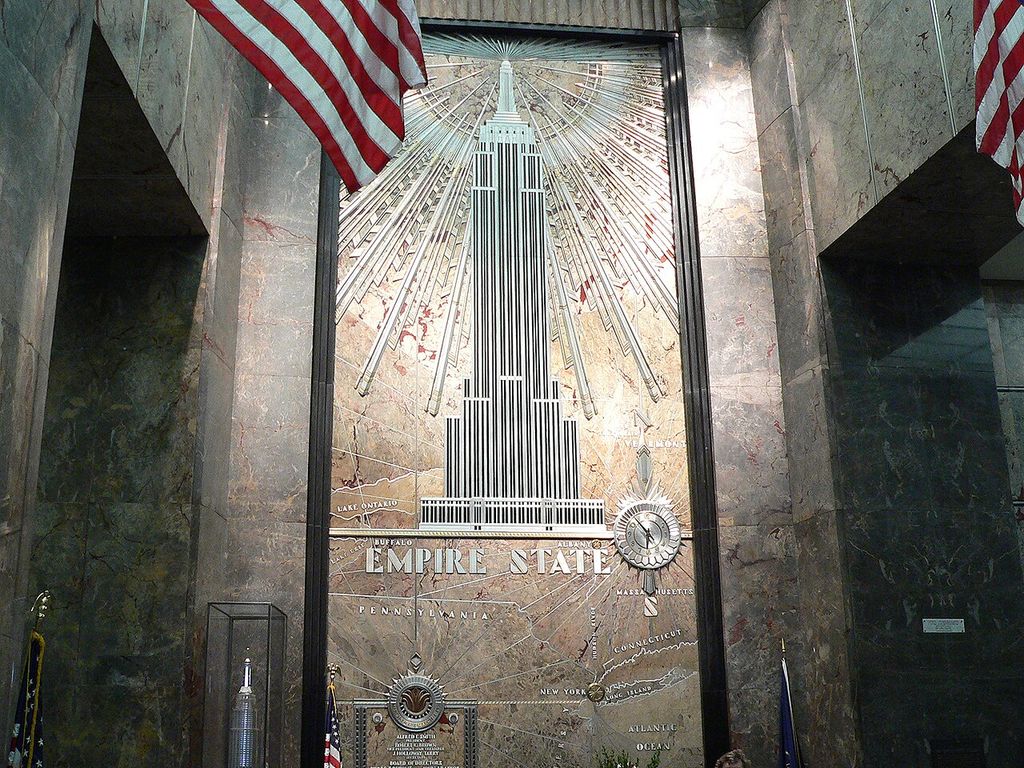
Empire State Lobby-27527. The entrance lobby of the Empire State Building . In “Purpose, access and movement”, this view records the form, material and setting discussed in the passage. Source image dated 2005; that date records the image, not the original construction. Ken Thomas, Empire State Lobby-27527; Public domain. Resized proportionally; no crop, retouch or upscaling.
Plan makes those differences tangible. Chrysler Building is organised as irregular lot and multiple zoning setbacks above a masonry-clad base; Empire State Building as large full-block base narrowing through disciplined setbacks.
Structure, material and light
For Chrysler Building, the structural summary is steel frame with brick and decorative metal cladding. For Empire State Building, it is steel frame erected at exceptional speed with limestone-and-metal exterior. These descriptions must be read as complete systems rather than lists of parts. Supports, spans, walls, roofs and foundations work together; applied ornament can echo that work without performing it.[2][3]
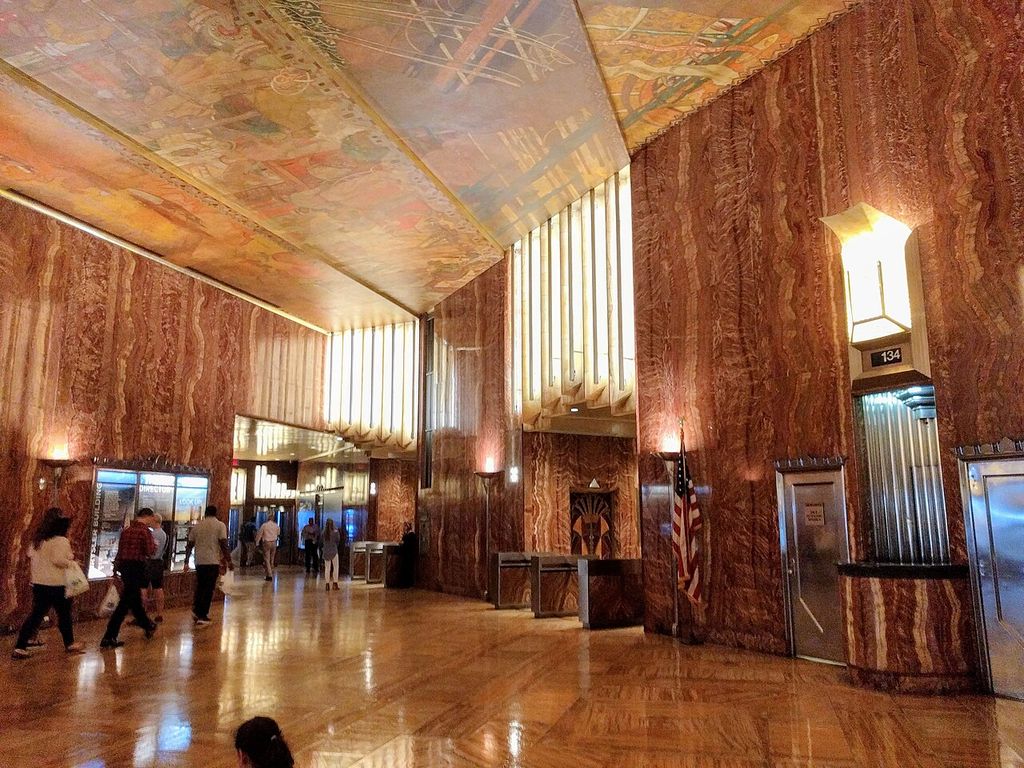
Chrysler Building lobby. Lobby of the Chrysler Building in Manhattan, New York City, New York, United States. In “Structure, material and light”, this view records the form, material and setting discussed in the passage. Source image dated 2017; that date records the image, not the original construction. Sdkb, Chrysler Building lobby; CC BY-SA 4.0. Resized proportionally; no crop, retouch or upscaling.
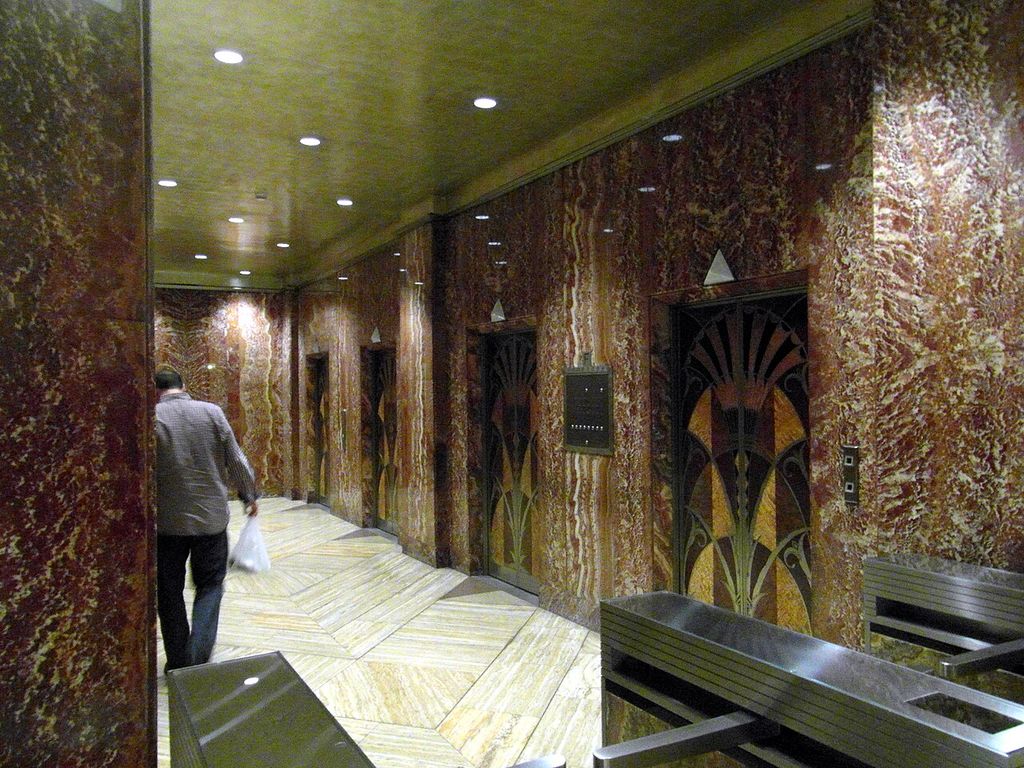
The Chrysler Building Lobby elevators. 405 Lexington Avenue, New York. In “Structure, material and light”, this view records the form, material and setting discussed in the passage. Source image dated 2012; that date records the image, not the original construction. Reading Tom from Reading, UK, The Chrysler Building Lobby elevators; CC BY 2.0. Resized proportionally; no crop, retouch or upscaling.
Material records labour and alteration. Dressing, jointing, lifting, firing, casting, carpentry, finishing and repair constrain what could be built and affect what survives. Wall depth, overhead mass and daylight sources reveal how a visible surface relates to its backing construction.
Light is architectural evidence rather than an atmospheric afterthought. Openings can direct attention, mark ritual or social hierarchy, expose structure and change with later glazing or enclosure.
Recognition and common confusion
The strongest initial cue for Chrysler Building is triangular windows, sunburst crown, hubcaps and eagle gargoyles. For Empire State Building, look for paired windows, vertical piers, stepped silhouette and broadcast mast. “Art Deco” describes a shared period vocabulary, not identical design logic; height records and antenna measurements also depend on the definition used.[1][4]
The distinction matters because a visual shorthand can turn unlike historical problems into a style contest. The question is not which side is more advanced, authentic or beautiful, but how different choices produced different spaces and afterlives. A careful comparison can also admit internal diversity: neither subject is exhausted by its most famous example.
Change, conservation and present experience
The surviving appearance of Chrysler Building and Empire State Building records maintenance, damage, repair, conversion and changing access as well as original construction. Replacement, structural intervention and modern visitor routes can all obscure original conditions. [3][4]
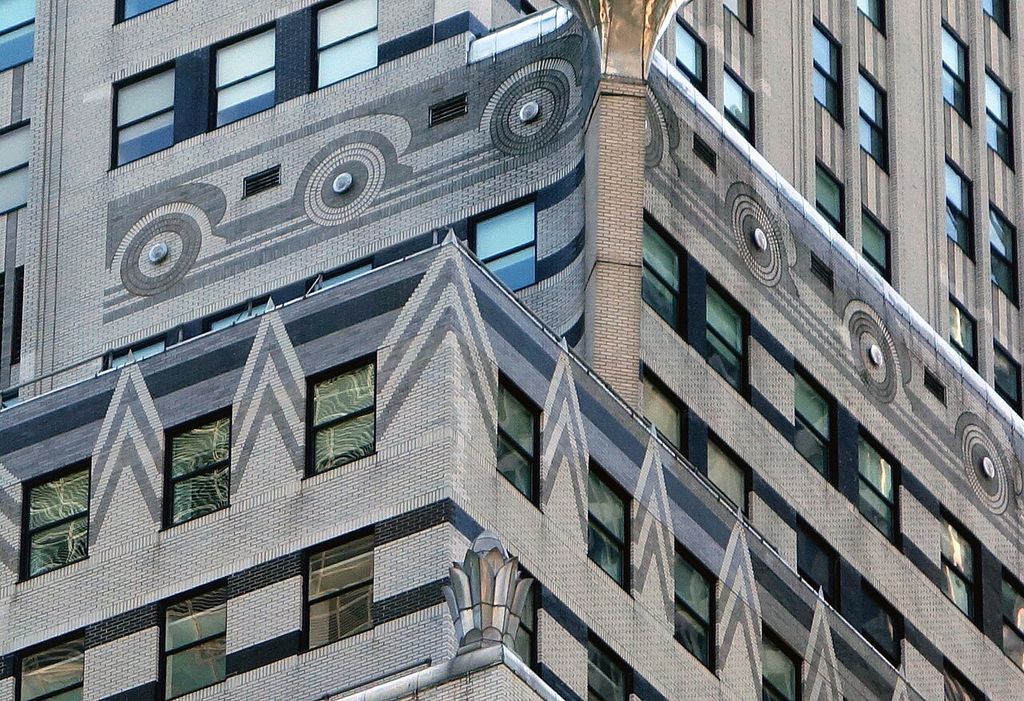
Chrysler Building motifs detail. Scarcely visible from the ground, these automobile friezes are on the last two stages of the 31 stories of ziggurat plinths that clad the central tower on three sides. In “Change, conservation and present experience”, this view helps identify chrysler Building exterior crown. Source image dated 2014; that date records the image, not the original construction. cogito ergo imago from Rumson, NJ, Chrysler Building motifs detail; CC BY-SA 2.0. Resized proportionally; no crop, retouch or upscaling.
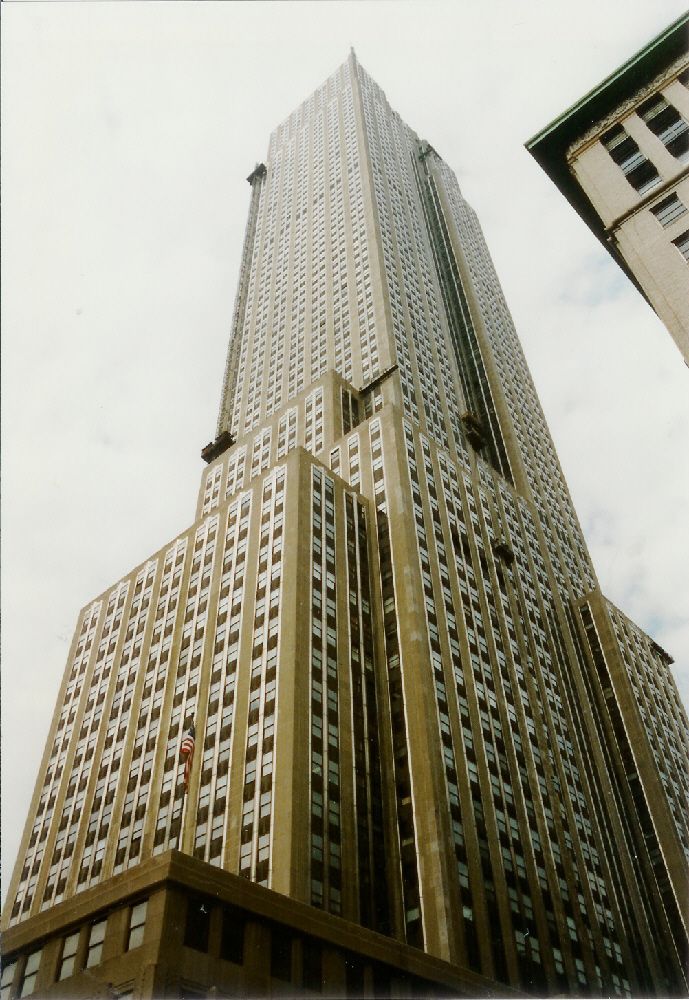
Empire State Building Summer 1997. Empire State Building from bottom, Manhattan, New York. In “Change, conservation and present experience”, this view records the form, material and setting discussed in the passage. Source image dated 1997; that date records the image, not the original construction. Stilfehler 17:38, 31 October 2007 (CET), Empire State Building Summer 1997; CC BY-SA 1.0. Resized proportionally; no crop, retouch or upscaling.
What the comparison can teach beyond style
Placing Chrysler Building beside Empire State Building opens questions about labour, procurement, access and maintenance that a style label cannot answer. The visible signatures—triangular windows, sunburst crown, hubcaps and eagle gargoyles for the former and paired windows, vertical piers, stepped silhouette and broadcast mast for the latter—were made possible by particular materials, skills and institutions. Their costs and difficulties continued after completion through repair, conversion and stewardship.
The most useful conclusion is therefore not a ranking. It is an account of how two different commissions coordinated purpose, plan, structure, light and public image. [1][4]
Interpreting construction without determinism
The construction of Chrysler Building—steel frame with brick and decorative metal cladding—made some spans, surfaces and maintenance practices feasible; the construction of Empire State Building—steel frame erected at exceptional speed with limestone-and-metal exterior—created a different set of possibilities. Material does not dictate meaning, however. Patronage, ritual, regulation, craft organisation and available knowledge shaped how those systems were selected and presented.[2][4]
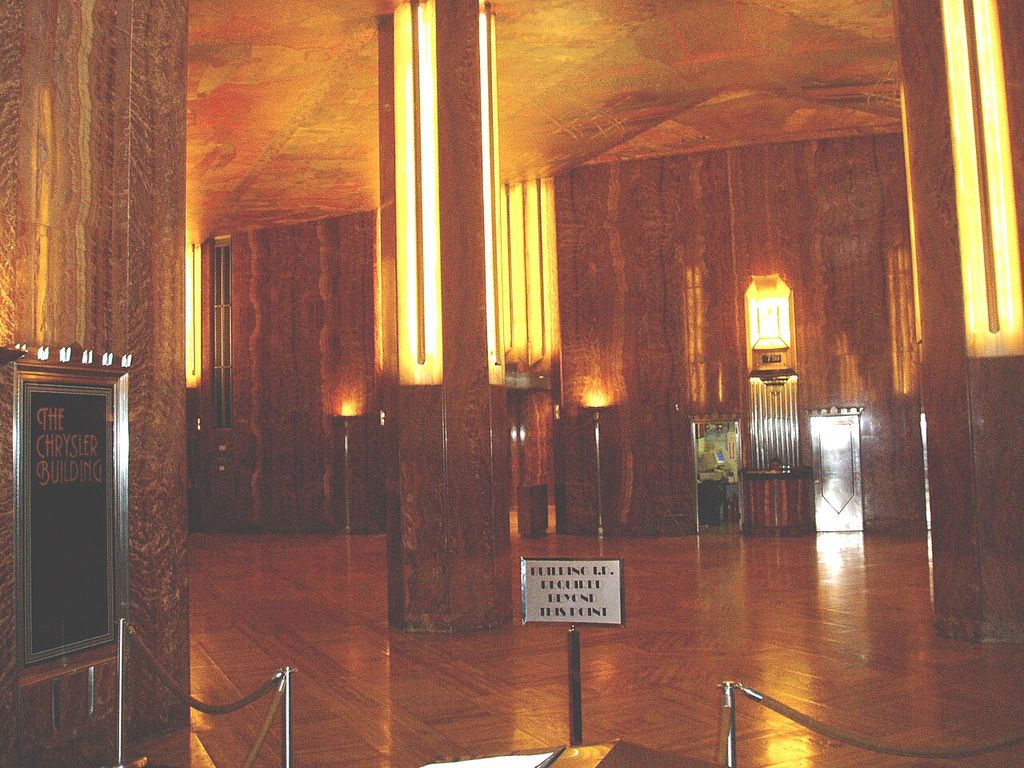
Chrysler lobby. Picture taken by BigMac on September 9, 2005. In “Interpreting construction without determinism”, this view records the form, material and setting discussed in the passage. Source image dated 2005; that date records the image, not the original construction. BigMacSC99 at English Wikipedia, Chrysler lobby; CC BY-SA 3.0. Resized proportionally; no crop, retouch or upscaling.
Nor should later technology be described automatically as progress. A different structural solution may answer a different programme, resource base or desired experience. In the Chrysler Building–Empire State Building comparison, the structural contrast becomes clearest when it reveals the route from support to span, the admission of light and the relation between exterior image and interior volume—not when it turns two historically distant works into contestants in a single engineering race.
Watch: Three Ways to Read Chrysler Building vs Empire State Building
Choose Architect Breaks Down Secret Details of the Chrysler Building, The Secret History of the Empire State Building or Why Nobody Wants the Chrysler Building. Together, the films connect architectural form with material, use and historical setting.
Architect Breaks Down Secret Details of the Chrysler Building
Uses the building itself to explain Van Alen’s setbacks, metal crown and automotive ornament.
Watch on YouTubeFrequently Asked Questions
Both are steel-framed Art Deco skyscrapers completed in New York at the start of the 1930s, but the Chrysler Building culminates in a highly ornamental stainless-steel crown while the taller Empire State Building uses a broader, more repetitive commercial mass and stepped tower capped by a mast.
They share recognisable visual or historical categories, but “Art Deco” describes a shared period vocabulary, not identical design logic; height records and antenna measurements also depend on the definition used. The grouping is useful only when date, purpose, plan and construction are then compared separately.
Start with the principal dates—Designed by William Van Alen; completed 1930 and Designed by Shreve, Lamb & Harmon; completed 1931—then compare plan and structure. Those categories are less vulnerable than a style label to photographic resemblance or later restoration.
No. Resemblance can suggest a research question, but influence requires chronology and a plausible route of transmission such as travel, drawings, texts, training or direct knowledge. Independent responses to similar problems remain possible.
Name the campaign being described. Current appearance, original design and later intervention may all be important, but they are different claims and should not be merged into one timeless image.
Discussion
Using a plan or section rather than an iconic façade alone, which single difference between the pair most changes your interpretation? Identify the evidence and distinguish observation from a sourced historical claim.
Reader Insights
Name the material, joint, opening or route you can observe.
Give the building, place, approximate date and a reliable source.
Separate documented history from your interpretation.
Join the Conversation
Share a concise observation or useful source below.
References
- New York City Landmarks Preservation Commission. “Chrysler Building Designation Report.” View source
- New York City Landmarks Preservation Commission. “Empire State Building Designation Report.” View source
- National Park Service. “Chrysler Building National Historic Landmark documentation.” View source
- National Park Service. “Empire State Building National Historic Landmark documentation.” View source
- Empire State Realty Trust. “Empire State Building history.” View source
- Smarthistory. “The rise of the skyscraper.” View source
- Columbia University Libraries. “How the City Now Controls Development of Realty.” View source
- USModernist Architecture Magazine Library. “Architectural Forum: engineering the Empire State Building.” View source
- New York City Landmarks Preservation Commission. “Empire State Building interior designation report.” View source
- Columbia GSAPP. “Dissertations in Architecture.” View source
Explore RELATED Architecture
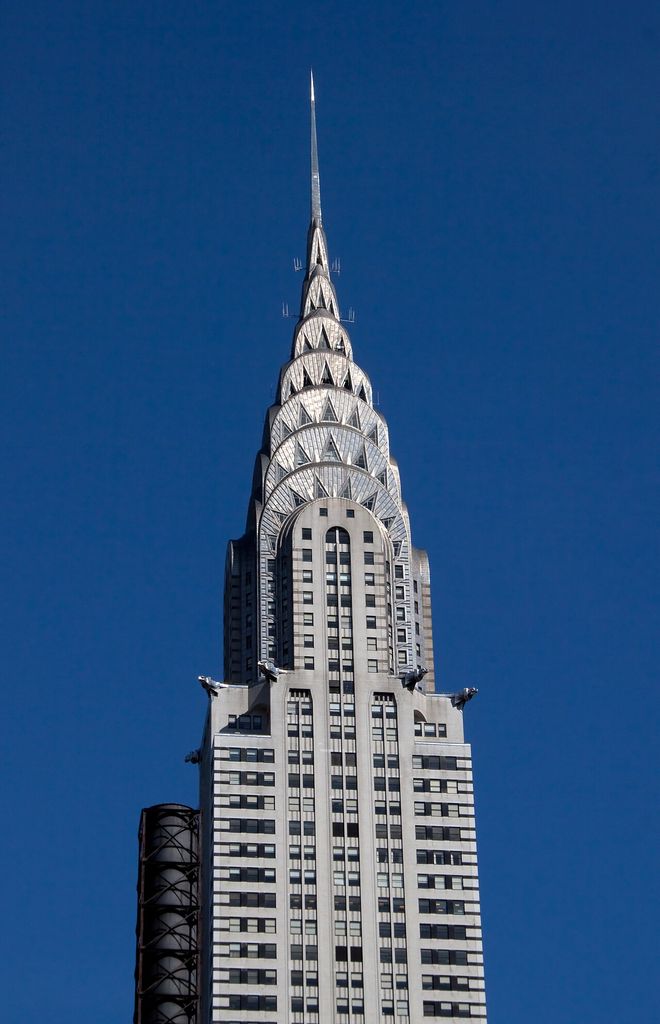
Chrysler Building
a direct next step for the form, period, building type or case study discussed here.
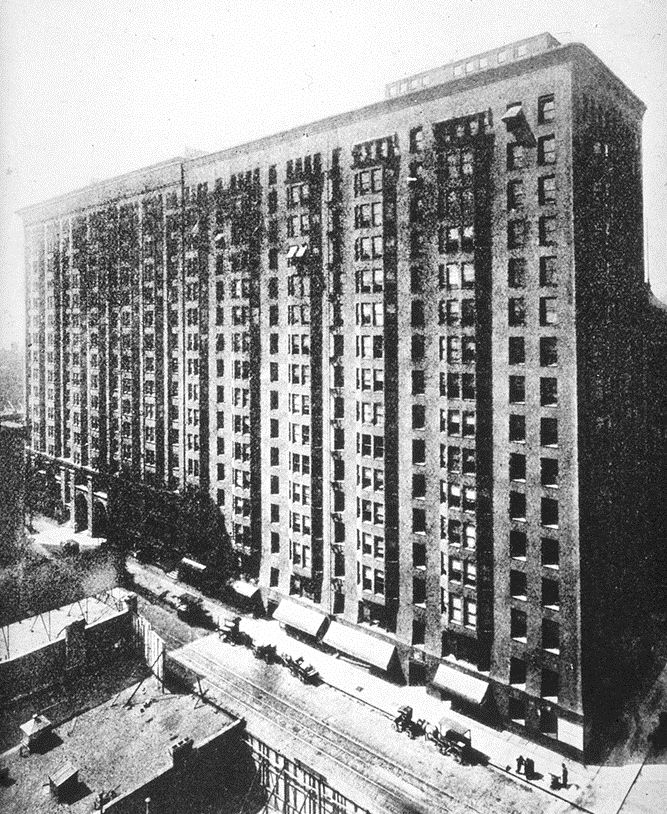
Early Skyscrapers
a direct next step for the form, period, building type or case study discussed here.
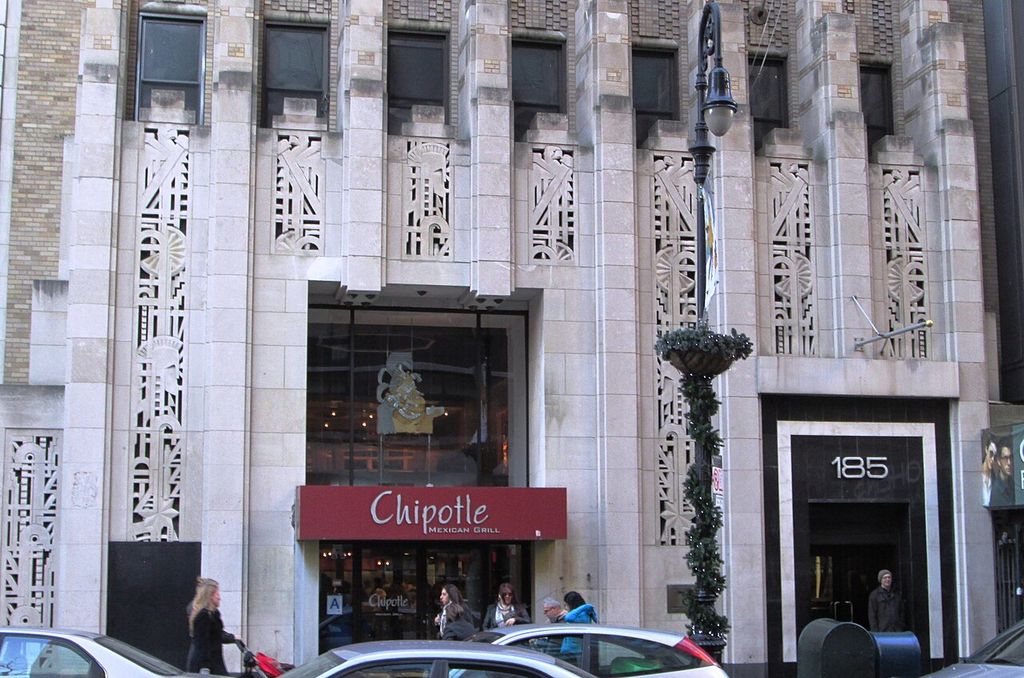
Art Deco
a direct next step for the form, period, building type or case study discussed here.
Facade
a direct next step for the form, period, building type or case study discussed here.
Louis Sullivan
a direct next step for the form, period, building type or case study discussed here.
Beaux-Arts
a direct next step for the form, period, building type or case study discussed here.
Art Nouveau
a direct next step for the form, period, building type or case study discussed here.
Civic Buildings
a direct next step for the form, period, building type or case study discussed here.