


 by Tom Gurney
Tom Gurney BSc (Hons) is an art history expert with over 20 years experience
Email: tomgurney1@gmail.com / Phone: +44 7429 011000
Definition and first recognition
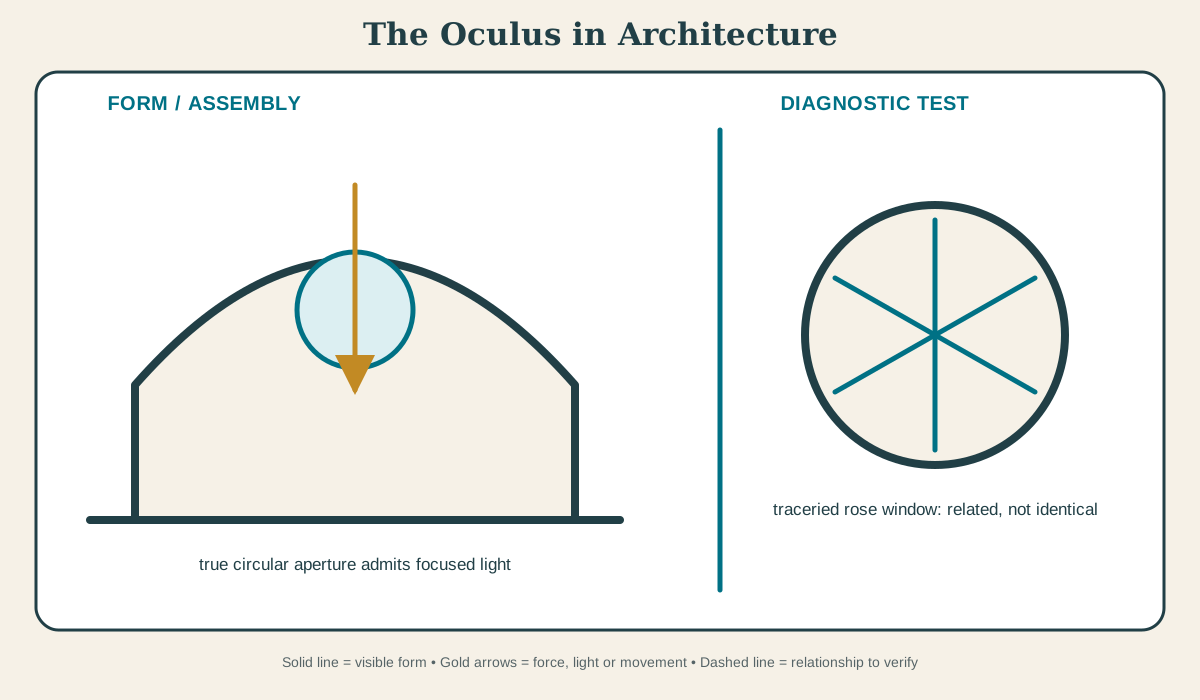
The oculus is a circular opening or window in a wall, vault or dome. Identify a true round aperture and ask whether it is glazed, open, structural, decorative or part of tracery. [1][2]
At a Glance
- Basic meaninga circular opening or window in a wall, vault or dome
- Recognition cueIdentify a true round aperture and ask whether it is glazed, open, structural, decorative or part of tracery.
- Principal roleIt brings focused light and ventilation, relieves or articulates a surface, and can establish a powerful visual centre.
- Historical developmentCircular openings appeared in Roman domes and walls, medieval façades and Renaissance centralised compositions, ranging from unglazed apertures to elaborate windows.
- Main cautionA rose window normally contains elaborate tracery and glazing; an oculus can be much simpler and may remain open to the sky.
Contents
What the oculus does
It brings focused light and ventilation, relieves or articulates a surface, and can establish a powerful visual centre. This explains the complete opening, not the condition of a particular window or roof junction. Frames, glass, flashings and concealed fixings are frequently renewed and must be dated separately from the aperture.[2][3]
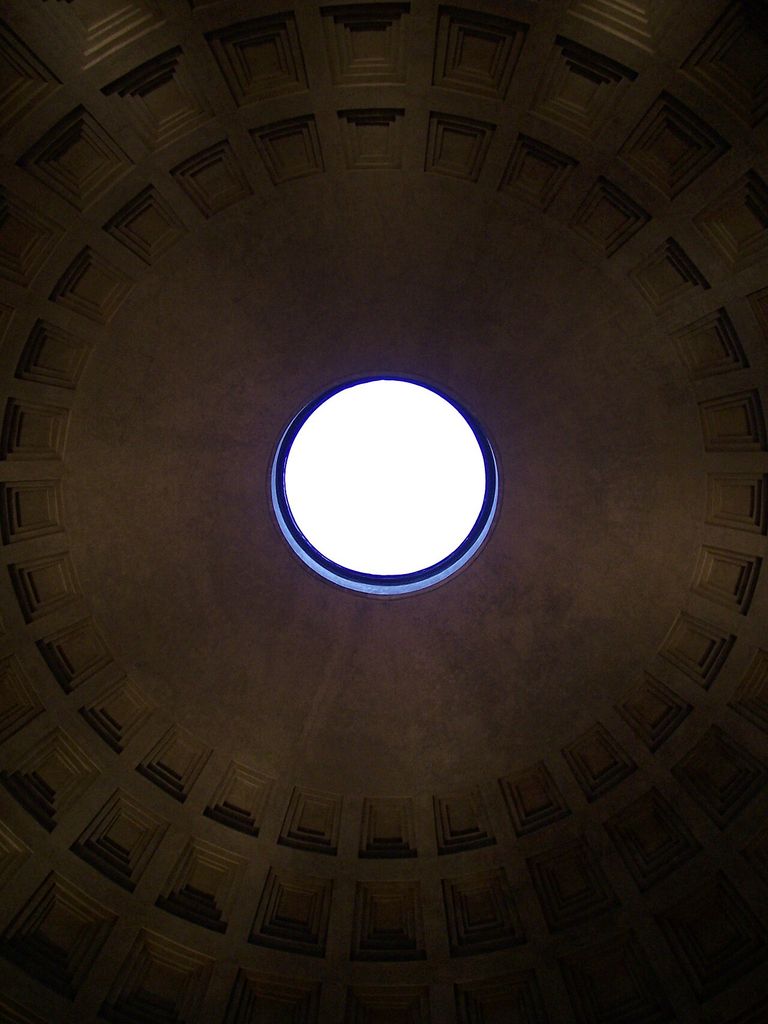
Pantheon Oculus 001. Pantheon Oculus, Rome. In “What the oculus does”, this view records the form, material and setting discussed in the passage. Source image dated 2005; that date records the image, not the original construction. Jericho, Pantheon Oculus 001; CC BY-SA 3.0. Resized proportionally; no crop, retouch or upscaling.
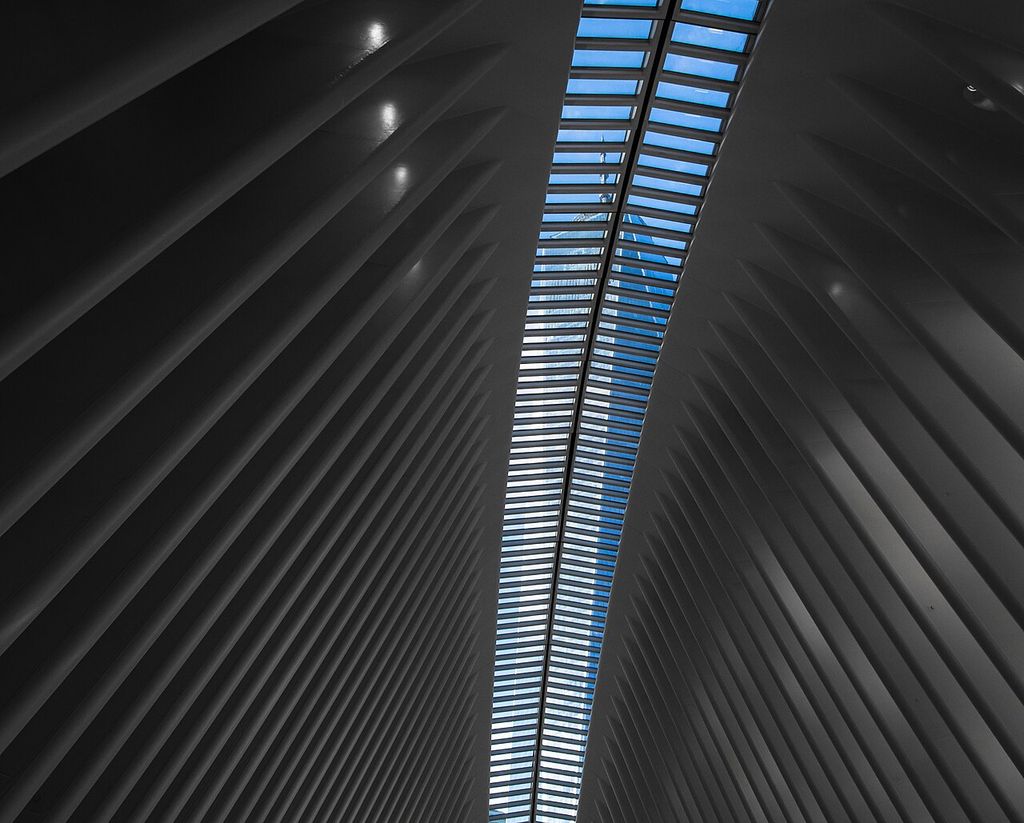
One World Trade Center through the Oculus (91538). One World Trade Center viewed through the ceiling window of the Oculus (World Trade Center station). In “What the oculus does”, this view records the form, material and setting discussed in the passage. Source image dated 2017; that date records the image, not the original construction. Rhododendrites, One World Trade Center through the Oculus (91538); CC BY-SA 4.0. Resized proportionally; no crop, retouch or upscaling.
An oculus is a circular opening in a wall, vault or dome. It may be open, glazed, filled with tracery or blind. In a dome it removes material at the crown and can act as the compression ring around which shell forces resolve; in a façade it is primarily an opening within a wall system. An opening is also a weather joint. Sills, drips, leadwork, putty, flashings and the interface with the wall determine whether rain is shed or trapped. Replacement units that alter these small relationships may change both durability and the depth of daylight inside.
Historical development
Roman builders used circular apertures most famously at the Pantheon. Medieval façades developed round windows into traceried roses, while Renaissance designers revived the plain oculus as part of centralized and classically ordered compositions. Neoclassical and modern buildings use it for focused top light or as a geometric emblem. Openings are routinely renewed because glass, frames, flashings and roof coverings weather faster than the walls around them. A medieval opening may contain a later frame and modern glazing; a revival façade may reproduce an older profile with industrial materials. The history belongs to the whole opening and its successive campaigns, not to the outline alone.[2][3]
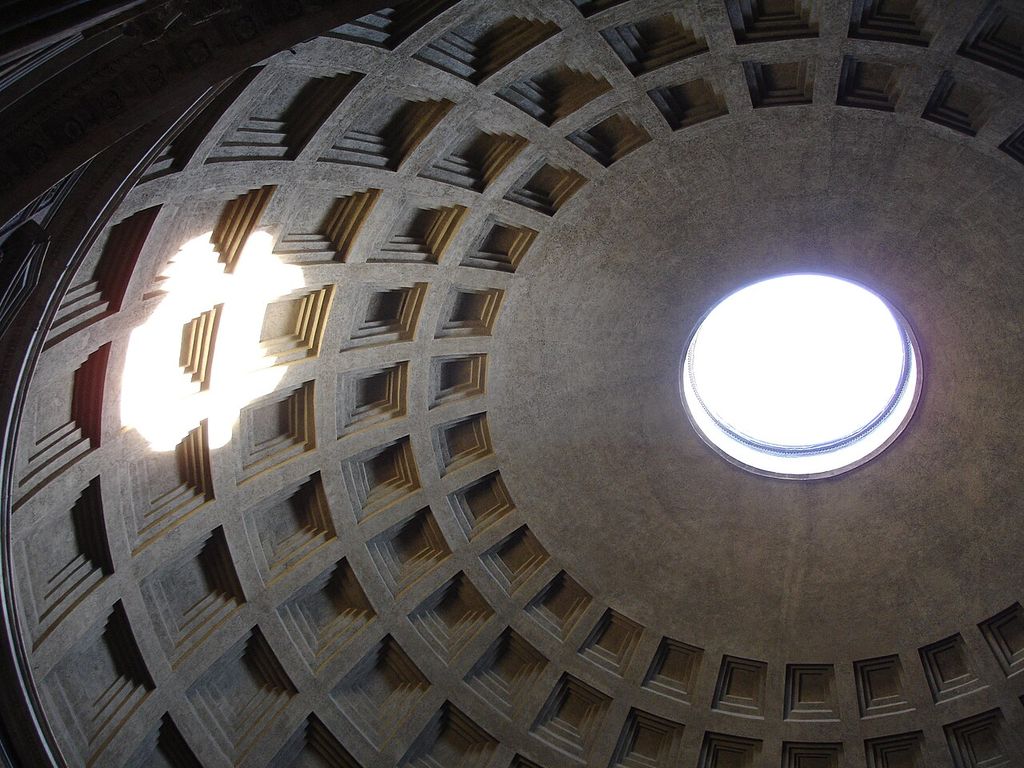
Pantheon oculus. Pantheon dome(Oculus). In “Historical development”, this view records the form, material and setting discussed in the passage. Source image dated 2008; that date records the image, not the original construction. Poepoe, Pantheon oculus; CC BY-SA 3.0. Resized proportionally; no crop, retouch or upscaling.
Terminology and common confusions
An oculus is the broad category of circular opening and may remain open to the sky. A rose window is normally glazed and elaborated with tracery, so the two terms should not be treated as interchangeable. [1][3]
Conservation and alteration
Historic openings should be repaired where practicable because profiles, glass and hardware carry evidence. Thermal improvement must consider ventilation, condensation and external appearance as a system. Replacement based only on a distant elevation can lose section, shadow and material character.[4] Repair can renew glass, putty, cames, frames, flashings and sill details while retaining an older aperture. The date and material of each layer should be recorded, because small changes affect daylight, ventilation and rain shedding.[3][4]
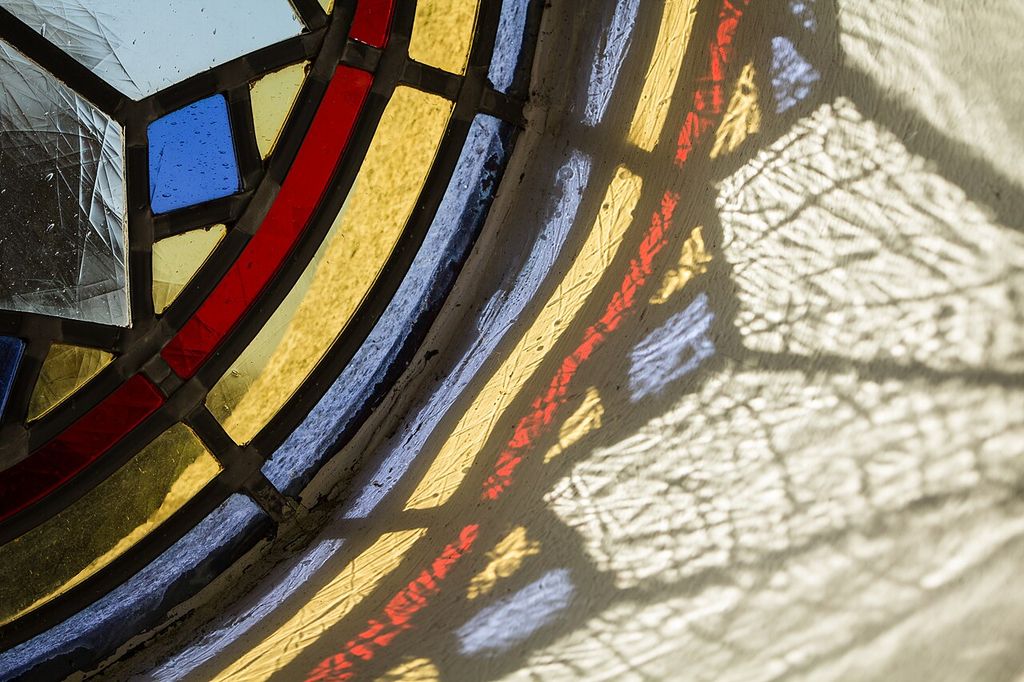
Oculus at St. Luzia church in Engelgau, Nettersheim, Eifel -0864. Detail and light reflex of Oculus at St. In “Conservation and alteration”, this view helps identify architectural oculus window. Source image dated 2015; that date records the image, not the original construction. Elke Wetzig, Oculus at St. Luzia church in Engelgau, Nettersheim, Eifel -0864; CC BY-SA 4.0. Resized proportionally; no crop, retouch or upscaling.
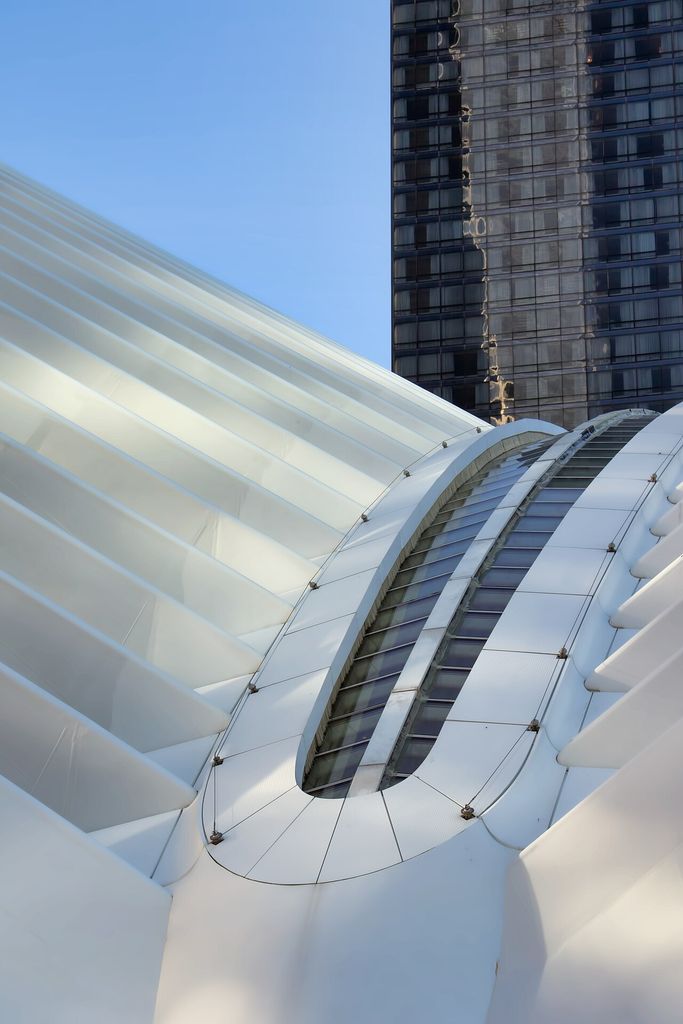
Oculus windows - Flickr - Travels with Kathleen. World Trade Center Transportation Center, designed by Santiago Calatrava, New York. In “Conservation and alteration”, this view records the form, material and setting discussed in the passage. Source image dated 2019; that date records the image, not the original construction. Kathleen, Oculus windows - Flickr - Travels with Kathleen; CC BY 2.0. Resized proportionally; no crop, retouch or upscaling.
Condition records should map water entry, frame distortion, glazing, ventilation and interior moisture over time. This can support targeted repair without replacing historically significant fabric merely because it is weathered. Conservation is included here as historical evidence: repair changes the object presented to readers and may reveal relationships that a supposedly pristine image conceals.
Examples for Further Study
The examples below show how the form changes across periods, materials and settings.
| Building or setting | Evidence to examine | Variant | Source |
|---|---|---|---|
| Pantheon | An open nine-metre oculus is the rotunda’s principal direct light source and the crown of its concrete dome. Show the opening in its full wall or roof context. | open dome oculus | Reference 5 |
| Romanesque façade | A small circular window punctuates masonry before the full development of rose tracery. Compare projection, frame and reveal in section. | glazed wall oculus | Reference 6 |
| Renaissance dome | A central opening may be surmounted by a lantern rather than left exposed. Use glazing and fixing evidence to separate campaigns. | rose-window precursor | Reference 5 |
| Federal Hall | A concealed dome and oculus produce an interior classical reference not obvious outside. Let the different daylight or outlook problem test the terminology. | blind oculus | Reference 6 |
What the oculus reveals about the building
At Renaissance dome, a central opening may be surmounted by a lantern rather than left exposed. At Federal Hall, a concealed dome and oculus produce an interior classical reference not obvious outside. Together, these cases show that the oculus is not a detachable motif: it participates in material, access, environmental control, structure or display according to its setting.[1][4]
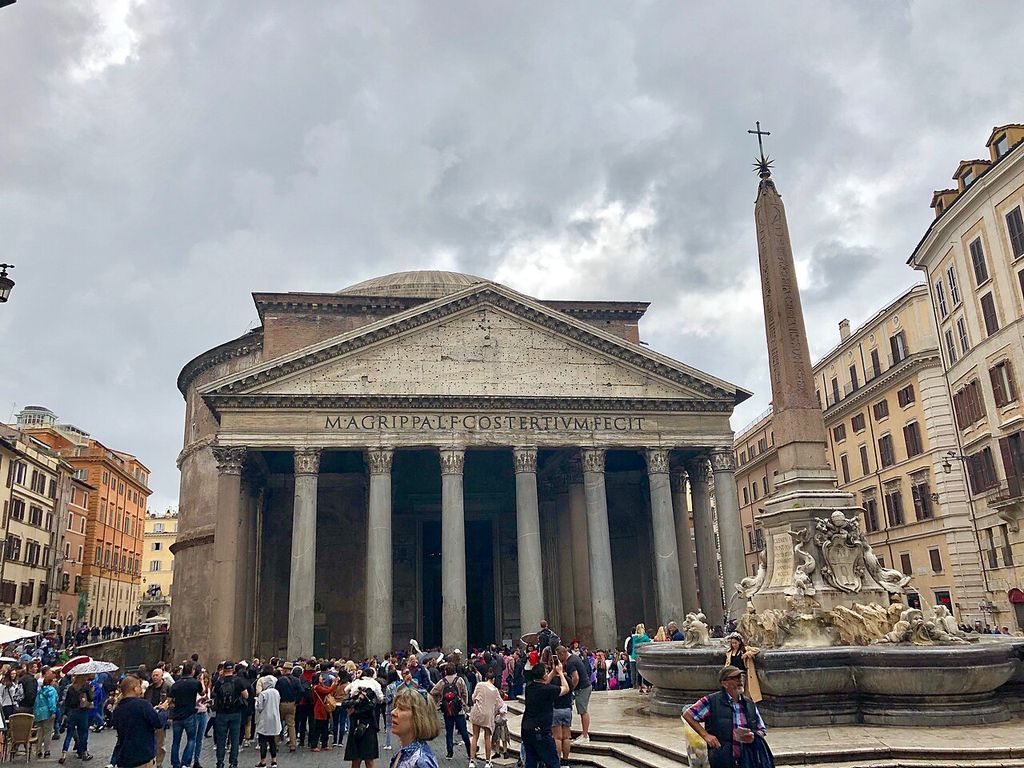
Pantheon, Roma, LZ, IT. The Pantheon, or Pantheum, is one of the greatest extant Architectural works built by the ancient Roman Empire, standing in the Piazza della Rotonda in the city of Rome, Italy. In “What the oculus reveals about the building”, this view helps identify renaissance church oculus. Source image dated 2019; that date records the image, not the original construction. Warren LeMay, Pantheon, Roma, LZ, IT; CC0. Resized proportionally; no crop, retouch or upscaling.
Comparing the oculus examples
Pantheon and Romanesque façade illustrate distinct settings: an open nine-metre oculus is the rotunda’s principal direct light source and the crown of its concrete dome. By contrast, a small circular window punctuates masonry before the full development of rose tracery. Renaissance dome differs because a central opening may be surmounted by a lantern rather than left exposed. Finally, Federal Hall shows that a concealed dome and oculus produce an interior classical reference not obvious outside.[4][6]
Watch: Three Ways to Read The Oculus in Architecture
Choose What Is an Oculus?, The Pantheon or How Domes Work. Together, the films connect architectural form with material, use and historical setting.
What Is an Oculus?
Compares the Pantheon’s open oculus with painted and glazed circular features, exposing a common terminology trap.
Watch on YouTubeFrequently Asked Questions
A circular opening or window in a wall, vault or dome.
Identify a true round aperture and ask whether it is glazed, open, structural, decorative or part of tracery. Confirm the identification by checking depth, joints, material and position in a plan or section.
Not necessarily. Historic examples may carry load, protect an edge, manage water or organise space, while later versions can preserve the appearance as applied ornament. The surrounding assembly determines the answer.
No. Shape can narrow a comparison, but revivals, reuse and repair allow the same form to appear in different periods. Documents and material evidence are needed for a defensible date.
Record the complete assembly and diagnose water, movement, corrosion, decay and earlier intervention before replacing visible fabric. Safety-critical decisions require a qualified professional and a building-specific survey.
Discussion
Find a documented example of the oculus in architecture. Which joint, section or sign of alteration most changes what a façade photograph alone seems to show? Cite the source and separate observation from inference.
Reader Insights
Name the material, joint, opening or route you can observe.
Give the building, place, approximate date and a reliable source.
Separate documented history from your interpretation.
Join the Conversation
Share a concise observation or useful source below.
References
- Hastings Borough Council. “Glossary of architectural terms.” View source
- Getty Research Institute. “Art & Architecture Thesaurus.” View source
- Francis D. K. Ching. “A Visual Dictionary of Architecture, 2nd edition.” View source
- Smarthistory. “The Pantheon.” View source
- Smarthistory. “Federal Hall National Memorial.” View source
- U.S. National Park Service. “Best Practices in Stone Building Preservation Management.” View source
- Brussels-Capital Region Heritage Inventory. “Lucarne: illustrated glossary.” View source
- Brussels-Capital Region Heritage Inventory. “Meneau.” View source
- Brussels-Capital Region Heritage Inventory. “Logette, oriel.” View source
- Edinburgh Research Archive. “Development of the window in Ireland c.1560–1860, with implications for conservation.” View source
- Sapienza University of Rome. “Intrados of the dome of the Pantheon—Oculus survey dataset.” View source
Explore RELATED Architecture
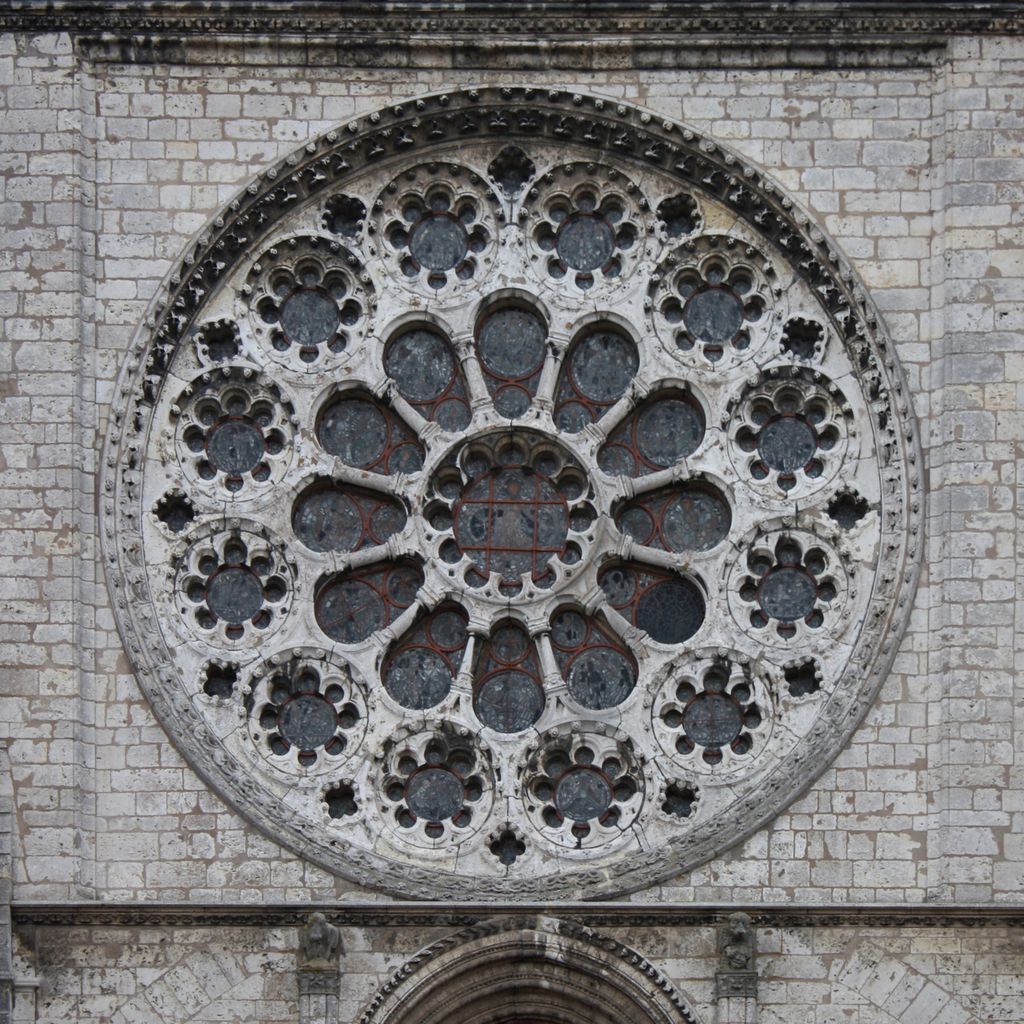
Gothic Tracery
further context for oculus.
Rose Window
further context for oculus.
Clerestory
further context for oculus.
Facade
further context for oculus.
Gable
further context for oculus.
Gothic Architecture
further context for oculus.
Tudor Architecture
further context for oculus.
Victorian Architecture
further context for oculus.