


 by Tom Gurney
Tom Gurney BSc (Hons) is an art history expert with over 20 years experience
Email: tomgurney1@gmail.com / Phone: +44 7429 011000
Definition and first recognition
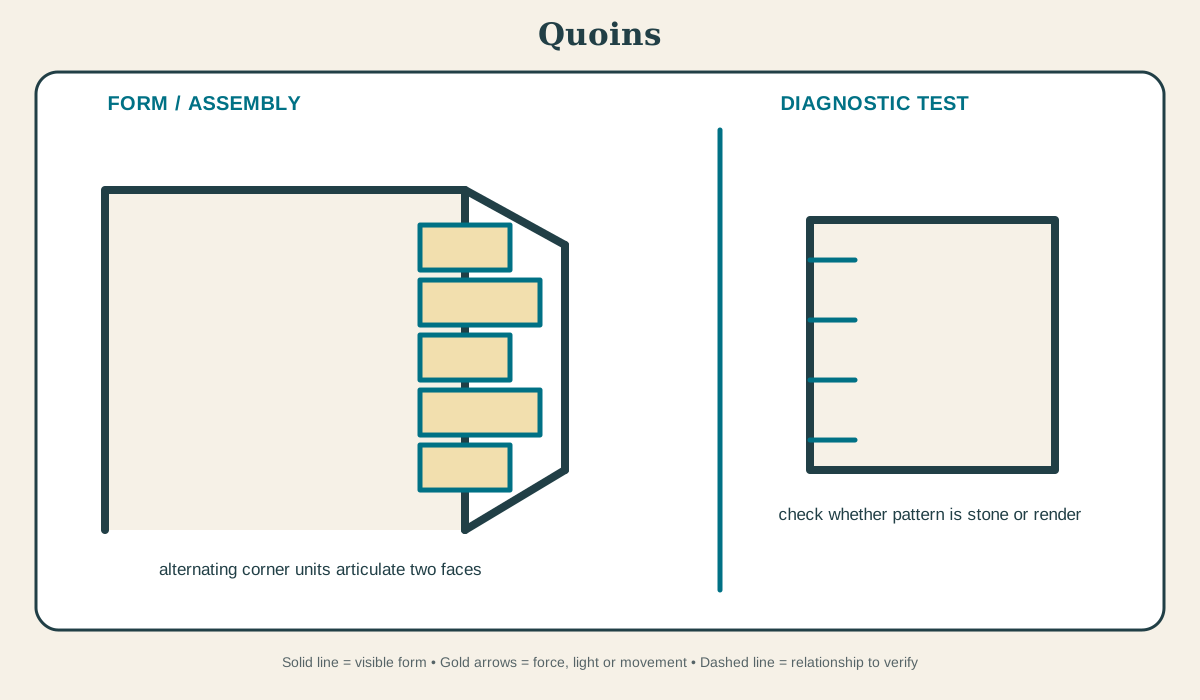
The quoin is a masonry unit or expressed treatment at the external corner of a building. Read the corner for alternating long-and-short blocks, contrasting material, raised bands or scored imitation. [1][2]
At a Glance
- Basic meaninga masonry unit or expressed treatment at the external corner of a building
- Recognition cueRead the corner for alternating long-and-short blocks, contrasting material, raised bands or scored imitation.
- Principal roleQuoins can bond wall faces, protect a vulnerable corner and make edges visually legible.
- Historical developmentDistinct corner units grew from practical masonry bonding and became a powerful visual convention in Renaissance palaces, Georgian houses and revival architecture, sometimes executed only in render.
- Main cautionCorner stones are structural facts; “quoins” often refers to their deliberately differentiated visual treatment.
Contents
What the quoin does
Quoins can bond wall faces, protect a vulnerable corner and make edges visually legible. This explains a general masonry relationship, not the stability of a particular wall. Embedment, backing, concealed anchors and altered loads require building-specific investigation before the force path or condition can be judged.[2][3]
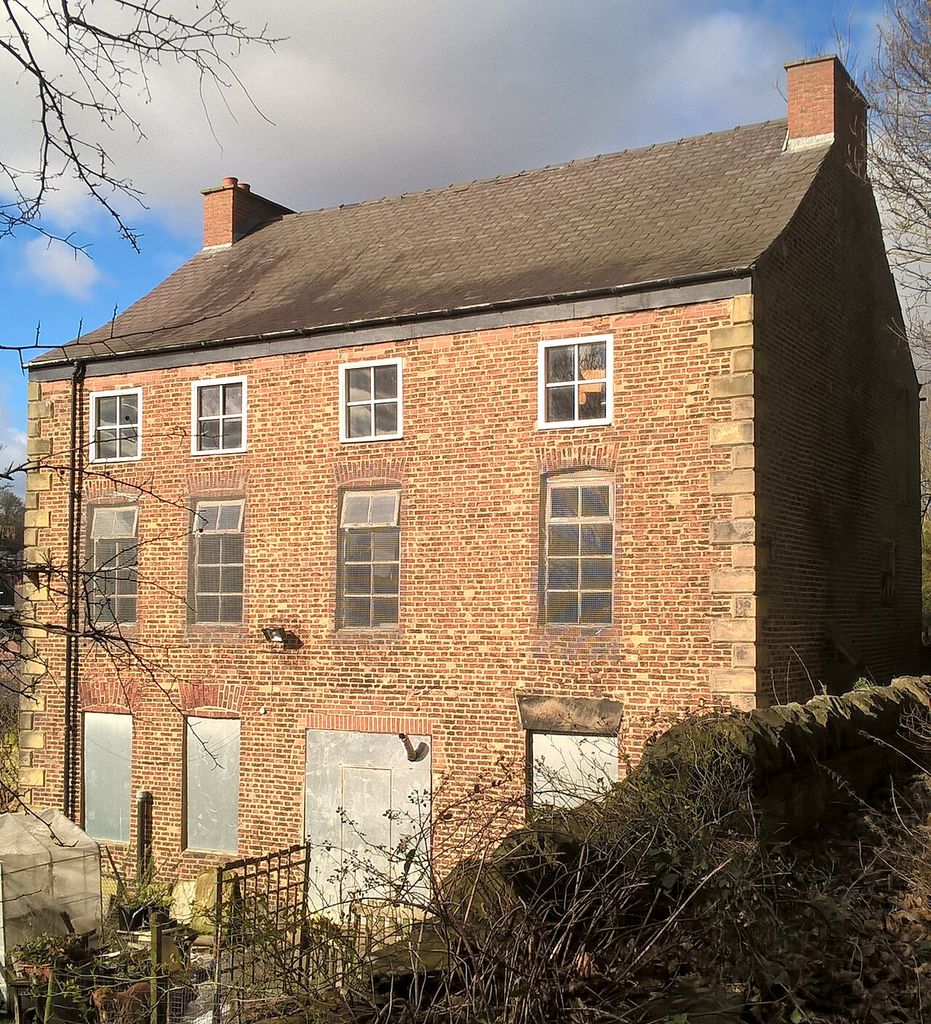
Scott Hall Leeds. Scott Hall, Scott Hall Street, Leeds LS7 2HR. In “What the quoin does”, this view helps identify rusticated quoins. Source image dated 2017; that date records the image, not the original construction. Chemical Engineer, Scott Hall Leeds; CC BY-SA 4.0. Resized proportionally; no crop, retouch or upscaling.
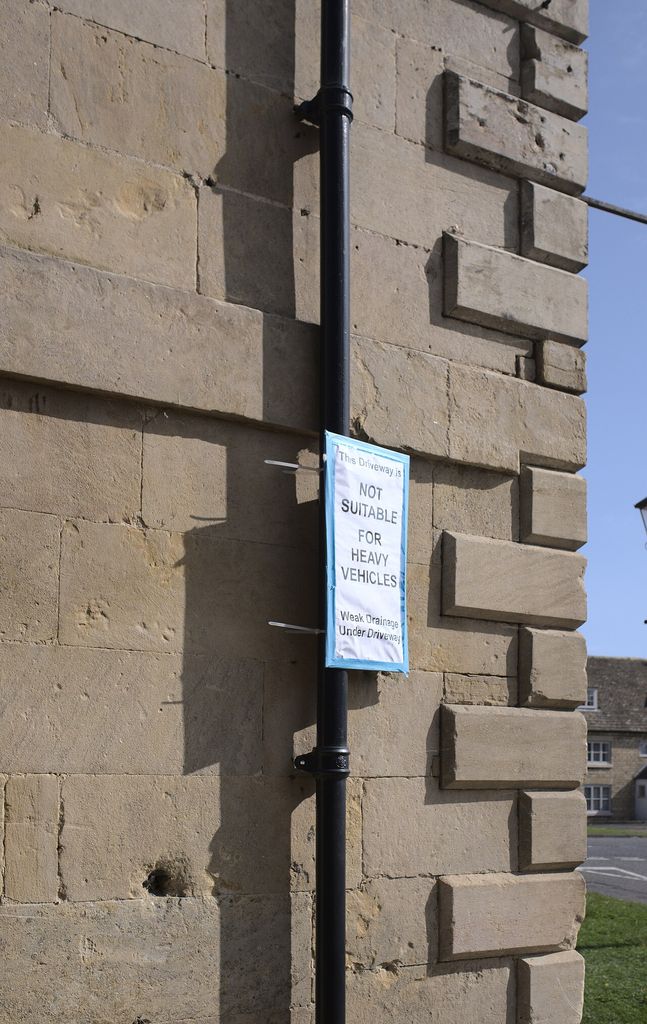
Quoins and string course - geograph.org.uk - 6609598. Quoins and string course. In “What the quoin does”, this view records the form, material and setting discussed in the passage. Source image dated 2020; that date records the image, not the original construction. Bob Harvey, Quoins and string course - geograph.org.uk - 6609598; CC BY-SA 2.0. Resized proportionally; no crop, retouch or upscaling.
Quoins are corner units or the differentiated expression of those units. Alternating long and short stones can bond intersecting wall faces, but many later quoins are thin dressings, stucco profiles or painted imitations. Their projecting edges are exposed to impact and weather, making joint condition especially revealing. Exposure is read at ledges, upper beds and wall junctions. Water lingering on a projection can drive salt movement, frost damage or corrosion of hidden cramps, while sheltered returns may preserve tooling lost from the face. Uneven decay can therefore disclose orientation and repair material as readily as age.
Historical development
Carefully cut corner stones occur wherever masonry walls need durable arrises. Renaissance palaces turned them into deliberate markers of mass and boundary. Georgian and colonial builders used contrasting stone or brick quoins to order façades; nineteenth-century stucco and render imitated large blocks at lower cost. The surviving sequence is shaped by repair as much as invention. Projecting stones, corner dressings and textured wall surfaces were repeatedly reset, refaced or copied, and later metal anchors can make an old profile perform in a new way. A defensible history therefore follows the dated wall campaign, the bond with adjacent masonry and documented repair rather than treating a familiar silhouette as a period label.[2][3]
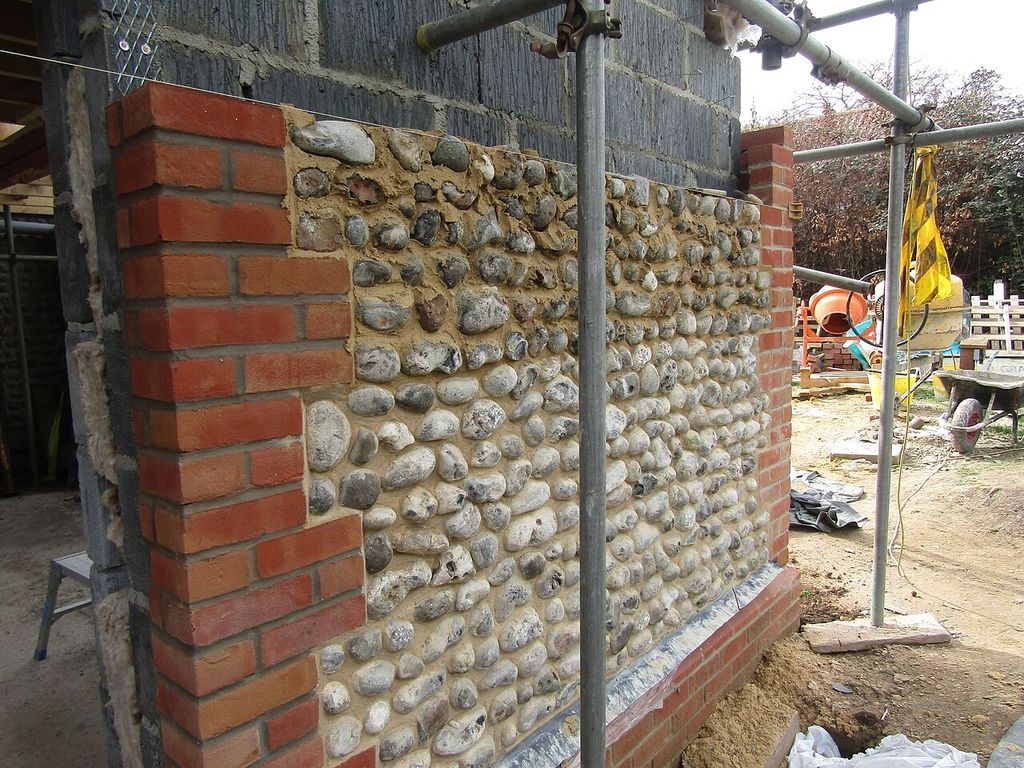
2022-03-16 Construction of a brick and flint house, Northrepps, England (1). Construction of flint walls between brick quoins on a new building in the parish of Northrepps , Norfolk, England. In “Historical development”, this view records the form, material and setting discussed in the passage. Source image dated 2022; that date records the image, not the original construction. Kolforn ( Kolforn ) I'd appreciate if you could mail me (Kolforn@gmail.com) if you want to use this picture out of the Wikimedia project scope. This file is licensed under the…, 2022-03-16 Construction of a brick and flint house, Northrepps, England (1); CC BY-SA 4.0. Resized proportionally; no crop, retouch or upscaling.
Terminology and common confusions
Every masonry building has corners, but ‘quoining’ usually means that the corner units are deliberately differentiated. Contrast in size, finish, projection, bonding or material must be recorded before the term becomes analytically useful. [1][3]
Conservation and alteration
Conservation begins with water and movement. Open joints, failed copings, salt crystallisation and incompatible hard cement repairs can accelerate stone or brick decay. Repair should retain sound material, use compatible mortar and address the source of displacement before rebuilding a visually tidy surface. Repair may introduce indented stone, new mortar, pins, cramps, anchors or local rebuilding. Each intervention should be dated where possible, and cleaning must retain tooling, paint and weathering that help distinguish campaigns.[3][4]
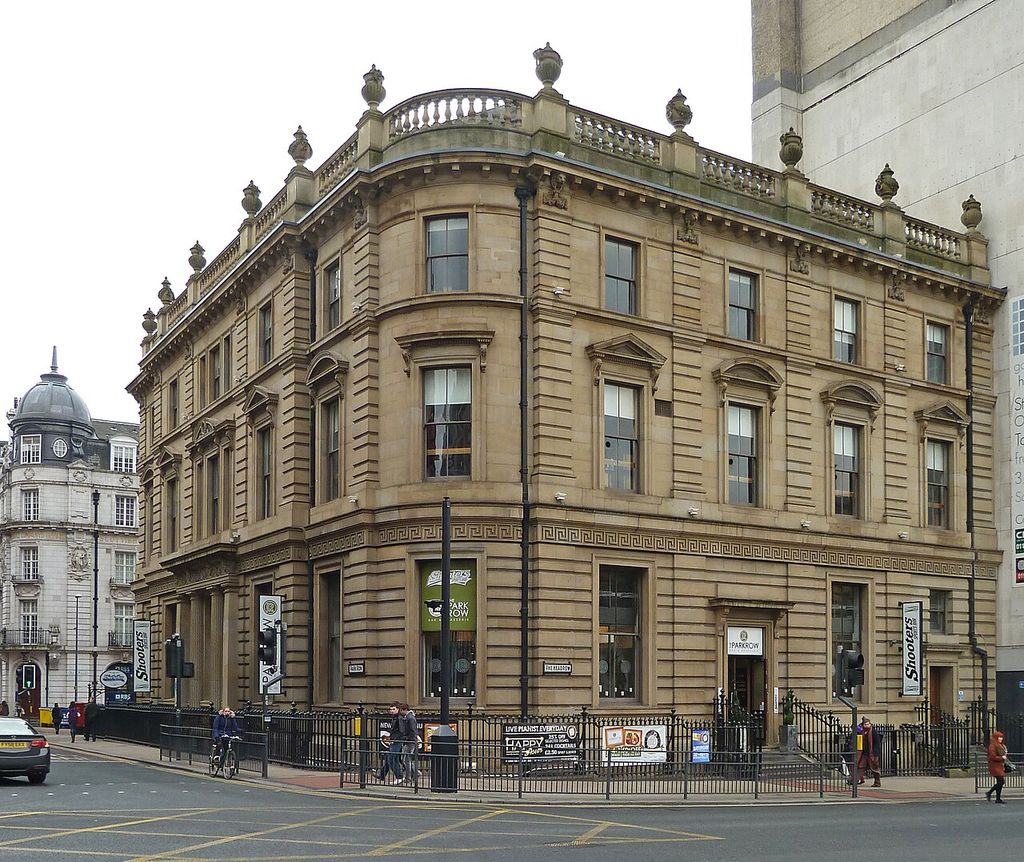
Sovereign House, Headrow-Park Row, Leeds (6797894973). Bank, now offices, with public house in basement.1862-64. In “Conservation and alteration”, this view helps identify rusticated quoins. Source image dated 2012; that date records the image, not the original construction. Tim Green from Bradford, Sovereign House, Headrow-Park Row, Leeds (6797894973); CC BY 2.0. Resized proportionally; no crop, retouch or upscaling.
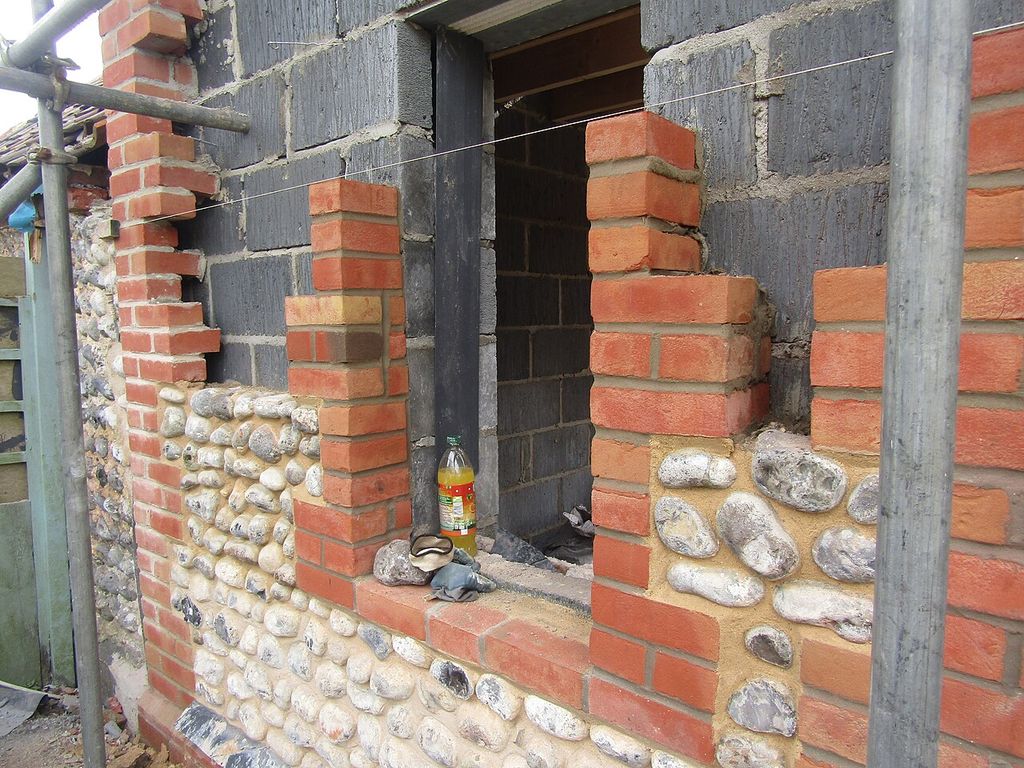
2022-03-16 Construction of a brick and flint house, Northrepps, England (2). Construction of flint walls between brick quoins on a new building in the parish of Northrepps , Norfolk, England. In “Conservation and alteration”, this view records the form, material and setting discussed in the passage. Source image dated 2022; that date records the image, not the original construction. Kolforn ( Kolforn ) I'd appreciate if you could mail me (Kolforn@gmail.com) if you want to use this picture out of the Wikimedia project scope. This file is licensed under the…, 2022-03-16 Construction of a brick and flint house, Northrepps, England (2); CC BY-SA 4.0. Resized proportionally; no crop, retouch or upscaling.
Repeated photographs, joint and moisture surveys, and—where movement is suspected—measured monitoring can distinguish old distortion from active change without sacrificing sound historic masonry. Conservation is included here as historical evidence: repair changes the object presented to readers and may reveal relationships that a supposedly pristine image conceals.
Examples for Further Study
The examples below show how the form changes across periods, materials and settings.
| Building or setting | Evidence to examine | Variant | Source |
|---|---|---|---|
| Renaissance palace | Large corner blocks reinforce an image of urban solidity. Trace the unit into its backing wall. | ashlar quoins | Reference 5 |
| Georgian brick house | Pale stone quoins contrast with brick and align visually with window dressings. Compare projection and bearing in section. | rusticated quoins | Reference 6 |
| Vernacular rubble building | Dressed corner stones regularise walls made from less uniform fieldstone. Use joints and material change to identify campaigns. | brick quoins | Reference 5 |
| Rendered façade | Scored or raised imitation must be distinguished from separate masonry units. Treat difference of scale as evidence, not as an exception to hide. | painted or rendered imitation quoins | Reference 6 |
What the quoin reveals about the building
At Vernacular rubble building, dressed corner stones regularise walls made from less uniform fieldstone. At Rendered façade, scored or raised imitation must be distinguished from separate masonry units. Together, these cases show that the quoin is not a detachable motif: it participates in material, access, environmental control, structure or display according to its setting.[1][4]
Comparing the quoin examples
Renaissance palace and Georgian brick house illustrate distinct settings: large corner blocks reinforce an image of urban solidity. By contrast, pale stone quoins contrast with brick and align visually with window dressings. Vernacular rubble building differs because dressed corner stones regularise walls made from less uniform fieldstone. Finally, Rendered façade shows that scored or raised imitation must be distinguished from separate masonry units.[4][6]
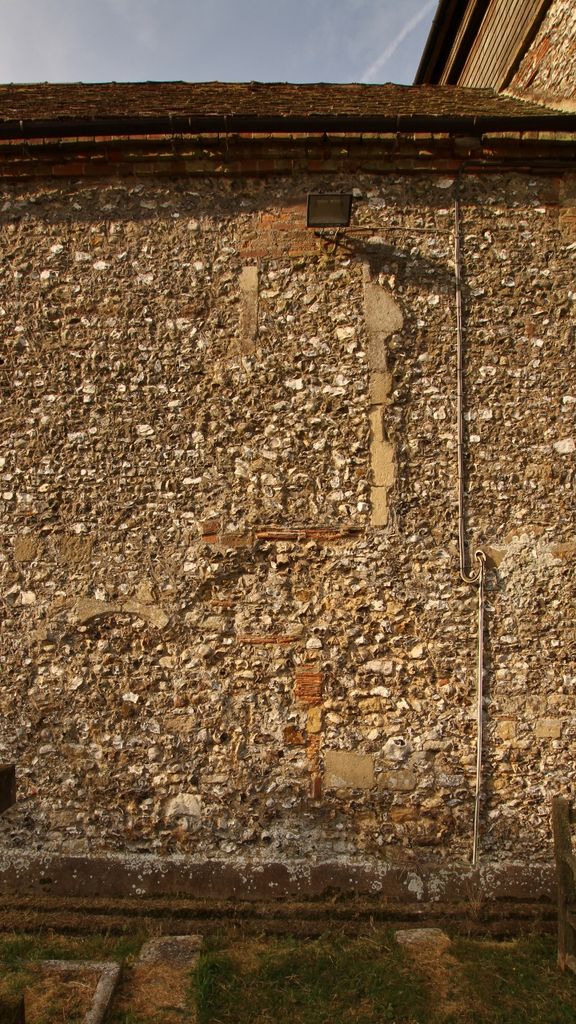
Nuffield HolyTrinity NorthAisle NorthWall detail. Part of the north wall of the north aisle of Holy Trinity parish church, Nuffield, Oxfordshire. In “Comparing the quoin examples”, this view helps identify architectural quoins stone. Source image dated 2018; that date records the image, not the original construction. Motacilla, Nuffield HolyTrinity NorthAisle NorthWall detail; CC BY-SA 4.0. Resized proportionally; no crop, retouch or upscaling.
The quoin as historical evidence
The principal role—quoins can bond wall faces, protect a vulnerable corner and make edges visually legible—connects the quoin to wider questions of labour, access, climate, ceremony and maintenance. That does not mean every example performed each role. It means that the named feature provides a precise place to test which role is documented in a particular building and which remains an editorial inference.[2][4]
Alteration is part of that history. Repair may introduce indented stone, new mortar, pins, cramps, anchors or local rebuilding. Each intervention should be dated where possible, and cleaning must retain tooling, paint and weathering that help distinguish campaigns. An account that distinguishes these interventions gives the reader a more accurate object than an image edited into apparent wholeness. It also avoids using weathering as a simple proxy for age: orientation, material compatibility and exposure can make later work deteriorate faster than older fabric.
Watch: Three Ways to Read Quoins
Choose What Is Rustication?, Alberti, Palazzo Rucellai or The Impressive Engineering of the Roman Arch. Together, the films connect architectural form with material, use and historical setting.
What Is Rustication?
A focused visual definition using a Renaissance palace, with enough detail to distinguish joint treatment from ordinary rough masonry.
Watch on YouTubeFrequently Asked Questions
A masonry unit or expressed treatment at the external corner of a building.
Read the corner for alternating long-and-short blocks, contrasting material, raised bands or scored imitation. Confirm the identification by checking depth, joints, material and position in a plan or section.
Not necessarily. Historic examples may carry load, protect an edge, manage water or organise space, while later versions can preserve the appearance as applied ornament. The surrounding assembly determines the answer.
No. Shape can narrow a comparison, but revivals, reuse and repair allow the same form to appear in different periods. Documents and material evidence are needed for a defensible date.
Record the complete assembly and diagnose water, movement, corrosion, decay and earlier intervention before replacing visible fabric. Safety-critical decisions require a qualified professional and a building-specific survey.
Discussion
Find a documented example of quoins. Which joint, section or sign of alteration most changes what a façade photograph alone seems to show? Cite the source and separate observation from inference.
Reader Insights
Name the material, joint, opening or route you can observe.
Give the building, place, approximate date and a reliable source.
Separate documented history from your interpretation.
Join the Conversation
Share a concise observation or useful source below.
References
- Hastings Borough Council. “Glossary of architectural terms.” View source
- Getty Research Institute. “Art & Architecture Thesaurus.” View source
- Francis D. K. Ching. “A Visual Dictionary of Architecture, 2nd edition.” View source
- Historic England. “Practical Building Conservation.” View source
- Wakefield Council. “District Design Code glossary: quoin.” View source
- Abingdon-on-Thames Town Council. “Buildings and people glossary.” View source
- Istituto Treccani. “Mensola.” View source
- Edinburgh Research Archive. “Medieval masonry techniques and architectural elements in central-eastern Umbria.” View source
- Brussels-Capital Region Heritage Inventory. “Glossaire de l’architecture.” View source
- French Ministry of Culture, POP. “Mérimée architectural inventory.” View source
- Historic England. “Old Quinnings, National Heritage List entry 1231957.” View source
Explore RELATED Architecture

Arches
further context for quoins.
Vaults
further context for quoins.
Arcade
further context for quoins.
Round vs Pointed Arches
further context for quoins.

Roman Architecture
further context for quoins.

Romanesque Architecture
further context for quoins.
Historic Bridges
further context for quoins.

Colosseum
further context for quoins.