by Tom Gurney
Tom Gurney BSc (Hons) is an art history expert with over 20 years experience
Email: tomgurney1@gmail.com / Phone: +44 7429 011000
Reading Jali Screens
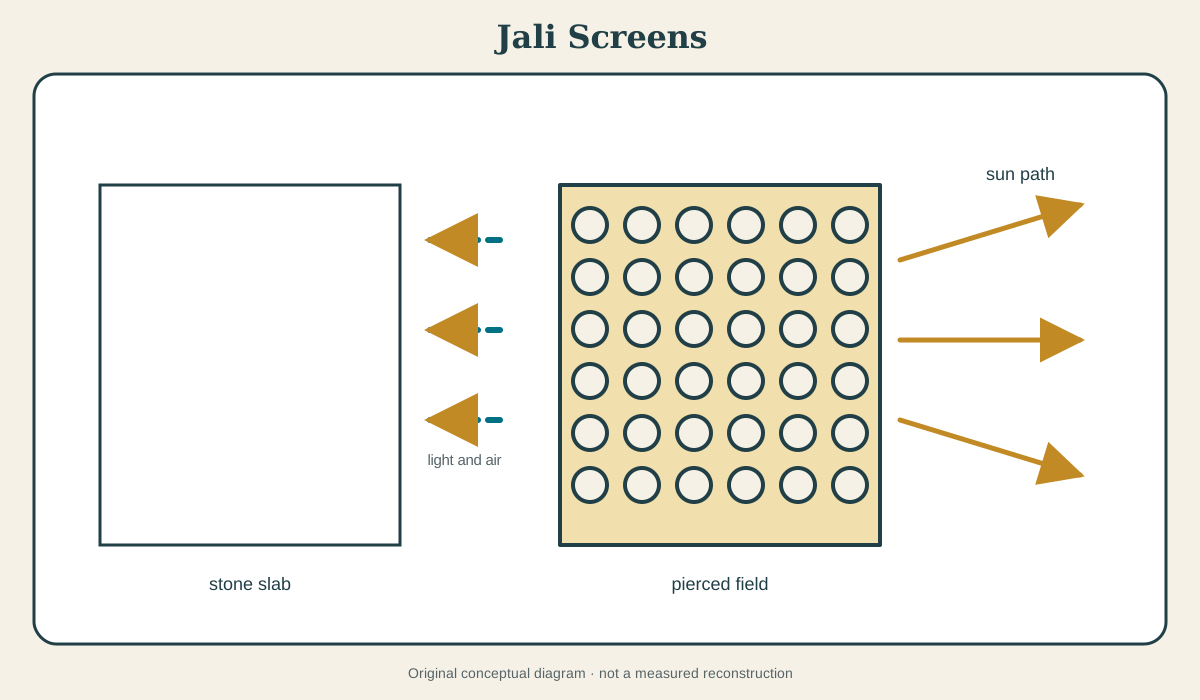
A jali is an architectural screen pierced with a repeating pattern, characteristically carved through stone in South Asian architecture. The Hindi-Urdu term, derived through Sanskrit usage, is also written jaali or jālī. Jalis turn a wall or slab into a permeable membrane: the material left between openings carries the panel, while the voids admit light and air, shape sight and cast moving patterns.[1]
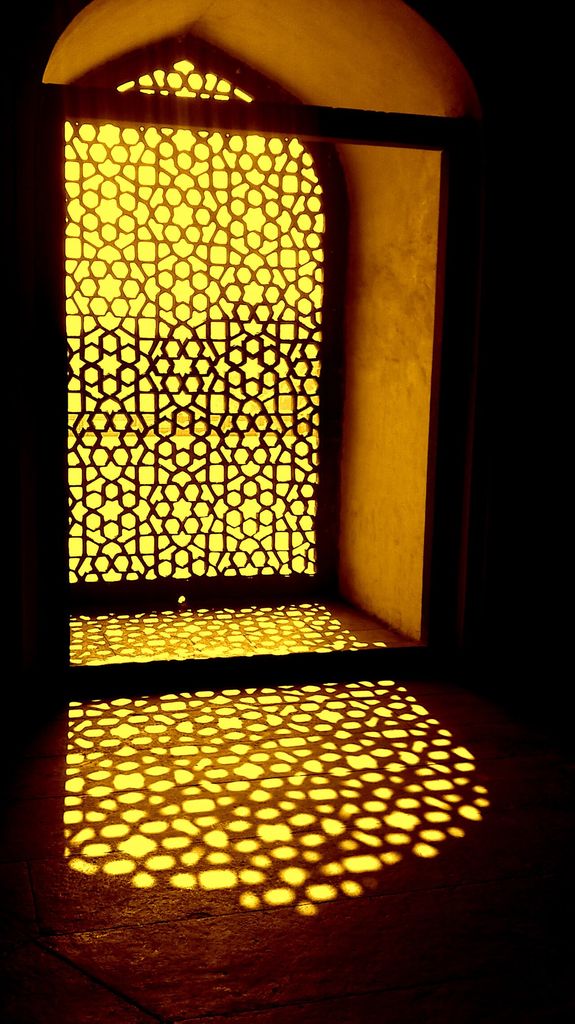
Mughal jali screen light shadow. This is a photo of ASI monument number. In “Reading Jali Screens”, this view records the form, material and setting discussed in the passage. Source image dated 2013; that date records the image, not the original construction. Om Pratap Singh, Mughal jali screen light shadow; CC BY-SA 4.0. Resized proportionally; no crop, retouch or upscaling.
The best-known examples are Mughal, but pierced screens have longer and broader histories in Hindu, Jain, Sultanate, Mughal and regional architecture. They occur in tombs, mosques, temples, palaces, houses, balconies and enclosures. Neither “Islamic screen” nor “privacy panel” is sufficient. Use, material, pattern and building position must be established for each case.
At a Glance
- Meaninga patterned architectural screen whose openings pierce through its material, especially carved stone in South Asia.
- How it worksremaining stone bridges transfer forces to a frame while apertures filter light, air and views.
- Patternsgeometric grids, interlaced polygons, circles, stars, vegetal forms and combinations adapted to panel shape.
- Common settingstomb enclosures, windows, balconies, mosques, temples, palaces and domestic interiors.
- Key distinctiona stone jali is made subtractively from a slab or field; mashrabiya is characteristically assembled from turned wooden members.
Contents
- A patterned membrane, not a flat motif
- How stone becomes screen
- Geometry, vegetal form and repetition
- Light through time
- Tomb, mosque, temple and palace
- Jali and mashrabiya
- Museum fragments and displaced architecture
- Breakage, repair and pattern integrity
- How to read a jali
- Carving sequence: from slab to membrane
A patterned membrane, not a flat motif
A photograph can make a jali look like a two-dimensional design. Move to the side and the architecture appears. The panel has thickness. Each aperture is a small reveal. The outer frame transfers load. Light changes as it passes through depth, so the shadow on the floor can be sharper, softer or offset according to the sun.
The Metropolitan Museum’s jali collection record preserves this object-level evidence.[1] In a gallery the screen can be examined at eye height, but its original orientation and building relation may be missing. An architectural reading asks which face was outward, how high it stood, what space lay behind and whether it formed one panel in a larger sequence.
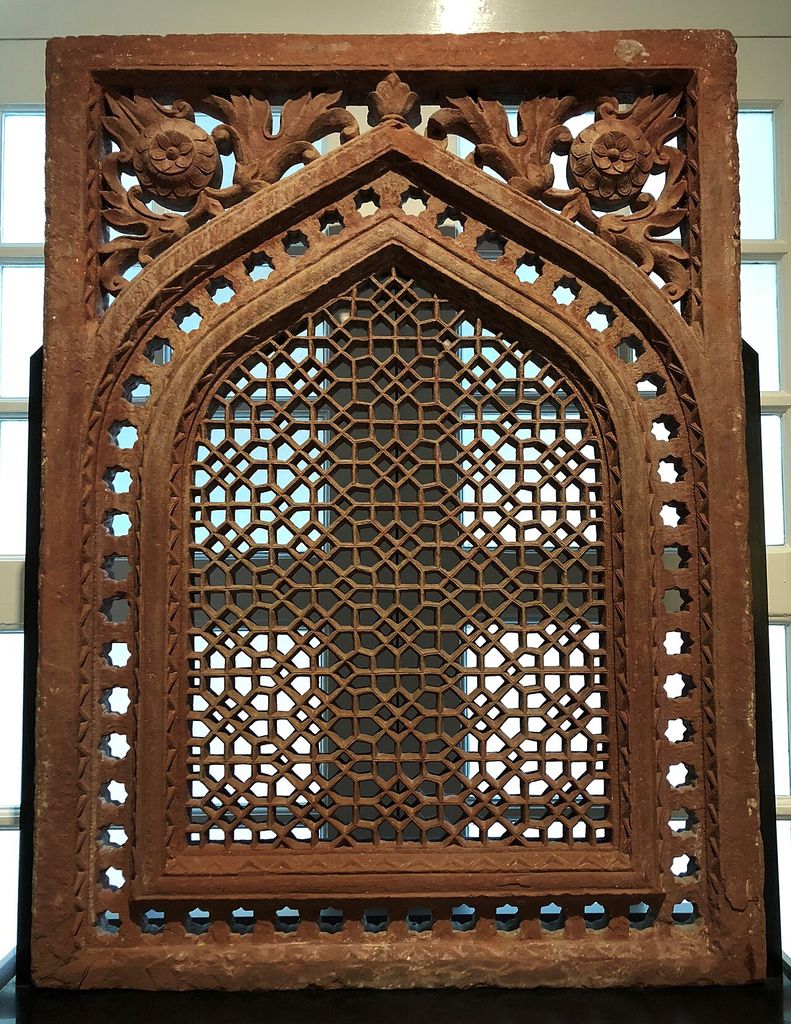
India Agra mughal late 17th C - jali screens in sandstone IMG 9514 Museum of Asian Civilisation. Panel screen from Mughal period Agra (India), late 17th century. In “A patterned membrane, not a flat motif”, this view records the form, material and setting discussed in the passage. Source image dated 2018; that date records the image, not the original construction. Bjoertvedt, India Agra mughal late 17th C - jali screens in sandstone IMG 9514 Museum of Asian Civilisation; CC BY-SA 4.0. Resized proportionally; no crop, retouch or upscaling.
Thickness also affects sight. A deep small opening narrows the cone of vision more than a thin cut-out. Looking squarely through a panel differs from looking obliquely. Dense pattern can conceal a person in a darker interior while letting that person perceive a brighter exterior, but the effect reverses or weakens as lighting changes.
How stone becomes screen
Stone jali begins with a slab or a constructed field of panels. The maker establishes the frame and pattern, drills or opens the voids, then refines their edges and mouldings. Material is removed until only a network of stone remains. Every new opening increases permeability while reducing section.
Pattern design therefore has structural consequences. Wide bridges and rounded junctions resist damage better than extremely thin, sharply notched work. The frame needs sufficient bearing. A large screen may be divided into panels so each can be carved, transported and replaced. Joints can align with the pattern or deliberately interrupt it.
Hand cutting produces small differences. Centres shift, a bridge thickens near a weak vein, a repair changes one lobe. These variations reveal adjustment rather than failed geometry. Digital tracings that regularise every unit can erase workshop evidence.
Different stones permit different results. Fine-grained sandstone and marble support crisp cutting but weather, salt and impact in their own ways. Bedding and veining matter. A bridge cut across a weakness may fracture. Surface polish affects reflected light and so changes how dense the screen appears.
Geometry, vegetal form and repetition
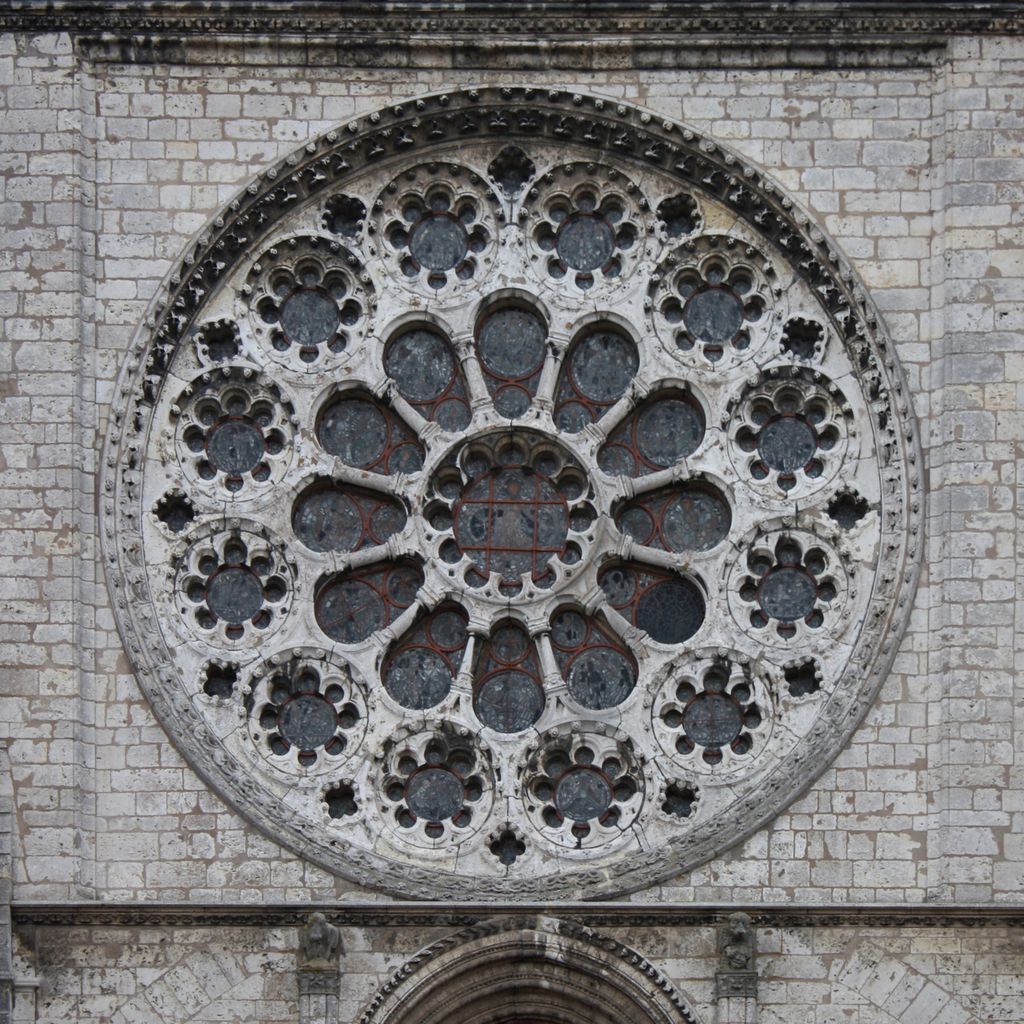
The Met’s Islamic-art teaching resource explains how circles, polygons and repeated units generate geometric patterns.[2] A jali may use a square, triangular or hexagonal grid, then develop stars, rosettes and interlace. Border conditions force adaptation: a repeating field must meet the rectangular or arched frame without leaving weak fragments.
Vegetal jalis use stems, leaves and flowers as a connected network. “Naturalistic” does not mean structure has disappeared. Every tendril must join another element or frame. Some panels combine a geometric scaffold with plant forms, calligraphy or heraldic emblems.
Pattern scale answers viewing distance and function. A tomb enclosure read at close range can sustain fine work. A high façade screen needs broader openings and stronger silhouette. Several densities may appear in one building, adjusting light and privacy by room.
Meaning must not be reduced to a universal pattern dictionary. Geometry can support theological interpretation, dynastic taste or ideas of ordered infinity, but inscription, patronage and architectural programme carry those claims. The same star pattern can move among communities and periods.
Light through time
Jali light is a temporal architecture. Morning sun strikes one side and projects angled shapes; noon light compresses them; evening reverses emphasis. A moving visitor sees openings alternately align and close. The screen can be more luminous than the wall around it or read as a dark veil against the sky.
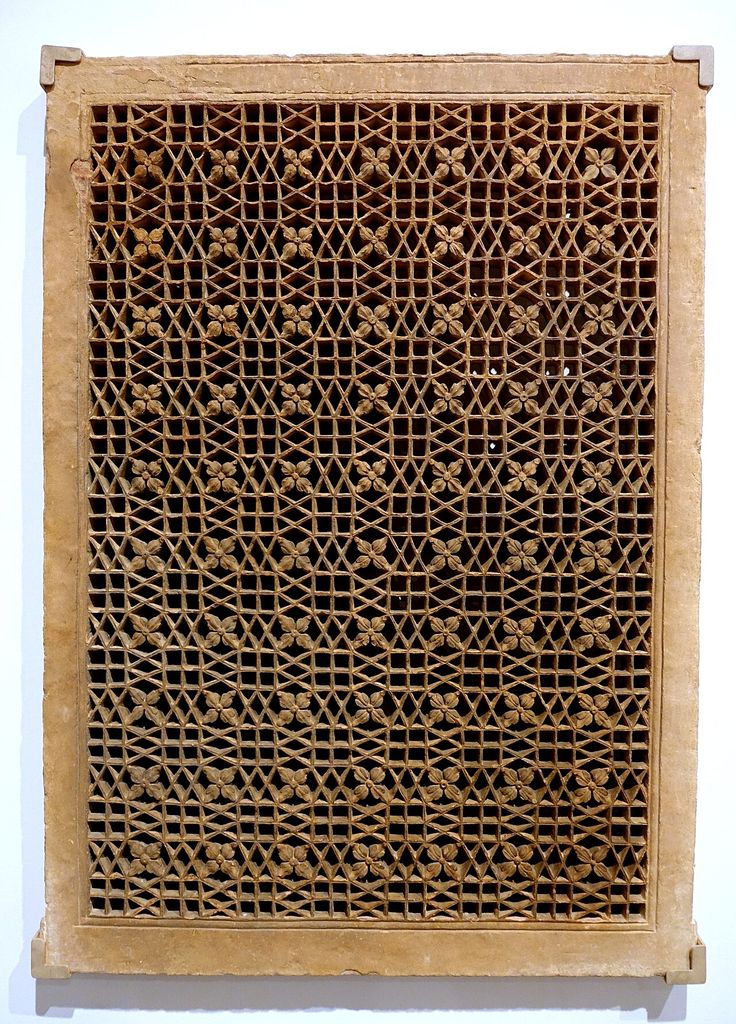
Pierced Screen (jali), India, Mughal period, c. 1580 AD, sandstone - Arthur M. Sackler Museum, Harvard University - DSC01106. Exhibit in the Arthur M. In “Light through time”, this view records the form, material and setting discussed in the passage. Source image dated 2015; that date records the image, not the original construction. Daderot, Pierced Screen (jali), India, Mughal period, c. 1580 AD, sandstone - Arthur M. Sackler Museum, Harvard University - DSC01106; Public domain. Resized proportionally; no crop, retouch or upscaling.
Filtering can reduce glare and break direct solar gain. Air passes through openings, and pressure differences can promote ventilation. Yet “jali cooling” should not be promised without evidence. Orientation, opening ratio, wind, room depth, thermal mass and other windows all affect performance.
The screen may work with a courtyard, veranda or water feature, but each component needs its own explanation. A jali before sealed glazing does not ventilate as an open historic screen did. A modern metal replica can heat rapidly. Form alone does not transfer performance.
Sound passes too. A screen can permit hearing between spaces while limiting sight and bodily passage. Smell and moving air cross. This partial separation helps explain use in devotional, funerary and domestic architecture without making privacy the only purpose.
Tomb, mosque, temple and palace
In Mughal tomb architecture, jalis may enclose cenotaphs, filter intense exterior light and establish degrees of approach. The Taj Mahal’s marble screens participate in a larger ensemble of inlay, calligraphy, geometry, chamber acoustics and controlled movement. They should not be treated as isolated lace-like luxury.
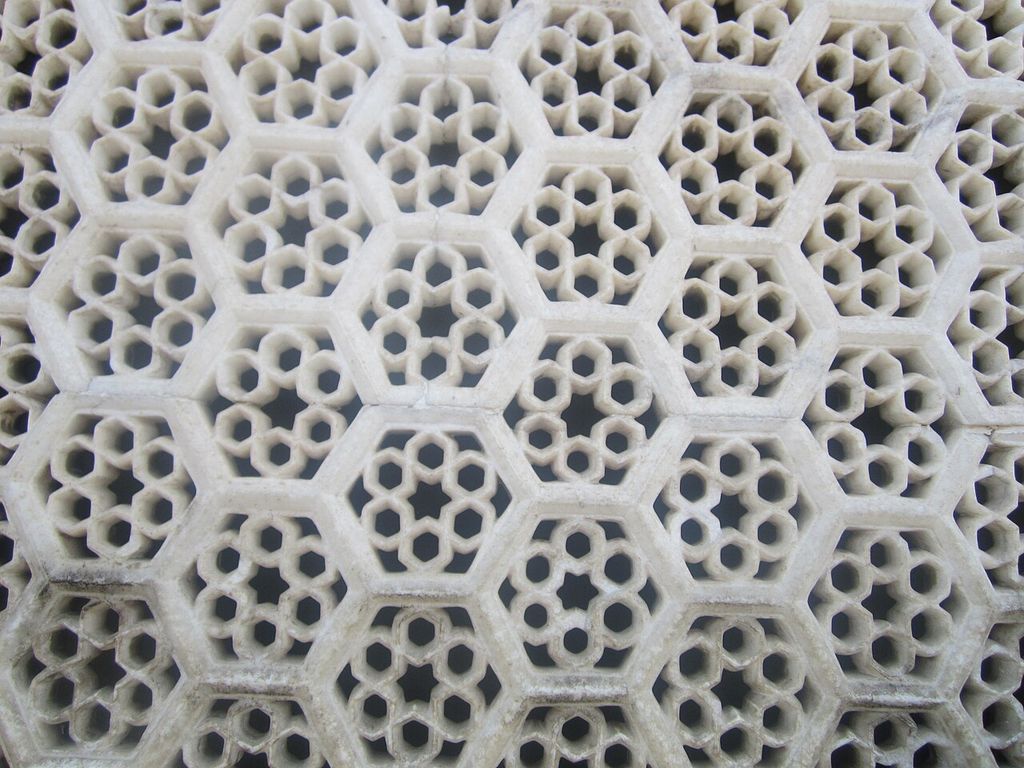
The jali of Taj Mahal an important part of it. this was the mind of some people about 200 years ago that they can make this jali simply by a hammer and a nail ........isnt interesting .that is its reason it is called best creation of man ever .it is made up of…. In “Tomb, mosque, temple and palace”, this view records the form, material and setting discussed in the passage. Source image dated 2013; that date records the image, not the original construction. Koolanisha1, The jali of Taj Mahal an important part of it; CC BY-SA 3.0. Resized proportionally; no crop, retouch or upscaling.
Mosque screens can light prayer spaces, separate zones or fill openings. Sultanate architecture uses stone carving and geometry in regionally specific ways. In temples and Jain architecture, pierced stone can mark sacred boundaries, illuminate mandapas and extend local carving traditions. Shared technique does not erase religious difference.
Palace and domestic examples mediate courtly visibility. A screened balcony may allow observation of ceremony from a controlled position. Gendered use matters, especially where zenana spaces are documented, but a jali does not by itself prove who stood behind it. Plan, access and records are required.
The Indira Gandhi National Centre for the Arts and Archaeological Survey of India glossary anchors the term in South Asian monument documentation.[3] That local institutional usage is essential because museum labels in Europe and North America can overgeneralise the screen as “Islamic ornament.”
Jali and mashrabiya
Both screen types mediate light, air and view, which makes comparison useful. Their dominant craft logics separate them.
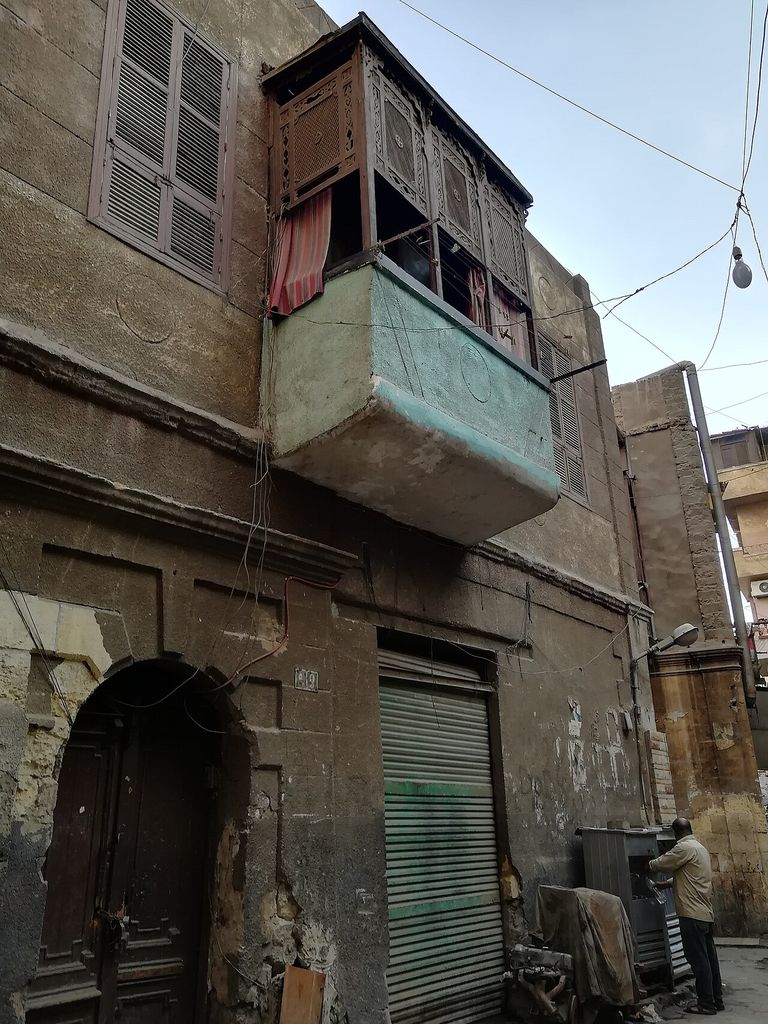
A jali is generally pierced or carved from stone. Stability depends on the web remaining between openings and on the panel frame. A mashrabiya is generally built from numerous turned wooden pieces assembled into lattice, often within a projecting bay. It depends on joinery and timber movement.
The two histories meet through trade, empire, architecture and modern design, but one is not simply a stone version of the other. South Asian wooden lattices and Middle Eastern pierced stone complicate any rigid material rule. The point is to describe the actual object and preserve regional terms, not turn a useful distinction into an absolute.
Modern manufacturers often market perforated metal, concrete and CNC timber as jali or mashrabiya. These may be legitimate references, but craft, environmental behaviour and cultural claim should be evaluated separately. A laser-cut sheet can reproduce a pattern while changing depth, repair and labour completely.
Museum fragments and displaced architecture
Jalis entered collections as fragments, complete panels and sections of dismantled buildings. Museum acquisition can preserve stone otherwise vulnerable to demolition. It can also obscure the original enclosure and histories of removal.
The Met’s acquisitions publication supplies provenance and curatorial history beyond the short object label.[4] Such records should be read with any surviving architectural documentation. The display can reveal both faces and edge thickness—views that were impossible in situ—while a reconstructed frame or projected sunlight helps restore spatial understanding.
Lighting should not romanticise. Backlighting a panel produces a beautiful silhouette but may not approximate its original room. Captions should distinguish known origin from attributed region and state when a panel has been reset.
Breakage, repair and pattern integrity
The narrowest stone bridges are the most vulnerable. Impact, settlement and thermal movement can crack junctions. Water carries salts into pores; inappropriate cement fills create hard stress points; iron fixings corrode. Cleaning can round crisp edges or remove pigment and surface treatment.
An Archaeological Survey of India condition report hosted by IGNCA records jali deterioration within monument fabric, giving conservation claims a direct institutional basis.[5] The lesson is that pattern and structure cannot be repaired separately. A missing bridge interrupts the design and redistributes force.
Small compatible indents may retain more old fabric than replacing a panel. Where a complete unit must be reproduced, measured recording should preserve thickness, taper and irregularity—not just the front outline. New stone needs compatible porosity and strength. Hidden pins should not create future corrosion.
Reintegration can be visually quiet without falsifying history. A close observer should be able to find the repair through records or discreet marking. Filling every loss to make the pattern seamless may erase valuable evidence of age; leaving an unstable network unsupported is equally irresponsible.
How to read a jali
Use both face and edge:
- identify panel, frame and joints;
- measure or estimate thickness and aperture depth;
- map the repeating unit and its adjustments at boundaries;
- distinguish geometric, vegetal and mixed fields;
- record light, view and airflow conditions rather than assuming effects;
- establish room, building, community and date;
- distinguish in-situ, reset, restored and museum contexts;
- map cracks, fills, pins and lost bridges.
The jali’s achievement lies in what remains. The carver removes stone until wall becomes screen, but enough material survives to carry the pattern and the panel. Through that balance, solid and void make light, climate, social relation and sacred boundary architectural.
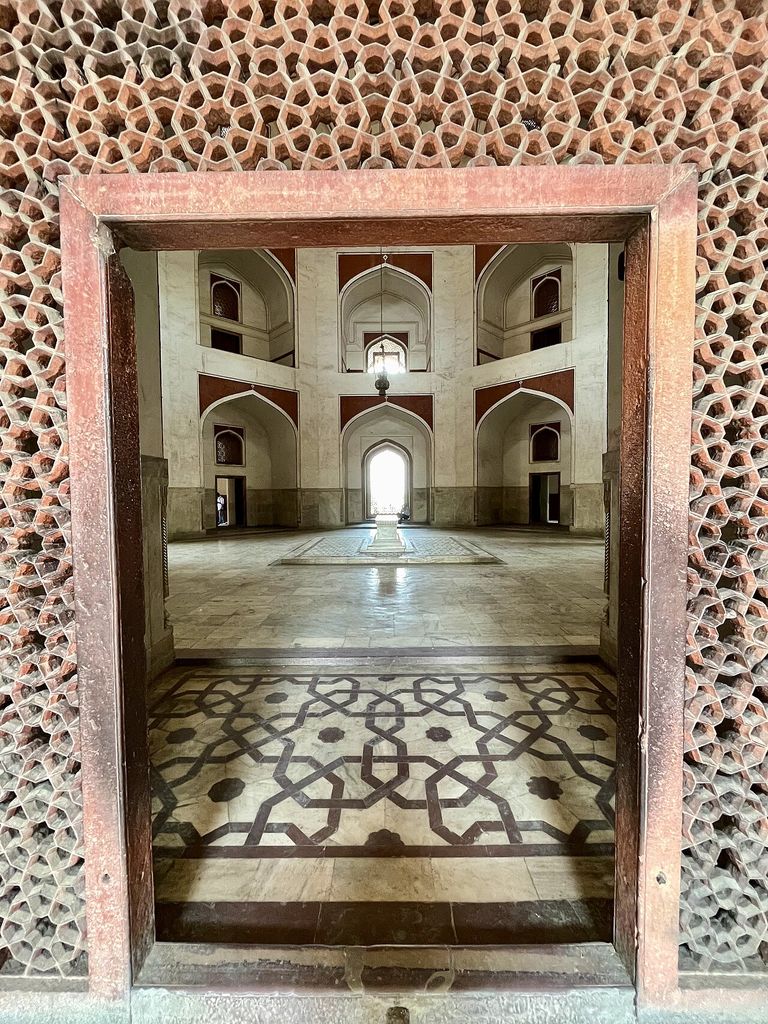
Geometric jali window at Humayun's Tomb. The image captures the beautiful geometric lattice work (jali) framing the view into the main hall of the tomb. In “How to read a jali”, this view records the form, material and setting discussed in the passage. Source image dated 2022; that date records the image, not the original construction. Mbigul, Geometric jali window at Humayun's Tomb; CC BY-SA 4.0. Resized proportionally; no crop, retouch or upscaling.
Carving sequence: from slab to membrane
A stone jali begins as a load-bearing object in its own right, even when it does not carry the wall above. The quarry and mason must supply a slab thick and sound enough to survive transport and carving. The pattern is set out on the face, openings are pierced, and their sides are worked through the thickness. Finishing the reverse matters because light exposes the internal profiles.
Open area and bridge width are linked. A dense pattern leaves more stone but can contain many vulnerable junctions; a broad opening reduces weight but lengthens unsupported members. Tool access constrains undercutting. The final screen is a negotiated balance between transparency, strength and visual fineness.
Multiple slabs can form a larger bay. Their joints may align with pattern boundaries or cut through them. Frames provide restraint while allowing for imperfect fit. A conservation survey that photographs only the ornamental face misses bedding, edge fractures and movement between units.
Light is evidence of thickness
As the sun moves, the screen projects an image whose sharpness and offset reveal aperture depth. Morning light can pass obliquely through one profile; midday light shortens the cast pattern; an interior surface catches a changing field. The jali is therefore not simply a perforated elevation but a small-scale solar section.
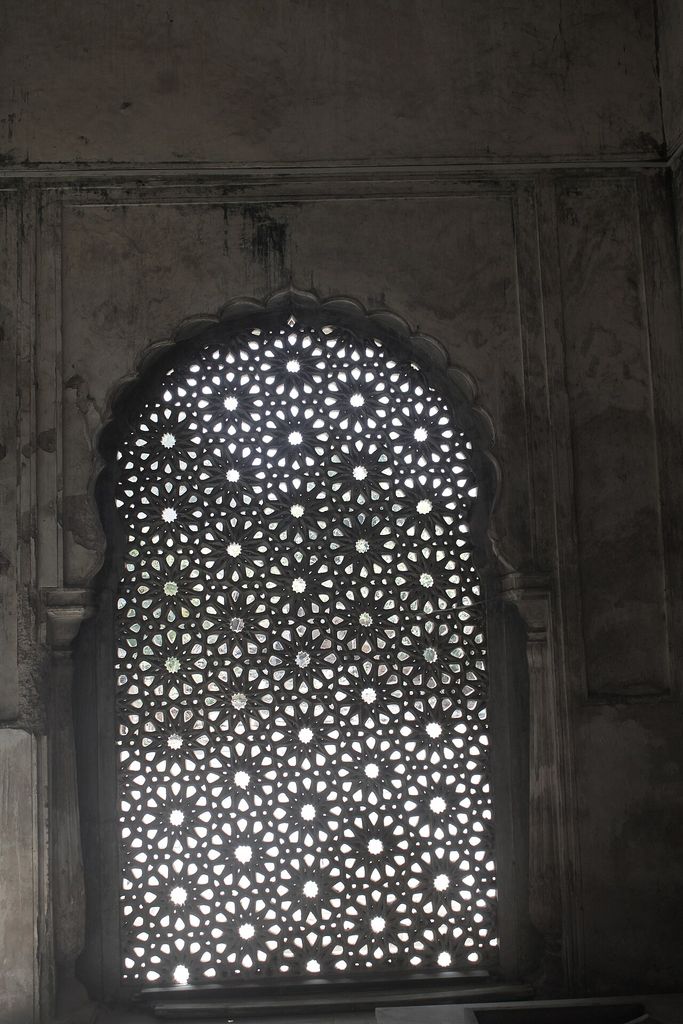
Jali work architecture. jali or jaali, is the term for a perforated stone or latticed screen, usually with an ornamental pattern constructed through the use of calligraphy and geometry. In “Light is evidence of thickness”, this view records the form, material and setting discussed in the passage. Source image dated 2019; that date records the image, not the original construction. Adbh266, Jali work architecture; CC BY-SA 4.0. Resized proportionally; no crop, retouch or upscaling.
Carved reveals can direct light. A bevel broadens acceptance from one angle, while a straight aperture produces a more abrupt cut-off. Dust and later paint reduce the legibility of those profiles. Measuring thickness and orientation makes claims about daylight more credible than a poetic photograph alone.
At night, the relation can reverse as illuminated interiors turn the screen into a bright patterned plane. Visibility and privacy are consequently contingent, as they are with mashrabiya, though the materials and construction differ.
Mughal tombs and the architecture of enclosure
In Mughal funerary architecture, jalis can define a protected enclosure around a cenotaph while maintaining visual and luminous connection. They establish degrees of approach rather than an opaque barrier. Pattern, inscription, floor level and circulation work together.
Museum fragments preserve this carving at close range, as the Met collection record demonstrates.[1][4] Once detached, however, the object no longer shows whether it stood in a tomb, palace or another setting, what lay on either side, or how several panels formed a complete enclosure. Provenance and old photographs are therefore essential.
The category also extends beyond Mughal monuments and beyond Islamic settings. South Asian temple, palace and domestic traditions use pierced stone with different iconographic and ritual contexts. “Jali” should not flatten those distinctions into a single court style.
Geometry, vegetal pattern and skilled judgement
Compass-and-straightedge analysis can recover underlying grids, stars and polygons.[2] Vegetal designs may follow repeating stems and leaves rather than a wholly geometric tessellation. Many screens combine both: a geometric frame regulates a more fluid internal carving.
The diagram is not the object. The carver adjusts intersections to prevent weak points, varies leaf tips and accommodates the slab edge. Slight asymmetries can record hand and sequence. Digital redrawing that replaces them with perfect repeats produces a useful analytical model, not a facsimile.
Meaning likewise requires restraint. Geometry may evoke order or infinity, and vegetal growth may carry associations of abundance, but a precise interpretation looks for inscription, location and patronage. Pattern is intellectually structured without needing one universal symbolic key.
Loss, repair and the danger of visual completion
Once a bridge breaks, loads redistribute to neighbouring members. A visually small loss can initiate progressive failure. Repairs may pin a retained fragment, insert compatible stone or support the panel within a discreet frame. Filling every gap with mortar can trap moisture and obscure the original pattern.
The cited ASI condition report represents the kind of monument-specific evidence needed to move from diagnosis to action.[5] Orientation, salts, impact, vegetation and previous cement repairs create different failure mechanisms. Replacement should follow the actual cause.
When reconstruction is justified, surviving geometry can predict missing lines, but carving depth and surface finish need separate evidence. A smooth laser-cut insert may be dimensionally exact yet visually alien; a heavily distressed copy can counterfeit age. Legibility, compatibility and documented distinction provide a more defensible balance.
Screen, climate and the complete wall section
A jali moderates direct sun, but its effect depends on what lies before and behind it. An external arcade, deep reveal, courtyard, interior curtain or second screen changes radiation and airflow. The stone's thermal mass also behaves differently from a light timber lattice.
Performance should be modelled with the actual aperture ratio and orientation. A copied motif enlarged for a western façade may admit low afternoon sun that the historic screen avoided. The term does not guarantee environmental success.
Modern comfort standards add glass and mechanical cooling behind the stone. This can retain the public image while eliminating ventilation and changing condensation risk. Detailing should keep the jali accessible for cleaning and allow drainage at its base.
Craft continuity and digital manufacture
Contemporary workshops use hand tools, powered cutters and computer-guided machines in different combinations. Digital cutting can reproduce complex geometry and reduce cost, but tool radius and surface finish differ from historical carving. Hand finishing may restore edge quality without making the process traditional in every respect.
Craft conservation includes knowledge of setting-out, stone selection and repair, not only the survival of old panels. Training on new commissions can sustain those skills. Fair attribution should name workshops rather than assigning all design to an architect.
A contemporary jali can be excellent architecture without being passed off as an ancient continuity. Recording software, machine path, handwork and material origin gives the new screen a history future conservators can understand.
Regional stones and different visual weights
White marble, red sandstone and other stones do not produce the same screen. Grain, translucency, compressive strength and weathering constrain aperture and thickness. Marble can glow at thin edges; sandstone may preserve a warmer, more granular shadow. Surface colour belongs to material, not an interchangeable pattern layer.
Quarry matching is more than visual. A replacement must weather and move compatibly. Stone cut from a geologically similar source can still differ by bed orientation. Petrographic analysis and trial carving reduce risk.
The choice also has labour and environmental histories. Quarry conditions, transport and waste should be documented in contemporary repair rather than hidden behind the language of traditional material.
Sound and social permeability
Openings pass sound and smell even when they restrict direct sight. A jali around a tomb or between court and room can maintain auditory connection. This permeability may be socially significant, but it varies with surrounding enclosure and activity.
Modern glazing changes it. The pattern remains visible while the acoustic and ventilation boundary becomes solid. Interpretation should point out that a visual survival can accompany environmental loss.
Experiencing the screen from both sides is essential. One face may address a public court and the other an intimate interior; carving depth, finish and wear can differ accordingly.
Documentation after displacement
When a panel enters a collection, the museum should record dimensions, thickness, edge joints, both faces and every provenance clue. A cropped display can make the screen look like autonomous geometric art. Mounting should allow transmitted light without inventing the original room.
Research may later reconnect a fragment to old photographs or matching bays. Digital reunification can show a hypothetical ensemble while retaining the object's present legal and physical history. Uncertainty must remain visible.
This practice lets collections support architectural knowledge rather than converting fragments into placeless design sources.[1][4]
Scale replicas can help visitors touch a pattern without handling original stone. If their edges reproduce tool finish and thickness as well as face geometry, they teach how the screen works materially. Labels should state whether the replica is measured from one object or synthesised from several.
The safest educational abstraction is explicit about what it omits: building orientation, surrounding room, original light and the cultural setting of use.
Inscription and pattern at one threshold
Some screens combine geometric or vegetal fields with calligraphy. The inscription may identify patron, text or devotional context while also regulating the pattern's scale. It cannot be treated as an ornamental band whose verbal content is irrelevant.
Reading requires a specialist and a precise record of direction. A fragment mounted upside down or reversed can distort both script and architectural orientation. The two faces may differ because the legible side addressed a particular room or route.
Where no inscription survives, symbolic claims about geometry remain comparative rather than direct. The absence of words does not make the screen meaningless; it changes the evidence available for assigning meaning.
Colour on apparently monochrome stone
Jalis are often admired as pure stone and shadow, yet surfaces may have been painted, limewashed or affected by coloured light from surrounding finishes. Microscopic residues and protected edges can test this possibility.
Cleaning to reveal “natural stone” can therefore remove a later or original campaign. Trial areas, stratigraphy and archival views should precede broad treatment. A discoloured coating may still be historically significant.
Colour also arrives through reflected ground, textiles and planting. Recording the complete room helps distinguish surface pigment from environmental cast while recognising that both shaped experience.
Watch: stone, geometry and condition
Choose Why Jali Screens Are Architectural Genius, India’s Jali Screens: Beauty, Privacy & Power in One Frame or Stone Jali Project on Completion. Together, the films connect architectural form with material, use and historical setting.
Why Jali Screens Are Architectural Genius
A direct visual overview of pattern, light and enclosure to test against the material evidence
Watch on YouTubeDiscussion
Which building or designed landscape most clearly demonstrates Jali Screens, and what physical evidence supports that reading?
Reader Insights
Name the material, joint, opening, route or view you can observe.
Give the place, approximate date and a reliable source.
Separate documented history from your interpretation.
Join the Conversation
Share a concise observation or useful source below.
References
- Metropolitan Museum of Art, jali collection record. View source
- Metropolitan Museum of Art, Islamic art teacher resource, Unit 3. View source
- Indira Gandhi National Centre for the Arts / Archaeological Survey of India, architectural glossary. View source
- Metropolitan Museum of Art, Notable Acquisitions 1984–1985. View source
- Indira Gandhi National Centre for the Arts / Archaeological Survey of India, monument condition report. View source