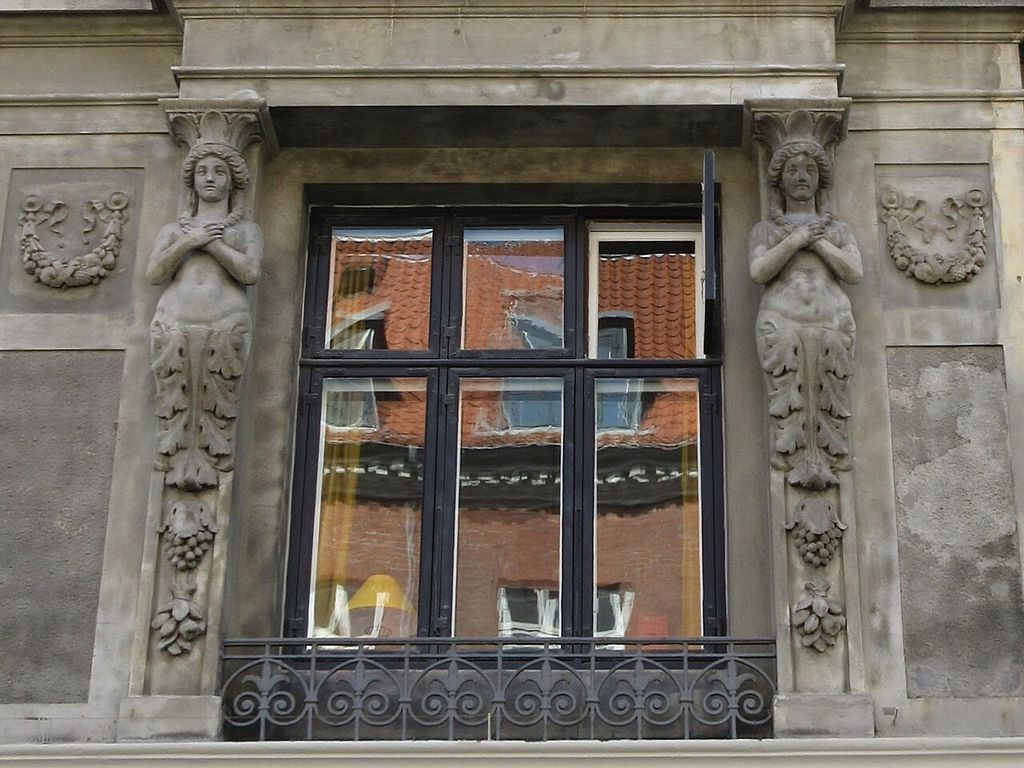
by Tom Gurney
Tom Gurney BSc (Hons) is an art history expert with over 20 years experience
Email: tomgurney1@gmail.com / Phone: +44 7429 011000
Reading Architectural Ornament
Architectural ornament is not simply decoration added after a building has been designed. It can clarify an edge, mark a threshold, announce a patron, display a craft, protect a joint, carry an image or bind rooms and furnishings into one visual order. Sometimes it is carved from the same block as a structural member; sometimes it is painted, pierced, cast, inlaid or fixed onto another surface. What counts as ornament—and whether it is praised as necessary, condemned as excessive or denied the name altogether—has changed with period, culture and architectural theory.[1]
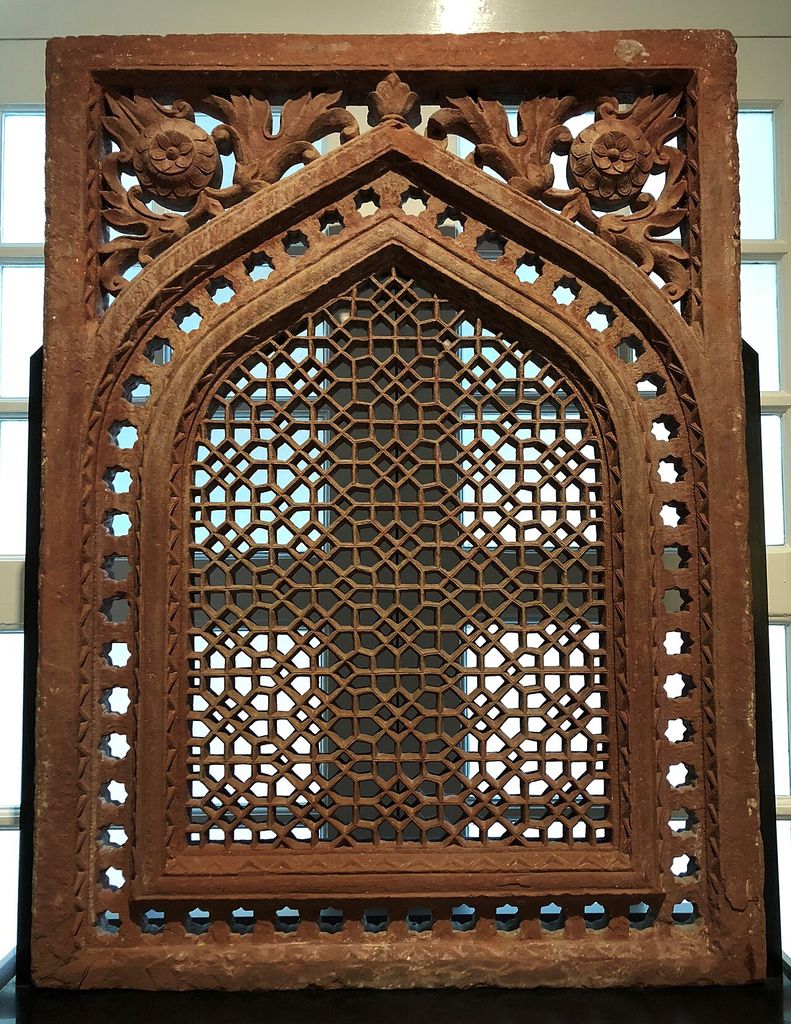
The most useful first question is therefore not “does this building have ornament?” It is: what has been worked, repeated or represented here, by whom, in which material, and what does that work do to the building? A row of crockets changes a pinnacle’s silhouette and weathering. A jali makes a stone wall permeable to patterned light and air. A sculpted tympanum turns a doorway into a narrative threshold. Coloured marbles can organise an interior without adding a detachable motif. Each belongs to ornament’s history, but none can be explained by the vague idea of “extra detail.”
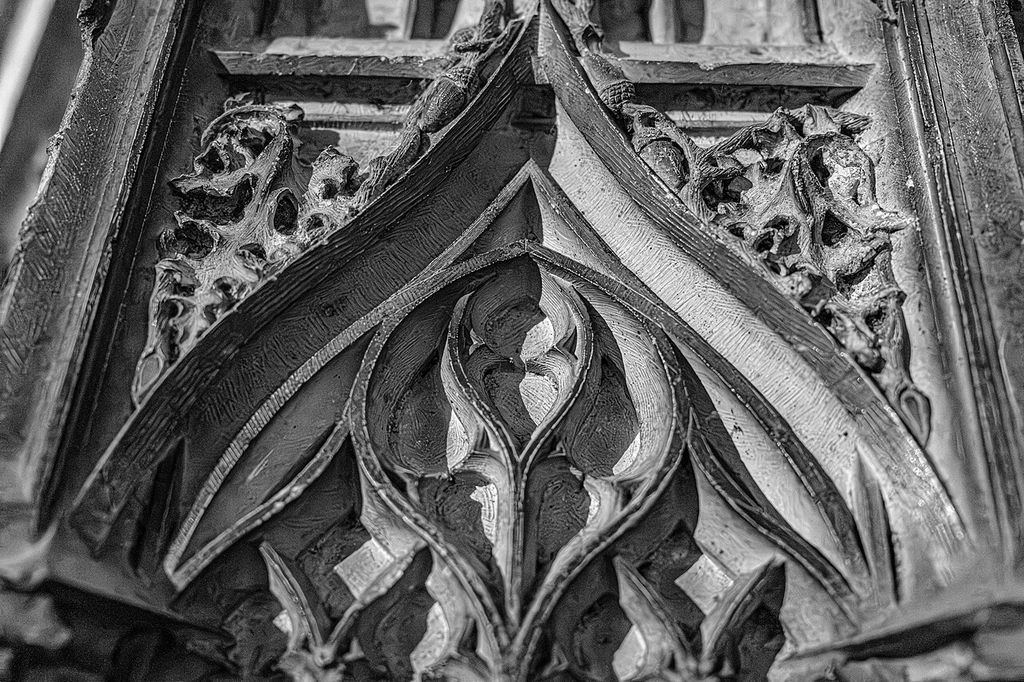
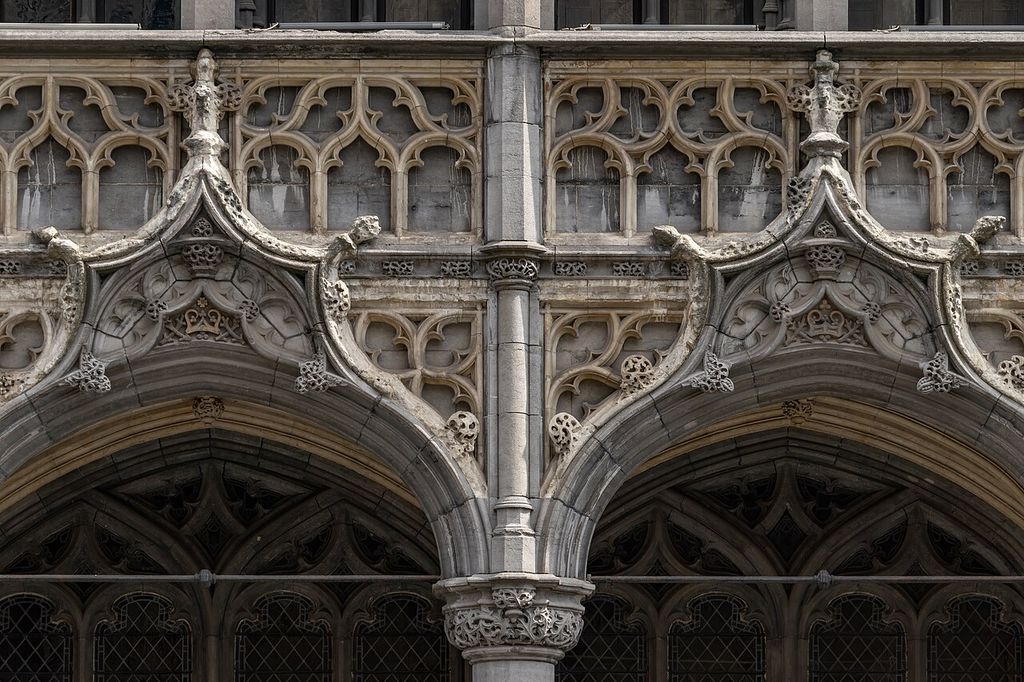
Albi-cathedral-gothic-ornament-detail. Close-up view of decorative Gothic stonework inside Sainte-Cécile Cathedral in Albi, France, emphasizing textures, patterns, and craftsmanship. In “Reading Architectural Ornament”, this view records the form, material and setting discussed in the passage. Source image dated 2025; that date records the image, not the original construction. Marc-Julien-Photography, Albi-cathedral-gothic-ornament-detail; CC0. Resized proportionally; no crop, retouch or upscaling.
At a Glance
- Meaningthe purposeful enrichment or articulation of architectural form, surface, edge and junction through material, pattern, colour or image.
- Where to lookthresholds, capitals, cornices, rooflines, screens, vault transitions, floors, façades and the meeting points between parts.
- How it is madecarving, moulding, casting, turning, piercing, painting, glazing, inlay, assembly and repeated modular manufacture.
- What it can doorganise a composition, communicate identity, guide attention, filter light, finish construction, display skill and transform how a building is approached.
- Essential caution“ornament” is a historical and analytical category, not a universal label used in the same way by every maker or culture.
Contents
- Ornament belongs to the building
- Pattern travels, but it changes on arrival
- The nineteenth-century argument about ornament
- How ornament is made
- What ornament does
- Ornament, identity and power
- How to read ornament on a building
- Conservation: retaining evidence, not just crispness
- Case study: the designed interior as a single ornamental field
- Pattern books: evidence of circulation, not proof of copying
Ornament belongs to the building
Modern habits can make ornament look detachable. Museum cases isolate a carved fragment. Pattern books flatten mouldings and foliage into printable outlines. Photographs crop a capital away from its column or a screen away from the room it once enclosed. Those formats are useful, but they can disguise the fundamental architectural fact: ornament has a position.
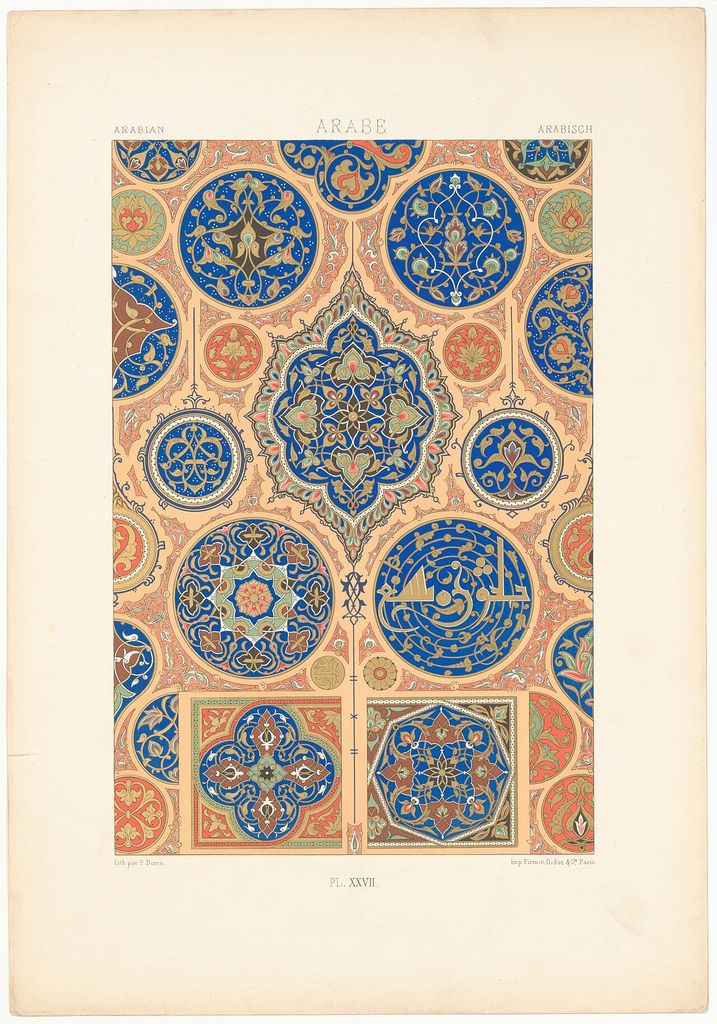
L'Ornement Polychrome. Collection Ornament & Architecture; Books. In “Ornament belongs to the building”, this view records the form, material and setting discussed in the passage. Source image dated 1869; that date records the image, not the original construction. Creator:Albert-Charles-Auguste Racinet, L'Ornement Polychrome; CC0. Resized proportionally; no crop, retouch or upscaling.
The Metropolitan Museum of Art’s account of medieval sculpture made for buildings stresses this original dependence.[2] A portal figure was encountered at a doorway, at a particular height, among jambs, archivolts and doors. Its scale answered the viewer’s approach; its material and depth answered the façade; its subject helped define the threshold. Once removed to a gallery, the figure can be inspected closely but its relation to procession, weather, shadow and entry must be reconstructed.
Position also determines practical behaviour. Ornament on a sheltered interior ceiling encounters different forces from ornament on a parapet. Deep exterior undercutting produces powerful shadow but gives rain and frost more surface to attack. A pierced screen has to preserve enough material around its openings to remain stable. A painted scheme depends on the preparation and moisture behaviour of the wall beneath it. Calling all these things decoration would conceal the decisions that made them architectural.
Ornament may be integral or applied, but those terms should describe construction rather than rank quality. A capital carved from its masonry block is integral in one sense; a mosaic fixed to a vault is applied in another. Yet the mosaic may have been conceived from the beginning and may control the room’s hierarchy more strongly than the stone profile. Conversely, a later carved panel can be physically well attached while remaining historically distinct from the first campaign. Fabric, records and joints—not an assumption that “original” always means integral—settle the question.
Pattern travels, but it changes on arrival
Ornament has always moved: with craftspeople, portable objects, drawings, moulds, textiles, diplomatic gifts, trade and conquest. Print greatly accelerated some kinds of movement in early modern Europe. The Victoria and Albert Museum’s Engraved Ornament Project describes ornament prints as working material for designers and makers rather than merely pictures to admire.[1] A printed grotesque, cartouche or foliage scroll could be copied, combined, reversed or translated into wood, plaster, silver and stone.
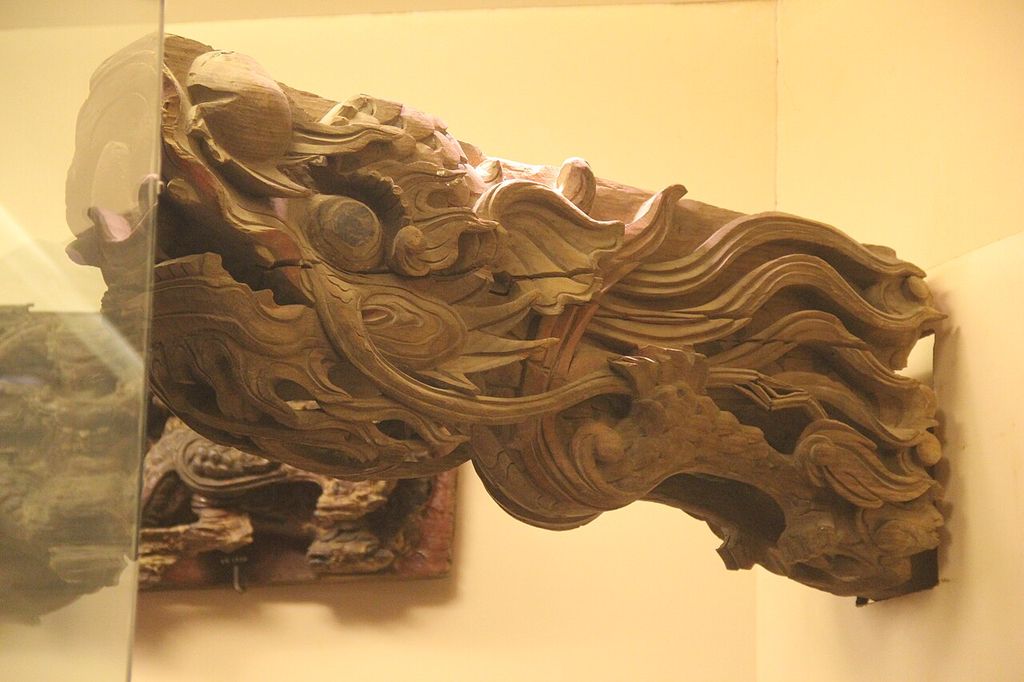
Restored Le Dynasty Carved Wood Architectural Ornament (9735586655). Post Tran Dynasty Gallery, National Museum of Vietnamese History, Hanoi. In “Pattern travels, but it changes on arrival”, this view records the form, material and setting discussed in the passage. Source image dated 2012; that date records the image, not the original construction. Gary Todd from Xinzheng, China, Restored Le Dynasty Carved Wood Architectural Ornament (9735586655); CC0. Resized proportionally; no crop, retouch or upscaling.
Translation is the decisive word. A line engraved on paper does not dictate the depth of a wooden carving, the firing limits of terracotta or the joints of masonry. A maker selects from the image, adjusts it to a site and works within a craft tradition. Even closely related repetitions may differ because a hand tool meets grain or stone, a mould wears, a budget changes or a patron asks for another emblem. Ornament can reveal networks of transmission without proving mechanical identity.
Robert Adam’s interiors show how such circulation could be coordinated at the scale of a whole commission. The V&A describes Adam’s work across architecture, furniture and interior decoration.[3] Ceiling compartments, chimneypieces, wall panels, carpets and furniture could answer one another. Here ornament does not occupy a narrow border around “real” architecture; it produces the room’s proportions, accents and social character.
The same caution applies when similar forms appear in distant traditions. A trefoil and a three-lobed screen opening can be compared geometrically, but their resemblance does not prove common ancestry, shared meaning or equal structural behaviour. A turned-wood mashrabiya and a pierced-stone jali may both filter sight and light, yet they belong to different materials, workshops, building types and regional vocabularies. Comparison begins an inquiry; it does not finish one.
The nineteenth-century argument about ornament
Industrialisation made ornament newly abundant and newly controversial. Mechanised production, international exhibitions, archaeological publication and imperial collecting placed an unprecedented range of patterns before European designers. They also raised anxious questions: should ornament reveal the nature of its material? Could a machine produce morally valid decoration? Who owned forms taken from colonised cultures? Was historical revival a form of knowledge or mere copying?
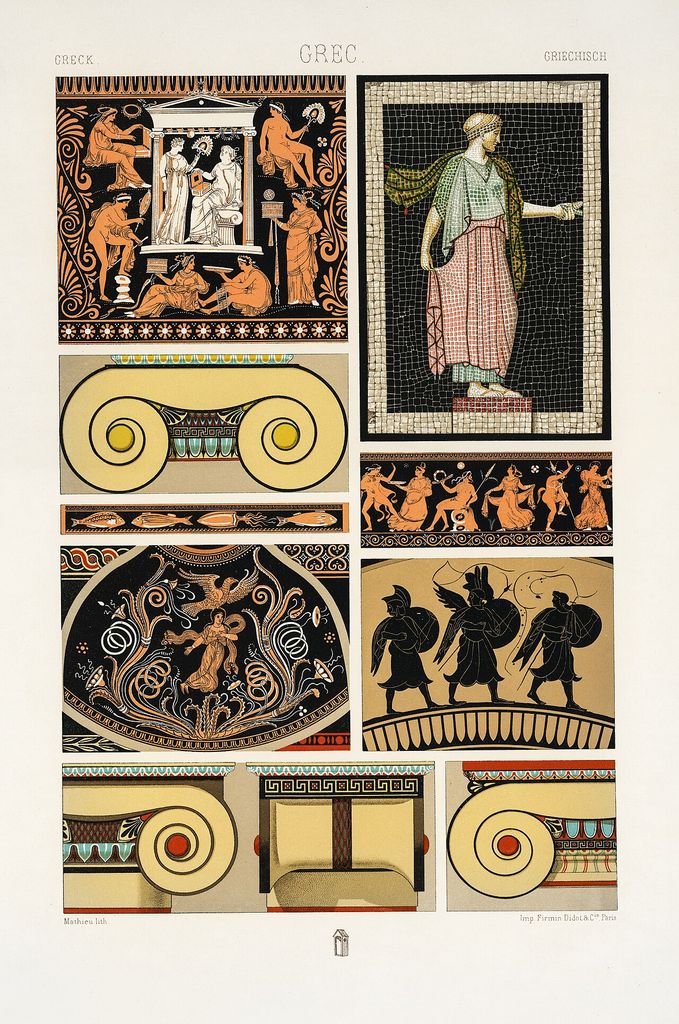
Illustration from L’ornement Polychrome by Albert Racinet from rawpixel’s own original 1888 publication 00093. Greek pattern from L’ornement Polychrome (1888) by Albert Racinet (1825-1893). In “The nineteenth-century argument about ornament”, this view helps identify polychrome architectural ornament. Source image dated 2017; that date records the image, not the original construction. Rawpixel, Illustration from L’ornement Polychrome by Albert Racinet from rawpixel’s own original 1888 publication 00093; CC BY-SA 4.0. Resized proportionally; no crop, retouch or upscaling.
Owen Jones’s The Grammar of Ornament, published in 1856, is a landmark in this debate. Jones used large chromolithographic plates to organise ornament from many periods and regions and formulated design propositions about geometry, conventionalisation and colour. The V&A shows both the book’s immense influence and the unequal imperial system through which its “global” archive was classified.[4] It should be read as an ambitious Victorian design project, not as a neutral key to the meanings of Egyptian, Islamic, Indian or Chinese work.
Jones’s abstractions could free a pattern from a particular object and make its principles available to new design. The same act could strip away material, religious use, makers and colonial circumstances. That double movement—generative and reductive—is central to the modern history of ornament. A plate may teach a designer how repetition is structured while remaining poor evidence for why a motif appeared on its source monument.
John Ruskin approached ornament through labour and moral life. In The Seven Lamps of Architecture, he connected the value of carved work to the freedom, observation and imperfection of the maker.[5] His argument remains powerful because it asks readers to see work rather than pattern alone. It is also a nineteenth-century moral theory, marked by Ruskin’s own medievalism and social assumptions. It cannot be applied as a universal judgement that hand carving is always truthful and machine production always false.
Gottfried Semper offered another influential framework, connecting enclosure and surface to techniques such as weaving and to processes of material transformation. Alice de Oliveira Viana’s Portuguese-language doctoral research at the University of São Paulo situates ornament within Semper’s architectural thought rather than reducing it to a slogan.[6] Semper’s importance lies partly in refusing a simple split between supporting core and meaningless surface. Yet his theory, like Jones’s and Ruskin’s, is a historical interpretation—not an origin story that every culture must confirm.
The famous modern rejection of ornament belongs to this argumentative field too. Economy, hygiene, standardisation and the image of technical progress made unornamented surfaces seem ethically or socially necessary to some modernists. But twentieth-century buildings never became free of visual articulation. Joints, grids, material grain, typography, colour, fittings and carefully proportioned repetitions continued to guide attention. The debate changed what was admitted under the word “ornament”; it did not abolish buildings’ communicative surfaces.
How ornament is made
Technique changes meaning because it changes what is possible. Stone carving begins with the choice and orientation of a block. Broad forms are roughed out, profiles established and details cut at depths calibrated to distance and light. Repeated members may follow templates while retaining small variations. Tool marks can reveal sequence, but later cleaning or recutting may erase them.
Moulded ornament reverses some of that logic. A model or negative mould permits repetition in plaster, terracotta, composition, concrete or metal. Repetition can lower cost and make long coordinated runs feasible. It also creates its own evidence: seams, casting flaws, fixing points and repeated damage. “Machine-made” remains too blunt a description because models, mould finishing, assembly and site adjustment all involve skilled decisions.
Pierced ornament depends on the material left behind. A jali is not a drawing with holes; it is a slab whose remaining bridges transmit forces to a frame. A wooden lattice is built from members and joints rather than excavated from a plane. Both can create pattern and permeability, but their failure modes differ. Likewise, inlay removes a shallow bed and introduces another material, while mosaic assembles many units on a prepared substrate. Each technique produces its own scale and maintenance needs.
Paint may be the most frequently lost architectural ornament. Exterior pigments fade or wash away; interiors are overpainted; cleaning removes thin remains. Where colour has disappeared, carving can look more self-sufficient than it originally did. Owen Jones’s concern with polychromy and current scientific reconstructions of ancient and medieval colour both correct the inherited fantasy that prestigious stone architecture naturally aimed at whiteness.[4] They also demand restraint: detecting a pigment does not reveal every hue, boundary or phase with certainty.
What ornament does
Ornament can make construction intelligible. A capital marks the transfer between support and what it carries. A moulding throws a water-shedding edge into shadow. Roof cresting makes a long ridge legible against the sky. This does not mean every ornament is structurally necessary; it means that visual work and construction often meet.
It can establish hierarchy. Dense carving may gather at an entrance, altar, throne, reception room or principal elevation while service spaces remain plainer. Differences in material and finish map access and status. Repeated heraldry or monograms name a patron; guild emblems can identify makers or civic groups; inscriptions may turn a surface into record and claim.
Ornament also orders perception. Borders separate fields. Repetition establishes pace. A change of scale tells the eye where to stop. Figurative work may address a viewer directly, while geometric pattern can extend beyond any single focal image. Colour can join distant parts of a room or separate structural zones. These effects are neither merely symbolic nor merely optical: they shape bodily movement and social encounter.
Meaning is rarely guaranteed by motif alone. A vine can refer to abundance, sacred text, seasonal renewal, a local plant, a pattern-book source or nothing that can now be securely recovered. The responsible explanation proceeds outward: identify the material and technique, establish date and campaign, locate the motif within the building, inspect adjacent inscriptions or images, then consider documented patronage and contemporary texts. Symbol dictionaries reverse that order and routinely turn possibility into certainty.
Ornament, identity and power
Buildings use ornament to make communities visible, but visibility is not innocent. A state building may gather motifs from regions it governs and present political domination as harmonious synthesis. A colonial interior may remove forms from their religious or local settings and reorganise them within an imperial taxonomy. A revival may claim ancestry through a style while excluding the people whose past it invokes.
The answer is not to stop comparing ornament. It is to compare with enough context to preserve difference. Jones’s plates can be studied beside the monuments and objects from which he abstracted. A museum fragment can be connected to its original façade and the history of its removal. A nineteenth-century “Moorish” room can be examined as European fantasy and manufacture rather than treated as transparent Islamic design. Ornament becomes especially informative when its claims of belonging are tested.
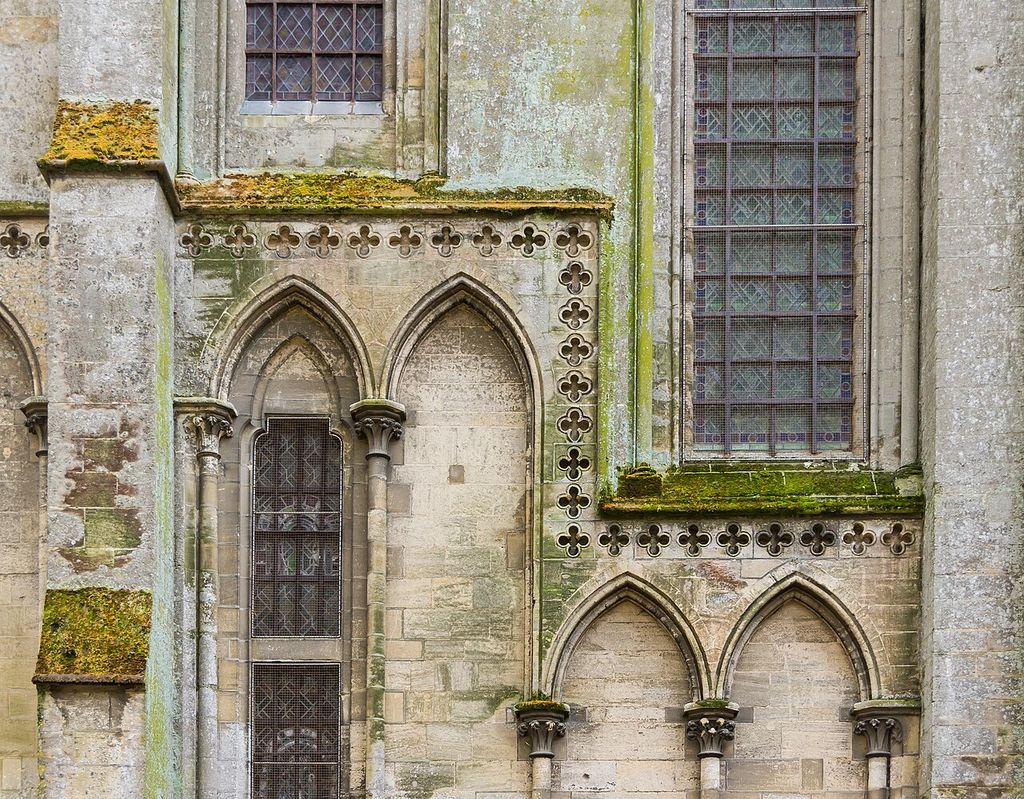
Architectural details cathedral Bayeux. Architectural details, Cathedral, Bayeux, Calvados, Normandy, France. In “Ornament, identity and power”, this view helps identify architectural ornament detail. Source image dated 2015; that date records the image, not the original construction. Jebulon, Architectural details cathedral Bayeux; CC0. Resized proportionally; no crop, retouch or upscaling.
Labour is equally important. The named architect may specify a scheme, but modellers, carvers, painters, masons, mosaicists, metalworkers and installers determine its material intelligence. Workshop organisation affects variation; contracts affect time; quarry and trade networks affect what can be made. Damage and repair introduce later hands. An apparently unified surface may therefore be a record of collaboration and unequal credit.
How to read ornament on a building
Begin at three distances. From far away, note where the building concentrates contrast and how the skyline, openings and major bands are organised. At middle distance, look for repeated units, changes of scale and relationships between ornament and structural bays. Close up—without touching fragile fabric—look for joints, tool marks, paint traces, fixings, mould seams, repairs and weathering.
Then ask six questions:
- Where is it? Threshold, support, roof edge, wall field and interior focus imply different roles.
- What is it made from? Similar profiles in stone, wood, metal and plaster do not share a method.
- How is it attached or formed? Integral carving, inserted panel, cast unit and paint layer leave different evidence.
- Which campaign does it belong to? A medieval-looking detail may be a documented revival or modern replacement.
- Who could see it, and from where? Viewing distance, access, procession and light condition shape meaning.
- What has changed? Lost colour, moved fragments, blocked openings and recutting can transform the first effect.
This method protects against two opposite errors. One is formalism without history: describing shapes beautifully while ignoring patronage, labour and use. The other is interpretation without fabric: assigning politics or symbolism before establishing what the object is. Architectural ornament rewards both kinds of attention at once.
Conservation: retaining evidence, not just crispness
Ornament often becomes the most vulnerable part of a building because it projects, traps water or depends on thin attachments. Stone leaves lose tips; iron fixings corrode and split surrounding masonry; timber joints open; salts disrupt painted plaster; glazed surfaces craze. A repair focused only on restoring a sharp outline can destroy evidence of tooling, colour and age.
Good investigation records context before detail. It maps condition, identifies material, checks water paths and distinguishes original work from later campaigns. Cleaning tests should be limited and documented. Replacement may be justified where a loose unit is dangerous or where a missing piece exposes the building, but the new work should not falsify certainty. Sometimes a quiet repair preserves more history than conjectural completion.
Museums face another problem: how to display fragments architecturally. Mounting height, lighting, reconstructed neighbours and digital models can help restore scale and position, provided conjecture is visible. The fragment’s acquisition history also belongs to interpretation. Removal may have protected it, followed demolition or participated in unequal collecting.
The deepest lesson is that ornament is evidence of relationships. It joins surface to support, image to route, maker to patron, local craft to travelling pattern and historical fabric to present care. Once those relationships are restored, the old question—whether ornament is necessary or superfluous—looks too small. The more revealing question is what kind of architectural work the ornament was made to perform.
Case study: the designed interior as a single ornamental field
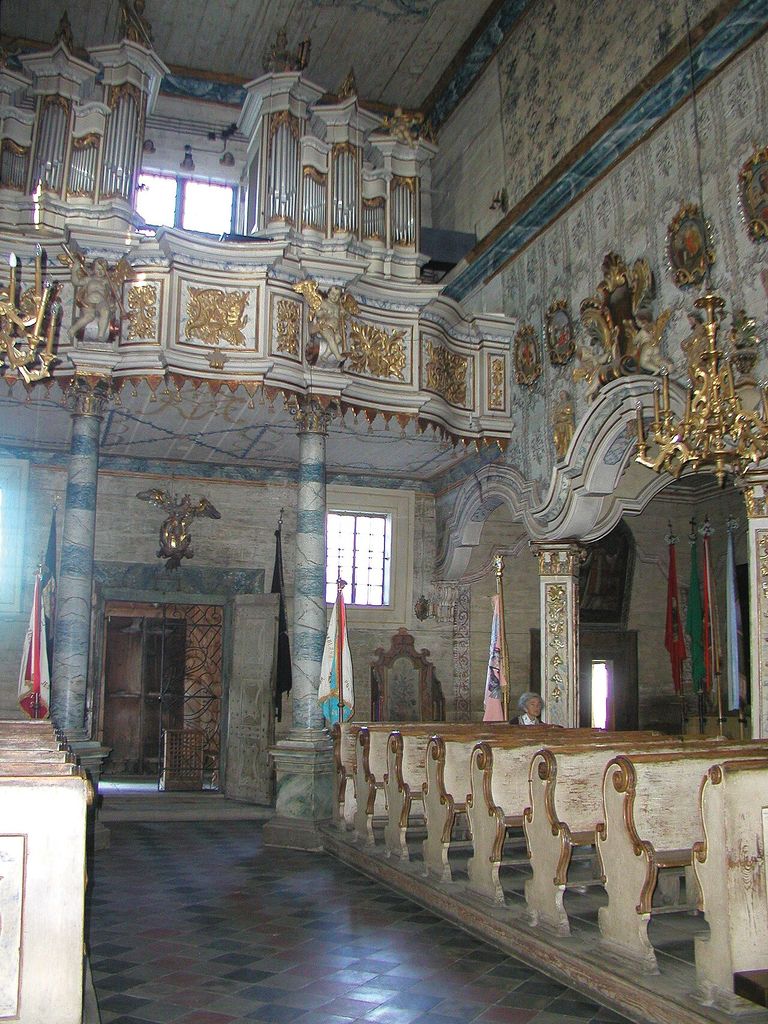
Robert Adam's interiors expose why ornament cannot be assessed as a collection of detachable motifs. Ceiling compartments, chimneypieces, doorcases, carpets, furniture and wall colour were conceived in relation to one another. A painted arabesque on plaster and a carved anthemion in stone may use different trades and materials, yet both participate in the room's proportions and hierarchy. The V&A's account of Adam consequently treats architecture, interior decoration and furnishings as a connected practice rather than separate design departments.[3]
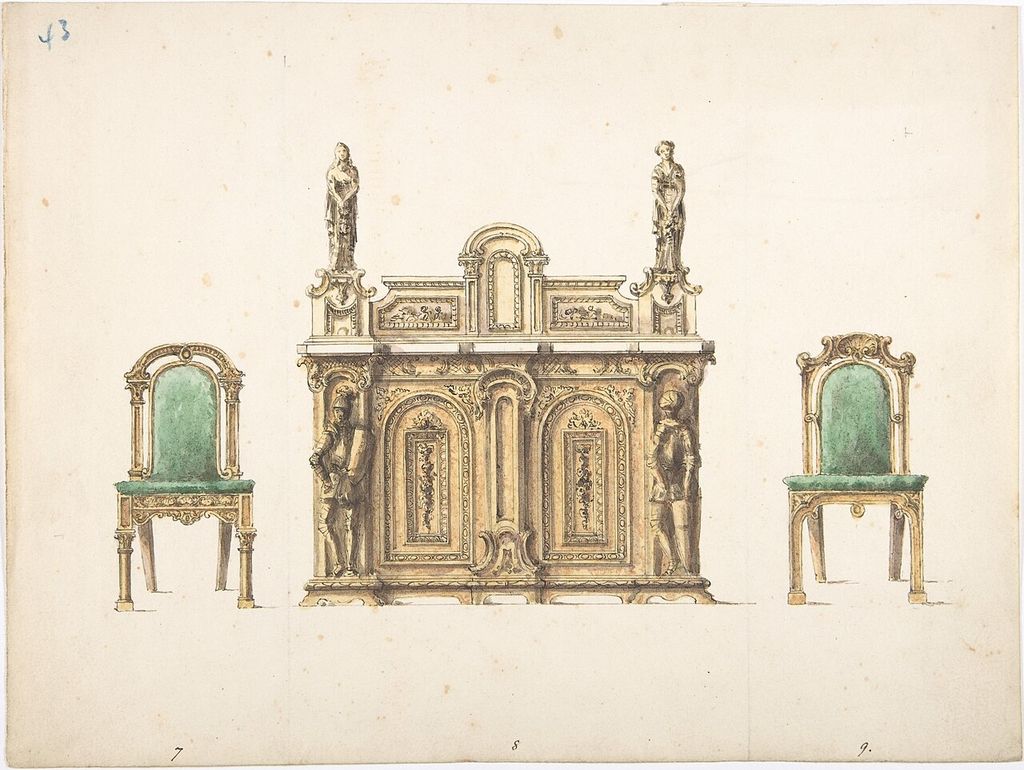
Design for Cabinet Ornamented with Carved Knights and Ladies, and Two Chairs. Drawing ; Ornament and Architecture; Drawings. In “Case study: the designed interior as a single ornamental field”, this drawing records the form, material and setting discussed in the passage. Source image dated 1850; that date records the image, not the original construction. Anonymous Unknown author, Design for Cabinet Ornamented with Carved Knights and Ladies, and Two Chairs; CC0. Resized proportionally; no crop, retouch or upscaling.
That unity was expensive and socially selective. It depended on patronage, workshops, pattern drawings, specialist modellers and a chain of makers whose names survive unevenly. Calling the result “Adam's style” is useful shorthand, but it can conceal the many hands that converted drawings into carved wood, cast plaster, woven textile and painted surface. The archive should therefore be read at two levels: authorship supplied an organising system; manufacture gave that system material variation.
The case also clarifies scale. From the centre of a room, a ceiling border helps the eye grasp its geometry. At a doorway, moulding distinguishes passage from destination. At a fireplace, ornament concentrates attention around heat and sociability. None of these is an optional sticker. Each changes how the room is read and used.
Pattern books: evidence of circulation, not proof of copying
Printed ornament made forms portable. A sheet could carry a grotesque, strapwork panel or foliage spray between cities and trades, and could preserve designs after the object that prompted them had disappeared. The V&A's engraved-ornament research stresses the importance of such prints to makers and collectors.[1] Owen Jones's Grammar of Ornament extended that portability through systematic plates drawn from many cultures.[4]
Yet resemblance alone does not demonstrate that a particular builder owned a particular book. Patterns could arrive through an intermediary drawing, an apprentice's memory, a cast, a textile or another building. They were also resized and translated: a two-dimensional printed line becomes a cut profile in stone, a pierced metal field or a coloured ceramic repeat. The journey changes the pattern.
Jones's comparative ambition deserves both historical recognition and critical distance. His plates encouraged serious attention to traditions often marginalised in European design education, but they also detached selected patterns from architecture, language, use and colonial conditions of collection. A present-day page should reconnect motif to named place and medium whenever evidence allows. It should not turn a culturally specific system into anonymous “inspiration.”
Evidence at the scaffold and under the paint
Close fabric inspection frequently overturns an elevation-based story. Tool marks can distinguish sawn, chiselled, punched and drilled work; joints can show whether a carved piece was integral or attached; fixing holes can reveal a lost crest or metal enrichment. Raking light makes recutting visible. Microscopy and cross-sections can disclose successive paint layers whose present topcoat bears little relation to the first scheme.
Such evidence also disciplines dating. Crisp carving is not automatically early, and weathered carving is not automatically original. A nineteenth-century replacement may have eroded faster than sheltered medieval work. A mould made during restoration may reproduce an old contour while changing tool finish. The sound conclusion records material, location, sequence and uncertainty together.
This is why conservation begins with significance mapping. One area may retain rare pigment; another may contain a later campaign important to the building's reception; a third may be structurally unstable replacement work. Treating all three as a single “decorative surface” loses the history that ornament carries. Ruskin's polemic against restoration is not a universal technical rule, but it remains a useful warning that renewal can erase age and authorship while claiming to recover style.[5]
Watch: three approaches to architectural ornament
Choose Architectural Ornamentation, What is the Use of Ornament in Contemporary Art and Architecture? or Historicism to Art Nouveau: Klimt and Ornament. Together, the films connect architectural form with material, use and historical setting.
Architectural Ornamentation
A museum lecture on how ornamental detail works across an architectural interior
Watch on YouTubeDiscussion
Which building or designed landscape most clearly demonstrates Architectural Ornament, and what physical evidence supports that reading?
Reader Insights
Name the material, joint, opening, route or view you can observe.
Give the place, approximate date and a reliable source.
Separate documented history from your interpretation.
Join the Conversation
Share a concise observation or useful source below.
References
- Victoria and Albert Museum, “What is ornament, what is an ornament print and why do they matter?” View source
- Metropolitan Museum of Art, “Medieval European Sculpture for Buildings.” View source
- Victoria and Albert Museum, “Robert Adam: Neoclassical architect and designer.” View source
- Victoria and Albert Museum, “Owen Jones and The Grammar of Ornament.” View source
- John Ruskin, The Seven Lamps of Architecture, Lancaster University digital text. View source
- Alice de Oliveira Viana, “Gottfried Semper e o ornamento em arquitetura,” doctoral thesis, Universidade de São Paulo, 2017. View source